Two former students of Ehud Netzer are disputing their teacher’s claim that he discovered Herod’s tomb at the Herodium. Prof. Joseph Patrich and Benjamin Arubas, both of Hebrew University, presented a paper yesterday in which they argued that the hillside shrine may have served Herod’s family but not the king himself.

They argue that the newly discovered tomb could not have been built for King Herod:

  • The tomb is too modest for one who considered himself the greatest king.
  • The plaza next to the tomb was too small to accommodate the large crowd that Josephus describes.
  • The later construction of the monumental staircase does not reflect the careful planning characteristic of Herod.

Nir Hasson provides a detailed summary in Haaretz of the presentation given at the seventh annual “Innovations in Archaeology in Jerusalem and the Surrounding Area” conference. The article also includes some counter-arguments by Netzer’s successor Roi Porat. I find the latter more convincing.

HT: Joseph Lauer

Herodium model tomb of Herod, tb042512613
Replica of Herod’s mausoleum at Herodium
Share:

A life-size statue of Ramses II was uncovered this week in Tell Basta in Egypt. The article does not note that Tell Basta is likely the site of biblical Bubastis (Ezek 30:17).

Israel has halted the auctioning of stolen Egyptian artifacts.

Ferrell Jenkins reports on recent vandalism in the Protestant Cemetery on Mount Zion.

Mark Hoffman has now shared his Google Earth Exercise for Biblical Geography (see here for the Google Maps Exercise).

The Encyclopedia of Ancient History (13 vols.) is reviewed by John Vanderspoel.

“In Israel, Dig Beneath the Headline for Archaeological Truth.” There are important things to be said concerning the sensationalism of archaeology and the truth of the Bible, but you won’t find them in this article at The Media Line.

Lucas L. Schulte will be lecturing on “Archeology of the Lands of the Bible: Illuminating Nehemiah” on Oct. 22, 4:30 p.m. at the Dumke Commons of Occidental College.

Wayne Stiles explains why you should send your pastor to Israel.

Aren Maeir reviews The Archaeology of Israelite Society in Iron Age II, by Avraham Faust.

“The British Museum and US-based Penn Museum are collaborating on the creation of a web
resource to display archaeologist Leonard Woolley’s Mesopotamian excavations from 1922-34.”

An op-ed in the LA Times argues that if you want to protect Syria’s antiquities, don’t buy them.

Today you can purchase the HCSB Study Bible on Kindle for just $2.99. The work includes several of our photos.

HT: Jack Sasson

Share:

From UPI:

Egypt says an exact replica of the tomb of Tutankhamun will be installed near the 3,000-year-old original to divert tourists away from the threatened site.
Officials said they hope the $675,000 project will prolong the life of the original tomb while maintaining sustainable tourism in a country where many ancient archaeological sites are under severe threat.
Tutankhamun’s tomb, in Luxor’s Valley of the Kings, is one of many burial sites deteriorating from the impact of years of tourism, while restoration efforts will likely to make the problem worse, they said.
“The attempt to fix the tombs to make them visitable is itself now the largest long-term risk to the tombs,” said Adam Lowe, whose firm Factum Arte, based in Spain, led and funded the creation of the tomb’s replica.

The full story is here. The price of visiting Tut’s tomb has long been many times the cost of visiting other bigger and better tombs, and I recommending skipping Tut in favor of the pharaohs who ruled much longer. The Cairo Museum has a large display of items discovered in Tut’s tomb.

HT: Jack Sasson

Tutankhamun gold coffin, tb110900522
Gold coffin of King Tutankhamen
Share:

Haaretz profiles the late archaeologist Nahman Avigad on the anniversary of his birthday. Leen Ritmeyer shares some personal reflections.

Mark Hoffman shares a Google Maps Exercise for Biblical Geography.

Many ancient leopard traps have been discovered in Israel’s Negev.

What if Cyrus had not freed the Jews? The Jewish Journal asks the question.

Adam Zertal’s theory about Gilgal is detailed in Israel HaYom.

Lior, the lion king of Jerusalem, has died at the age of 16.

HT: Charles Savelle, Jack Sasson

Share:

The latest issue of the SAU Institute of Archaeology DigSight is now available online in pdf format.

Contents include:

  • Excavating Lachish 2013
  • Qeiyafa Final Celebration
  • New Museum Coordinator
  • Battle Over David in South Africa
  • Institute of Archaeology at ASI
  • Director’s Letter
  • Recent Sightings
  • Upcoming Events

The first article reports on the initial season of excavations at Lachish. The team hopes to find answers for the following questions:

  • When was Lachish inhabited for the first time in the Iron Age?
  • When was Lachish first fortified in the Iron Age?
  • How did the economy, administration, international connections, writing, cult, and art develop in the first 200 years of the Kingdom of Judah?
  • Was there a fortified city in Lachish relating to 2 Chronicles 11:5–12, which recounts Rehoboam’s rebuilding of the city?

The archaeologists are focusing their work on the northeast quarter of the site and they have already exposed part of the fortification system near the well.

Information about upcoming lectures is provided on the last page of the newsletter, including these events:

October 22, 2013, 7 p.m.


“Excavating Nebuchadnezzar’s Destruction at Lachish”  Michael G. Hasel, PhD (Southern Adventist University)

February 11, 2014, 7 p.m.


“Tell Jalul: A Levitical City of Refuge in Jordan?”  Randall W. Younker, PhD (Andrews University)

March 11, 2014, 7 p.m.


“Ossuaries and the Burials of Jesus and James”  Jodi Magness, PhD (University of North Carolina, Chapel Hill)

Lachish aerial from south, tb010703291
Lachish from the south
Share:

The Center for Near Eastern Archaeology at La Sierra University is hosting its 5th Annual Archaeology Discovery Weekend on November 16–17, 2013 with this year’s focus on Jerusalem.

Most of the lectures and events appear to be free though there is a charge for some workshops and the Grand Opening Gala and Middle Eastern Banquet on Saturday evening.

Lectures include:


Jerusalem through the Ages: Prehistory to Modern, by Dan Bahat. Respondents: Jane Cahill West, Mahmoud Hawari, and Larry Herr


Jerusalem in the Iron Age, time of Old Testament Kings, by Jane Cahill West


Jerusalem in the Roman Period, time of the New Testament, by Dan Bahat


Jerusalem and the Knights Templar, by Kent Bramlett


The “Golden Age” of Islamic Culture, Art and Architecture in Jerusalem: The Ayyubid and 
Mamluk Periods (AD 1187–1516), by Mahmoud Hawari


Jerusalem Inscriptions, by Larry Herr

The closing lecture is a series of short presentations on The Archaeology of Jerusalem in the Context of the Modern Middle East: Risk, Responsibilities, Opportunities. Presenters include Dan Bahat, Kent Bramlett, Mahmoud Hawari, Lawrence Geraty, Larry Herr, Robert Mullins, and Jane Cahill West.

For more information, follow the links from La Sierra University’s website. La Sierra University is located in Riverside, California.

HT: James Lancaster

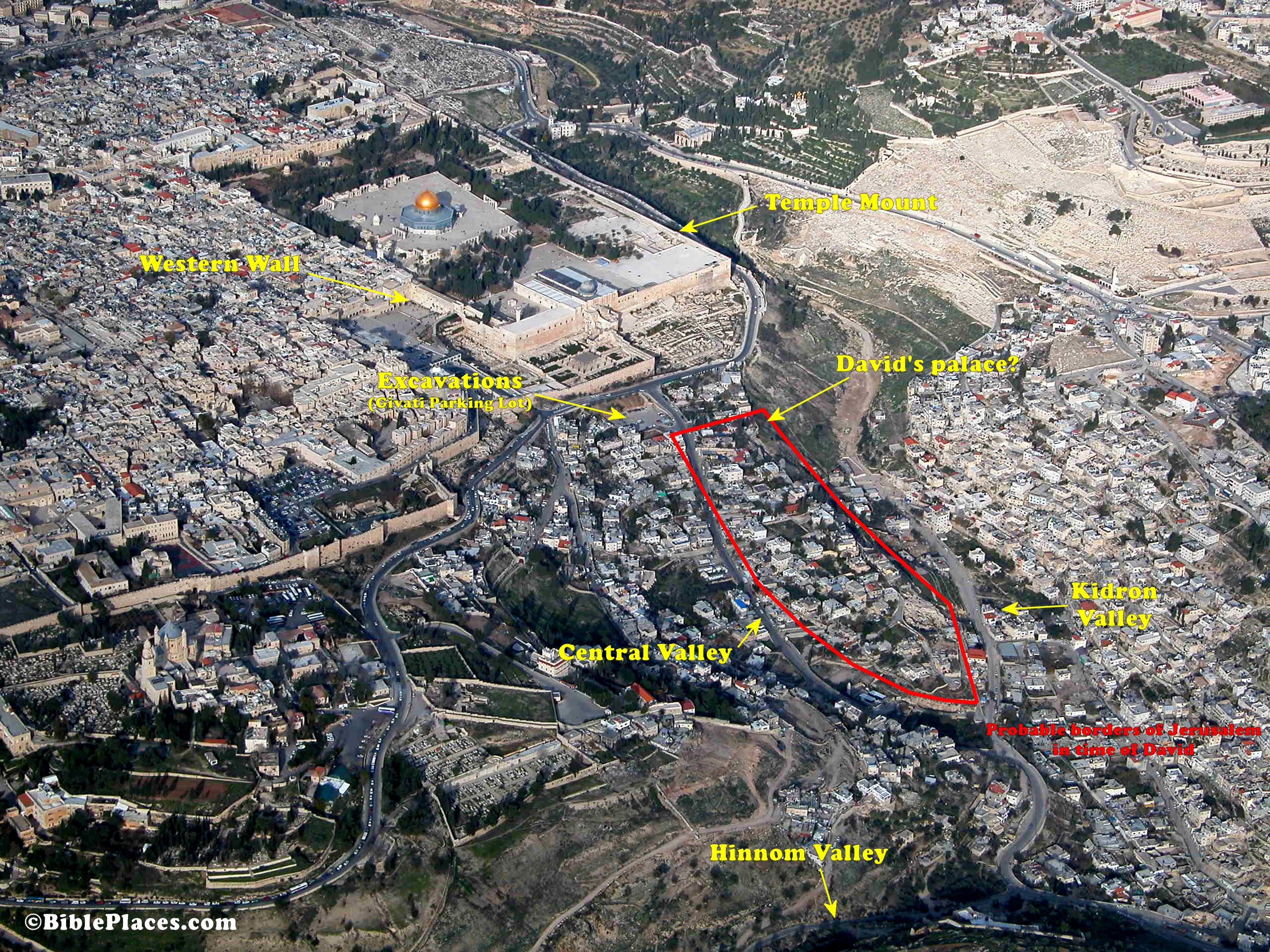
Temple Mount and Western Wall aerial from southwest, tb010703235
The Temple Mount and Western Wall from the southwest
Photo from the Pictorial Library of Bible Lands
Share: