A PhD student has discovered a fragment of Codex Sinaiticus under the binding of an 18th-century book. The parchment contains part of Joshua 1:10 and dates to A.D. 350.

Azusa Pacific University has purchased five Dead Sea Scrolls fragments from a book dealer in southern California. “This acquisition will set Azusa Pacific University apart from all other Christian institutions of higher education in the world,” said Paul Gray, vice provost for graduate programs and research and dean of the University Libraries. As an educator, I think this is a publicity stunt which will do little more than give them bragging rights for recruiting. How about this as an idea for setting apart a school and improving education: build an extension campus for your students in Israel.

CNN carries the story of the Middle Bronze passageway discovered in Jerusalem, together with a 2.5 minute video that includes interviews with archaeologists Reich and Shukrun.

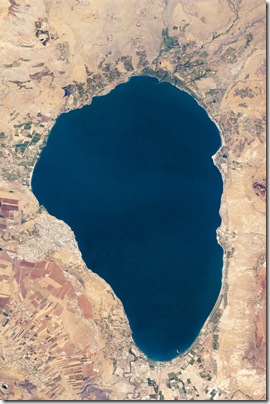
A carved stone with Egyptian signs from the First Dynasty has been discovered at Tel Bet Yerah (Khirbet Kerak) on the southwestern shoreline of the Sea of Galilee (photos here).

HT: Joe Lauer and Ferrell Jenkins

UPDATE (9/11): NPR has a 4-minute radio interview of Ronny Reich (with written transcript)

Share:

This summer I read a book sent to me by one of the authors that I am happy to recommend to my readers here. Sitting at the Feet of Rabbi Jesus is subtitled “How the Jewishness of Jesus Can Transform Your Faith.” The essence of the book is to reveal aspects of Jewish life that inform how we (should) read the New Testament. feetrabbi

Ann Spangler teamed up with Lois Tverberg to write an engaging study of first-century customs that would have been familiar to Jesus and his disciples, but are unknown to most readers today. The book includes chapters focusing on rabbis and disciples, education, prayer, blessings, Jewish feasts, Torah, and the kingdom of God. The appendices and glossary provide much helpful information.
Quite a bit of work has been done in the last few decades in the area of Jewish backgrounds of the New Testament, but much of it I cannot recommend. This book distinguishes itself in several ways. First, the research upon which the book is based is trustworthy. I don’t agree with every bit of analysis, but they use the best sources. Second, while the first point would lead you to expect that this is a “scholarly” work, it is, in fact, written to a popular audience and the writing style is superb. Third, the book is not an academic exercise, but the writers are very interested that their discoveries impact the reader’s faith and daily life. Altogether, these three realities combine to make an excellent book.

There were a few things I would change, and I note these more as testimony that I carefully read the whole book than to affect my positive endorsement. I haven’t read too many books that were co-authored, but these writers often told personal stories and the use of the first-person singular (“I”) sometimes felt awkward. Another issue was the way that a chapter would end so that it led to the next chapter. Perhaps it was the intervening page-long study/thought questions that made the transitions not work as well as I think they were intended. Theologically, I am more and more uncomfortable with the way that the definition of the “kingdom” is derived from later church history than from Jesus’ Bible, but the authors can certainly claim to belong to a larger subset of modern Christianity in this regard than I do.

Brief quotations cannot communicate the argument of a book, but as they may give a sense for the tone, I include a few below:

“Instead of making our hearts burn, sometimes Scripture makes us scratch our head in confusion” (12).
“One day, when the presiding rabbi was having trouble generating group discussion, he fired off question after question, finally tossing out a provocative comment to stir things up. But still the group was silent. Exasperated, the rabbi exclaimed, ‘Come on people! Somebody disagree with me! How can we learn anything if no one will disagree?” (29)
“When Jesus called himself a ‘shepherd’ in John 10, he was hinting at his identity as the messianic king, the future ruler of God’s kingdom” (46).
“While the Gospels record many instances of Jesus instantly healing people’s illnesses, we know of not even one instance in which he simply waved his hand to immediately fix an ugly habit for one of his disciples. Instead, he simply kept teaching and correcting them, giving them time to grow” (56).

Of all the popular “Jewish background of Jesus” books that I have read, this one was the best.

Share:

Those who have traveled with me can readily attest that one of my favorite sites in the land of Israel is the Shechem area.  In recent years, I’ve been able to do no more than stand on top of Mount Gerizim or view the area from the east, but even that is quite satisfying.  My love for the area is not necessarily related to anything the eye can see today.  There are other hills, valleys, tells, and impressive views.  But the acts of God make this area unlike any other.  Here the Lord promised the land to Abraham.  Here Jacob erected an altar and apparently dug a well.  Here the twelve tribes recited the blessings and curses.  The list goes on, and it is long and rich.

Shechem from above, tb041106601 locations

Shechem area from Mount Gerizim, 2006

Standing atop Mount Gerizim and gazing over this panorama is one of my favorite things to do.  But it could be better.  It would be better if dense urbanization did not obscure the historic sites.  It would be better if the loud noises of modern city life did not disturb my thoughts.  It would be better if Israeli soldiers weren’t on guard around the corner.  And it would be better if there was peace in the land and I could walk down the slope, into ancient Shechem, and then up the slope of Mount Ebal.

If I had lived 100 years ago, I could have done all of that.  I can’t do that, but I can enjoy the beauty of old photographs.  This is one of my favorites.

Looking north from Mount Gerizim, mat05142 locations Shechem area from Mount Gerizim, 1900-1920

This photograph is one of 600 high-resolution images in the new Northern Palestine CD, volume 1 of The American Colony and Eric Matson Collection. Photo: Library of Congress, LC-matpc-05142.

If you prefer to view the photos in a PowerPoint file where you can flip back and forth between them, you may download that here.

Share:

The discovery of a massive fortified walkway leading to Jerusalem’s Gihon Spring has been announced by archaeologists Ronny Reich and Eli Shukrun. Excavations so far have uncovered a portion of a Middle Bronze wall that is 26 feet (8 m) high and 75 feet (24 m) long. The wall apparently protected a passageway that led from the fortified city of Jerusalem down the eastern slope of the City of David to the Gihon Spring in the Kidron Valley.

The discovery is reported in a press release of the Israel Antiquities Authority and a story in Arutz-7, soon to be followed by all the major news outlets. There are some parts of the story that don’t make sense or are inaccurate.

“This is the most massive wall ever discovered in the City of David,” Reich said. “It is tremendously large in terms of its dimensions, thickness, and size of the rocks used. It appears that they protect a walk-way used to walk down from some tower atop the hill towards the spring.”

That statement is fine, but then Reich is quoted as saying,

This is the first time we have found such massive building in Jerusalem from before the period of King Herod.

But he said the same thing years ago, for his excavations of the Pool and Spring Towers reveal monumental construction from the Middle Bronze Age. Perhaps he means that collectively all of his excavations in the past decade have found such construction “for the first time.”

The new double wall/passageway is apparently related to the Pool and Spring Towers which protected Jerusalem’s water supply at this same period. When discovered, there was a mystery as to whether these were free-standing towers outside of Jerusalem’s wall. My guess is that this new wall “connects the dots” and explains how Jerusalemites accessed these towers without exposing themselves to enemy attack.

Connecting discoveries to biblical figures increases interest, but few people would agree with the article’s assertion that this was the time period of Abraham. The wall dates to 1800-1700 BC, while the biblical chronology puts Abraham’s death closer to 2000 BC.

My favorite quote of the article is a statement I’ve often heard archaeologists make, but which rarely seems to make it into print.

The new discovery shows that the picture regarding Jerusalem’s eastern defenses and the ancient water system in the Middle Bronze Age 2 is still far from clear.

And then this:

Despite the fact that so many have excavated on this hill, there is a very good chance that extremely large and well-preserved architectural elements are still hidden in it and waiting to be uncovered.

The IAA release invites you to see the discoveries in person.

The fortification will be revealed to the public for the first time tomorrow (Thursday, September 3), within the framework of the 10th Annual Archaeological Conference on the discoveries in the City of David. Admission to the conference is free and the public is invited. Unique artifacts from all of the excavations at the site, such as the gold earring that was found in the excavation at the Givati Car Park, will be presented in the conference. In addition, before the conference, visitors can participate in any of 17 different tours that will be guided by scholars there.

Two high-resolution photographs of the wall are available here or here (direct link to zip file).

The official (and beautiful) website of the City of David is here.

Share:

Many students have commented to me at the end of a semester that the most impressive site in Israel is Beth Shean.  They are referring to the prominent Roman and Byzantine remains of the lower city that have been excavated and reconstructed in the last 20 years.

If you had visited before that time, the tell was striking, but there was little evidence that a glorious city was buried in the dirt.  I’ve heard, but not seen in a photograph, that there was a lone column sticking out of the ground prior to excavations.

The natives visible in the photo below certainly don’t have any idea of what lies beneath their feet. 

Then again, that’s probably true for hundreds of cities around the world today.

Beth Shean from south, site of recent excavations, mat02786

Beth Shean from the south.  Date of photograph: 1920-1933

Beth Shean excavations with tell, tb011506672

Beth Shean from the south

There is another impressive photo comparison of Beth Shean mid-way down this page at www.lifeintheholyland.com.

The top photograph is one of 600 high-resolution images in the new Northern Palestine CD, volume 1 of The American Colony and Eric Matson Collection. Photo: Library of Congress, LC-matpc-02786.

Share:

Some months ago I learned about a new Virtual Walking Tour of al-Haram al-Sharif (the Temple Mount), but being short of time, I filed it for later.  Today seems to be a slow news day and so I started it up and enjoyed the tour.  It is excellent.

Created by Saudi Aramco World, the tour focuses on the present Muslim structures at the site, but it does not deny the previous existence of the two Jewish temples.

The tour begins with a five-minute narrated introduction (which you can skip) and then includes 32 360-degree panoramic views, each of which is explained both by an audio recording and a written transcript.

The visitor starts with two views of the Temple Mount from the east and west before surveying the grounds of the complex with approximately 18 more scenes.  A particularly unique image is #25, taken atop Al-Aqsa Mosque.

Tourists to Israel today can see most of these views if they visit during the open hours of the Temple Mount (approximately Sun-Thurs, 7:30-10:00 am, 12:30-1:30 pm), but since 2000 the holy buildings have been closed to non-Muslims.  Thus the images inside the Dome of the Rock and Al-Aqsa Mosque will be especially appreciated by those who have been denied entrance.

A couple of practical comments: 1) You can turn the audio off and read the text; 2) the full-screen view is very high quality, but may be slow on your internet connection; 3) to get “inside” the Dome of the Rock, select #8 and new options will become available; 4) to get “inside” Al-Aqsa Mosque, select #26.

The creators did a fantastic job with this.  The photography is superb, the narration is helpful, and the location is one of the most religiously (and politically) important in the world.

Dome of Rock from southwest, tb122006949dxo2 Dome of the Rock from southwest
Share: