A 2,000-year-old bronze ring with a solitaire gemstone was uncovered in the City of David National Park in Jerusalem.

Ceramic jars and cooking pots suggest the Persian Empire used Tel Keisan, near the city of Akko in
Northern Israel, as a base camp in their effort to conquer Egypt (Haaretz premium).

Police caught antiquities thieves in the act of excavating Huqoq for ancient coins.

The petrified remains of a harnessed horse has been uncovered in Pompeii.

Emma Maayan-Fanar writes about her recent study at Shivta which revealed a painting of Jesus.

Longer, hotter summers and drier winters are a threat to the remaining cedar trees in Lebanon.

The NY Times reports on the only tourist boat operation on the Dead Sea.

”By analysing the architecture and historical documentation, it is possible to reconstruct a detailed history of the Karak Castle during the Crusader period.”

Several people are dead and a dozen injured after a bomb blast struck a tourist bus near the Egyptian pyramids in Giza.

“Finds Gone Astray” is a new exhibit opening on Monday at the Bible Lands Museum. The Times of Israel provides some of the background for these artifacts that have been recovered from thieves and smugglers in the West Bank since 1967.

Carl Rasmussen asks: Herod or Jesus: Which “King” Has Had the Most Lasting Influence?

What is the Samaritan Torah? David Moster has created a 10-minute video to answer that question.
National Geographic has produced a 4-minute animated video on The History of the Bible.

Gary Knoppers died last week.

HT: Ted Weis, Agade, Joseph Lauer, Charles Savelle

Share:

The Ultra-Orthodox are upset that the French government won’t allow entrance into the Tomb of the Kings in Jerusalem. The French claim that they have renovated the site and with the right assurances, they will open it to the public.

A long tunnel has been covertly dug underneath the “Tomb of David” on Mount Zion and now some people are mad.

The large number of tourists visiting the Church of the Nativity in Bethlehem has led to the development of an app that will handle reservations.

“The inauguration ceremony of Egypt’s new Greco-Roman Museum [in Alexandria] will be held by the end of 2019.”

Three ancient cities in Crete are the focus of an exhibit at the Museum of Cycladic Art in Athens, Greece.

Harvey Mudd College is giving its Cypriot artifacts to the University of Cyprus.

Don McNeeley shares a report on the 2018 annual meeting of the Near East Archaeological Society.
You can join the society here.

The video is now online for the 2018 Plenary Address for the ASOR Annual Meeting: “Between Looters, Private Collectors, and Warlords: Does Archaeology Stand a Chance?” by Hélène Sader, Professor of Archaeology, American University of Beirut.

Tali Erickson-Gini is on The Book and the Spade talking about the Timna Park excavations and the opportunity for the public to volunteer.

Wayne Stiles compares Peter’s boast in the Upper Room to his failure in the Garden of Gethsemane to find application today.

That “ark of the covenant” in the church in Ethiopia—it’s a replica.

Rick Lanser believes he has evidence that supports the birth of Jesus on Nisan 1, 6 BC.

Ferrell Jenkins’s favorite photos this week include Hasankef, the Roman road near Saglikli, and Riblah.

Justin Taylor interviews the filmmaker who has created “The Chosen,” the first-ever multi-season drama about the life of Christ.

HT: Joseph Lauer, Agade, Ted Weis

Share:

Archaeologists disagree on whether the highway running over Tel Beth Shemesh should be expanded or not. That was the plan when a salvage dig was initiated several years ago, but now one of the responsible archaeologists claims that the site must be preserved at all costs.

Not so, says Prof. Oded Lipschits of Tel Aviv University. “The extent [of the tell] is huge, but there is nothing special there or grandiose that would justify turning the site into a tourist attraction.”

Yesterday’s article in Haaretz magazine (premium) walks through the politics of the decision. From those interested in the archaeological results, the main discovery is that Judahites returned to living at the site soon after the Assyrian destruction in 701 BC. This contradicts the theory of some that there was a long occupation gap, possibly the result of an Assyrian policy forbidding resettlement. Whether or not such a finding justifies building a tunnel, overpass, or alternate route is the point of dispute.

HT: Joseph Lauer

Beth Shemesh new excavations aerial from southwest, ws062018211
Tel Beth Shemesh from the south, June 2018
Share:
(Post by A.D. Riddle)


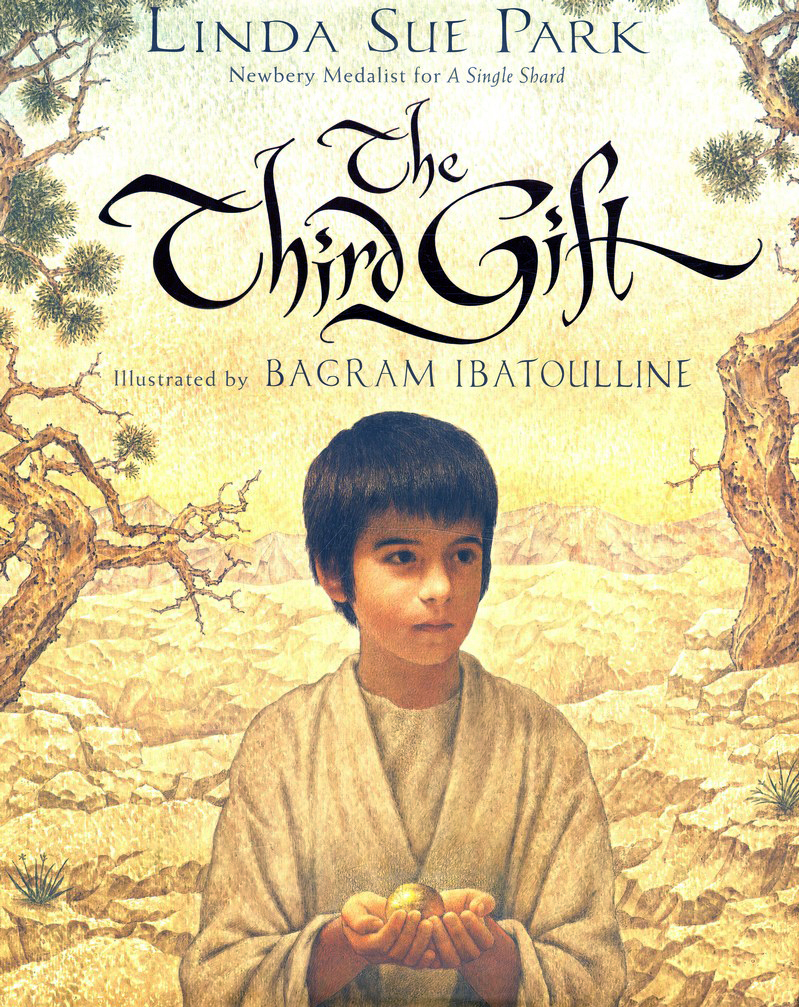
Several years ago, I checked out a book at the library to read to my kids. It turned out to be a delightful story of a young boy who helps his father harvest resin from trees in Arabia. The connection with Jesus’ birth is sort of a surprise twist at the end of the book, so if you read it to your kids, be sure not to give away that this is a Christmas story—they will get it by the time they reach the last page.

The book is entitled, The Third Gift, by Linda Sue Park (Boston: Clarion, 2011). The Third Gift was probably intended for ages 4-10 (best guess with input from my kids), but the beautiful illustrations (by Bagram Ibatoulline) and the Middle Eastern setting made it interesting for me as well, and it gives you a different perspective for thinking about a very familiar account from the book of Matthew. The “Author’s Note” on the last two pages summarizes the history of our modern perceptions about the biblical story, and re-connects the event with its original geographical and cultural setting. Recommended if you have young ones around for the holidays.

p.p1 {margin: 0.0px 0.0px 0.0px 0.0px; font: 11.0px Palatino}

Share:

Archaeologists have discovered a 5th-Dynasty tomb in Saqqara, Egypt, that has never been looted.

Excavations begin today. The photos are impressive.

A 4,500-year-old marble pillar that sat in the basement of the British Museum for 150 years has been revealed as the first recorded account of a conflict over a disputed border — and the earliest known instance of word play. The pillar is featured in an exhibit entitled, “No Man’s Land,” that runs through January.

The use of machine translation may open the door to deciphering more than half a million cuneiform tablets from Mesopotamia.

The Syrian Director General of Museums and Antiquities claims that the US is looting ancient tombs in northern Syria.

The November issue of the Newsletter of the Egyptian Ministry of Antiquities features stories on the latest archaeological discoveries, the transfer of antiquities to the new Grand Egyptian Museum, and cultural events.

All past issues of the “Archaeology in Jordan” Newsletter are now available online. The 2018 issue is also available here.

The new issue of Biblical Archaeology Review includes stories on the destruction of Azekah, an artificial tell in Arkansas, and excavation opportunities in 2019.

Students from all over the world, including Arab countries, have joined Aren Maeir’s MOOC on biblical archaeology.

The Institute of Biblical Culture will be offering two classes in January: Biblical Geography I and Early Biblical Interpreters I. They are also running a buy two, get one free special.

David Moster shares his experience at this year’s SBL conference with a 10-minute video.

The first in Ferrell’s Favorite Fotos series is of Babylon, taken in 1970.

HT: Agade, Ted Weis, Joseph Lauer, Chris McKinny, Keith Keyser

Share:

Archaeologists believe that a public bath excavated in Sepphoris may have been used by Rabbi Judah the Prince.

Archaeologists excavating at the Negev town of Shivta have found a lamp wick dating to the Byzantine period.

Kiriath Jearim has a large platform which must have been cultic and could only have been built by the northern kingdom of Israel. Or so says Israel Finkelstein. (Haaretz premium)

A total of 1,500 landmines have been cleared since the spring near the Jordan River baptismal location of Qasr al-Yahud.

Migdal Aphek, the Crusader castle also known as Mirabel, will soon be open to the public following conservation works.

Dennis Mizzi asks, “What does Qumran have to do with the Mediterranean?”

The Annual Conference on the Excavations of the Institute of Archaeology at the Hebrew University will be held on Thursday.

Israel’s Good Name reports on a university field trip to the Hebron area.

Biblical Byways has a couple of tours to Israel coming up, including a Spanish tour in April.

Tim Frank’s latest book, Household Food Storage in Ancient Israel and Judah, is now available in paperback and as an e-book.

The Lexham Geographic Commentary on the Gospels was chosen as the Best Book in Biblical Studies in Christianity Today’s 2019 book awards. You can read an excerpt about the birthplace of
Jesus here.

HT: Agade, Ted Weis, Joseph Lauer

Share: