Archaeologists have now finished a chronological mapping of Megiddo, with radiocarbon dates for the two dozen layers of habitation from the Early Bronze Age to the end of Iron II.

Archaeologists excavating a deep rock-hewn moat along the northern side of Jerusalem’s Old City walls have discovered a handprint carved into the stone.

Not all scholars agree that the name of David is on the Mesha Stele.

The Technion and the University of Haifa’s School of Archaeology and Maritime Cultures have launched a joint initiative to support cooperation between the two institutions in archaeological sciences, especially microarchaeological research.

“Benjamin Netanyahu reportedly promised King Abdullah II that the status quo on the Temple Mount in Jerusalem will be preserved.”

“Jerusalem’s Tower of David was never built to be accessible.” The Times of Israel gives the backstory on the ingenuity required to make the ancient fortress accessible to those with disabilities.

Chandler Collins writes about a significant geographical feature in Jerusalem that he calls the “Fortress Saddle.” This was the city’s most vulnerable area on its most vulnerable side.

The Mardigian Museum has opened in Jerusalem’s Armenian Quarter, documenting the community’s history and serving as a memorial to the Armenian Genocide.

“A riveting new exhibition, titled ‘Peace and War: The Assyrian Conquest of Lachish,’ will open on January 30 in the Lynn H. Wood Archaeology Museum on Southern Adventist University’s campus.” I’m not sure how much “peace” was involved in the Assyrian conquest.

Excavations at ancient Capitolias, a city of the Decapolis in modern Jordan, are shedding light on the production of glass in the Roman, Byzantine, and Umayyad periods.

A former director of the Citadel Museum in Amman, Jordan, was convicted of stealing 6,000 ancient coins and replacing them with forgeries.

Oded Lipschits will be giving a series of lectures in the UK in honor of the Anglo-Israel Archaeological Society’s Diamond Jubilee between February 20 and March 6. One of them will be online: “New Light on Jerusalem and its Surroundings during the Reign of King Manasseh,” on March 2. Registration required.

Preserving Bible Times has released The Bible: Its Land and Culture, Session 4, including Galilee aerial videos, cultural vignettes, and biblical culture.

Nathan Steinmeyer gives advice on finding the right archaeological dig to join. This is also the topic of an OnScript Biblical World podcast with Steinmeyer, Chris McKinny, and Kyle Keimer.

HT: Agade, Joseph Lauer, Arne Halbakken, Ted Weis, Explorator

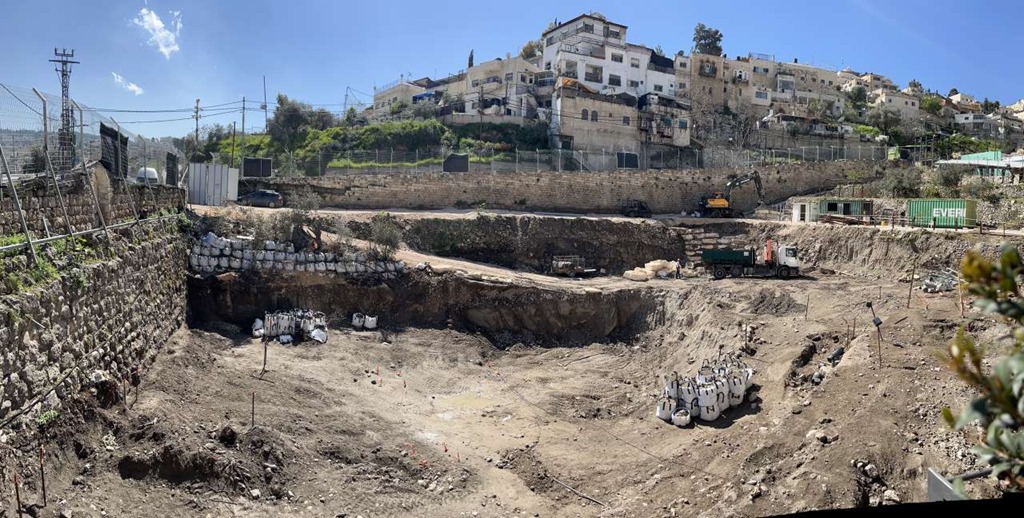
Pool of Siloam excavations Jan 2023

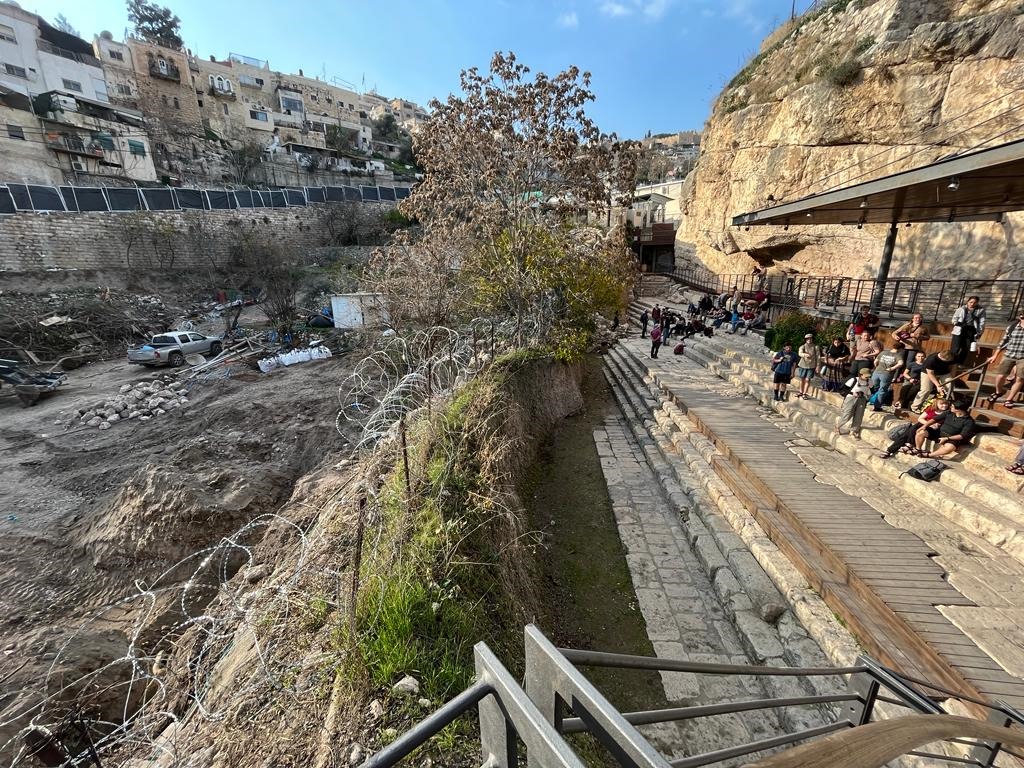
Pool of Siloam excavations Jan 2023b

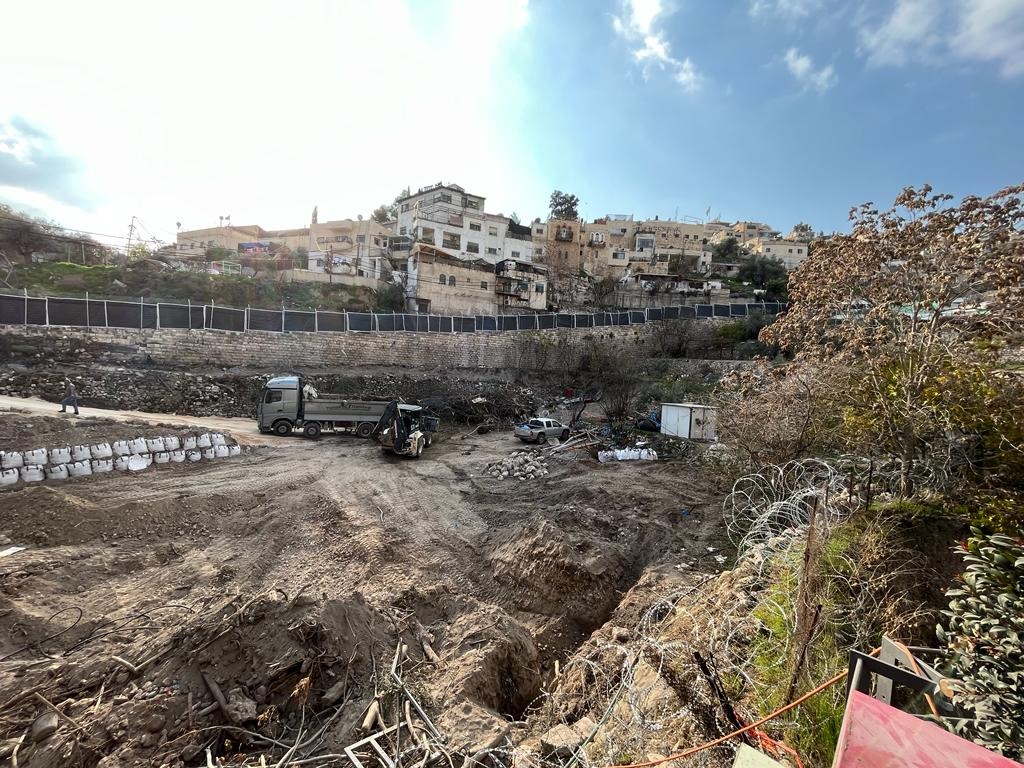
Excavations at the Pool of Siloam this week; photos by John Black

Share:

A new study confirms that the name of David is indeed written on the Mesha Stele.

Smithsonian Magazine profiles Michael Langlois, an unusual scholar who identified many “Dead Sea Scroll” forgeries in various private collections around the world. More recently he has confirmed the reading of “David” on the Mesha Stele.

A BAS Dig Scholarship recipient describes his experience excavating at Khirbat al-Balu’a, a Moabite site in Jordan.

Flashfloods in Petra caused the evacuation of 1,700 tourists and locals.

Egyptian archaeologists believe they have uncovered the tomb of a queen from the 18th dynasty in Luxor.

Ten mummified crocodiles were found in an Egyptian tomb.

Three men were arrested in Aswan for trying to steal a 10-ton statue of Ramses II.

“An ancient wooden sarcophagus that was featured at the Houston Museum of Natural Sciences was returned to Egypt.”

“There’s a good chance you were told ancient Egyptians pulled chunks of brains out through the nose. Experiments suggest there was a much easier way to do this: scrambling the brains.”

Middle East Eye posts several dozen interesting and annotated satellite images of Egypt.

In recent episodes on the GTI Tours Podcast, Jerrell Jobe discusses Egypt’s significance in Scripture, and Matt Bach identifies some “hidden gems” in Israel.

“As of March 2023, ‘Atiqot will become a thematic journal, publishing volumes dedicated to specific topics related to the archaeology of Israel from the protohistoric to Ottoman periods. The journal will be published in English only, both online (Open Access) and in print.” Themes of future issues include:

  • `Atiqot 112: Ancient Hoards, Caches, and Deposits
  • `Atiqot 113: The Archaeology of Purity and Impurity
  • `Atiqot 114 (March 2024): Wine and Drinking Habits in Antiquity
  • `Atiqot 115 (June 2024): Rural Life in the Southern Levant
  • `Atiqot 116 (September 2024): Cult and Religion
  • `Atiqot 117 (December 2024): Burials and Burial Practices

HT: Agade, Joseph Lauer, Arne Halbakken, Gordon Dickson, Ted Weis, Wayne Stiles, Mondo Gonzales, Alexander Schick, Charles Savelle, Keith Keyser, Explorator

Share:

“Accumulated disquiet among Israeli archaeologists over the widespread publication of sensational claims regarding ostensibly newly deciphered, once-in-a-lifetime biblical inscriptions in Jerusalem has spilled over into an open letter.”

A recent episode of This Week in the Ancient Near East discusses the way in which new alleged inscriptions in Hezekiah’s Tunnel were announced.

Israeli archaeologists discovered the oldest hoards of silver, attesting to its use as currency some centuries earlier than previously thought. The underlying journal article is here.

Excavations at Khirbat el-Masani revealed the remains of a Byzantine monk whose neck, hands, and feet bore heavy iron rings, perhaps as a symbol of his ascetic lifestyle.

“Newly uncovered remains of fabrics from the Far East dating to some 1,300 years ago in Israel’s Arava region suggest the existence of a previously unknown ‘Israeli Silk Road.’”

The United States has returned an 8th century BC cosmetic spoon, probably taken from the region of Hebron, to the Palestinian government. This the first such repatriation of an antiquity by the US to the Palestinian Authority.

The Palestinian Authority is apparently planning to construct homes on the area of the altar on Mount Ebal.

Walking The Text has begun a mini-series on Ruth, with a number of helpful maps and illustrations.

El-Araj, possibly Bethsaida, is the latest site featured in the “Digging In” series of the Biblical Archaeology. The article includes a 6-minute video taken on location.

Hybrid lecture on Jan 26: “Byzantine Bethsaida and the House of St. Peter,” by R. Steven Notley and Mordechai Aviam, at the Museum of the Bible.

New from Eisenbrauns: Yotvata: The Ze’ev Meshel Excavations (1974–1980) The Iron I “Fortress” and the Early Islamic Settlement, by Lily Singer-Avitz and Etan Ayalon

Aaron Demsky provides a extensive discussion of the location of Rachel’s tomb, concluding that it was near the border of Benjamin and Ephraim.

GTI Tours is offering a study tour specifically designed for those who have visited Israel before, with a variety of experiences most tourists don’t have.

The BAS Scholars Series includes four lectures, with a discount for purchase of all four:

  • Mar 5: “Holy City Hotspot: Exploring Jerusalem’s Acropolis,” with Andrew Lawler
  • June 4: “A Wise Woman and a Bearded Man: Ten Seasons of Excavation at Tel Abel Beth Maacah,” with Nava Panitz-Cohen
  • Sept 28: “Free Health Care Is a Miracle: Psalm 8, Jesus, and the Jerusalem Temple,” with Amy-Jill Levine
  • Dec 6: “The Life of Jesus Written in Stone: The Earliest Commemorative Churches in Roman Palestine,” with Jordan Ryan

HT: Agade, Joseph Lauer, Arne Halbakken, Gordon Dickson, Ted Weis, Wayne Stiles, Mondo Gonzales, Alexander Schick, Charles Savelle, Keith Keyser, Explorator

Share:

Christy Chapman and Brent Seales describe the technology that allows Dead Sea Scrolls to be read without even unwrapping them.

NY Times: “Prodded by law enforcement, and pushed by foreign governments, American museums are increasingly returning artifacts to countries of origin, but critics wonder at what cost.”

The inscribed ivory lice comb is the subject on the latest episode of This Week in the Ancient Near East.

Author Rod Dreher reflects on his visit to Turkey and the seven churches of Revelation.

Andrew Lawler will be speaking in the BAS Scholars Series on March 5 on “Holy City Hotspot: Exploring Jerusalem’s Acropolis” ($10).

Brad Nelson looks at the “Magi from the East” in the latest episode from Walking The Text’s Teaching Series.

BAS has posted its list of dig opportunities for 2023 in Israel, Jordan, and Turkey. They are also accepting applications for $2,000 dig scholarships.

Douglas Clark, Larry Herr, and Larry Geraty reflect on Burton MacDonald’s legacy.

Robert Mullins reflects on the life of Father Bill Broughton.

The Institute of Biblical Culture is giving away hundreds of books related to the Semitic languages.

Carl Rasmussen will be leading a 33-day Bible Study Tour to Israel, Jordan, Turkey, and Greece in April and May.

HT: Agade, Arne Halbakken, Ted Weis, Wayne Stiles, Charles Savelle, Keith Keyser, Gordon Dickson, Explorator

Share:

Archaeologists working in southeastern Turkey believe they have discovered the “oldest narrative depiction in history.”

The recent discovery of several dozen bronze statues in Italy may affect how historians understand the relationship between the Etruscans and the Romans.

ScienceDaily: “Using advanced geochemical analyses, a team of scientists has uncovered new answers to decades-old questions about trade of tin throughout Eurasia during the Late Bronze Age.”

Ruth Schuster has written a well-illustrated article about how the “desert kites” mystery was solved.

Archaeologists used LIDAR to discover a Roman temple underneath a church in Croatia.

A 17-minute video produced by the British Museum explains what the Rosetta Stone actually says.

Tim Johnson writes about his visit to Syracuse, the “greatest Greek city,” and one that Paul briefly visited on his way to Rome.

“A number of looted artefacts returned to Turkey and Italy in the past three months have been revealed to be from the private collection of prominent American philanthropist Shelby White.”

George Smith, best known for his work on the Epic of Gilgamesh, is the subject of the latest episode on the Thin End of the Wedge.

Some Roman centurions and gladiators have been arrested after they threatened to beat up tourists at the Colosseum.

Discussion on a agreement between the British Museum and Greece to send the Elgin Marbles to Athens is “at an advanced stage.”

HT: Agade, Arne Halbakken, Gordon Dickson, Keith Keyser, Explorator

Share:

Newly discovered Byzantine-era mosaics with four inscriptions have been discovered at Hippos. This Haaretz article by Ruth Schuster has many beautiful photos.

A new museum at the Armenian Monastery [in the Old City in Jerusalem] offers displays of stunning mosaics and artworks, artifacts and architecture, going back to Armenia’s 4th-century roots in the Holy Land.”

A Qumran cave will be opened to the public for the first time, with a path being created to lead from the site to Cave 61. (I do not have a link at this time.)

The search of a home of a man using a metal detector at an archaeological site revealed a trove of ancient coins including a rare coin of Antiochus Epiphanes.

Yonathan Adler suggests that “Judaism as we know it became a mass religion relatively late, possibly only when Judea was ruled by the Hasmonean dynasty” (subscription).

Michael Hasel is on The Book and the Spade discussing the ivory comb alphabetic inscription.

The program and abstracts for the 2022 ASOR meetings in Boston are online.

HT: Agade, Joseph Lauer, Arne Halbakken

Share: