The claims are grand, indeed:

A British excavation has struck archaeological gold with a discovery that may solve the mystery of where the Queen of Sheba of biblical legend derived her fabled treasures.

The archaeologist is claiming to have found a gold mine, a temple, and a battleground. The gold mine is the basis of the connection with Sheba, for 1 Kings 10:10 reports that the Queen of Sheba gave Solomon 120 talents [4.5 tons] of gold.

If you read on further, however, you learn that the gold mine has not been excavated. In fact, the entrance is blocked by stones. You won’t be surprised by what follows:

Schofield will begin a full excavation once she has the funds and hopes to establish the precise size of the mine. Tests by a gold prospector who alerted her to the mine show that it is extensive, with a proper shaft and tunnel big enough to walk along.

So somebody searching for gold has convinced an archaeologist to publicize her “discovery” in order to raise the money to dig for treasure.

Schofield found above the blocked mine a “20ft stone stele (or slab) carved with a sun and crescent moon, the ‘calling card of the land of Sheba.’” That’s a curious statement given that evidence for the ancient kingdom of Sheba is sparse and most scholars believe that it was located not in Ethiopia but in Yemen. I’d be interested to know more about this “calling card.”

The article says that Louise Schofield is “an archaeologist and former British Museum curator,” and credits her with the establishment of multinational rescue excavations in Turkey and an environmental development project in Ethiopia. The latter is being done by a charity that Schofield founded to help the poor develop a sustainable lifestyle. According to another website, Schofield “was for 13 years Curator of Greek Bronze Age and Geometric Antiquities at the British Museum, and was responsible for the Mycenaean collection.” She also authored The Mycenaeans.

If you wish to pursue the subject further, I’d recommend starting with this post at Paleojudaica and following the links. As of this writing, the story is only being reported by the Observer.

The screenshot below shows the area of the present discovery (Maikado) along with the location of Marib, another candidate for the capital of ancient Sheba.

sheba-possible-locations

Possible locations of Sheba in relation to Jerusalem
Share:

Aren Maeir provides links to grants for volunteer excavators.

Maeir also lists nine sites in the Shephelah that will be under excavation as of this summer: Azekah,
Beth Shemesh, Burna, Eton, Gath, Gezer, Qeiyafa, Socoh, and Zayit. That bodes well for the future of this blog.

Robert Mullins will begin a new excavation this summer for Azusa Pacific University at Abel Beth 
Maacah. Mullins will also be lecturing on March 19 in Beverly Hills on “The Many Temples of Beth Shean.”

If you’ve ever wondered what that palatial structure atop Mount Gerizim is, Tom Powers has found the answer.

Daniel Wallace says that the first New Testament manuscript from the first century has been discovered.

Wayne Stiles: “Like so many great cities of yesteryear, Tel Samaria remains a testimony of all earthly glory. The only beauty that remains is what God put there to begin with.”

Leen Ritmeyer recalls the discovery of the Burnt House in the Jewish Quarter of Jerusalem.

Jodi Magness is interviewed on the Book and the Spade radio program (mp3 links: part 1, part 2).

LA Times: “The Israeli government is gradually releasing its National Photo Collection from copyright restrictions.”

The Jerusalem Post recommends the top 5 nature spots in the city.

The ASOR Blog surveys the latest in archaeology from around the world.

HT: G. M. Grena, Daniel Frese, Joseph Lauer

Abel Beth Maacah from southwest, tb040903201

Abel Beth Maacah from the southwest
Share:

Attempts to sensationalize this story by connecting it to the prophet Jonah should not be allowed to obscure the significance of a fortress recently uncovered in Ashdod. The Israel Antiquities Authority (IAA) press release blows it on all things “Jonah.”

At ‘Giv’at Yonah’, in Ashdod, Archaeological Finds were Uncovered that Verify the Existence of Life there at the Time of Jonah the Prophet
The foundation of a large fortress that was situated there during the First Temple period was exposed in an excavation the Israel Antiquities Authority conducted with funding provided by Hofit – Ashdod Development & Tourism Company, Ltd.
At ‘Giv’at Yonah’ (the Hill of Jonah) in Ashdod, which according to various traditions is identified with the burial place of the prophet Jonah, archaeological finds were exposed that verify the existence of life there during the First Temple period, at the time of this prophet.
In a trial archaeological excavation the Israel Antiquities Authority carried out on ‘Giv’at Yonah’ in Ashdod prior to development work by Hofit –Ashdod Development & Tourism Company, Ltd. remains of massive walls more than 1 m wide were found that are dated to the late eighth century and early seventh century BCE.
In the estimation of the excavation director, Dmitri Egorov, of the Israel Antiquities Authority, these walls constituted the base of a large building from the First Temple period, the time when Jonah the prophet was active, who lived in the eighth century BCE and was famous for having been swallowed by a fish after he refused to “go to Nineveh…and proclaim against it” (Jonah 1:2).

One can understand why a news organization would try to hype this discovery and in the process distort the data, but it is disturbing that a scientific governmental organization such as the IAA would fail to get basic historical and geographical facts right.

1. The IAA gets the chronology wrong. Jonah was a prophet in the first half of the 8th century, during the reign of Jeroboam II (793-753 BC). This fortress dates to the late 8th and early 7th centuries.

Thus the claim made in the headline and throughout the story is false. This should be clear later in the press release when the district archaeologist states that the fortress belonged either to the Assyrians or to the Judean king Josiah (640-609 BC).

2. The IAA gets the geography wrong. Jonah was a prophet in the northern kingdom, from the Galilean city of Gath-hepher (2 Kgs 14:25). He fled on a ship via the port at Joppa. There is no
evidence that he ever traveled to Judah or to the territory then controlled by the Philistines.

3. The IAA fails to note the value of the “various traditions” that identify the site as the “Hill of Jonah.” There is no Jewish or Christian tradition that Jonah was buried here. Only a decade ago did
“Atra Kadisha” identify it as the tomb of Jonah. It is relevant that the purpose of Atra Kadisha is to prevent the excavation of ancient Jewish tombs. The Atra Kadisha declaration follows a Muslim tradition, which is much too late to be taken as having historic value.

What is important in this story is the discovery of a fortress apparently from the time of Hezekiah when the Philistines were caught in a bit of a tug of war between Judah and the Assyrians. For more details, see Sennacherib’s Siege of Jerusalem in Context of Scripture 2.119B.

DSCN4502

Excavations of Iron Age fortress at Givat Yona. Photo by IAA.
Share:

Scientists have discovered evidence for cultivation of three of the “four species” of Sukkot in the plaster of walls at Ramat Rahel.

A model of the Temple Mount made by Conrad Schick in 1872 will be on display next week in the new Heritage Center of Christ Church, Jerusalem.

Leen Ritmeyer has notice of a program to be held on the 20th anniversary of Nahman Avigad’s death.

Yosef Garfinkel is pretty upset with Rami Arav’s review of the first excavation report of Khirbet
Qeiyafa. [Update: The post has been removed. See comment below for detail.]

The world’s largest Israeli flag is now flying over Nazareth Illit.

Joe Yudin suggests visiting some sites from King David’s life when the wildflowers are blooming.

The 50th anniversary of the publication of The Dead Sea Scrolls in English, by Geza Vermes, was celebrated last week at Wolfson College.

Bedouin gunmen in Sinai kidnapped two US tourists traveling from Jebel Musa. They were released when Egyptian police set free four Bedouin who had been in custody.

The first snowfall in Rome in 26 years kept visitors out of the Colosseum, the Forum, and Palatine Hill.

HT: Jack Sasson

UPDATE (2/7): At the request of the sponsors, I’ve removed the link to the invitation to the (private)
presentation at Christ Church.

Ramat Rahel mikveh, tb031905812

Mikveh with plastered walls at Ramat Rahel
Share:

Looking back over the year is a profitable exercise for me personally because I forget so much and so quickly. Perhaps it is the volume of information coming from all corners of the globe that trains the mind to retain very little. A review of the posts here over the past year reminds us of recent history
but it also allows us to judge what was more important and what was less.

I have compiled several lists of “top stories.” Today we will review major discoveries, top technology-related stories, and losses. Tomorrow we will survey significant stories, noteworthy posts, and favorite resources of the year.

I do not deny that what is judged “top” in these reviews may tell the reader more about us than it does about the world of biblical archaeology. These lists are entirely subjective, and since they are based on what we decided to post (and not to ignore), they are doubly subjective. The primary criteria for selection was that the story was posted on this blog and then it caught my eye when I reviewed the year’s stories. The lists follow a roughly chronological order.

Top Discoveries of 2011:

Jerusalem Water Channel (and here and here and here and here)

Ossuary of Caiaphas’ Granddaughter Recovered

Lion Statue Found at Tell Tayinat, Turkey

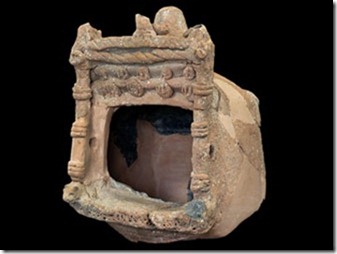
Philistine Two-Horned Altar from Tell es-Safi (and here)

Golden Bell Discovered in Jerusalem and Recording Released 

Ancient Sabbath Boundary Inscription in Galilee (and here)

Hercules Statue Discovered in Jezreel Valley

Roman Sword and Menorah Depiction Found in Jerusalem

Largest Mosaic Discovered in Antioch

Mikveh Discovered near Biblical Zorah

Western Wall Discovery: IAA Desperate for Headlines (and here)

Mysterious Marks in the City of David (and here)


Top Technology-Related Stories of 2011:

Archaeology in Saudi Arabia with Google Earth

X-ray Vision for Archaeologists: The “Multi-PAM” Tool

Kinect Game System To Be Used in Jordan Excavation

Five Dead Sea Scrolls Online in High Resolution

InscriptiFact: A Better Way To Read Inscriptions (and here)
 

Losses:

Anson F. Rainey (and here)

Joseph Naveh

Giovanni Pettinato

image

Ossuary of Caiaphas’ Granddaughter
Photo by Boaz Zissu, Bar-Ilan University
Share:

Over the years I’ve mentioned the excavation at the “back” of the Western Wall prayer plaza. The latest issue of Biblical Archaeology Review has a report by the excavators on their discoveries at the site from 2005 to 2010. Since I expect some curious student to ask me in a couple of days about the big hole in the ground, the article arrived at a good time for me. I made a few notes as I read the article that I thought I’d share here.

The earliest remains at this spot indicate that it was used as an Iron Age quarry.

Later in the Iron Age, a four-room house was constructed here. This was a Jerusalemite’s home sometime after Hezekiah fortified the Western Hill with a new wall (part of which is known today as the “Broad Wall.”) The house may have been destroyed by the Babylonian assault in 586, but this is not certain. Several personal seals were found in the building, including one depicting an Assyrian-style archer.

Curiously, there is no evidence of occupation at the site in the Babylonian, Persian, or Hasmonean periods (586-50 BC).

In the New Testament period, the Lower Aqueduct ran through this area, bringing water from
“Solomon’s Pools” to the Temple Mount. The only other discovery from the 1st century was a ritual bath (mikveh).

The most impressive remains at the site are that of a monumental street. This cardo is similar in size and design to its counterpart to the west, located today in the heart of the Jewish Quarter, but the archaeologists say that the eastern cardo was constructed in the Roman period by Hadrian (whereas the southern extension of the western was built by Justinian c. 530).

All the details are presented in a much more interesting style in the January/February 2012 issue of Biblical Archaeology Review. The article, with all of its illustrations, is currently available online, no subscription required.

 
(Yellow box = present excavations; red box = Byzantine Valley Cardo previously revealed)

Western Wall plaza excavations, tb051908178

Western Wall prayer plaza with excavations, May 2008
Share: