The Shephelah, or western foothills of Judah, is an ideal site for excavations because of

1) its rich history;

2) its close proximity to universities in both Tel Aviv and Jerusalem; and

3) its moderate climate.  There’s enough work to be done in the Shephelah alone to occupy every archaeologist working in Israel for the next 100 years.

Tel  Aviv University has been approved to renew excavations at Azekah.  Though it is one of the most important sites in the Shephelah, it has only been excavated by Robert Alexander Stuart Macalister in a brief dig more than 100 years ago.  Among other things, Azekah is mentioned in the Bible as near the place of the Philistine encampment when David defeated Goliath.  It was one of the last two cities holding out against Nebuchadnezzar in 586 B.C. (see Jeremiah 34:6-7 and Lachish Letter #4).  There are undoubtedly a lot of goodies buried under that pile of dirt.
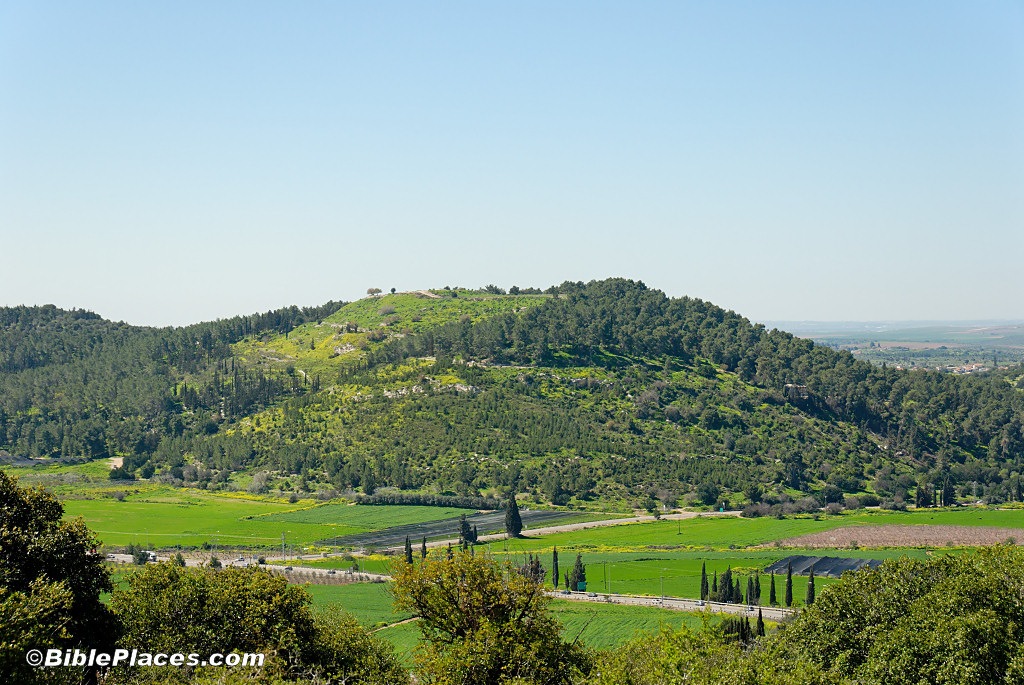
Azekah from northeast, tb030407700
Azekah from the northeast

Bar Ilan University has been excavating Tel ‘Eton/Tell Aitun under the direction of Avi Faust.  This year was their third season of excavation and they are finding a destruction level as well as a fortress in the style of a four-room house, only larger. The destruction level seems to pre-date Sennacherib’s 701 campaign because pottery is transition form between Lachish III and IV; but also not likely to be Sargon II’s 712/711 campaign since it appears he only visited cities on the coastal plain. Scholars have suggested that the site is biblical Eglon (for more on that, see The Sacred Bridge, 128). The website is viewable in MS Internet Explorer, but not Firefox.
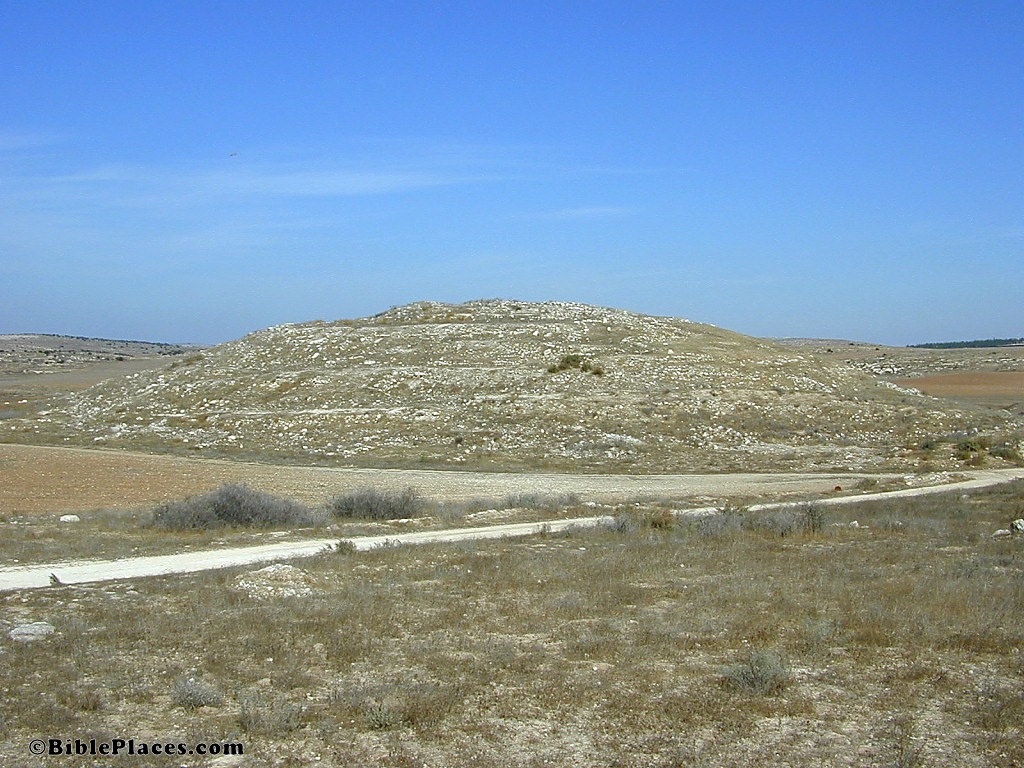
 Tell Aitun, possibly Eglon, from south, tb102900331
Tel ‘Eton, possibly biblical Eglon, from south

Khirbet Qeiyafa, located directly east of Azekah, is being excavated by Yosi Garfinkel of Hebrew University.  They found a four-chambered gate dating to the 10th century B.C. with a casemate wall and two attached buildings. There was no previous occupation and the nearest subsequent occupation is Hellenistic, so it is virtually a single-period site for Iron IIA. They also found an ostracon (inscribed potsherd) with about 4-5 lines of writing, the contents of which are apparently more sensitive than Israel’s plans to bomb Iran.  (This is a good reminder to thank those archaeologists who are quick to share their discoveries with all of their supporters.)  The ostracon will be published by Misgav.

Share:

A guy discovers a ship 10,000 feet underwater that was sunk 60 years ago – without ever leaving his computer!  Wetherby News has the fascinating story and some potential benefits to archaeologists.  A previous article was in the Times Online.

The Israel Antiquities Authority has posted a 7-minute movie about the discovery of the Dead Sea Scrolls.

Worldmapper.org has quite a selection of interesting (modern) maps.

HT: Joe Lauer

Share:

From Arutz-7:

Archaeologists have discovered three 9,000-year-old skulls at the Yiftah’el dig in the Lower Galilee, the Israel Antiquities Authority announced Wednesday. Experts said the placement of the skulls confirms the worship of ancestors from during that time, practiced by displaying skulls inside houses. The skulls were apparently placed on benches in a house where they would inspire the younger generation to continue in the ways of their forefathers. A similar custom was also identified in Syria, Turkey and Jordan. The skulls are 8,000-9,000 years old and were buried in a pit adjacent to an excavated large public building. They were discovered during excavations for a new highway interchange at the Movil Junction, a major intersection. “The skulls were found plastered – that is to say sculpted – which is a phenomenon that is identified with the New Stone Age,” said site director Dr. Hamoudi Khalaily. “The practice included the reconstruction of all of the facial features of the deceased by means of sculpting the skull with a variety of materials such as plaster that was specifically intended for this. On the skulls that were found in the excavation the nose was entirely reconstructed.”

The story continues here.

Share:

A Roman temple from the 2nd century A.D. has been excavated at Sepphoris.  The temple was about 40 by 80 feet (12 x 24 m) and its facade faced the decumanus, the main east-west street of the city.  A church was later built over the temple.  The story is reported by ScienceDaily, Physorg, and the Jerusalem Post.  The first two links each have a photo.

Zondervan Academic has a new blog and they have, among other things, links to the online programs for the national meetings of AAR, ETS, and SBL.  I also liked John Walton’s post on bad things people do in teaching children the Bible

The JPost has a short article about “Genesis Land,” a tourist site that recreates patriarchal life midway between Jerusalem and Jericho.

Some people know General Charles Gordon because of his work in China and Sudan, and others for his popularization of “Gordon’s Calvary” or the Garden Tomb.  NPR has a five-part series on China and Sudan, in which Gordon’s influence is discussed in part one.

Share:

A “very formidable and rare olive press” was discovered recently in Western Galilee.  It is one of the largest known from Israel and dates to the 6th-7th centuries A.D.  From the Israel Antiquities Authority:

A unique and impressive complex for producing oil that dates to the Byzantine period, which is also one of the largest uncovered in the country so far, was discovered recently during trial excavations conducted by the Israel Antiquities Authority in Moshav Ahihud, in the Western Galilee. The excavations are being carried out as part of a development plan to enlarge the village….
In the middle of the building a central crushing mill (a large round stone) was uncovered upon which a millstone (referred to as a memel) was placed. It was customary to harness an animal to the axle of the millstone which would turn the stone and thereby crush the olives.
After crushing and breaking them, the olive pulp was brought for pressing in aqalim (baskets woven of coarse fabric or ropes). The aqalim were squeezed in a press and the olive oil was extracted as a result of this action. The baskets served as a filter whereby the liquid dripped out leaving the pits and pulp waste behind in the baskets. 
Three screw type press beds and a stone weight that was originally connected to the end of a. beam were revealed at the site.

The rest of the story, and photographs, are here.

HT: Joe Lauer

Share:

Haaretz is reporting on the discovery of a hoard of coins at a site three miles south of ancient Jerusalem.

A few days ago, archaeologists made a most surprising find at the bottom of such a columbarium, at a site at Kibbutz Ramat Rachel near Jerusalem – a hoard of coins from the time of the destruction of the Second Temple (70 C.E.).
Late in July, archaeologists from Tel Aviv University identified, beneath the floor of the columbarium, a ceramic cooking pot from the 1st century C.E. that held 15 large gold coins. “It’s very special to find a hoard like this, and it’s very exciting,” related the director of the excavations at the site, Dr. Oded Lipschits, of TAU. “We discovered the hoard with a metal detector, and then we went down into the niche and found this small cooking pot inside it.”
What was a pot holding coins doing at the bottom of a cave used for raising pigeons? According to Lipschits, the pot was covered up in a way that indicates that it had been concealed in a hurry. “We know that coins like these were brought to the Temple,” he says. “Possibly after the Temple was destroyed there was no place to bring the coins, and since the columbarium was no longer in use, they buried the coins here. This arouses sad thoughts as we approach Tisha B’Av,” he added, referring to the Hebrew date (the ninth of Av) that traditionally marks the destruction of both the First and Second Temples.

For photos, see the Hebrew version of the article. (HT: Joe Lauer).

Unrelated to the coin discovery is discussion of the function of the building that has previously been identified as a palace of the Judean kings (something akin to Camp David in the U.S.). 

Lipschits says that one of the aims of the current dig is to clarify the purpose of this structure. “The accepted claim is that it is a palace of the kings of Judea, but I’m dubious of that. The palace lacks any Judean characteristics, and there is no reason that a royal palace would have been built here, when the City of David is not far away.”
Lipschits believes that the palace was built during the period of the Assyrian subjugation. “This entire complex is, in my opinion, an administrative center for the occupying regime, a place where agricultural produce was collected, for delivery as a tax to the Assyrians.”
During the period of the return to Zion (beginning 539 B.C.E.), the Assyrian regime was replaced by a Persian one, but the administrative center continued to operate. Many seal impressions from this period have been found, bearing the name “Pahwat Yahud,” the name of the country under this regime. The Ramat Rachel excavation is is the main accumulation in the country of impressions of this sort, and Lipschits sees this as further proof that the site was an administrative center.

There’s some confusion about this elsewhere, but I think the journalist has it correct.  What Lipschits is suggesting, contrary to his predecessors (Aharoni, Yadin, and Barkay) is that the palace was an Assyrian center, following the time of the Assyrian subjugation of Judah under Hezekiah.  While most would agree that Assyria maintained some sort of control over Judah for about 50 years after Sennacherib’s failed attempt to conquer Jerusalem, Lipschits goes farther in claiming that Ramat Rahel was an on-site command post for Assyria.  Here’s a brief summary of archaeologists’ conclusions about this important and beautiful building:

  • Yohanan Aharoni: Palace of Judean king Jehoiakim (cf. Jeremiah 22); ca. 600 B.C.
  • Yigael Yadin (never missing an opportunity to disagree with YA):  Palace of Judean queen Athaliah; ca. 840 B.C.
  • Gabriel Barkay: Palace of Judean king Hezekiah; ca. 700 B.C. (possibly built, destroyed, and rebuilt during his reign)
  • Nadav Na’aman and Oded Lipschits: Assyrian headquarters in Judah; ca. 700 B.C.

If you’re interested in more, you can start with the article by Barkay in Biblical Archaeology Review, Sept/Oct 2006, pp. 34-44.

Share: