Scholars at UNI Graz claim that a 3rd century BC papyrus has evidence of a binding, making it the oldest book in the world discovered. The press release is in German, but the video of the press conference is partly in English. Brent Nongbri offers some thoughts.

A network of stone walls along the Nile River provide evidence of ancient hydraulic engineering.

“A team of computer scientists and archaeologists from the University of Bologna in Italy has developed a new tool for identifying archaeological sites using artificial intelligence … [which] reached a predictive accuracy of over 80 percent.”

“A team of archaeologists and computer scientists from Israel has created an AI-powered translation program for ancient Akkadian cuneiform, allowing tens of thousands of already digitized tablets to be translated into English instantaneously.”

The square in Rome where Julius Caesar was assassinated has been opened to the public.

Renovations of the Carthage Museum will begin in 2025 and expand the exhibition space to three times the current size.

The book of Esther’s independence from classical sources makes it “more important as a historical source for Achaemenian history than has traditionally been assumed.”

“An ancient Hebrew Bible and more than 100 Roman coins were recovered by Turkish military police.” The photo with the article is not the seized manuscript.

New release: A Jew in the Roman Bathhouse: Cultural Interaction in the Ancient Mediterranean, by Yaron Z. Eliav (Princeton University Press, $45; save 30% with code P321).

New release: Wounded Tigris: A River Journey Through the Cradle of Civilization, by Leon McCarron (Simon & Schuster, $29)

New release: Famine and Feast in Ancient Egypt, by Ellen Morris (75 pages, Cambridge University Press, $22; free download until July 3).

In the latest episode of Thin End of the Wedge, Agnès Garcia-Ventura discusses the historiography of Assyriology.

Mark Janzen is guest on The Book and the Spade discussing the historicity of Moses.

Now that the Plutonium at Hierapolis (aka the gate to Hades) is open, Carl Rasmussen shares photos and explains what you are looking at and how the ancient rites were carried out.

HT: Agade, Alexander Schick

The worst experience in Jerusalem is walking through the drainage channel under the Siloam street. Unless you’re under 5 feet tall.

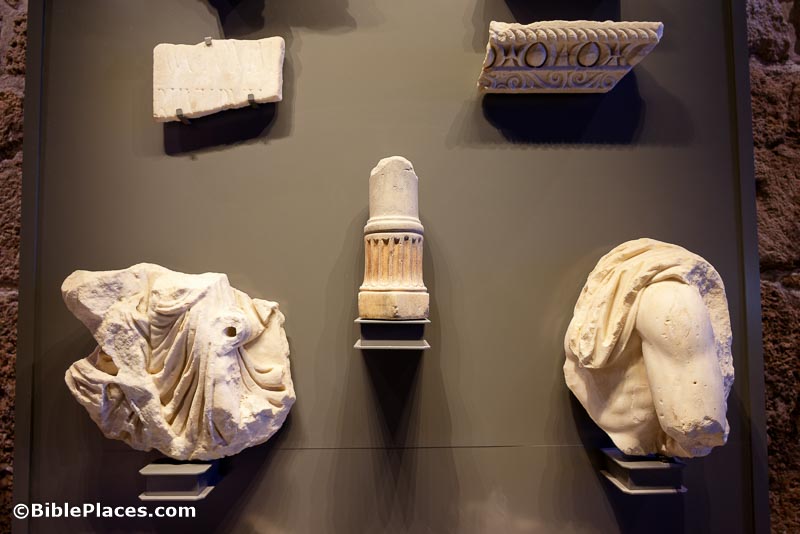
Excavations in the Sarachane Archaeology Park in Istanbul uncovered a fragment of a statue of the Greek god Pan holding a flute.

Turkish Archaeological News rounds up the top stories in the month of May, including mention of three new museums to open in Kuşadası (ancient Ephesus)

Writing for Religion Unplugged, Kim Lawton reports on her recent travels to the seven churches of Revelation. She interviewed me as part of her research.

The Christian Post has a feature on places in Turkey related to the apostle Paul.

A retired garbage collector helped uncover two dozen bronze statues in central Italy.

Three more victims of the Vesuvius eruption were discovered recently at Pompeii.

The National Archaeological Museum of Naples will be opening a new branch in the city to display more of its collection.

Stephen DeCasien investigates the development of the naval ram in early maritime warfare.

Katerina Velentza describes her project to “interpret anew where, when, why and how sculptures were transported by sea in the ancient Mediterranean world.”

New video from the British Museum: “How the Greco-Persian Wars changed the way Athenians drank their wine” (16 min).

Terry Madenholm investigates how the ancient Greeks and Romans viewed suicide.

“Last week the American Academy in Rome launched a major update to the Arthur & Janet C. Ross Library’s Digital Humanities Center, giving the repository a new look and feel while increasing access to the collections and their research value in several important ways.” This resource is easily searchable, especially by location, with lots of old photos.

HT: Agade, Joseph Lauer, Arne Halbakken, Ted Weis, Stephanie Durruty, Wayne Stiles, Alexander Schick, Gordon Franz, Explorator

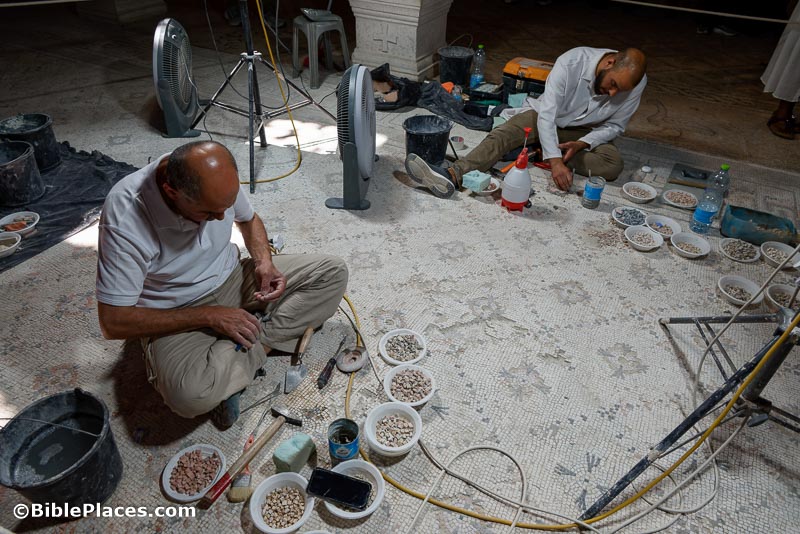
The Lod Mosaic Museum protects a beautiful Roman-era mosaic, but I think it’s unlikely to get many visitors, especially with the $10 entrance fee.

Zohar Amar believes that the best candidate for the balm of Gilead is resin from the Atlantic pistachio tree.

The latest video from Expedition Bible is “Peniel: Where Jacob saw the Face of God and lived.”

“The oldest known to-scale architectural plans recorded in human history” are engravings of desert kites discovered in Jordan and Saudi Arabia. More than 6,000 desert kites have been discovered in the Middle East and Asia to date.

Archaeologists discovered rare copper ingots from the Early Bronze Age in Oman.

Egyptian archaeologists have discovered two embalming facilities at Saqqara.

“Archaeologists offer a new explanation for one of the century’s grislier finds, ‘a carefully gathered collection of hands’ in a 3,500-year-old temple” in Avaris.

“Egyptian conservationists are racing to save ancient relics buried with some of Cairo’s most renowned residents as bulldozers flatten parts of a vast cemetery that houses forgotten kings.”

Jerusalem Post: “Many people died after visiting King Tut’s tomb in Egypt. What exactly happened, and how does it involve the Aspergillus fungus?”

A couple of scholars have recently tried to identify all the birds in the Green Room of Akhenaten’s palace in Amarna.

Egypt has barred the National Museum of Antiquities (RMO) in Leiden from carrying out excavations in the famous Egyptian necropolis Sakkara. The country accused the Dutch museum of “falsifying history” with the “Afrocentric” approach to the RMO exhibition Kemet: Egypt in hip-hop, jazz, soul & funk.”

New release (open access): Egypt and the Mediterranean World from the Late Fourth through the Third Millennium BCE, edited by Karin Sowada and Matthew J. Adams

New release: Life and the Afterlife: Ancient Egyptian Art from the Senusret Collection, edited by Melinda Hartwig (open access; click on right sidebar for pdf download)

New release: ‘To Aleppo gone …’: Essays in honour of Jonathan N. Tubb, edited by Irving Finkel, J.A. Fraser, and St John Simpson (Archaeopress, £16–45)

The Ideas podcast reflects on “the many afterlives of the Queen of Sheba.”

Eckart Frahm is guest on Thin End of the Wedge discussing his new history of Assyria. Also, YaleNews has a brief interview with him about the book. 

A new video retraces the journey of Joseph-Philibert Girault de Prangey, perhaps the earliest photographer of the eastern Mediterranean.

Two pillars used to decipher the Phoenician script are reunited for the first time in 240 years in an exhibition in Abu Dhabi.

Zoom lecture on June 15: “Home and Away: Studying the Deportations to and from the Southern Levant during the Age of the Neo-Assyrian and the Neo-Babylonian Empires,” by Ido Koch

Jaromir Malek, Egyptologist and creator of the Tutankhamun Archive, died recently.

HT: Agade, Joseph Lauer, Arne Halbakken, Ted Weis, Stephanie Durruty, Wayne Stiles, Alexander Schick, Gordon Franz, Explorator

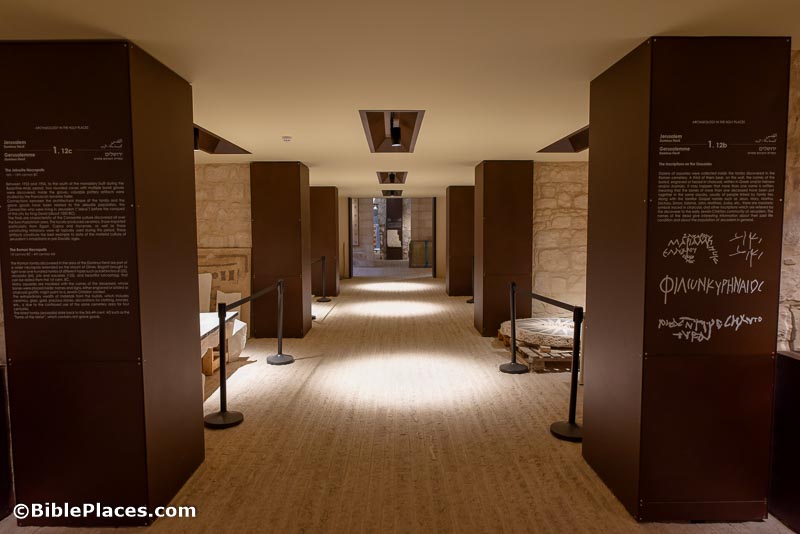
The newly renovated Davidson Center in Jerusalem displays dozens of finds related to the Temple Mount, including these steps from the staircase over Robinson’s Arch.

Gabriel Barkay was recently interviewed by ICEJ. Among other things, he says that he recently finished a book about material culture in the Song of Songs.

Gordon Franz is the latest subject in the Discussions with the Diggers series at Bible Archaeology Report. He relates the story of the discovery of the Ketef Hinnom silver amulets.

Chandler Collins has published the third issue of his “Jerusalem Tracker” newsletter, providing a list of every new publication related to Jerusalem’s history.

Bryan Windle describes the top three reports in biblical archaeology in the month of May.

The first batch of commercially available ancient yeast, discovered at Goliath’s hometown of Gath, will begin shipping later this year.

Chemical analysis of Middle Bronze grave goods at Megiddo reveals the extensive use of wine in funerary rituals.

Arleta Kowalewska and Craig A. Harvey explain what we know about Roman bathhouses in the southern Levant.

“Dor Zlekha Levy’s One Tongue audiovisual project revives Proto-Semitic, the ancestral language of Hebrew and Arabic, in song.”

Hybrid lecture on June 22 at the Albright: “The 2022 Season of the Megiddo Expedition,” by Matthew J. Adams

Hybrid lecture on July 13 at the Albright: “Back to Tell Qasile: Current Research of Old Excavations,” by Amihai Mazar

Arieh O’Sullivan tells the story of his family’s relationship with Samson’s tomb and the tomb’s transformation in recent years.

The latest episode from Walking The Text: “Jesus in Galilee, Part 3: Religious Jews of the (Evangelical) Triangle.”

“Lessons from the Land: The Kings” is the latest series produced by Appian Media. The 13 episodes are about 5 minutes each.

HT: Agade, Joseph Lauer, Arne Halbakken, Ted Weis, Stephanie Durruty, Wayne Stiles, Alexander Schick, Explorator

Nearly a century after the Americans dismantled half of the Solomonic gate, the Israelis have restored it. Now visitors can walk through the six-chambered gate as they can at Hazor and Gezer.

“Researchers found traces of dysentery-causing parasites in material excavated from the cesspits below the two stone toilets that would have belonged to elite households” in Jerusalem. The underlying journal article is here.

A recreational swimmer discovered a shipwreck that included a cargo of 44 tons of marble blocks headed to the Roman port of Ashkelon or Gaza for an elite building project.

A 1st-century receipt was discovered in a 19th century excavation tunnel in Jerusalem.

“Tiny bones from prehistoric birds found at a birdwatching site in northern Israel have been identified as 12,000-year-old flutes.”

The “curse tablet” from Mt. Ebal has been published, but early reactions to the claims are not positive. The journal article is here.

Andy Cook has returned to the Pool of Siloam to give an update on why they haven’t discovered any more remains of the pool.

Carl Rasmussen writes about a new area in Caesarea being billed as the prison of Paul. Carl notes his misgivings with the identification.

In a recent article, Nadav Na’aman argues that the original center of Jerusalem was on the Temple Mount, not in the City of David. Haaretz provides a summary of the Tel Aviv journal article which is available to subscribers. (In my experience, Na’aman is quite good at being provocative but less good at being persuasive.)

Robert Mullins considers the implications of discovering the name of “Benyaw” inscribed on a storejar found at Abel Beth Maacah.

Chandler Collins raises questions about the hypothesis that Jerusalem’s population exploded because a mass of Israelite refugees arrived in the late 8th century BC.

Haaretz premium: “In Israel, everyone wants to excavate – from foreign volunteers to youth groups. But many archaeology experts, warning of damaged sites, now believe it’s time to slow down and focus on what’s already been unearthed.”

The summer issue of Biblical Archaeology Review includes stories on David and Solomon’s “invisible kingdom,” the lost treasures of the First Temple, and the Amorites.

HT: Agade, Joseph Lauer, Arne Halbakken, Ted Weis, Stephanie Durruty, Wayne Stiles, Alexander Schick, Gordon Franz, Explorator

The bulldozers working in the Pool of Siloam left this section for the archaeologists to carefully excavate. So far, no additional remains of the pool’s architecture have been discovered in this year’s work.

“Researchers at Tel Aviv University (TAU) and Ariel University have developed an artificial intelligence model that can automatically translate Akkadian text written in cuneiform into English.”

A 2nd-century AD statue of Buddha discovered in the Egyptian port city of Berenike is helping scholars to understand ancient trade routes between India and Rome.

“Anemia was found to be common amongst children in ancient Egypt, following analyzation of child mummies found in different museums in Europe.”

The Greek Reporter has an update on excavations at Smyrna (Izmir).

Turkish Archaeological News has a roundup of stories for the month of April.

“Crete is showcasing its rich ancient history with three new archeological museums at Messara, Agios Nikolaos and Archanes.”

“An ancient Greek settlement dating back 2,500 years was discovered beneath Naples, Italy by using cosmic rays and lasers.”

“A meticulously reconstructed Pompeii bridal chariot that eluded the ancient city’s modern-day looters is a star of an ambitious new exhibition in Rome.”

“The Colosseum [in Rome] was built to commemorate the sacking and destruction of Jerusalem, and was funded by loot stolen from the ancient Jewish Temple in Jerusalem.”

Tourists will soon be able to travel to Pompeii via a high-speed train from Rome.

“In the Roman world, although the rule of the sea was a complicated matter, and the sea itself appeared as an uncivilised, untamed wilderness, Roman law was able to provide practical solutions to deal with real-life sea problems.”

In response to controversy over Netflix’s upcoming documentary series on Cleopatra, Egypt’s leading media production company is planning to create its own documentary.

New release: The Seven Wonders of the Ancient World: Science, Engineering and Technology, by Michael Denis Higgins (Oxford Academic, 360 pages, $35; Amazon)

New release: Ancient Persia and the Book of Esther: Achaemenid Court Culture in the Hebrew Bible, by Lloyd Llewellyn-Jones (Bloomsbury, 280 pages, $31; Amazon)

New exhibit at The British Museum: “Luxury and Power: Persia to Greece.” May 4 to August 13.

I’ll be traveling for the coming weeks, so there will not be another roundup until June. I hope to be able to post a book review or other update in the meantime.

HT: Ted Weis, Explorator, Arne Halbakken, Keith Keyser, Explorator