Scholars have long wondered if an Amorite language existed, until the discovery of two tablets written at least partially in the language.

“An archeological site at Girsu, in modern-day south-central Iraq, a major city in the ancient Mesopotamian civilization of Sumer, has been unearthed revealing a palace and a temple that date back over 4000 years.”

Egyptian police discovered a fake tomb created to defraud antiquities traffickers.

Kim Phillips addresses questions of what’s real and what’s hype in the sale of Codex Sassoon.

Eric Cline explains how the recently discovered evidence of a drought in 1198-1196 adds to our knowledge of the collapse of the Hittite Empire and other societies.

France 24 shows drone footage of the earthquake damage to Turkey’s Gaziantep castle.

“It’s still an open question among scholars whether Mycenaeans participated in long-distance metallurgical trade in the Bronze Age. The mythological narratives found in Greek literary tradition suggest they did.”

“The UK is working on a new arrangement with Greece through which the Parthenon Sculptures could be seen both in London and in Athens.”

Greece has announced a four-year renovation project of the National Archaeological Museum in Athens.

Online lecture on Feb 28, 10am: “Excavations at Nineveh and Nimrud in 2022.” Join by Zoom here, or watch the recording a few days later here.

New York tells the story of Michael Steinhardt and the investigation of his antiquities collection.

New release: The Most Extraordinary Life: Discovering the Real Jesus, by Bob Rognlien. Also on Kindle.

My colleague William Varner has just published his latest work, The Preacher and the Song: A Fresh Look at Ecclesiastes & Song of Songs.

HT: Agade, Explorator, Arne Halbakken, Gordon Dickson, Alexander Schick, Ted Weis

“Archaeologists have uncovered early evidence of brain surgery after the discovery of two brothers buried beneath the floor of a late Late Bronze Age-era building” in Megiddo. The underlying journal article is here.

“A family found an ornamental 1,400-year-old clay figure on the ground while hiking through the hills south of the city of Modiin.”

Roman sarcophagi at Tel Kedesh were vandalized yesterday. It seems that the criminals believe that Deborah the prophetess’s tomb is located there.

The importance of the oldest known Canaanite sentence is the subject of a 5-min BBC video.

An Israeli team is using artificial intelligence and robots to put the pieces of ancient frescoes at Pompeii back together.

Emanuel Tov explains how the process of copying a Torah Scroll became sacred.

The Spring 2023 issue of Biblical Archaeology Review includes stories on Jeremiah’s journey to Egypt, first-century synagogues in Israel, the Mesha Stele’s possible reference to the “house of David,” volunteer excavation opportunities this summer, and more.

An exhibit at Christopher Newport University pays tribute to Richard Freund, showcasing “the treasures he found, the method he used to discover them, and what they represented to both his students and the world.”

Knowing the Bible has produced several dozen high-resolution maps, including base maps, all available for free, non-commercial use. Donations are appreciated.

Olive Tree Bible Software is offering a free download of The ESV Concise Bible Atlas. A short video explains how to use them on your device.

Eisenbrauns has released two new reference guides, both by David Moster: Biblical Hebrew Grammar Card and Biblical Hebrew Vocabulary Card. Use code NR31 to save 30%.

An Israeli intelligence officer tells the story of when he seized some of the Dead Sea Scrolls from Kando in Bethlehem.

HT: Agade, Explorator, Arne Halbakken, Gordon Dickson, Alexander Schick, Ted Weis

A Roman-era lead sarcophagus was uncovered in a cemetery in the northern Gaza Strip.

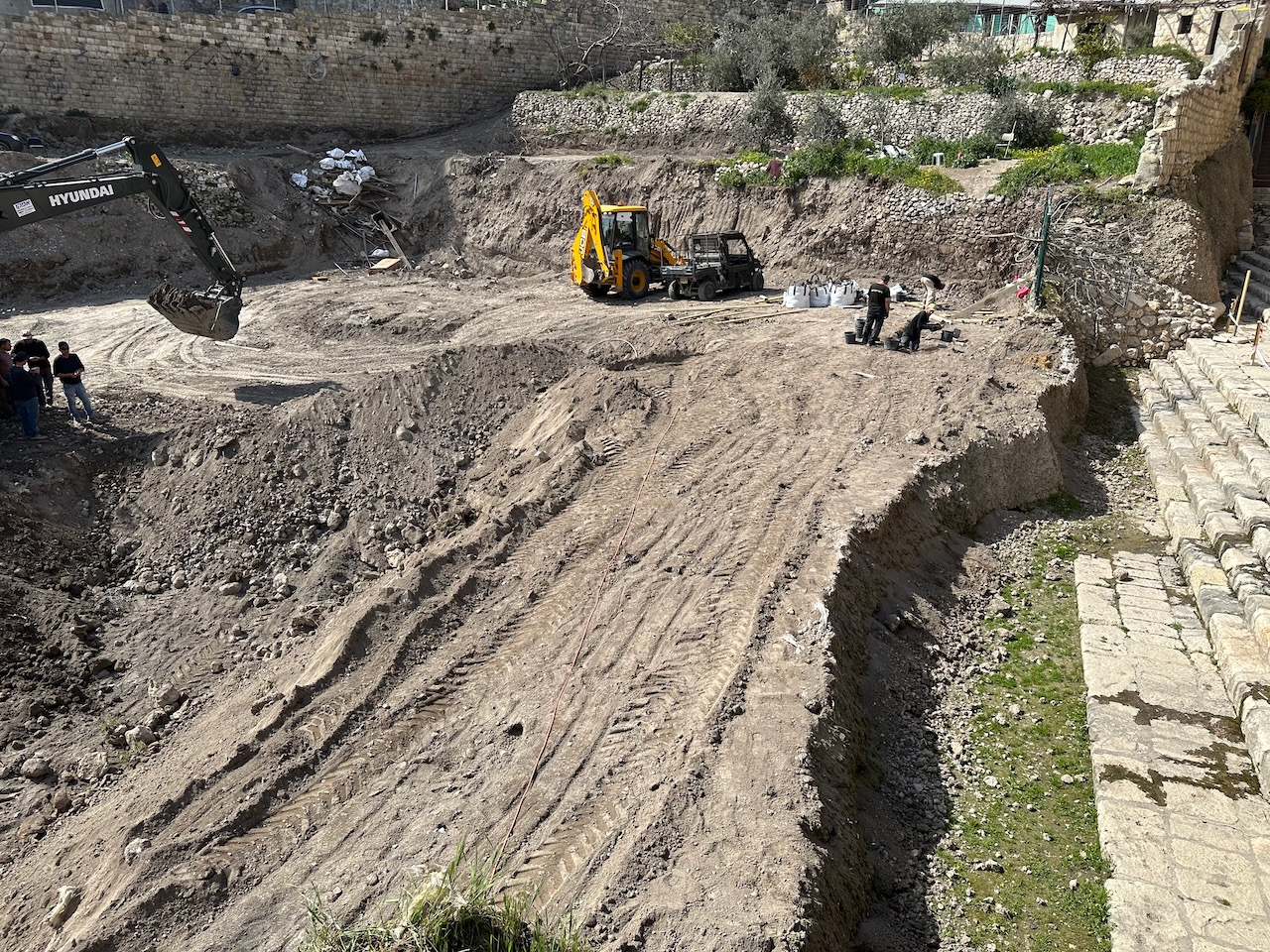
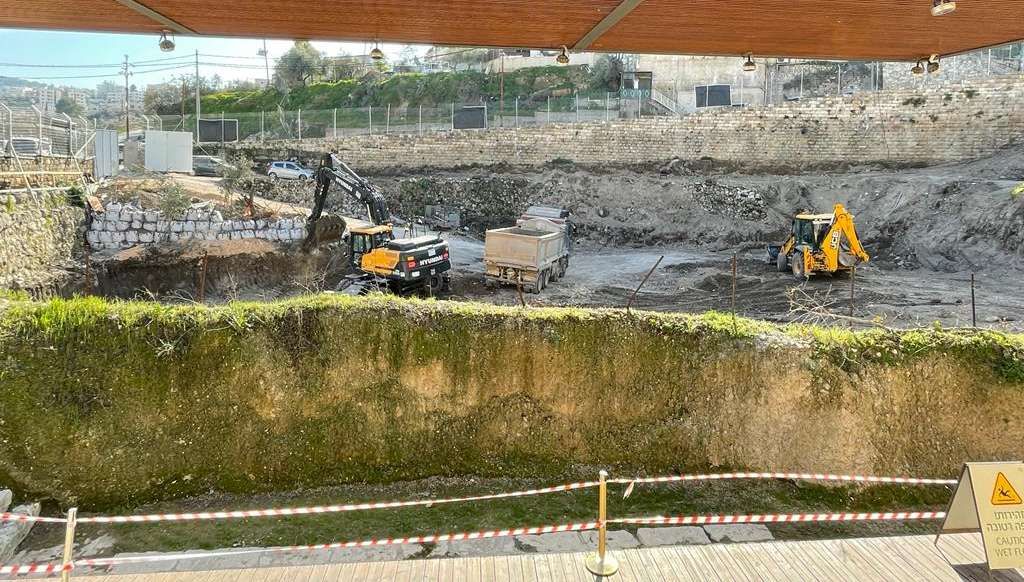
“At Jerusalem’s Western Wall plaza, a recent excavation has alarmed some heritage specialists who fear the traces of [the Mughrabi quarter,] a centuries-old Arab neighbourhood razed by Israel may disappear.”

Leen Ritmeyer tells the story of his remarkable journey from kibbutz volunteer to expert archaeological architect, largely working in Jerusalem but contributing to many other sites in Israel.

A volunteer describes her experience in excavating Azekah.

Webinar on March 1: “More Than Just Mosaics: The Ancient Synagogue at Huqoq in Israel’s Galilee,” by Jodi Magness. The event is a fundraiser to support graduate students, and the event will not be recorded.

John DeLancey offers an on-location devotional at Masada in his latest episode in “Faith Journeys with God in the Land.”

James Howell interviews Eric Meyers about his life and work.

A new video series, “If These Stones Could Talk,” created and hosted by Rabbi Dr. Kenneth Brander, has released six videos so far.

Wayne Stiles has just announced a Greece Tour and Cruise in August/September and an Israel tour in October.

The Albright Institute in Jerusalem is accepting applications for the Position of Director.

The University of Haifa has been given a rare map collection from the 1500s and 1600s.

Bible Mapper has created a poster map of Israel and Judah that can be downloaded at several resolutions.

I mentioned the new ebook by Jerusalem Perspective earlier this week, and Lois Tverberg has posted one of its articles: “Jesus’ Devout Jewish Parents and Their Child Prodigy.”

The oldest nearly complete Hebrew Bible, dating to approximately AD 900, is expected to sell at auction for $30 to $50 million, the highest valued manuscript ever to go to auction. If you are not confident that your bid will win, you can be grateful that the Sassoon Codex has been digitized, is in the public domain, and is available online.

HT: Agade, Arne Halbakken, Alexander Schick, Keith Keyser, Greg Ford

The Gaziantep Castle, first built in the Roman period and expanded in the Byzantine period, was severely damaged in Turkey’s earthquake (before and after). The citadel of Aleppo also sustained significant damage. The epicenter appears to have been on the northern end of the Syro-African Rift (that includes the Sea of Galilee and Dead Sea).

Antioch on the Orontes, modern Antakya, was devastated. This article has many photos. The Turkish authorities announced that “the earthquakes did not cause any damage to the Kahramanmaraş, Elbistan, Adıyaman, and Malatya museums, but that a part of the Hatay Archeology Museum [in Antakya] was damaged.” The Antioch Seminar on Paul and Peter will be postponed until 2024.

Sarah Kaplan investigates possible causes for the collapse of the Hittite empire.

Turkish Archaeological News has a roundup of archaeological stories in the month of January.

“An amateur archaeologist in Romania has discovered a unique ancient Roman parade mask.”

The ancient stadium at Nemea has reopened to visitors.

On the ASOR Blog, Robin Derricourt writes about “Absences, Archaeology, and the Early History of Monotheistic Religions in the Near East.”

New from Oxford University Press: Ancient Greek Athletics: Primary Sources in Translation, by Charles H. Stocking and Susan A. Stephens. Reviewed here.

“Ancient Roman ruins at Pompeii have been fitted with invisible solar panels, in a move that will contribute to the archaeological site’s sustainability efforts and cut costs.” CNN has photos of the solar panels that look like terracotta tiles.

HT: Agade, Arne Halbakken, Explorator

A rare gold bead was discovered by a teenage volunteer in excavations on the “Pilgrimage Road” leading from the City of David to the Temple Mount.

Israel’s driest winter in 60 years ended with a week of heavy rainfall throughout the country. The recent rains filled Herod’s pools at the Tower of David Museum in Jerusalem. If you look at the photos, you’ll see that “filled” is a bit generous, but there is water where there usually is not.

“An extraordinary physical reconstruction of a Nabataean woman who lived in the Arabian peninsula more than 2,000 years ago has gone on display to the public.”

“Inside el-Janab Cave near Nablus, archaeologists have found first-ever solid evidence of Muslims fleeing Mongol forces sweeping through the Levant in 1260.”

The Book & The Spade is celebrating a remarkable 40-year run with an anniversary celebration in a live webinar on Wednesday, featuring Scott Stripling, a reflection back on the last four decades of biblical archaeology, and some prize giveaways.

Chandler Collins has posted the second issue of the Jerusalem Tracker, with an extensive roundup of news publications, and media related to Jerusalem from the last six months.

King Jehoram of Israel, the son of Ahab and victim of Jehu, is the subject of Bryan Windle’s latest archaeological biography.

In part 3 of Teaching The Text’s series on Ruth, Brad Gray explores the early encounters between Ruth and Boaz.

Volume 14 of the open-access e-journal Negev, Dead Sea and Arava Studies has been published. The articles are in English, Hebrew, and French.

New release: The Bible and Music, by James F. McGrath. Free download in several formats.

HT: Agade, Arne Halbakken, Explorator

A bronze shield thought to belong to a king of Urartu has an inscription mentioning a previously unknown nation.

Archaeologists discovered a tavern dating to 2700 BC in the ancient city of Lagash.

“Two ancient clay tablets discovered in Iraq and covered from top to bottom in cuneiform writing contain details of a ‘lost’ Canaanite language that has remarkable similarities with ancient Hebrew.”

“The ancient Egyptians employed a host of exotic ingredients – some apparently imported from as far away as Southeast Asia – to mummify their dead.”

“A battleground fought over by ancient Egyptians and the Ptolemaic Kingdom and mentioned on the Rosetta Stone has been discovered.”

Papyrus conservator Helen Sharp explains how ancient Egyptian papyri have survived for so long.

Julien Cooper writes about the travels of Khety in the Sinai Peninsula during the 11th Dynasty.

On the Tikvah Podcast, Israeli rabbi and biblical scholar Joshua Berman talks about leading tours to Egypt. (“Things that you see from there you don’t see from here.”)

Life and the Afterlife: Ancient Egyptian Art from the Senusret Collection, on view at the Michael C. Carlos Museum from February 4 to August 6, 2023, is an exhibition about the power of ancient Egyptian objects to engage and inspire.”

Jason Colavito argues against displaying mummies in museums.

Webinar on Feb 8: “Secrets of Egypt’s Middle Kingdom Capital: el-Lisht,” by Sarah Parcak

“The 20th edition of the Annual Symposium on the Iranian Archaeology will take place in the National Museum of Iran,” with presentations of the latest archaeological research.

Zoom lecture on Feb 8: “Mercenary Soldiers in the Achaemenid World,” by John W. I. Lee

New release from RevelationMedia: Polycarp. Free to view if you enter your email address. (I don’t see another viewing option.)

Nominations are invited for the 2023 Biblical Archaeology Society Publication Awards, for books published in 2021 and 2022.”

ASOR is offering 40+ scholarships of $2,000 each for participation on ASOR-affiliated projects during the summer of 2023. The deadline to apply is February 15.

HT: Agade, Arne Halbakken, Explorator