A massive boundary stone marking the city limits of ancient Rome in the 1st century AD was discovered near the mausoleum of Augustus during construction work.

“The monumental entrance gate of the Zeus Temple’s sanctuary in the ancient city of Aizanoi, located in the Çavdarhisar district of western Kütahya province, Turkey, was unearthed during recent excavations.”

The latest discovery from the submerged ancient city of Thonis-Heracleion are fruit baskets from the 4th century BC.

Egypt moved the 4,600-year-old solar boat of Pharaoh Khufu from its old home near the Great Pyramid to the soon-to-open Grand Egyptian Museum.

A new study concludes a tablet from the Old Babylonian period is the oldest example of applied geometry.

17,000 looted artifacts were returned to Iraq from the Museum of the Bible and Cornell University.

A 3-min clip from a BBC documentary on the Persians focuses on the ziggurat of Chogha Zanbil, one of the best preserved ancient ziggurats.

Zoom lecture on August 11: “From Sanctuary to Synagogue,” by Robert Stieglitz.

On pre-publication sale at Logos: Biblical Illustrator Treasury

HT: Agade, Ted Weis, Arne Halbakken, Charles Savelle, Andy Cook, Roger Schmidgall, Explorator

Share:

Archaeologists working in the City of David believe that they have found evidence of the 8th-century BC earthquake that occurred in the reign of Uzziah (Amos 1:1; Zech 14:5).

Archaeologists believe they have discovered the place where the Aramean king Hazael breached the walls of the Philistine city of Gath.

Israel will not renew the contract for Elad to run the Davidson Archaeological Park south of the Temple Mount (Haaretz premium).

Ruth Schuster gives the case for identifying el-Araj as the New Testament site of Bethsaida.

Haim Silberstein lists “10 of the best underground attractions in Israel.”

Bruce Chilton writes about “Herod, His Progeny, and the Cutting Edge of Power.”

The current issue of Adventist Review has a number of articles related to biblical archaeology.

This week on The Book and the Spade: “Wet Sifting or Not, An Archaeological Dilemma” with Jimmy Hardin.

Online conference on Sept 30: Jerusalem and Other Chosen Places

HT: Agade, Ted Weis, Arne Halbakken, Charles Savelle, Andy Cook, Roger Schmidgall, Explorator

Share:

“Researchers in Saudi Arabia have discovered a sixth-century B.C.E. rock carving of the last Babylonian king, Nabonidus” along with a lengthy cuneiform inscription.

“Beneath the murky waves of the Venice Lagoon, researchers have discovered the remains of an ancient Roman road and other possible port facilities, like a dock, that may predate the founding of the Italian city.”

“A spectacular ancient mosaic floor that was part of a building from the Hellenistic period is among the important finds from excavations carried out recently at Fabrika Hill in Kato Paphos, Cyprus.” The photo is apparently not of the newly discovered mosaic.

NPR has a story on what lies below ground in Istanbul.

“Work has begun to refurbish the old Acropolis Museum near the iconic Parthenon temple and turn it into an exhibition space.”

“Held annually on [Turkey’s] Aegean coast, the Selcuk camel-wrestling festival is part of a nomadic legacy rooted in ancient Turkic tribes.”

“Between the years 193 – 235, the Roman Empire was ruled by a series of emperors who were originally Phoenicians.”

The new director of Michigan State University’s excavations at Isthmia has developed a new website to share both old and new research with the public. The website is here.

The US government has seized the Museum of the Bible’s Gilgamesh Tablet, declaring that it was illegally deported from Iraq.

Death by stoning is not so common these days, especially in the United States. But that’s how a gunman in Texas recently died.

Zoom lecture on August 29: “From Standing Stones to Sacred Emptiness: Textual and Visual Portrayals of Israel’s God,” by Theodore Lewis.

University College London and King’s College London are co-hosting an eLecture series in August, entitled Ancient Near Eastern Languages in Contact (ANELC). The first eLecture will take place on Wednesday 4 August from 16:00 until 17:00 BST (London), when Dr. Ohad Cohen of the University of Haifa will be speaking on “The Canaanite Melting Pot – The Theoretical Implications of ‘Languages in Contact’ to the Understanding of Late Biblical Hebrew.”

New release: The City of Babylon: A History, c. 2000 BC – AD 116, by Stephanie Dalley

HT: Agade, Arne Halbakken, Wayne Stiles, Joseph Lauer, Ted Weis, Explorator, Mark Hoffman, Roger Schmidgall, Paleojudaica

Share:

Archaeologists believe that they have greater clarity about the roads in the southern Judean desert leading to Edom following the examination of a site near Nahal Gorer. The underlying journal article is available to PEQ subscribers.

Haaretz follows up on the Jerubaal inscription discovery with a report fashioned as a back-and-forth between David Vanderhooft and Christopher Rollston, with the former suggesting the inscription may have been Zerbaal or Ezerbaal, and the latter sticking with his original interpretation of Jerubaal.

Excavations are underway at el-Araj (Bethsaida?), and updates are posted daily on their website.

The 25th and final summer season of excavations at Tell es-Safi/Gath has concluded. They have had a remarkable run.

Haaretz surveys the debate between Erez Ben-Yosef and Israel Finkelstein on the effect of “architectural bias” in drawing conclusions about Israel’s United Monarchy.

Naama Yahalom-Mack writes about the history of iron in ancient Israel.

Naama Barak writes about the mystery of the 1,400 dog burials at Ashkelon during the Persian period.

Bryan Windle identifies the top three reports in biblical archaeology for the month of July.

Construction has begun on a new reception center at the traditional Shepherds’ Field site near Bethlehem.

A music historian plans to restore a 12th-century organ discovered beneath the Basilica of the Nativity in Bethlehem. The instrument is the oldest known example of a pipe organ.

Shea Sumlin is on the GTI podcast talking about what it was like to be one of the first tour groups to be back in Israel.

Joseph L. Rife reviews A Walk to Caesarea: A Historical-Archaeological Perspective, by Joseph Patrich.

2nd edition released: The Archaeology of Qumran and the Dead Sea Scrolls, by Jodi Magness.

One of the books on sale at Logos right now is the Zondervan Handbook of Biblical Archaeology, by Randall Price with H. Wayne House ($9).

John DeLancey’s new Institute of Biblical Israel is launching a new course on biblical archaeology tomorrow.

HT: Agade, Arne Halbakken, Wayne Stiles, Joseph Lauer, Ted Weis, Explorator, Mark Hoffman, Roger Schmidgall, Paleojudaica

Share:

“Archeologists in Saudi Arabia have discovered the largest inscriptions in the Kingdom depicting the Babylonian King Nabonidus in the north-western city of Hail.”

Egypt has found remains of a military vessel from the Ptolemaic era at the ancient submerged port city of Thonis-Heracleio.

Treasures similar to those from King Tut’s tomb were allegedly found at a site recently discovered in southern Iraq.

“Turkey’s Izmir Archaeology Museum recently launched a new, unique exhibition centered around the historical artifact known as a ‘strigil,’ which 2,300 years ago was a tool used for cleansing the body by scraping off dirt, perspiration and oil.”

Lee Lawrence provides a well-illustrated introduction to the “meticulous, miniature world of Mesopotamian cylinder seals.”

Robert Deutsch is the guest this week on The Book and the Spade, discussing seals, seal impressions, and wet sifting.

Stephanie Lynn Budin takes issue with recent studies that assume that nude terracotta figurines are all related to fertility and childbirth.

New release: Egg Whites or Turnips? Archaeology and Bible Translation, by Paul J. N. Lawrence. The book has endorsements from Alan Millard and James Hoffmeier.

The Bible Mapper Blog has posted some new maps, with downloadable high-res versions:

HT: Agade, Charles Savelle, Ted Weis, Arne Halbakken, Joseph Lauer

Share:

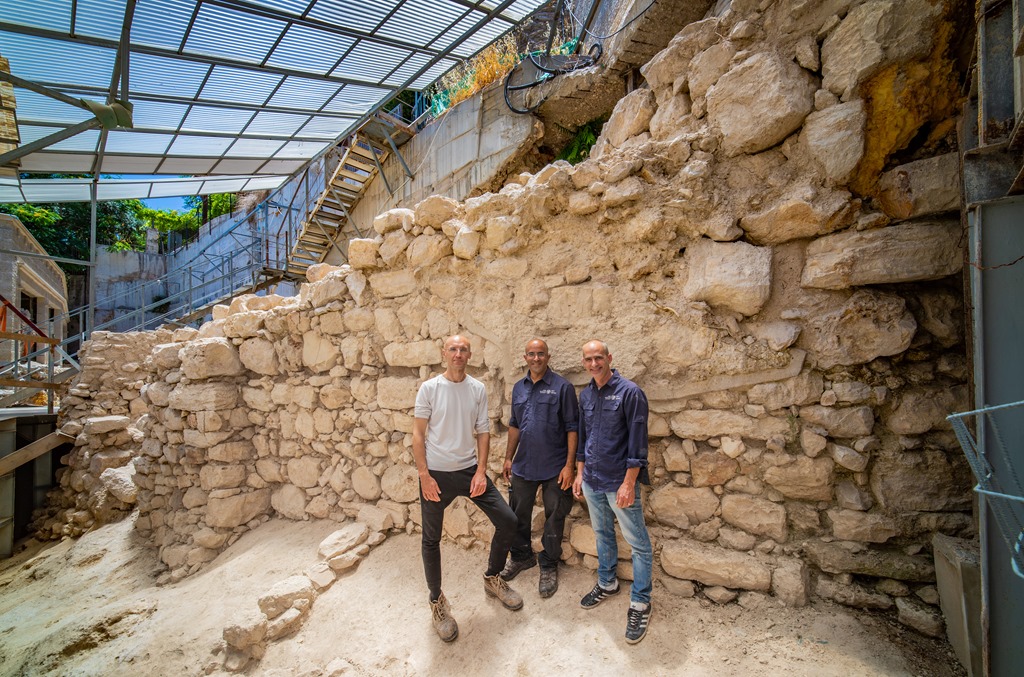
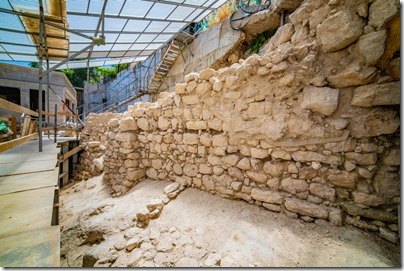
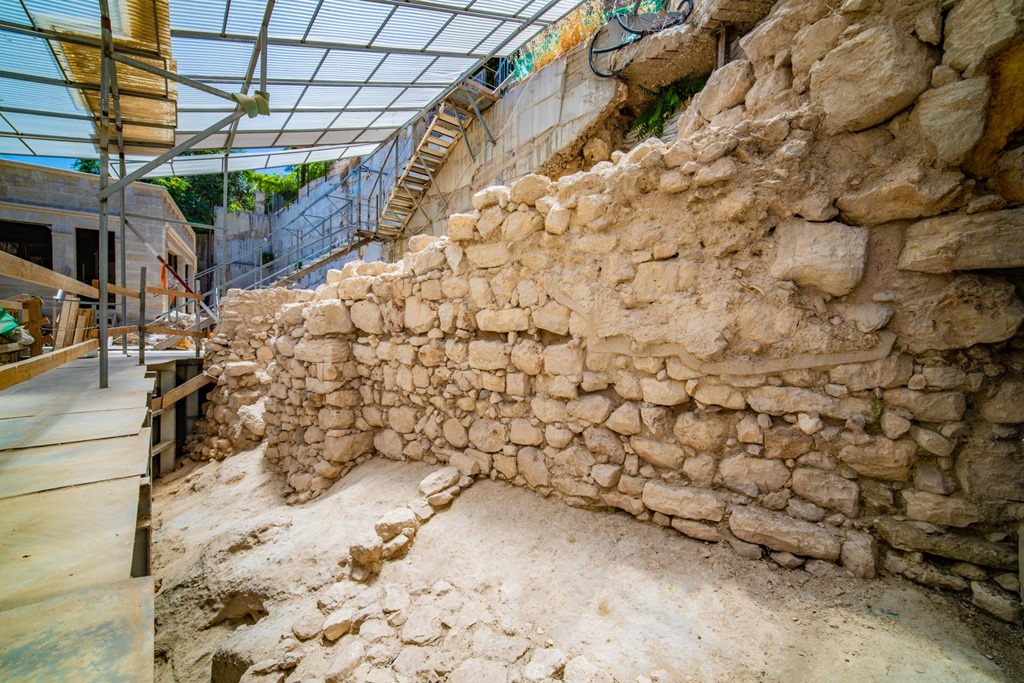
Archaeologists have announced the discovery of a portion of Jerusalem’s city wall dating to the time of Hezekiah and Josiah. The story is reported in many outlets, including The Times of Israel, The Jerusalem Post, and Haaretz. A 2-minute video has been created by the Israel Antiquities Authority. Here are the main points:
Jerusalem-eastern-wall-section-Koby-Harati-sm

Newly discovered wall; photo by Koby Harati/City of David

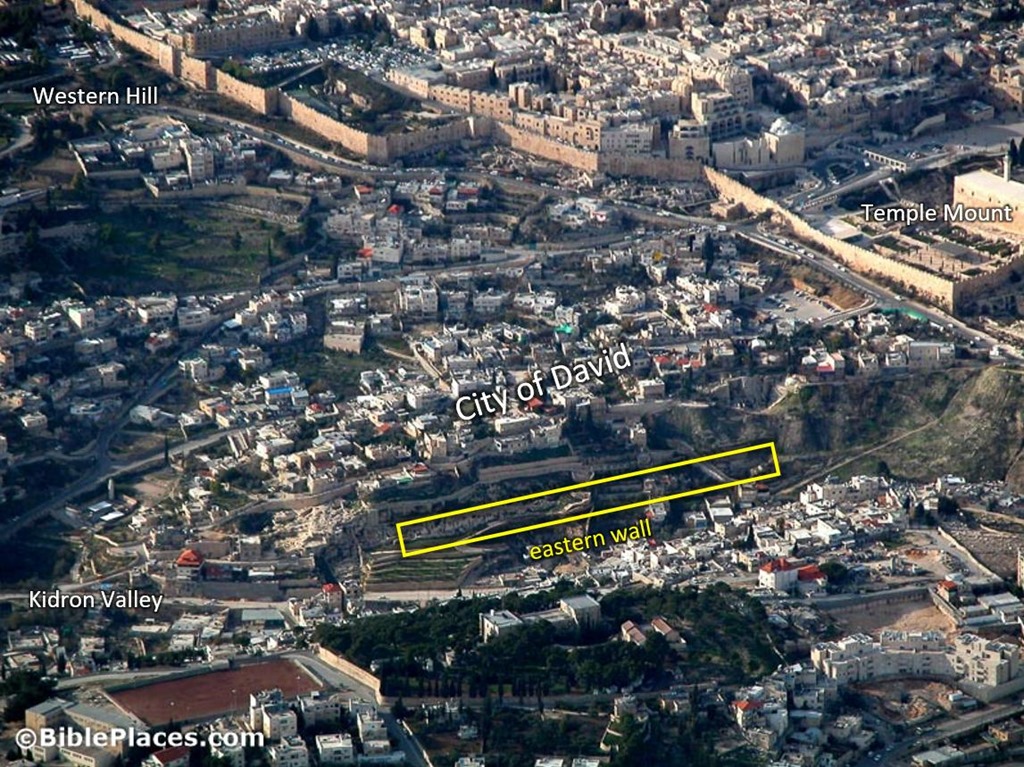
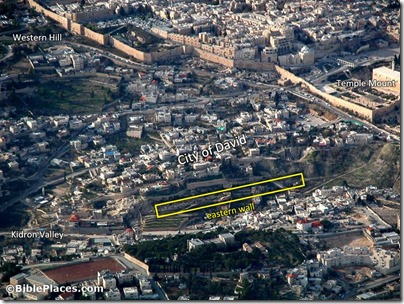
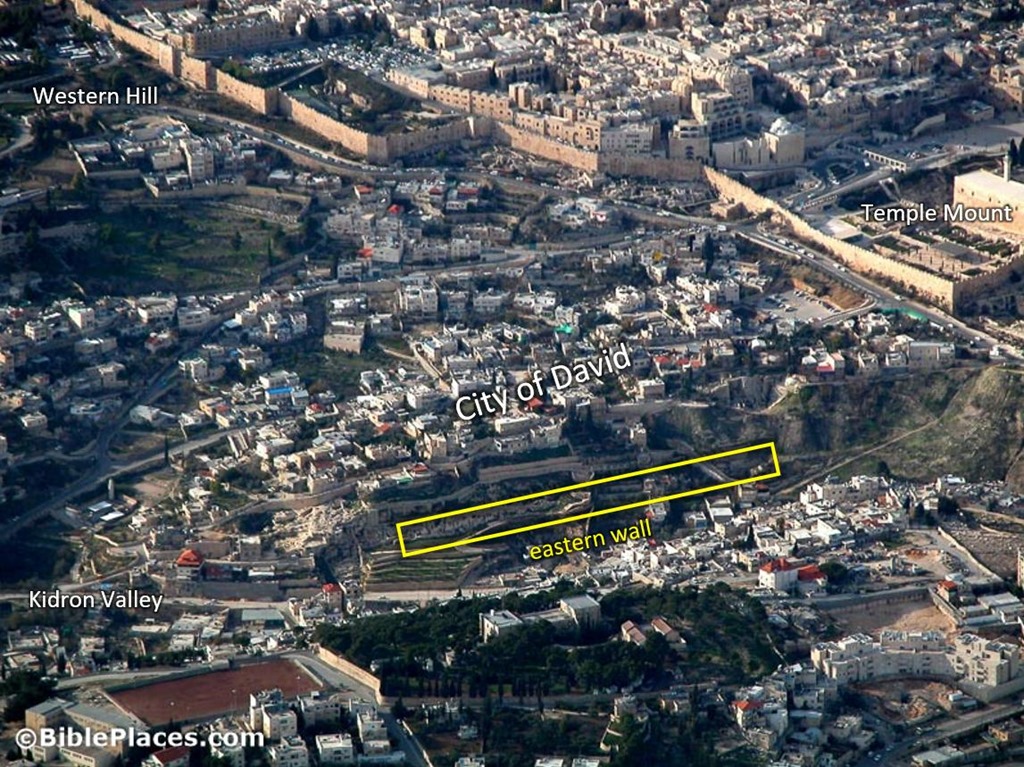
Location: The excavated portion is on the eastern slope of the City of David just south of the Gihon Spring, between previously known sections of this wall to the north (a 100-foot section in Kathleen Kenyon’s trench) and to the south (a 300-foot section in Yigal Shiloh’s Area E).
City of David aerial from east, tb010703201-labeled

City of David from the southeast; marked portion shows entire extent of all wall sections discovered to date

Size: The excavated sections are about 15 feet (5 m) wide and up to 10 feet (3 m) high. One section is 130 feet (40 m) long, and the other is 10 feet (3 m) long.

Date: The wall is believed to have been built in the late 8th or early 7th centuries BC. This corresponds to the reign of Hezekiah whose sole reign was from 715 to 686 BC. The archaeologists have not determined if the wall was built before or after the Assyrian invasion in 701. We do know that Hezekiah built a massive wall (the “broad wall”) on Jerusalem’s western hill (cf. Isa 22:10). The archaeologists have not yet received results from material submitted for radiocarbon dating.

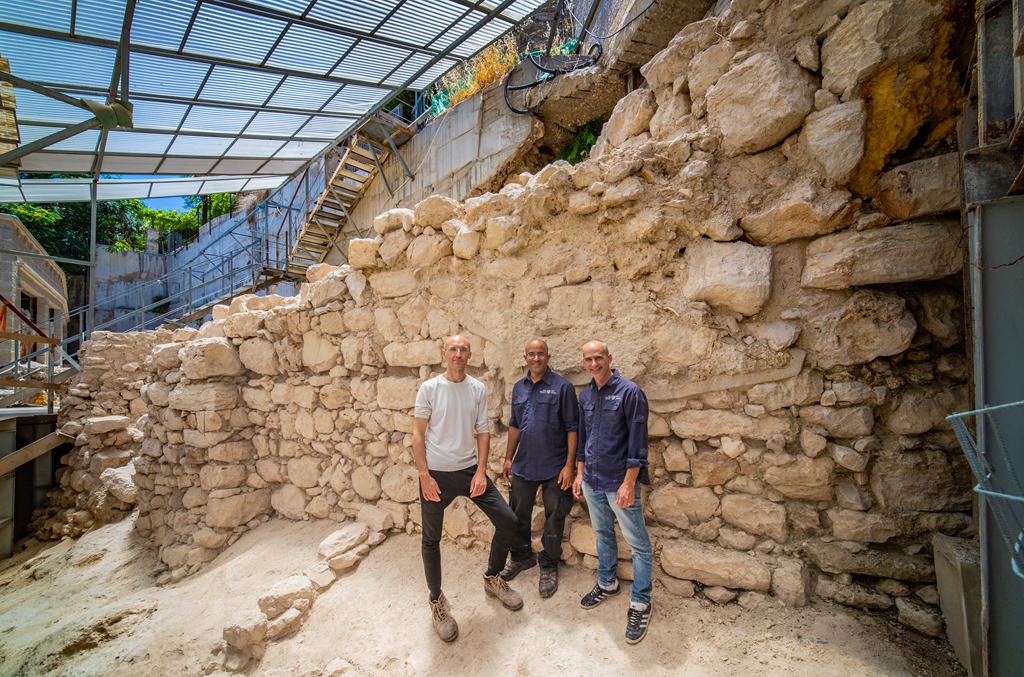
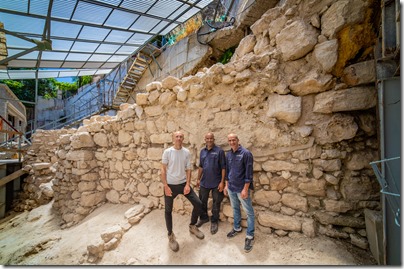
Archaeologists: The excavation was directed by Filip Vukosavović of the Ancient Jerusalem Research Center and Joe Uziel and Ortal Chalaf on behalf of the Israel Antiquities Authority.
Excavated eastern wall with archaeologists, Koby Harati

Archaeologists (from l to r): Vukosavović, Chalaf, Uziel; photo by Koby Harati/City of David

Significance: The discovery ends the debate that portions of the wall found by Kenyon and Shiloh were not city fortification walls. These three known sections allow archaeologists to reconstruct the line of Jerusalem’s eastern wall for about 650 feet (200 m).

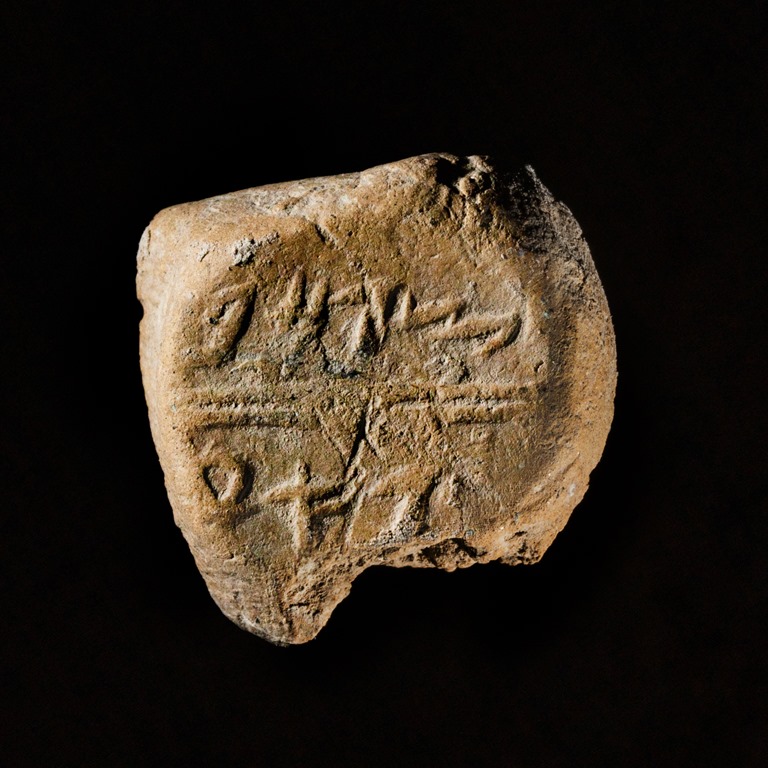
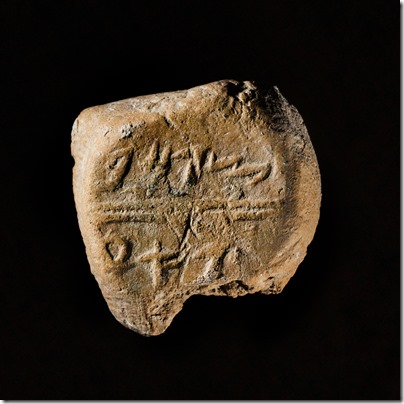
Small finds: Near the wall, archaeologists uncovered a building, LMLK seal impressions, rosette-stamped handles, a Babylonian stamp seal, and a seal impression with the name “Tsafan.”
Seal of Tsafan, Koby Harati

Seal of Tsafan; photo by Koby Harati/City of David

Contradiction: Stories are more interesting if there is a conflict, and so some reporters have framed this discovery of a standing wall as a “contradiction” to the biblical notice in 2 Kings 25:10 that the Babylonians destroyed all of Jerusalem’s walls. But this is a poor interpretation of the biblical text.

Response:

  1. In the context of 2 Kings, the Babylonians had previously besieged Jerusalem (in 597; 2 Kgs 24:20-17), but they did not destroy the walls when they captured the city. This time (in 586), they destroyed the walls.
  2. Contrary to some translations in the news reports, 2 Kings 25:10 simply reads that the Babylonians “destroyed the walls around Jerusalem.” It does not say that they destroyed every wall in every place.
  3. By destroying the walls around Jerusalem, the biblical author is indicating the extent of the damage. The Babylonians did not destroy only the massive (broad) wall on the northern side.
  4. The destruction of a wall does not require removing every stone from its place. By comparison, the Romans destroyed the Temple Mount and knocked down many but not all of its stones.
  5. The archaeologists have suggested that this portion of the wall was not torn down because the slope of the hill in this area is quite steep, making it more difficult to access.
  6. That the Babylonians sufficiently destroyed Jerusalem’s walls is evident from the fact that the city lay in ruins for many years, and the reconstruction of the walls required a major effort under Nehemiah.
  7. Imagine if today’s Old City walls of Jerusalem were destroyed, but that stretches of the wall were preserved to 10 or 15 feet in height. Would it be inaccurate to say that the walls around Jerusalem were destroyed?

Conclusion: This is an outstanding discovery that contributes significantly to our knowledge of ancient Jerusalem. There is no need to try to make it more exciting by inventing contradictions.
Share: