“The rare ancient tomb of a wealthy Minoan woman has been discovered at a monumental archaeological complex on the Greek island of Crete.”

“Archaeologists have revealed the face of an Egyptian princess who lived almost 4,000 years ago by painstakingly piecing together the wooden shards of her sarcophagus.”

A study of legal texts from Susa reveals how elderly parents ensured that their children took care of them.

“A replica Phoenician vessel made in Syria is sailing the Atlantic to prove the ancient civilisation did it 2,000 years before Columbus.”

The Biblical Archaeology Society has announced their 2019 Publication Awards Winners.

A review of a new work from Oxford: Peter Mitchell, The Donkey in Human History: An Archaeological Perspective.

“Persepolis, Then & Now” is the title of a conference at NYU on November 21.

The latest issue of Biblical Archaeology Review includes articles on the Assyrian relief at Sela, the search for portraits of Herod, and hiking in Paul’s footsteps.

Bible Land Passages has just released a new video, “Go Now to Shiloh.” Here’s what you’ll see:

This full-length documentary complete with on-site interviews, a behind the scenes look at the process of archaeology, analysis of the newest and most exciting discoveries to date, reenactments, computer generated graphics and illustrations, and numerous biblical connections and faith building lessons.

Appian Media has launched its ‘inRoads’ podcast, and they have made it available via Apple Podcasts, Google Podcasts, Spotify, Stitcher, as well as video versions on Facebook and YouTube. If you sign up to be a supporter this month, you get a beautiful free coffee mug.

The Biblical Archaeology Society is having an inventory clearance sale on Carta and IES books, with the best prices on some items I’ve seen. Some examples, all of which I recommend:

  • Leen Ritmeyer, The Quest ($30)
  • Carta’s Illustrated Josephus ($30)
  • The Carta Bible Atlas ($25)
  • Jerusalem: Biblical Archaeology Map ($9)
  • New Encyclopedia of Archaeological Excavations in the Holy Land, 4 vols. ($100)

There’s still time to catch the second of the two-day Oriental Institute Indiana Jones Film Festival.

Carl Rasmussen has begun a series on hippodromes/circuses, with part 1 and part 2 of what happened there, featuring some beautiful photos of a splendid ancient mosaic in France.

Ferrell’s Favorite Foto this week is of the Siq and Treasury at Petra.

What do we know about Pontius Pilate from archaeology? Bryan Windle pulls it all together in the latest entry in his Archaeological Biography series.

HT: Agade, Keith Keyser
Discoveries:
Tablets excavated at Gezer and the nearby Tel Hadid indicate that Israelites were not living in the area following the Assyrian invasions in the late 8th century BC (Haaretz premium).

A new study by Tel Aviv University has determined that the kingdom of Edom was flourishing in the 12th and 11th centuries BC, led in part by a high-tech copper network. The underlying journal article is available here.

Tin ingots from the 13th-12th centuries BC discovered near Haifa were apparently mined in Cornwall, England.

“Egyptian authorities have unintentionally discovered several historical monuments dating back to the Greco-Roman and Ptolemaic era in roughly 20 archaeological sites in the east and middle of Alexandria.”

A temple of Ptolemy IV was discovered in northern Sohag, Egypt, while drilling for a sewage drainage project.

An archaeologist in Aphrodisias, Turkey, discovered a Roman milestone that had long been used as a table base in a coffee shop.

Excavators continue to work to expose the forum area in ancient Alexandria Troas.

Nadav Shragai reports on the Adonijah seal impression and other discoveries that have come as a result of the excavations at the foundations of the western wall of the Temple Mount.


Museums and Exhibits:
The Bank of Israel in Jerusalem has opened an archaeological exhibit featuring “several spectacular ancient coin caches,” one of which includes more than 10,000 large coins.

Two Roman statues discovered last year near Beth Shean are joining the permanent collections of the Gan Hashlosha–Sahne Museum.

The largest-ever exhibition of treasure from King Tut’s tomb will be on display at the Saatchi Gallery from November 2, 2019 to May 3, 2020.

The Palestinian Museum in Bir Zeit recently won the Aga Khan Award for Architecture. The museum does not have a permanent collection.

New York’s Metropolitan Museum is returning a beautiful gold coffin of a high-ranking priest to Egypt after learning the item was stolen and its import papers forged.


Books:
Available at a pre-pub discount on Logos: Zondervan Handbook of Biblical Archaeology, by Randall Price and Wayne House.

Two new books from the Oriental Institute:

  • Discovering New Pasts: The OI at 100, edited by Theo van den Hout. Purchase ($134). Free download.
  • 100 Highlights of the Collections of the Oriental Institute Museum, edited by Jean M. Evans, Jack Green, and Emily Teeter. Purchase ($80). Free download.

The Times of Israel reviews Jodi Magness’s new book, Masada.

The German Protestant Institute of Archaeology in the Holy Land (GPIA) has produced a catalogue of the exhibition “Tall Zirā’a—Mirror of Jordan’s History.”

In tomorrow’s roundup, we’ll cover tourism, lectures, and videos.

HT: Agade, Joseph Lauer, Ted Weis, Keith Keyser, Explorator, Jared Clark

A seal impression was recently discovered in the City of David that reads “belonging to Adonijah, the royal steward.” The inscription dates to the 7th century, the period when Jerusalem was ruled by Manasseh and Josiah. The royal steward was the king’s “chief of staff,” and this position is mentioned in Isaiah 22:15 in reference to Shebna.

There is some question about whether this might be the same individual who was buried in the “tomb of the royal steward” in the Silwan necropolis opposite the City of David.

Also of interest is the fact that this man had the same name as David’s son who attempted to seize the throne before his father had died (1 Kgs 1). The Times of Israel reports:

The most famous Adoniyahu occurs some 300 years before this newly attested Adoniyahu, and is a son of King David and Haggit. He is called both Adoniya and Adoniyahu.
There are two other notable Adoniyahus recounted in the Bible. One, a Levite, appears during the reign of Jehoshaphat (circa 870–849 BCE), who is recounted in Chronicles. The other noteworthy Adoniyahu is found during the rule of Nehemiah, which occurs during the Persian era of the Second Temple period circa 465-424 BCE.

Perhaps next time the Times reporter can look up the English spelling of the name so that English readers will more readily understand. (Many other news reports perpetuate the same problem, making me think that these stories are simply regurgitated, without the necessary care.)

For the full story, including photos and a video, see The Times of Israel.

HT: Joseph Lauer

Excavations under a house in northern Israel have revealed what may be the largest wine factory from the Crusader era.

Archaeologists have discovered an arrowhead from the Roman siege of Jotapata in AD 67.

A i24News video shows the “pilgrim road” leading from the Pool of Siloam to the Temple Mount of Jerusalem.

“Archaeologists working in the buried Roman city of Pompeii say they have uncovered a ‘sorcerer’s treasure trove’ of artefacts, including good-luck charms, mirrors and glass beads.”

A new exhibit about a 4th-century synagogue mosaic floor has opened in the Archaeological Museum of Aegina. Aegina is a Greek island not far from Athens.

“Anchors Aweigh: Seaports of the Holy Land” is a new exhibit opening on Tuesday at the Bible Lands Museum in Jerusalem.

Preliminary images of seven (alleged) Dead Sea Scroll fragments owned by the Southwestern Baptist Theological Seminary are now online. (The link looks unusual, but it works.)

Lubna Omar provides a personal perspective as a Syrian archaeologist unable to protect her country’s heritage.

A guy passionate about ancient Egypt and baking used ancient yeast to bake a loaf of bread.

Egyptian authorities transferred a 90-ton obelisk of Ramses II from Zamalek to El Alamein.

The Oriental Institute is celebrating its 100th anniversary.

Carl Rasmussen shares photos of the largest altar in the world.

I always like the photos that Wayne Stiles includes with his posts, and this week is no different with his reflections on Abraham’s faith.

Matti Friedman writes a helpful review of Jodi Magness’s new book on Masada.

Did you know there are four long distance hiking trails in Israel? They range in length from 37 miles to 637 miles.

HT: Agade, Joseph Lauer, Alexander Schick, Ted Weis

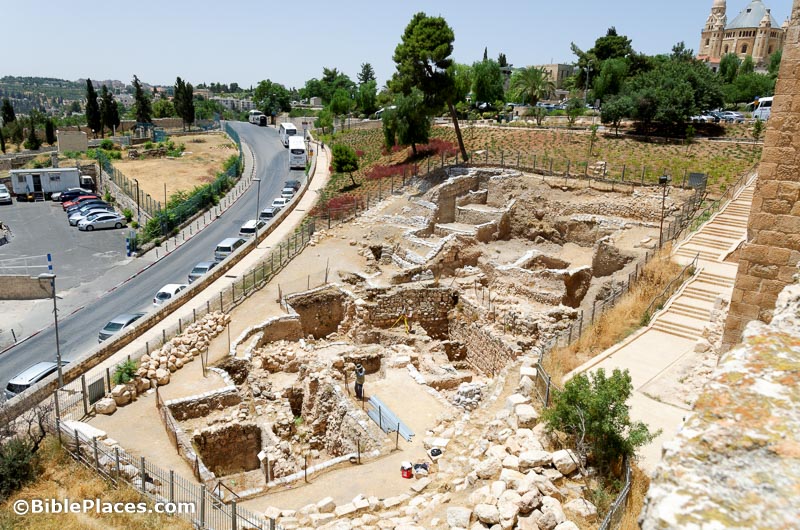
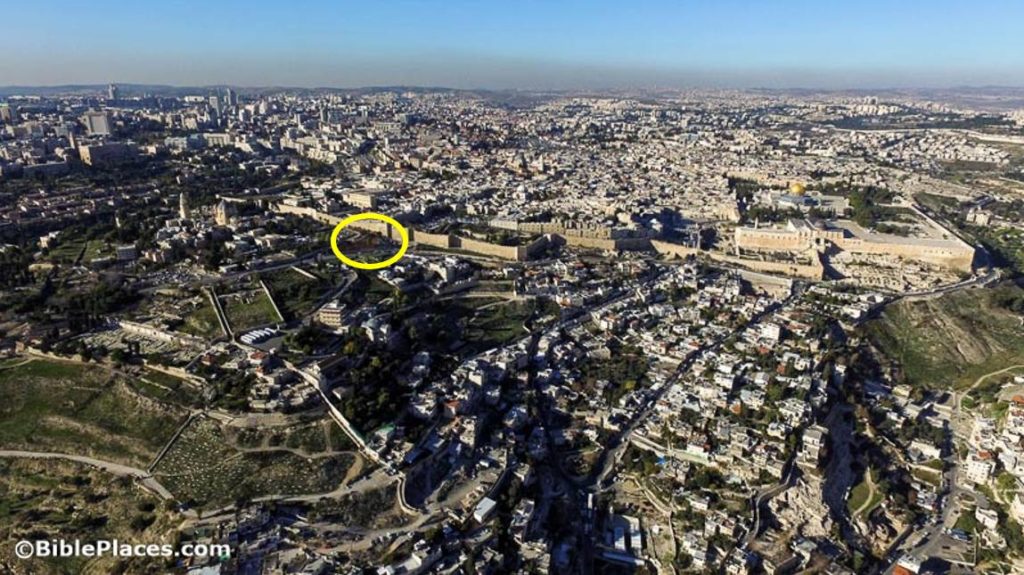
Archaeologists excavating on the Western Hill of Jerusalem (aka the modern “Mount Zion”) have announced the discovery of a destruction layer from the Babylonian conquest of Jerusalem in 586 BC.

The discovery is of a deposit including layers of ash, arrowheads dating from the period, as well as Iron Age potsherds, lamps and a significant piece of period jewelry – a gold and silver tassel or earring.

Despite what you might expect, archaeologists working in Jerusalem over the years have not found an abundance of material from this destruction, probably because it has been disturbed by later inhabitation. Shimon Gibson and his team date this material to the Babylonian destruction on the basis of context.

The team believes that the newly-found deposit can be dated to the specific event of the conquest because of the unique mix of artifacts and materials found — pottery and lamps, side-by-side with evidence of the Babylonian siege represented by burnt wood and ashes, and a number of Scythian-type bronze and iron arrowheads which are typical of that period.

The arrowheads are similar to those discovered at the “Israelite Tower” on the north side of ancient Jerusalem in a destruction context from the Babylonian invasion. Because the excavation site is inside the city walls, it is unlikely to be a dumping area.

“It’s the kind of jumble that you would expect to find in a ruined household following a raid or battle,” Gibson said. “Household objects, lamps, broken bits from pottery which had been overturned and shattered… and arrowheads and a piece of jewelry which might have been lost and buried in the destruction.”

“Frankly, jewelry is a rare find at conflict sites, because this is exactly the sort of thing that attackers will loot and later melt down.”

“I like to think that we are excavating inside one of the ‘Great Man’s houses’ mentioned in the second book of Kings 25:9,” Gibson speculated. “This spot would have been at an ideal location, situated as it is close to the western summit of the city with a good view overlooking Solomon’s Temple and Mount Moriah to the north-east. We have high expectations of finding much more of the Iron Age city in future seasons of work.”

The full press release is here, and the story is reported by numerous outlets, including The Jerusalem Post, The Times of Israel, and Haaretz (premium).

Jerusalem from the south, with excavation area circled


Area of Mount Zion excavations (in 2016)

Madeleine Mumcuoglu and Yosef Garfinkel explain how a shrine model discovered at Khirbet Qeiyafa may help us to better understand Solomon’s Temple.

Samuel Dewitt Pfister asks whether the latest claim about Bethsaida and the Church of the Apostles should be trusted.

ABR has announced the discovery of three altar horns in their excavations at Shiloh this summer. (Press release not online as of this writing.)

Applications for excavating at Shiloh in 2020 with the Associates for Biblical Research are now being accepted.

“Hamas has done little to protect Gaza’s antiquities and in some cases actively destroys them.”

Though rare and significant, few people know about a First Temple period cistern discovered near the Western Wall of Jerusalem’s Temple Mount.

Joe Zias looks at ancient crucifixion, considering the difficulties of the lone archaeological bone and arguing that crosses were shaped as a T.

Clyde Billington reviews the latest archaeological news on this week’s The Book and the Spade.

A slideshow/video on the work of M. G. Kyle at Tell Beit Mirsim’s excavations from 1926 to 1932 is on YouTube. The photos have captions, and if you read faster, you can advance more quickly through parts. The video clips may be the earliest from an excavation in the Holy Land. Near the end, there are scenes from a grain harvest as well as footage from Jerusalem in 1930.

HT: Ted Weis, Agade, G. M. Grena