The Jerusalem Post has more about recent excavations that exposed part of Jerusalem’s Old City wall without a foundation but instead relied upon a “wonder of engineering”—a carefully calculated amount of earth packed against the base of the wall.

A new study of a fortress in Upper Galilee identifies it as the center of a local chiefdom in approximately 1100 BC. The underlying journal article may be purchased here.

A Crusader-era castle in northern Israel is being transformed into a mini-hotel.

With the Dead Sea level dropping more than 3 feet each year, the Israeli government is considering setting a level below which it may not fall.

“A soon-to-be-released docu-series will present a rare and researched look at one of the most perplexing Biblical topics: Nephilim (giants).”

Now online: Coin Deposits in Ancient Synagogues in Late Antique Palestine: A Digital Dissertation Project, by Tine Rassalle

“The Seventeenth International Orion Symposium, ‘(Con)textualPerspectives on the Dead Sea Scrolls,’ will take place from February 28 to March 3, 2022, online.”

National Geographic has released a special issue on The Dead Sea Scrolls: 75 Years Since Their Historic Discovery. Amazon’s “look-inside” feature has the table of contents and some photos, including one they printed upside-down.

Harry Moskoff believes that there are temple treasures hidden in the Vatican, and he tells stories of various people who allegedly saw them.

Kyle Keimer and Chris McKinny interview Andrew Lawler in the latest episode of the Biblical World podcast.

I am back for part 2 of “Esther in Susa” on Digging for Truth. In this episode we focus on discoveries related to the Bible in King Xerxes’s palace.

HT: Agade, Joseph Lauer, Alexander Schick, Explorator, Keith Keyser

Share:

Construction work in the Gaza Strip has uncovered a Roman cemetery. There have been reports of looting.

Ongoing work at a quarry near Bethlehem has destroyed about 100 meters of a 1st-century aqueduct that brought water to Solomon’s Pools. There are calls on the government to stop the destruction.

Haaretz (premium) runs a short story about the Gal On Citadel, a Canaanite fortress in the Shephelah between Gath and Lachish. But, as Moshe Gilad writes, “it is advisable not to have too high expectations.”

Schoolchildren hiking in Nahal Besor discovered a coin with the head of Roman Emperor Valentinian I.

The latest episode of This Week in the Ancient Near East podcast questions whether there were really two synagogues in Magdala.

Peter Feinman surveys what prominent Egyptologists in the last century have thought about Israel’s exodus from Egypt.

Pharaoh Hophra ruled Egypt when Jerusalem fell to the Babylonians, and he is the subject of the latest archaeological biography on the Bible Archaeology Report.

A series of videos featuring Alexander Schick discussing the history of the Bible, Tischendorf, and the Dead Sea Scrolls is being released this month as the “focus series” by the Historical Faith Society (membership required).

On The Book and the Spade, John DeLancey discusses what’s new for tourists in Israel after returning from his first tour following Covid shutdowns.

HT: Agade, Joseph Lauer, Arne Halbakken, Explorator

Share:

Excavations at the “altar site” on Mount Ebal have uncovered an ancient amulet with Hebrew writing. There’s more about it in this lecture by Scott Stripling (beginning at about 34:38).

Zvi Koenigsberg recounts some of his story in working with Adam Zertal on the Mt. Ebal excavation, and the conclusion of the account provides more information about the recently discovered amulet.

Archaeologists are investigating a group of asphalt-coated skulls discovered in a cave in Nahal Hemer near the Dead Sea.

A 5th-century Byzantine church has been opened in Gaza after a three-year restoration project.

The Israeli government is allocating $3 million toward the preservation of archaeological sites in Judea and Samaria, with half of that allocated to reconstruction work at Sebastia (the ancient city of Samaria) and a significant amount to the winter palaces at Jericho.

Ruth Marks Eglash writes about the $50 million renovation project underway at Jerusalem’s Tower of David Museum, including the discovery that Suleiman’s Old City walls have no foundation.

Bryan Windle’s top 3 reports in biblical archaeology this month include two related to Egyptian pharaohs, a discovery on Mount Ebal, and a discoveries from a Jerusalem toilet.

Chris McKinny and Kyle Keimer discuss the geography of Judges in the latest episode of the Biblical World podcast.

Israel’s Good Name reports on a university trip to the site of Doq above Jericho and the Good Samaritan Museum. He includes many photos.

James Strange reflects on his work as an archaeologist and recent discoveries at Magdala. The story includes a 30-minute video interview.

Zoom webinar on Feb 10: “Tel Rehov: A Major Bronze and Iron Age City in the Jordan Valley,” with Amihai Mazar, Nava Panitz-Cohen, Nota Kourou, Naama Yahalom-Mack, and Robert Mullins.

Zoom webinar on Feb 20: “Excavations at Tel Gezer: A Personal Story,” with Sam Wolff.

I don’t think I’ve ever seen a media blitz like that carried out by Andrew Lawler, author of Under Jerusalem. His latest story is on Christianity Today’s website.

There is something special about hiking in Israel.

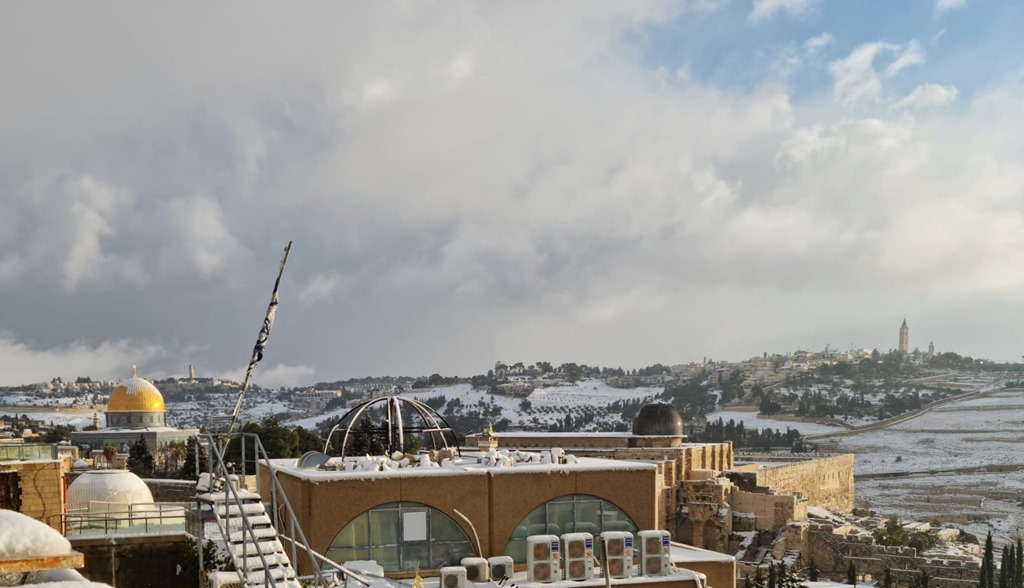
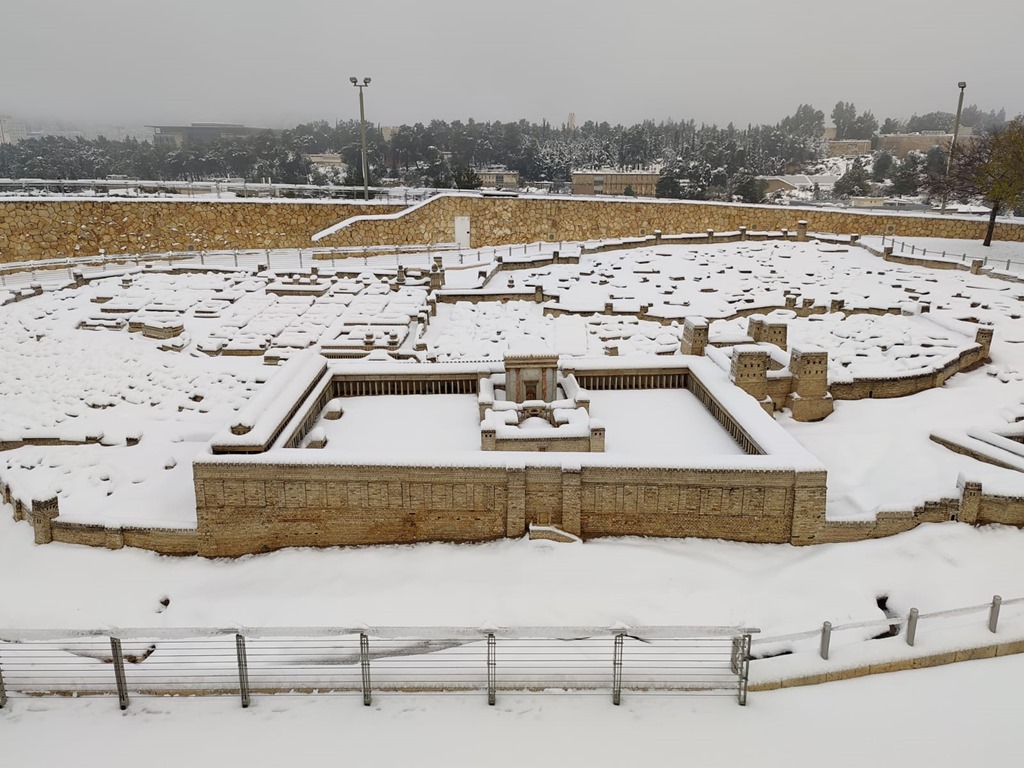
Snow fell in Israel this week, from the Golan Heights to the hills around Jerusalem. The Times of Israel has photos. Haaretz (premium) has more.

HT: Agade, Joseph Lauer, Arne Halbakken, Keith Keyser, Charles Savelle

Jewish Quarter snow

Snow in the Jewish Quarter and on the Mount of Olives. Photo by Miriam Siebenberg

BA6EAF83-6D81-4D2B-9E01-2387334F8571

Jerusalem model at the Israel Museum. Photo by a museum guard.

Share:

A new study suggests that the mining operations in the Timna Valley and Faynan thrived in the 10th century because of good management. The underlying journal article is here.

Moshe Gilad wonders whether the Bible can be used as an archaeological travel guide to Israel, and his article in Haaretz is based on the responses of Israel Finkelstein, Aren Maeir, and Yoram Bilu.

Saul Jay Singer writes about the life of Yigael Yadin and his father Eliezer Sukenik.

A couple of scholars are suggesting that Mary Magdalene was not from Magdala. (Now seems to be the perfect time for such a proposal, with all the great finds coming out of 1st-century Magdala…) The underlying journal article is here.

Questions have been raised about artifacts in the Israel Museum that were donated by Michael Steinhardt.

John DeLancey and Kyle Keimer complete their four-part tour of the archaeological wing of the Israel Museum.

The Museum of the Bible and Digital Interactive Virtual Experiences are offering virtual tours of Caesarea on January 20 and Qumran on January 27.

The materials in the Israel Film Archive are now online for public viewing. The Times of Israel identifies some highlights.

Andrew Lawler is on The Times of Israel podcast talking about his recent book, Under Jerusalem. (I enjoyed the book, and I hope to say more later.)

The Jerusalem Post reviews Adventure Girl: Dabi Digs in Israel, an illustrated book for children.

Israel’s Good Name reports on his trek around Horvat Hanut and Salvatio Abbey.

The 200th anniversary of the birth of Conrad Schick is on January 27, and Christ Church in Jerusalem will be having a special event to celebrate on the 28th (10:00-13:00). Their museum includes some of Schick’s models, including the one pictured below.

HT: Agade, Joseph Lauer, Arne Halbakken, Wayne Stiles, Alexander Schick

2

Model of Conrad Schick on display at Christ Church, Jerusalem. Photo by Michael Schneider.

Share:

Archaeologists have found a second synagogue at Magdala, making the site the first to have two known synagogues in the first century AD. A 2-min video (in Hebrew) shows some of the excavation.

A police stop of a vehicle driving the wrong way on a one-way street in Jerusalem led to the discovery of some interesting archaeological artifacts from the Roman period.

A “new Sanhedrin Trail exhibition at the Yigal Allon Center on Kibbutz Ginosar includes 150 rare ancient artifacts from the Israel Antiquities Authority.”

The exhibition catalog for the Tel Rehov exhibit at the Eretz Israel Museum is online at Amihai Mazar’s Academia page.

Katharina Schmidt, currently the Director of the German Protestant Institute of Archaeology in Amman has been appointed as Director of the W. F. Albright Institute in Jerusalem.

A new English translation of the Jerusalem Talmud has been released online.

David Moster made a video about what makes the Tanakh different from the Old Testament.

Moshe Gilad recommends a visit to Gezer, including a walk down the new staircase into the ancient water system.

A fire broke out at the Crusader castle of Belvoir (Kochav Hayarden), temporarily trapping about 30 construction workers.

Bible & Archaeology shares news and stories that inform and entertain, promoting the study of the Bible, archaeology, and ancient civilizations, while celebrating their many diverse cultures and histories.”

Cyndi Parker is on the Biblical World podcast speaking with Lynn Cohick about “what it means to understand Jesus in his own cultural, political, social, and religious contexts.”

Baruch Levine died on Thursday.

The latest free maps from Bible Mapper:

HT: Agade, Joseph Lauer, Arne Halbakken, Alexander Schick, Keith Keyser, Explorator

Share:

“New archaeological findings in the city of Yavne may shed light on the city 2,000 years ago, when it was the center of Jewish life in the region and home to the Sanhedrin.”

A lead sling stone bearing the name of a Seleucid leader who fought against the Hasmoneans was recently found in the southern Hebron Hills.”

Archaeologists have uncovered ancient glass kilns from the Roman period in the Jezreel Valley.

A Hasmonean-era oil lamp was discovered in the City of David shortly before Hanukkah began.

Chris McKinny and Kyle Keimer talk with Andrea Berlin about her excavations of Tel Anafa and Tel Qedesh and how that illuminates the history of the Galilee in the Hellenistic and Roman periods.

Gordon Govier writes about ancient seal impressions discovered through the use of wet-sifting for Christianity Today (subscription).

Israel’s Good Name reports on his visit to the Crusader ruins of Beit Itab in the Judean hills. He has also begun a new blog: Israel’s Good Bird.

Shechem is the latest site to be considered in Kyle Keimer’s “Why” series.

Jerusalem University College has announced its slate of spring online courses, including:

  • Ancient Egypt and the Biblical World, taught by Paul Wright
  • Archaeology of the Judean Shephelah, taught by Chris McKinny and Kyle Keimer
  • Lessons from the Land: Applications for Teaching and Ministry, taught by John Monson
  • Physical Settings of the Bible, taught by Chandler Collins
  • The World of Jesus and His Disciples, taught by Rebecca Pettit

HT: Agade, Joseph Lauer, Arne Halbakken, Explorator, Ted Weis

Share: