Note: this blog moved to a new location a few days ago. The old address should forward to the new, but you can update your bookmark to https://www.bibleplaces.com/blog/. Email subscriptions should not be affected, but those using a feed reader will need to update to the new address.

Archaeologists have published a report that they have discovered a “massive Iron II temple complex” at Moza, in use from 900 to 600 BC.

An Egyptian anchor discovered off the coast near Haifa is now on display at the Israel Museum. The impressive artifact features hieroglyphics and images.

Excavations at Tel Tsaf in the Jordan Valley have uncovered homes and food silos made of mudbrick and preserved since the Neolithic period.

“Archaeologists on Thursday unveiled 16 ancient Egyptian tombs filled with sarcophagi and other artifacts from a vast burial ground” near Minya in central Egypt.

Israeli researchers have successfully grown six trees from seeds discovered at the sites of Masada, Qumran, and Wadi Makkuk. The seeds date to the 4th century BC to the 2nd century AD, and like their predecessor Methuselah, they have been given biblical names. Photos here.

Shlomit Bechar argues that the Hazor complexes with standing stones were part of a “ruin cult.”

A professor has found a technique to solve quadratic equations that the ancient Babylonians used.

Laerke Recht takes a look at human sacrifices in the ancient Near East.

War has devastated a museum in Maaret al-Numa, Syria known for its Roman and Byzantine-era mosaics.

A terrorist near St. Anne’s Church fired shots toward the Temple Mount, wounding a policeman.

USA Today is having a contest for the Best Religious Museum in the USA. Nominees include the Museum of the Bible, the Ark Encounter, and the Biblical History Center.

The latest video in the “Life Lessons from Israel” is a 6-minute devotional video on Megiddo.

Upcoming events at the Albright Institute include a lecture by Israel Finkelstein on the excavations at Kiriath Jearim.

After renovations to steps and railings, the Ramparts Walk from the Damascus Gate to the Lions Gate of the Old City of Jerusalem has re-opened.

Agrippa II is the subject of Bryan Windle’s latest archaeological biography.

HT: Agade, Joseph Lauer, Ted Weis, Charles Savelle

Share:

A stone measuring table and several dozen stone weights were discovered in a plaza along the first-century AD street from the Pool of Siloam to the Temple Mount. Archaeologists believe that the area it was found served as the Jerusalem’s central market. The Times of Israel article includes a video and many photos.

It’s not quite a copy of the Tel Dan Inscription, but a pottery restorer discovered a faint ink inscription of a single Hebrew word on a storejar excavated at Abel Beth Maacah (Haaretz premium).

“Egypt’s recent decision to transport ancient Pharaonic artifacts to a traffic circle in the congested heart of Cairo has fueled fresh controversy over the government’s handling of its archaeological heritage.”

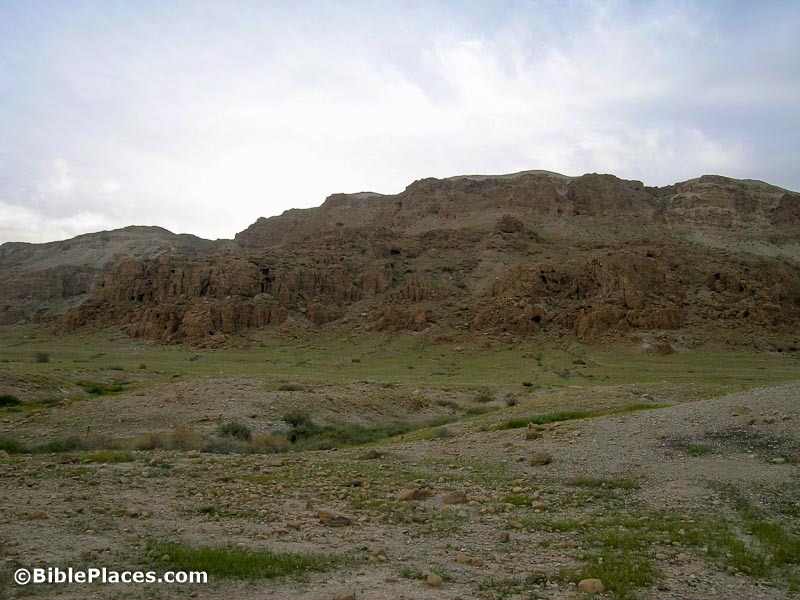
Rainfall this week led to flooding in the Judean wilderness. The video at the bottom of this page shows waterfalls in Nahal Qumran. Aren Maeir shares videos and photos of a river running through the Elah Valley.

The Biblical Archaeology Society is offering dig scholarships for excavations this coming year.

The most recent maps posted on the Bible Mapper Blog are of Southern Greece, the Judean Wilderness, and Philistia.

The photographs of Nancy Lapp, taken during excavations around the Middle East from the 1950s to the 1990s are the subject of an interesting photo essay by Rachael McGlensey. More than 2,000 images from Jordan have been digitized in the Paul and Nancy Lapp Collection at ACOR.

Bob Rognlien’s new book is out: Recovering the Way. The book trailer will introduce you to it. Here’s my endorsement:

Recovering the Way is an enjoyable and fascinating read, combining historical insights from the time of Jesus with practical encouragement for our lives today. All that Bob has learned and experienced in three decades of leading pilgrims through the land of Israel provide the reader with a rich treasure of biblical instruction, wise application, and captivating stories. All of this benefits from dozens of beautiful illustrations which help the reader to see the world where Jesus ministered.

HT: Agade, Joseph Lauer, Ted Weis

Share:

An 8th-century BC tomb with a child and its parents has been discovered in Achziv on Israel’s northern coast.

Joan Taylor looks at the historical evidence to determine what Jesus may have looked like and what clothes he wore.

Nir Hasson reports on Rona Avissar Lewis’s Hebrew-language book in which the author “examines the traces of the presence of children at biblical-era archaeological sites around Israel. Her conclusions about their births, their lives and their deaths may be somewhat different from the accepted conception of the role and situation of children at the time.”

And for another article on children: “Children in the ancient Middle East were valued and vulnerable—not unlike children today.”

The Temple Mount Sifting Project’s history in 12 objects series continues with #4, focusing on artifacts from the Persian period.

Three mosaics from the 2nd century BC have been discovered in Zeugma, Turkey.

A Polish professor believes that he has discovered eight sundials in ancient mosaics, including one in the Medeba Map (the column on the northern end of the city).

A record amount of rainfall fell in Galilee this week, including 5 inches in Safed and 7.8 inches on Mount Hermon, both in under 24 hours. The link includes a video of Saar Falls in the Golan Heights. For a photo of a snowman on Mount Hermon, see Luke Chandler’s post.

Magdala is the latest in John DeLancey’s video series of Life Lessons from Israel.

A trailer has dropped for “The Museum,” a documentary about the evacuation of the Aleppo Museum during the Syrian Civil War.

Statistics for Christian tourists to Israel in 2019: “55% of the 4.5 million tourists arriving in Israel in 2019 were Christians. Of those, 43% were Catholics, 31% Protestants, and 24% Eastern Orthodox. Of the Protestant visitors, 83% were Evangelicals (comprising 28% of all Christian tourists, and 13% of tourists in general). 15% of Protestant tourists hailed from African American churches. Of the Orthodox, 74% were Russian Orthodox, 26% were Greek Orthodox. 84% of all Christian tourists visited Jerusalem, and 65% visited Tel Aviv-Jaffa. The most visited sites by Christians were the Western Wall, the Church of the Holy Sepulchre, the Via Dolorosa, and the Mount of Olives.”

The newest issue of Electrum includes a number of articles related to ancient Jerusalem including:

  • New Evidence for the Dates of the Walls of Jerusalem in the Second Half of the Second Century BC, by Donald T. Ariel
  • Herod’s Western Palace in Jerusalem: Some New Insights, by Orit Peleg-Barkat
  • Coins of the First Century Roman Governors of Judaea and their Motifs, by David M. Jacobson
  • The Purpose of the Ritual Baths in the Tombs of the Kings: A New Proposal, by Omri Abadi and Boaz Zissu
  • The Training Ground (Campus) of the legio X Fretensis in Jerusalem/Aelia Capitolina—a Possible Identification North of the Damascus Gate, by Avner Ecker
  • Eusebius and Hadrian’s Founding of Aelia Capitolina in Jerusalem, by Miriam Ben Zeev Hofman
  • Jerusalem and the Bar Kokhba Revolt Again: A Note, by Eran Almagor

Some lists highlighting the top discoveries of 2019 have started to appear. I hope to present my own list here next week at which time I’ll link to others I have found.

HT: Agade, Joseph Lauer

Share:

“Colorful remains of mosaics from a 3rd century synagogue in the ancient town of Majdulia are the earliest evidence of synagogue decoration in the Golan.”

“A group of archaeologists, architects and researchers petitioned the High Court of Justice . . . to stop a controversial plan to build a cable car to the Western Wall in Jerusalem’s Old City.”

The latest in the Life Lessons from Israel video series focuses on the Talmudic Village of Katzrin.

Aviva and Shmuel Bar-Am write about a number of small archaeological sites in Pisgat Zeev, a northern suburb of Jerusalem.

Israel21c: Fabulous photos of 5 picturesque places to visit in Israel. The sites include Banias, En Gedi, Masada, Beth Shean, and Caesarea.

Archaeologists are hoping to continue excavations at el-Ahwat, possibly the biblical Harosheth HaGoyim, before modern construction destroys remains.

Israel’s Good Name visited the Horns of Hattin during a reenactment of the famous battle between the Crusaders and Saladin.

Carl Rasmussen reports on his visit to the “real” Bethsaida.

Luke Chandler, Ferrell Jenkins, Chris McKinny, and BibleX note the release of three new volumes in the Photo Companion to the Bible series.

HT: Agade, Joseph Lauer

Share:

Leen Ritmeyer has written an informative and well-illustrated post on the significance of Shiloh and the recent excavations. Ritmeyer’s reconstruction drawings are available for purchase in his image library, including his new drawing of Shiloh.

A government committee in Jerusalem has authorized the construction of a cable car to the Dung Gate.

A $37 million visitors’ center has been opened at the Huleh Valley Nature Reserve.

Anthony Ferguson shares 5 surprising details about the discovery of the Dead Sea Scrolls from Weston Fields’ history.

“The only project agreed on by Israel and Jordan that could possibly, in the foreseeable future, help save the Dead Sea from further shrinkage is stuck in a byzantine web of politics, bilateral tensions and Israeli foot-dragging.” This is a well-researched article on a subject frequently in the news.

Excavations have resumed at Tell Ziraa in Jordan, with the recent discovery of an Iron Age house with several dozen loom weights.

Colin Cornell considers whether the Jews living in Elephantine worshipped a goddess in addition to Yahweh.

Egyptian authorities have announced the discovery of a cemetery in Ismailia that dates to the Roman, Greek, and pre-dynastic eras.

The October issue of the Newsletter of the Egyptian Ministry of Antiquities is online.

History Magazine has the story of how Howard Carter almost missed King Tut’s tomb.

Two vast reproduction Assyrian statues were unveiled in Iraq on Thursday as part of a project designed to restore the cultural heritage of Mosul.”

Wayne Stiles explains the significance of the Arch of Titus and the relevance of an olive tree planted beside it.

“A team of international scholars versed in culinary history, food chemistry and cuneiform studies has been recreating dishes from the world’s oldest-known recipes.”

In a 10-minute video, David McClister explains who Flavius Josephus was.

On sale for Kindle:

Tim Bulkeley has died. He began his biblioblog in 2004 and was a regular encouragement to me over the years. He will be missed.

HT: Agade, Charles Savelle, Keith Keyser

Share:

Archaeologists have uncovered the largest Early Bronze city in Israel. The site of En Esur is 160 acres in size and is located 7 miles (11 km) east of Caesarea.

A lengthy inscription discovered at Pompeii in 2017 has been translated. It describes a “massive coming-of-age party for a wealthy young man.”

In the ruins of the ancient Hittite capital, there is a large, beautiful green rock that is a mystery to archaeologists and visitors.

Christopher Rollston is using multispectral imagery to study ostraca discovered at Macherus in 1968.

“The British Library, the largest national library in the world by number of items cataloged, has for the first time ever put some of its rarest and most ancient religious texts online for the general public to be able to access them from around the world.”

In a 2015 article for a special edition of the BBC History Magazine now published online, Aren Maeir identifies 10 key discoveries from the Holy Land. (It seems to me to be cheating for one of those to be “the discoveries of Jerusalem.”)

A portion of the Istanbul Archaeology Museums has reopened after years of renovations.

250,000 objects from the Louvre will be moved over the next four years to a non-public storage facility in northern France.

A student volunteer describes her experiences at Hazor in the last three years.

Wayne Stiles recently led a tour to Rome, and he shares some of his observations and reflections here.

JJ Routley argues that there is such a thing as Christian archaeology.

Bryan Windle has begun a new series of archaeological biographies, and the first subject is King Hezekiah.

The Getty Trust is devoting $100 million over the next 10 years to protect endangered historical sites around the world through dialogue and conservation.

If you would like to volunteer for a winter excavation in Israel, registration is now open for the February season at Timna.

A new survey is aiming to shed light on the Nabateans who lived in what is now Saudi Arabia.

The Wadi Shuʿaib Archaeological Survey Project (WSAS) is a new project in the area northwest of Amman, Jordan.

Bryan Windle has posted a resource review of the Photo Companion to the Gospels, with a focus on how he has used the Luke volume in his preaching.

HT: Agade, Joseph Lauer, Ted Weis, Keith Keyser, Explorator

Share: