Charles Jones has put created an excellent Roundup of Resources on Ancient Geography. Bookmark this one!

There are enough scholars who have serious doubts about the authenticity of the “Gospel of Jesus’ Wife” that when a report circulated that Harvard Theological Review had decided to not publish the article, many scholars believed it. Brian LePort has some of the back and forth.

Mark Hoffman excavated at et-Tell (Bethsaida?) this summer and is sharing his photo book of the dig. (No account is needed to flip through it, and full screen provides the best view.)

Jodi Magness is interviewed in the WAMC Academic Minute about her excavations of the Huqoq synagogue.

Cornell University has received a $200,000 grant from the National Science Foundation for dendrochronology and radiocarbon dating research in the Near East.

A conference at Tel Aviv University in late October will focus on Ancient Greece and Ancient Israel:
Interactions and Parallels (10th to 4th Centuries BCE). The details are available here.

SourceFlix’s latest short is called “Fishers of Men.”


Biblical Archaeology Review is now available as a digital subscription, with the bonus that you get last year’s digital issues.

Robert Mullins gives a day-by-day account of the first season at Abel-beth-maacah. His excitement is justified.

HT: Joseph Lauer, Jack Sasson

Abel Beth Maacah from northwest, tb062900201
Abel Beth Maacah from the northwest
Photo from Pictorial Library of Bible Lands

Excavations along a highway in northern Israel revealed a 50-acre site dating to the Neolithic period. One of the most impressive discoveries was a small stone bowl with several hundred stone beads.

Among the special finds that were uncovered in the excavation is a group of small stone bowls that were made with amazing delicacy. One of them was discovered containing more than 200 black, white and red stone beads. Other important artifacts are clay figurines of animals (sheep, pig and cattle) that illustrate the importance of animal breeding in those cultures. The most importance finds are stone seals or amulets bearing geometric motifs and stone plaques and bone objects decorated with incising. Among the stone plaques is one that bears a simple but very elegant carving depicting two running ostriches. These objects represent the world of religious beliefs and serve as a link that connects Ein Zippori with the cultures of these periods in Syria and Mesopotamia. According to Milevski and Getzov, “The arrival of these objects at the ʽEin Zippori site shows that a social stratum had already developed at that time that included a group of social elite which used luxury items that were imported from far away countries”.

The full press release is here, and three high-resolution images are also available. The discovery is reported by the Jerusalem Post and Haaretz.

DSC_1523

Photo by Clara Amit, courtesy of the Israel Antiquities Authority

The University of Oxford and the Vatican Library plan “to digitize 1.5 million pages of texts from their collections and make them freely available online.”

A large 3rd or 4th century poolside mosaic has been uncovered in southern Turkey, not far from biblical Attalia.

The Saqqara Serapeum was inaugurated this week.

The Jaffa Cultural Heritage Project has received a 3-year grant from the National Endowment for the Humanities.

Hebrew University will begin offering online courses for free.

Check out Wayne Stiles’ descriptive and devotional thoughts about Tel Dan. “By providing alternative places of worship [at Dan and Bethel], Jeroboam appealed to the laziness of the human spirit.”

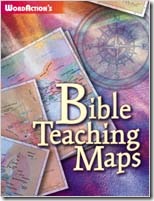
If you’re looking for full-color, poster-size maps of biblical history, take a look at WordAction’s Bible Teaching Maps. The $35 set includes 10 large maps bible-teaching-mapsand 10 reproducible charts. The maps were produced by Zondervan and Oxford University Press.

They are easily mounted on foam board for display and transport.

Christianbook.com has many Bible atlases on sale this week, as well as Gary Burge’s The Bible and the Land for $1.99.

A number of distinguished scholars passed away this week, including Manfred Goerg, Bahnam Abu As-Souf, and Itamar Singer.

HT: Jack Sasson, Joseph Lauer

Nadav Shragai has written an extensive and interesting report of the newly discovered reservoir near the Temple Mount. If you’re interested in Jerusalem in the Old Testament period, this is a must-read.

2.5-minute video takes you inside the reservoir (Hebrew).

The Western Wall has passed its annual health check-up.

Excavation reports on the Mount of Olives reveal settlement in the OT and NT periods.

“I am the gate for the sheep,” said Jesus. A new 2-minute video short from SourceFlix illustrates what that means with footage from the Middle East.

Whether you love the water-soaked landscape of Caesarea Philippi or the parched terrain of the Judean wilderness, you can enjoy some great weekend reading, illustrated with slideshows and videos.

BibleX points to a couple of publications now online for the Church of the Holy Sepulcher in Jerusalem.

The IDF has begun clearing 700 mines from the Jordan Valley.

Sitting at the Feet of Rabbi Jesus, by Ann Spangler and Lois Tverberg, is marked down to $2.99 for Amazon Kindle for a few days.

Christianbook.com has some good deals on reference works beginning today:

HT: Joseph Lauer

Judean wilderness at sunset, tb021107716
The Judean wilderness at sunset

The Macherus article in the newest issue of Biblical Archaeology Review is quite good, especially with its reconstruction diagrams. A particularly impressive photo is the panoramic shot from Macherus showing Masada, Herodium, and Jerusalem. I was surprised to see the entire article available online this morning. If you don’t subscribe to the print edition, you have a brief chance to read it before it goes behind the subscription wall. An annual digital subscription to BAR is now available for $20. A 21-m-long sediment sample near the Dead Sea is providing scientists with information about the area’s climate in history. According to Thomas Litt, the results “clearly show how surprisingly fast lush Mediterranean sclerophyll vegetation can morph into steppe or even desert vegetation within a few decades if it becomes drier.” The level of the Sea of Galilee dropped more than two feet this summer. Carl Rasmussen has just added photos to his site of a place in Galilee I have not seen: Domus Galilaeae is a Roman Catholic retreat center overlooking the northern side of the Sea of Galilee. And his latest travel tip suggests an alternative viewpoint now that Arbel is controlled by Park Rangers and closes way too early. Wednesday marked the 200th anniversary of John Lewis Burckhardt’s visit to Petra. He was 27 when he re-discovered the Nabatean city for the western world on August 22, 1812. Gus W. Van Beek died this week. He was Curator of Old World Archaeology in the National Museum of Natural History, Smithsonian Institution and recent author of Glorious Mud! How in the world did the ancients ever move massive stones such as the trilithons in the Jupiter Temple of Baalbek that weigh more than 1,000 tons? Paleobabble answers that question with diagrams and translation from an older French article. Baalbek, Jupiter Temple western wall trilithon, adr090511208 Trilithon in Jupiter Temple, Baalbek (photo from the Lebanon volume of the Pictorial Library of Bible Lands)

Free on Kindle today: The Apostle: The Life of Paul, by John Pollock. The ASOR Blog has posted the latest Archaeology Roundup. Three new volumes of the City of David final excavation reports have been published. If you have not had the chance to visit Hebron, you should take the illustrated tour today with Wayne Stiles. (Another version with smaller images is published at the Jerusalem Post.) Is skinny-dipping in the Sea of Galilee sacrilegious? The Washington Post gives my answer to the question. WiFi access is important enough to visitors in Israel that one biblical village has equipped their donkeys with WiFi routers. HT: Charles Savelle Sea of Galilee windsurfer, tb060105650 Windsurfer on Sea of Galilee (photo source)