Recent excavations in front of the edicule in the Church of the Holy Sepulcher revealed the 4th century arrangement of the rotunda.

Chris McKinny gives an overview of the results from Week 2 of excavations at Tel Burna.

Aren Maeir notes that excavations are also currently underway at Tell el-Hesi and Khirbet Summeily.

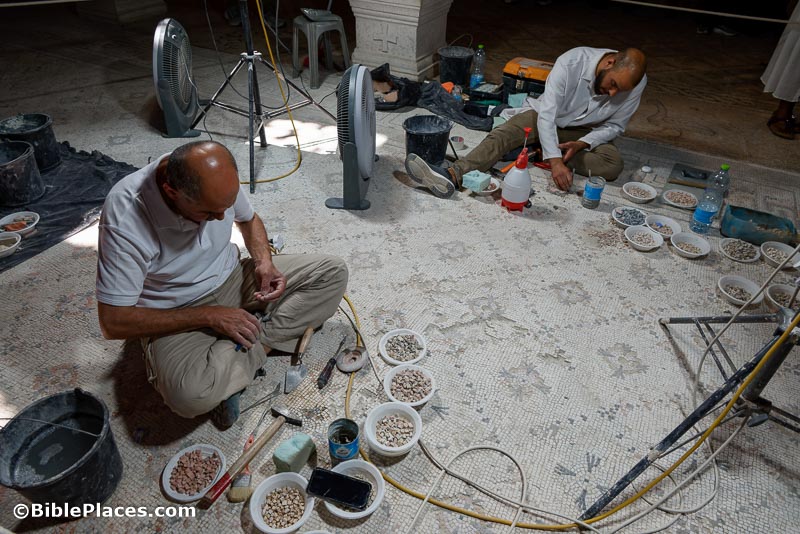
Archaeologists have invited the local community to help conserve the Middle Bronze gate at Gezer after last year’s fire.

William Hild, a participant in this summer’s excavation at Hyrcania, is guest on The Book and the Spade discussing the project.

Ruth Schuster writes about the treasures that were returned when the Israel Antiquities Authority announced an amnesty campaign. Enjoy the many photos, for you’ll never see these objects again as the IAA protects them in a vast storage center.

Ariel David reports on Garfinkel’s latest claim of Judah’s importance in the 10th century, including criticism from other archaeologists. Melanie Lidman has a similar story.

Tim Chaffey explains how Ernest Martin and Robert Cornuke “avoid key passages of Scripture, distort Josephus’ words, and ignore the findings of archaeologists” in their relocation of Solomon’s temple.

New release: Ancient Synagogues Revealed 1981-2022, edited by Lee I. Levine, Zeev Weiss, and Uzi Leibner (Israel Exploration Society, 300 NIS). You can see all the volumes in the long-running series on the IES website.

Hybrid conference on July 10-13 in Jerusalem: “Jerusalem: From Umbilicus Mundi to the Four Corners of the Earth and Back.” The conference brochure is here. The live broadcast will be here.

Zoom lecture on July 25: “Jesus in Galilee: An Archaeological Perspective,” by Eric Meyers

BBC Reel has released “Armageddon: The ancient city behind the biblical story.”

Chandler Collins considers what may be learned from 19th century travelers’ writings about their first views of Jerusalem.

HT: Agade, Arne Halbakken, Joseph Lauer, Explorator

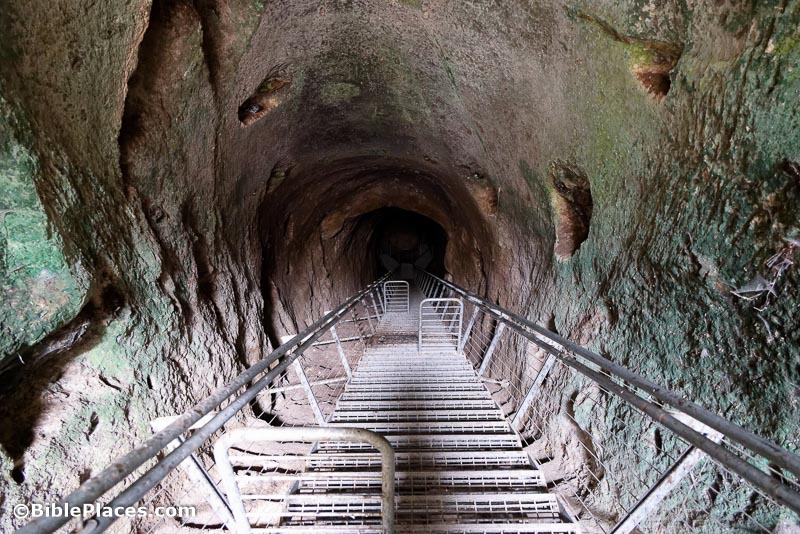
The latest big hole in the ground opened to visitors is the Gezer water system. The descent gives you a new appreciation for the value of a secure source of water.

A new study claims that Tel Shikmona near Haifa was home to a large Israelite purple dye factory that supplied the prestigious color to Solomon’s temple in Jerusalem from about 850 to 750 BC.

Steve Notley has proposed an explanation for how the New Testament village of Bethsaida came to be known in Arabic as el-Araj, which means “the lame man.”

Abigail Leavitt reports on the final week of excavating at Shiloh, with mention of the discovery of a scarab and a bulla.

Ronit Vered reports on the new exhibition at the Israel Museum entitled “The Feast.”

Joel Kramer has just released a video about the Mesha Stele (Moabite Stone).

The latest episode of Digging for Truth focuses on King Hazael of Aram.

In the latest Biblical World podcast episode, Kyle Keimer discusses Hezekiah’s preparations for the Assyrian invasion, the subject of his dissertation.

The latest edition of Tel Aviv has been published, and a number of the articles are open-access.

Accordance Bible Software has a number of photo collections on sale as well as works from Carta.

Ferrell Jenkins posts some photos of the Dead Sea from his recent trip (also here).

Bryan Windle’s latest archaeological biography is on Aretas IV, the only Nabatean king mentioned in the Bible.

HT: Agade, Ted Weis

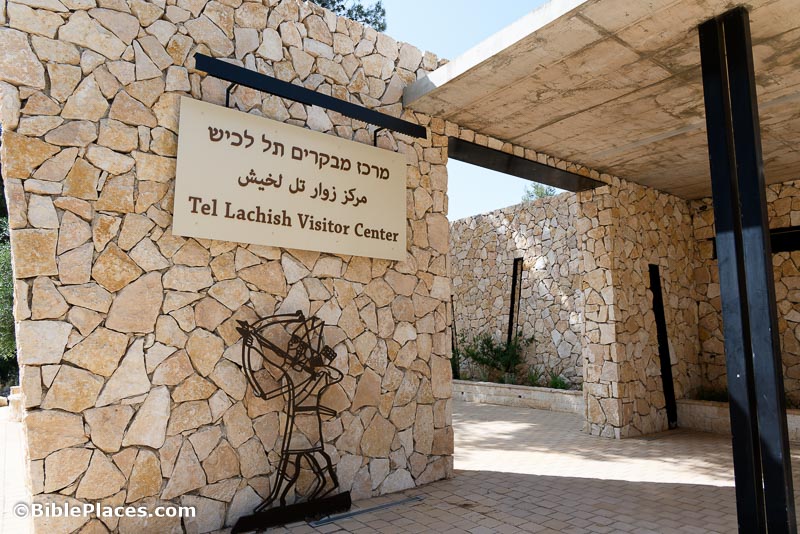
Soon visitors to Tel Lachish will have public restrooms to use. There may well also be some displays of artifacts, replicas, or reconstructions.

Gabriel Barkay was recently interviewed by ICEJ. Among other things, he says that he recently finished a book about material culture in the Song of Songs.

Gordon Franz is the latest subject in the Discussions with the Diggers series at Bible Archaeology Report. He relates the story of the discovery of the Ketef Hinnom silver amulets.

Chandler Collins has published the third issue of his “Jerusalem Tracker” newsletter, providing a list of every new publication related to Jerusalem’s history.

Bryan Windle describes the top three reports in biblical archaeology in the month of May.

The first batch of commercially available ancient yeast, discovered at Goliath’s hometown of Gath, will begin shipping later this year.

Chemical analysis of Middle Bronze grave goods at Megiddo reveals the extensive use of wine in funerary rituals.

Arleta Kowalewska and Craig A. Harvey explain what we know about Roman bathhouses in the southern Levant.

“Dor Zlekha Levy’s One Tongue audiovisual project revives Proto-Semitic, the ancestral language of Hebrew and Arabic, in song.”

Hybrid lecture on June 22 at the Albright: “The 2022 Season of the Megiddo Expedition,” by Matthew J. Adams

Hybrid lecture on July 13 at the Albright: “Back to Tell Qasile: Current Research of Old Excavations,” by Amihai Mazar

Arieh O’Sullivan tells the story of his family’s relationship with Samson’s tomb and the tomb’s transformation in recent years.

The latest episode from Walking The Text: “Jesus in Galilee, Part 3: Religious Jews of the (Evangelical) Triangle.”

“Lessons from the Land: The Kings” is the latest series produced by Appian Media. The 13 episodes are about 5 minutes each.

HT: Agade, Joseph Lauer, Arne Halbakken, Ted Weis, Stephanie Durruty, Wayne Stiles, Alexander Schick, Explorator

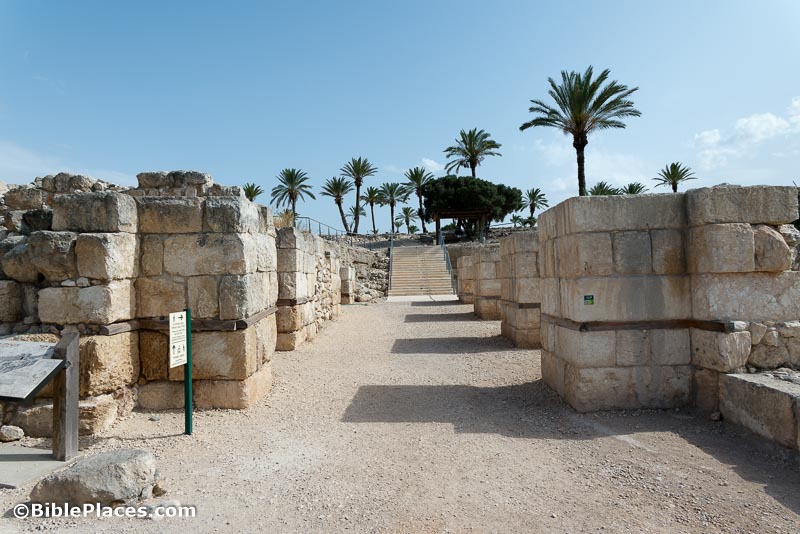
Nearly a century after the Americans dismantled half of the Solomonic gate, the Israelis have restored it. Now visitors can walk through the six-chambered gate as they can at Hazor and Gezer.

The Tower of David Museum in Jerusalem reopened on June 1 after a $50 million renovation. The Times of Israel explains what’s new.

The Israeli government has approved spending more than $100 million in the next five years on various projects in Jerusalem, including on excavations in the Western Wall Tunnels and the City of David National Park.

To judge from this recent promo video, Israel’s Ministry of Tourism is seeking a different kind of tourist. This video also seems to embody the adage that advertising is another form of lying.

The IAA discovered three ossuaries in a Roman-period burial cave near Kafr Kanna (Cana) that had recently been looted.

A traffic stop near Ramallah led to the discovery of dozens of 10th Roman Legion floor tiles that had recently been illegally excavated.

Israeli police arrested a suspect in possession of dozens of coins illegally excavated in Jerusalem, including a rare coin from the reign of Antigonus Mattathias II.

A three-week operation led to the capture of thieves illegally excavating a Roman-Byzantine site near Nazareth.

The latest volume of the Journal of the Ancient Near Eastern Society includes articles on 1 Samuel 5, the Gezer Calendar, the altar at Tel Dothan, and the story of Dinah. Articles are open-access.

Preprints for a festschrift for Tallay Ornan are available on Academia.

New release: Pushing Sacred Boundaries in Early Judaism and the Ancient Mediterranean: Essays in Honor of Jodi Magness (Brill, $211)

New release: History of Ancient Israel, by Christian Frevel (SBL, $75)

On pre-order sale at Logos: “A Virtual Walk Through the Land of the Bible,” by Charlie Trimm

Logos has just released The New Encyclopedia Of Archaeological Excavations In The Holy Land.

Logos has a sale on The New Moody Atlas of the Bible this month ($10).

Rafael Frankel, retired archaeologist from the University of Haifa, died last week. Some of his publications can be seen here.

Weston Fields, longtime managing director of the Dead Sea Scrolls Foundation, died on May 25. A list of his publications can be seen here.

HT: Agade, Joseph Lauer, Arne Halbakken, Ted Weis, Alexander Schick, Explorator

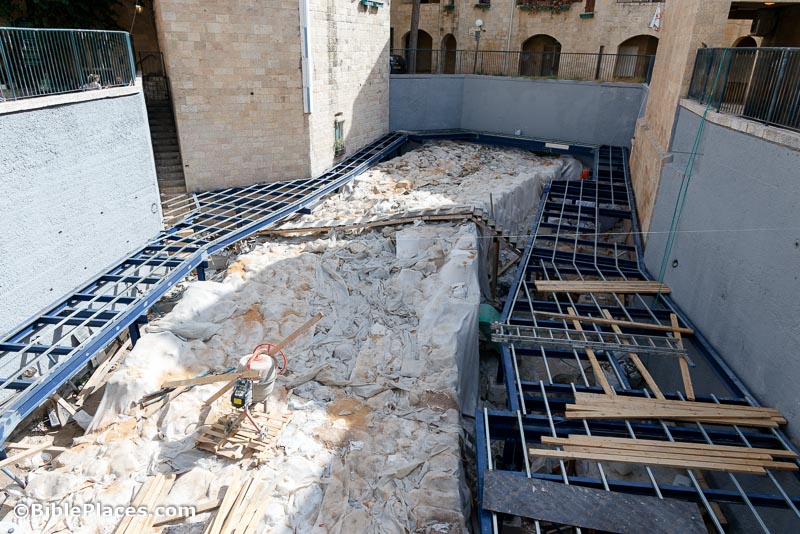
The viewing area for the Broad Wall in Jerusalem will be transformed once they complete construction of these new walkways. Amazing that it took 50 years to get around to this.

“Researchers found traces of dysentery-causing parasites in material excavated from the cesspits below the two stone toilets that would have belonged to elite households” in Jerusalem. The underlying journal article is here.

A recreational swimmer discovered a shipwreck that included a cargo of 44 tons of marble blocks headed to the Roman port of Ashkelon or Gaza for an elite building project.

A 1st-century receipt was discovered in a 19th century excavation tunnel in Jerusalem.

“Tiny bones from prehistoric birds found at a birdwatching site in northern Israel have been identified as 12,000-year-old flutes.”

The “curse tablet” from Mt. Ebal has been published, but early reactions to the claims are not positive. The journal article is here.

Andy Cook has returned to the Pool of Siloam to give an update on why they haven’t discovered any more remains of the pool.

Carl Rasmussen writes about a new area in Caesarea being billed as the prison of Paul. Carl notes his misgivings with the identification.

In a recent article, Nadav Na’aman argues that the original center of Jerusalem was on the Temple Mount, not in the City of David. Haaretz provides a summary of the Tel Aviv journal article which is available to subscribers. (In my experience, Na’aman is quite good at being provocative but less good at being persuasive.)

Robert Mullins considers the implications of discovering the name of “Benyaw” inscribed on a storejar found at Abel Beth Maacah.

Chandler Collins raises questions about the hypothesis that Jerusalem’s population exploded because a mass of Israelite refugees arrived in the late 8th century BC.

Haaretz premium: “In Israel, everyone wants to excavate – from foreign volunteers to youth groups. But many archaeology experts, warning of damaged sites, now believe it’s time to slow down and focus on what’s already been unearthed.”

The summer issue of Biblical Archaeology Review includes stories on David and Solomon’s “invisible kingdom,” the lost treasures of the First Temple, and the Amorites.

HT: Agade, Joseph Lauer, Arne Halbakken, Ted Weis, Stephanie Durruty, Wayne Stiles, Alexander Schick, Gordon Franz, Explorator

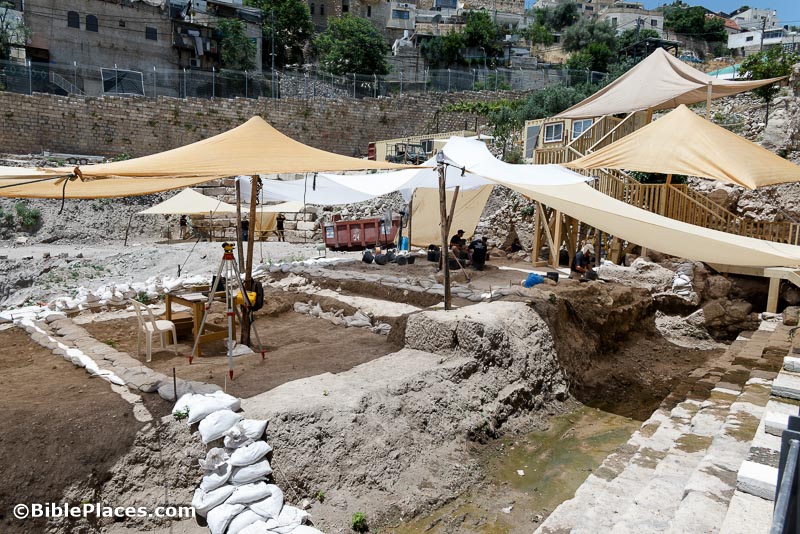
The bulldozers working in the Pool of Siloam left this section for the archaeologists to carefully excavate. So far, no additional remains of the pool’s architecture have been discovered in this year’s work.

[Due to some website issues, part 2 of the last Weekend Roundup was not sent out. You can read it here.]

A cave near ancient Shechem served refugees for at least eight different historical periods, from the Chalcolithic to the Mamluk periods.

El-Unuk, one of Adam Zertal’s six “Gilgal” sites, is under threat of destruction from construction work.

The Israeli government has approved an $8 million budget to restore and protect the ancient capital city of Samaria. The funding “will go toward establishing a tourism center at the site, building new access roads, mapping untouched areas, and increasing law enforcement to prevent illegal activity.”

Scott Stripling discusses the Mount Ebal Curse Tablet on the latest episode of Digging for Truth.

John DeLancey’s latest video was filmed in the 1st-century synagogue of Magdala.

What are the Lachish Letters and why are they of importance to the Bible? Nathan Steinmeyer explains.

JNS has a story on the Inscriptions of Israel/Palestine project being run by Brown University.

In connection with a new exhibit at the Corning Museum of Glass, Ruth Schuster investigates the history and method of Roman glassmaking in the land of Israel.

Hybrid lecture at the Albright Institute on May 11: “Before the Nabataeans: Arabian Traders in the Negev Highlands,” by Tali Erickson-Gini and Martin David Pasternak

Zoom lecture on May 11: “Jesus Reading Scripture: Exploring the Archaeology of Worship in First-Century Synagogues,” by Paul Flesher ($6/$12).

The online lecture with Ken Dark on “Exploring the Archaeology of Jesus’ Nazareth” has been rescheduled to Friday, 12 May 2023 at 11:00am-12:30 pm ET.

Preserving Bible Times has released Session 5 of The Bible: Its Land & Culture! This session explores Two Different Worlds: Jewish or Hebrew and Roman or Gentile; Peter vs Paul; Deciphering the Roman World; and Roman Exceptionalism. Individual sessions are available here, and all 5 sessions are now available for purchase as a set ($40).

Paleojudaica links to articles that explore connections of King Charles III’s coronation with the Bible and the ancient Near East.

HT: Ted Weis, Explorator