Archaeologists have discovered an underground chamber in Nero’s Domus Aurea palace.

“Ancient workers used molten iron to repair Pompeii’s streets before the historic and devastating eruption of Mount Vesuvius in A.D. 79.”

Greek authorities have granted permission for the restoration of the interior of the Parthenon in Athens.

Turkish officials have discovered an ancient mosaic that was illegally excavated in Çanakkale.

“Ancient treasures pillaged from conflict zones in the Middle East are being offered for sale on Facebook, researchers say, including items that may have been looted by Islamic State militants.”

In light of ISIS’s plundering, researchers have attempted to quantity the market value of artifacts from a single site.

The Biblical History Center in LaGrange, Georgia, is seeking approval to build a replica of the Sea of Galilee.

The Minerva Center for the Relations between Israel and Aram in Biblical Times has announced the list of speakers for its 2019 conference “Between Israel, Aram and Phoenicia: Archaeological and Historical Perspectives.”

BibleX has posted a mini-review of the Photo Companion to Daniel.

HT: Ted Weis, Agade, A.D. Riddle

Share:

Eggshells discovered in the City of David are the first evidence of chicken eggs used the diet of ancient Israelites.

A group of high schoolers discovered a rare gold coin from the time of Theodosius II (AD 420) on a class trip in Galilee.

A new archaeological visitor center has opened at Jokneam, at the base of Mount Carmel not far from Megiddo. The highlight is a 9th-century statue of the city’s ruler. There’s a slideshow on Facebook.

The partnership between Israel Finkelstein and Tel Aviv University physics professor Eli Piasetzky began when the latter was volunteering undercover at the Megiddo excavation.

The new Petra Museum has been inaugurated. It is located next to the main entrance to the site.

Flora Brooke Anthony provides examples of how Egyptians depicted in art their northern neighbors in the Levant.

Egypt’s Ministry of Antiquities Newsletter for March 2019 is now online.

Adriano Orsingher explains the purpose of Phoenician and Punic masks.

Salvage excavations in Larnaca, Cyprus, revealed more than 110 tombs from the Early Bronze to the Late Roman periods.

Lightning recently struck the Acropolis in Greece, closing it temporarily.

Emory University is receiving the Senusret Collection, “one of the most extensive collections of ancient Egyptian and Near Eastern artwork to be donated to a US museum.”

“Life Lessons from Israel: Dan” is the latest video produced by Biblical Israel Ministries & Tours.

Israel’s Good Name recounts his visit to Herodium.

Now is the time to register for the 2019 season at Tell es-Safi/Gath.

“The arched stone-built hall in Jerusalem venerated by Christians as the site of Jesus’ Last Supper has been digitally recreated by archaeologists using laser scanners and advanced photography.”

Carl Rasmussen’s posts this week focus on Jesus’s crucifixion, including (1) crucified man from Jerusalem; (2) bone box of Caiaphas; (3) Church of the Holy Sepulcher; and (4) the best rolling stone tomb in Israel.

Pilgrims in Jerusalem yesterday celebrated Good Friday and Passover.

Police arrested several people who were planning to smuggle two baby goats onto the Temple Mount for a sacrifice.

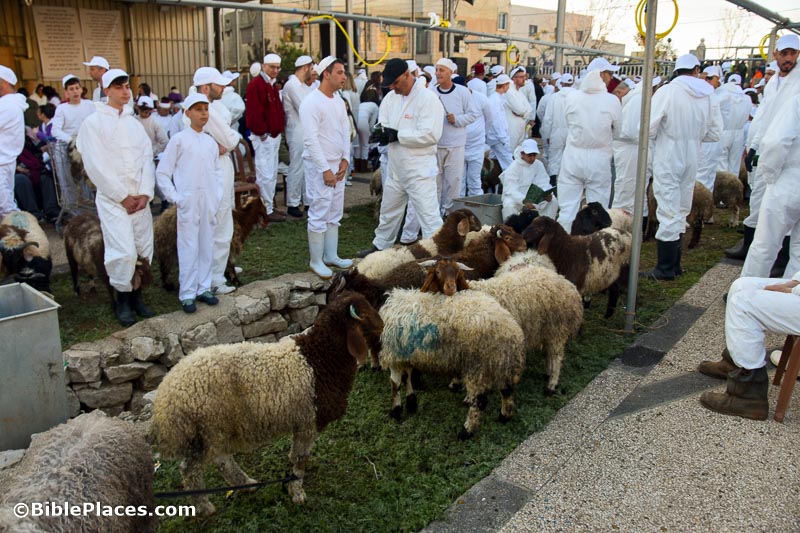
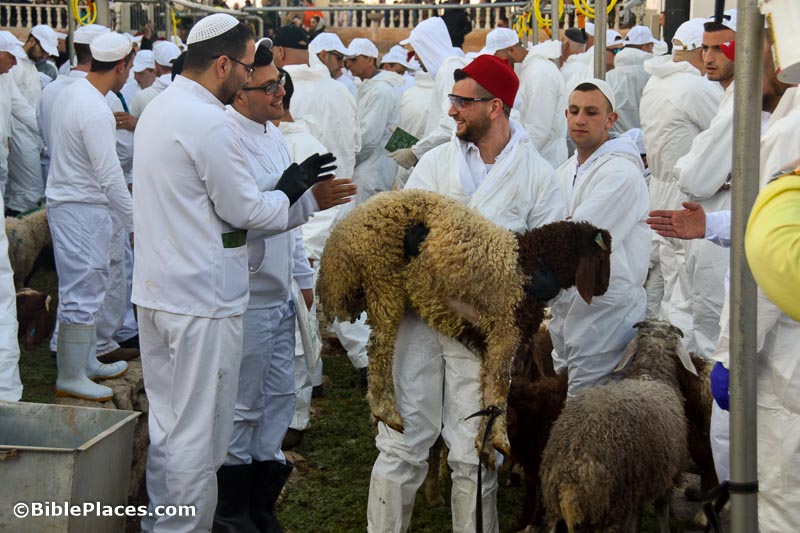
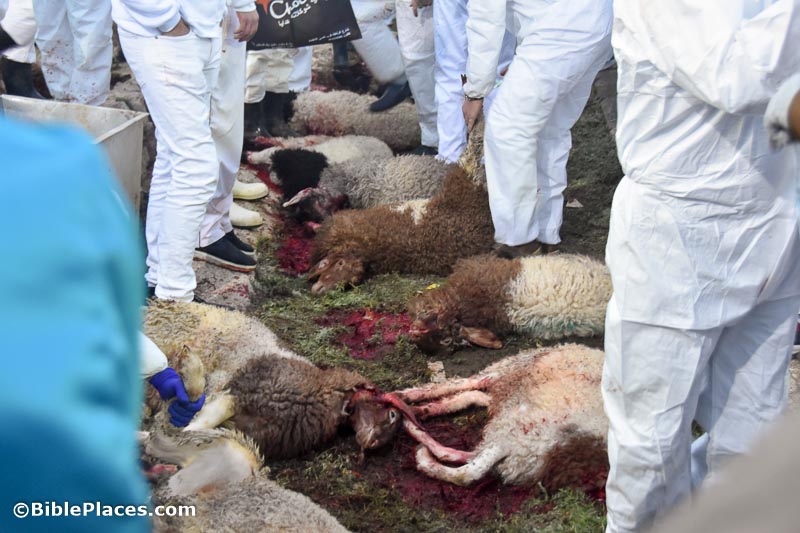
The Samaritans celebrated Passover on Thursday evening. See below for a few photos my son took at the event.

HT: Agade, Ted Weis, Steven Anderson, Chris McKinny

“He was led like a lamb to the slaughter…”

“And as a sheep before her shearers is silent, so he did not open his mouth…”

“He was cut off from the land of the living; for the transgression of my people he was stricken…”

Share:

A large statue of Trajan has been discovered in Laodicea.

Archaeologists have excavated another thermopolium in Pompeii, bringing the number to about 80.

Steps believed to be from the palace of Pontius Pilate in Jerusalem have been re-opened to visitors in Rome after 300 years.

The palace of Nero is now open to visitors and includes virtual reality features.

An ancient shipwreck off the Greek island of Alonissos is now being opened to recreational divers.

“Archaeologists have uncovered more than 100 ancient inscriptions [from the Middle Kingdom] carved into rock at Wadi el-Hudi, where the ancient Egyptians mined amethyst.”

The Temple Mount Sifting Project will re-start its sifting work on Jerusalem Day, June 2, but at a new location.

David Moster has released a new 5-minute video on butter churns from the ancient world.

Eisenbrauns has a 40-50% off sale through Sunday on some books related to ancient Israel.

New release: Excavations at Karkemish I. The Stratigraphic Sequence of Area G in the Inner Town, edited by F. Zaina. The print volume is available for purchase; the pdf is available for free (third item from the bottom).

Keith Taillon explains how Egyptian obelisks ended up in Paris, London, and New York City.

Luxor Times posts photos of the Grand Egyptian Museum, scheduled to open next year.

Brent Nongbri explains the archaeology of early Christian manuscripts.

The study of imagery from U2 spy planes is revealing numerous archaeological features.

Carl Rasmussen is giving a nicely illustrated tour of the Tomb of Annas, beginning with the exterior and continuing inside.

Ferrell’s favorite photo is one he took last week of a ewe and lamb grazing along the road from Jericho to Jerusalem.

HT: Agade, Ted Weis

Share:

An attempt to smuggle into Britain an ancient Babylonian kudurru as a “carved stone for home decoration” with a value of “300” failed.

“Music was ubiquitous in Ancient Greece. Now we can hear how it actually sounded.”

Israel has become the first country to list all cemetery tombstones online.

The February 2019 issue of the Newsletter of the Egyptian Ministry of Antiquities includes the latest discoveries, repatriations, and news.

A Greek archaeologist has been working in Alexandria for 15 years in an effort to find the tomb of Alexander the Great.

A 3-minute video shows an animation of what the hanging gardens of Babylon may have looked like.

The Museum of the Bible is hosting a two-session lecture series on “Jerusalem and Rome: Cultures in Context in the First Century CE,” featuring Eric Meyers, Mary Boatwright, Lawrence Schiffman, and Steven Notley.

Eric Meyers will be lecturing on March 28 in Chapel Hill, North Carolina, on “Holy Land Archaeology: Where the Past Meets the Present.”

Six speakers will address the subject of “Egypt and Ancient Israel: Merneptah’s Canaanite Campaign—History of Propaganda?” in a conference at Southwestern Baptist Theological Seminary on March
26.

Chris McKinny’s recent lecture on “Tel Burna—After a Decade of Investigation” is now online. The video includes all of his visuals.

This is fascinating: Predators in the Thickets: A Film Interview with Two Botanists and a Zoologist in Israel. You’ll learn more about lions, bears, forests, thickets, the Zor, and the Ghor. The film is intended an introduction to the newly launched Dictionary of Nature Imagery of the Bible.

Amos Kloner died yesterday.

HT: Agade, Chris McKinny, Joseph Lauer

Share:

Egypt has preserved a unique Greco-Roman catacomb in Alexandria through a groundwater-lowering project.

The Egyptian site of Heliopolis is “a black hole in our knowledge of ancient Egypt.”

A ram-headed sphinx carved from sandstone more than 3,000 years ago has been found in Egypt.”

The new exhibit “Ancient Egypt: From Discovery to Display” at the University of Pennsylvania Museum walks the visitor through the archaeological process.

John DeLancey shares photos he recently took inside the pharaohs’ tombs in the Valley of the Kings.

The top archaeological finds from Greece in 2018 include the oldest known excerpt from Homer’s Odyssey and the most intact ancient Greek vessel ever found.

Carl Rasmussen goes to Rome in search of an answer to the question, “Where did the Jerusalem Temple treasure go?” (Part 1, Part 2)

This year’s Friends of ABR Fundraising Banquet will honor Bryant Wood.

HT: Explorator, Ted Weis, Agade, Paleojudaica

Share:

New clues to the lost tomb of Alexander the Great are being unearthed in Egypt (National Geographic).

Sinai’s 500 plus photographic entries from mid 19th to mid 20th centuries . . . are now published online with detailed geography and history description . . . based on the 19-year field survey and maps of Sinai Peninsula Research (SPR).”

Erin Blakemore recounts the tale of how a modern attempt to play King Tut’s trumpets went awry.

Somehow John DeLancey is able to post summaries every day for his tours, including their recent days in Egypt.

Iraq is seeking World Heritage List status for the ancient city of Babylon.

Tourists are apparently returning to the ancient city of Ur in southern Iraq.

Esagil, Treasure Hunt in Babylon, is a a board game with a real-scale map of ancient Babylon.

The opening of a spectacular ancient Jewish catacomb in Rome continues to be delayed.

What is “biblical archaeology”? Owen Jarus provides some definitions and an introduction to some of the controversy surrounding its use.


Smithsonian Magazine profiles Wendell Phillips, sometimes known as America’s “Lawrence of Arabia.”

The majority, or perhaps even all, of the 75 new “Dead Sea Scrolls” fragments that have appeared on the market since 2002 are modern forgeries, according to Årstein Justnes and Josephine Munch Rasmussen. UPDATE: I am told by someone I trust that this article has many errors, including in its basic assertions.

ASOR has begun its March Fellowship Madness 2019 to raise funds to help students and scholars.

Ferrell Jenkins explains why he is fond of an “unattractive” photo taken at the Corinth Museum.

Two new videos with Aaron Brody: Introduction to the Bade Museum and Repatriating Antiquities.

HT: Ted Weis, Agade, G. M. Grena

IMG_20190301_134514_thumb[1]
Destroyed baptismal site on the Jordan River after recent flooding
(Photo by Alexander Schick)
Share: