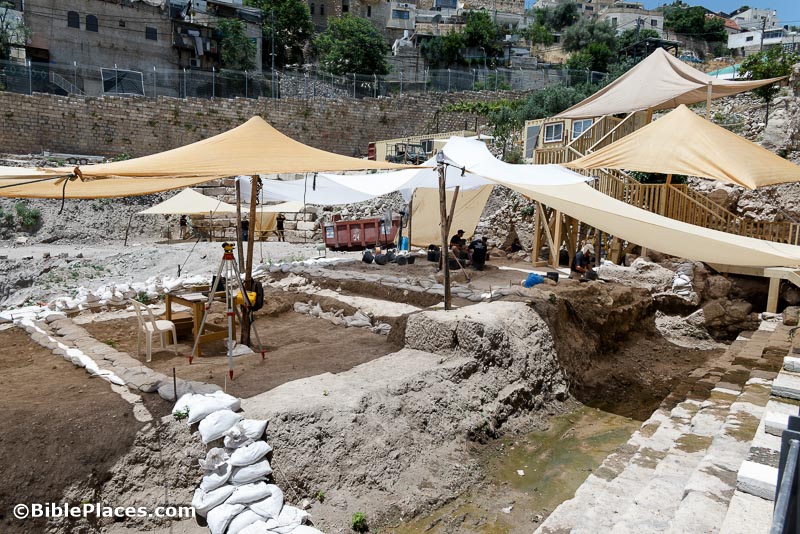
The oldest ceramic rooftiles discovered in Israel date to the 2nd century BC and were found in the Givati Parking Lot excavations in the City of David.

Leen Ritmeyer recalls his previous visits to the Gaza Strip, and shares reconstruction drawings from archaeological remains discovered there.

The Times of Israel follows up on the recent publication of articles challenging the Mount Ebal “curse inscription,” including a response from Scott Stripling. Peter van der Veen, one of Stripling’s co-authors, has released a photo and some comments on the inscription on the exterior of the lead object.

The American tourist who smashed ancient statues in the Israel Museum was acquitted but sent to involuntary hospitalization. His attorney claimed that he suffers from “Jerusalem Syndrome.”

The Israel Antiquities Authority Conference will be held on December 11 in Jerusalem. The conference title is “In Those Days at This Time – The Hasmoneans are Coming,” and admission is free.

New release: Jewish Quarter Excavations in the Old City of Jerusalem, Volume IX. “Volume Nine presents the wealth of small finds from the Palatial Mansion, built in the 1st century CE and destroyed by the Romans in 70 CE.” (Israel Exploration Society, 380 NIS)

Logos deal: Week in the Life Series  (7 vols) for $25

Jerusalem University College is hosting its 4th annual online seminar, “Culture Counts” on January 13. Registration is free, and the three presentations are:

  • Home Sweet Home: Ancient Israelite Households in Context, by Cynthia Shafer-Elliott
  • Life in the Roman Army, by Carl Laney
  • Hosting a Rabbi: A Lesson in Discipleship from Mary and Martha, by Cyndi Parker

BAS’s February Bible and Archaeology Fest will be held on February 24-25. Registration is open now for $149.

Mark Hoffman explains why now is a good time to (re-)sign up for the free BiblePlaces Newsletter.

HT: Agade, Arne Halbakken, Ted Weis
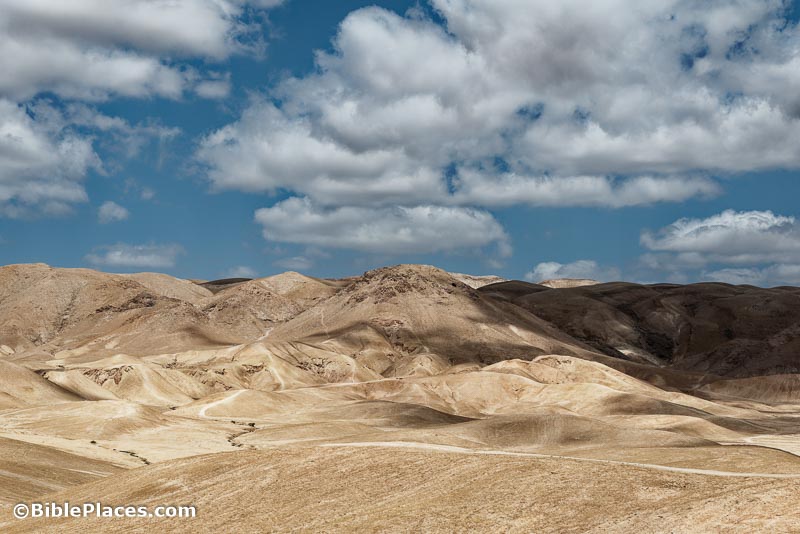
A new dataset of radiocarbon dates from Gezer “provides an independent source of absolute dates that will allow researchers to better understand the events at Gezer and to place them in a regional perspective.” Of particular interest is that the Solomon gate dates to the time of Solomon, contrary to the Low Chronology promoted by Finkelstein who calls the study “meaningless.” The underlying journal article is here.

When the war began in Israel on October 7, Israel’s museums acted quickly to protect their most precious artifacts.

Avshalom Halutz writes a “short history of Gaza,” reviewing the last 5,000 years of the coastal city’s conflicts (Haaretz premium

Ariel David reports on the recent study that argues that Jerusalem’s Millo was “defensive complex that protected the ancient water spring of Jerusalem for centuries.”

Online lecture in the BAS Scholars Series on Dec 6: “The Life of Jesus Written in Stone: The Earliest Commemorative Churches in Roman Palestine,” by Jordan Ryan, Wheaton College ($10)

Online “gala event” on Dec 10: “New Discoveries in the Temple Mount Sifting Project Research,” with Zachi Dvira, Gabriel Barkay, Haim Shaham, Anat Mendel-Geberovich, and Mordechai Kedar

New release: From Nomadism to Monarchy? Revisiting the Early Iron Age Southern Levant, edited by Ido Koch, Oded Lipschits and Omer Sergi (Eisenbrauns, $100)

Jerusalem Seminary is offering a 6-week audit-only version of “Israel Matters: A Theology of People and Land,” with Gerald McDermott, for only $79. A full description is here.

Now online: A Biblical Archaeology Conference held last Saturday, hosted by the Institute for Creation Research, with presentations by Randall Price and Tom Meyer

Bible Mapper Atlas has added a number of new maps in the last few months:

HT: Agade, Arne Halbakken

Excavations conducted during the laying of a water pipe not too far from Lachish revealed the “most ancient gate ever discovered in Israel.” They are dating it to about 300 years earlier than the Early Bronze gate at Tel Arad. The gate has already been backfilled.

Archaeologists excavating Tel Shimron announced the discovery of a massive Middle Bronze monument that was 15 feet tall and covered the entire acropolis. The monument was very well-preserved because soon after its construction it was filled in with gravel.

A beautiful Herodian ceiling panel was discovered in secondary use in the Ophel excavations (YouTube).

One of the arches in Caesarea’s Roman aqueduct collapsed on Friday.

A suspension bridge crossing the Hinnom Valley is now open to pedestrians (YouTube).

Zedekiah’s Cave (aka Solomon’s Quarries) reopened earlier this month, and Zahi Shaked gives a 30-minute tour.

Some Jews and Christians are arguing over the right to pray in the area of a possible tomb of Elisha at Stella Maris on Mount Carmel.

Israeli officials are considering loaning the Megiddo Mosaic, which comes from an early Christian building, to the Museum of the Bible. (Ilan Ben Zion’s AP article is a disappointment.)

WUNC interviews Jodi Magness upon the completion of her 11-year excavation of the Huqoq synagogue.

Aviva and Shmuel Bar-Am write about some of the many ritual baths that have been discovered throughout Israel. The article includes many photos.

Abigail Leavitt recounts various sites she visited this summer in Jerusalem. She has another post about a tour of the Shephelah.

“The Jewish National Fund, KKL-JNF, recently welcomed guests to visit the ancient Jewish synagogue in Ma’on, located in Israel’s southern Negev desert.”

Tour Caesarea virtually with DIVE (Digital Interactive Virtual Experiences) on August 30 ($20).

Joel Kramer goes to Mamre in the latest episode from Expedition Bible.

There are a number of late-summer festivals being held around Israel.

New release: The Changing Landscape of Israeli Archaeology: Between Hegemony and Marginalization, by Hayah Katz (Routledge, $42/$136).

The latest Jerusalem Tracker has been posted, with a roundup of news, publications, and media.

It may be hard to believe, but apparently there are unscrupulous shopkeepers in the Old City of Jerusalem.

HT: Agade, Gordon Dickson, Al Sandalow, Will Varner, Arne Halbakken, Roger Schmidgall, Keith Keyser, Wayne Stiles, Explorator

With the Israeli military gone, there are no obstacles to visiting Hyrcania in the Judean wilderness.

“A woman walking along the Palmahim Beach discovered an over 3,000-year-old figurine of the Egyptian goddess Hathor floating in the water.”

A group of first-graders discovered an Egyptian scarab on a field trip to Azekah.

The first-ever excavations of the Hasmonean fortress at Hyrcania recently began.

Abigail Leavitt is reporting on her experiences in the excavations of Tel Shiloh, most recently with Week 3. Tim Lopez gives his perspective in Spanish.

“Thousands who were illegally holding antiquities in their homes returned the items during a two-week campaign this month, the Israel Antiquities Authority and Ministry of Heritage reported.” One of the more impressive artifacts returned is a small anchor from the Roman period.

Writing for Christianity Today, Gordon Govier explains how archaeological discoveries have strengthened the case for the historicity of David.

Chandler Collins reflects on Nadav Na’aman’s recent proposal to place the earliest city of Jerusalem on what is today’s Temple Mount.

The “Road of the Patriarchs” is the subject of a new TBN documentary.

Bryan Windle is on Digging for Truth discussing Hoshea, the last king of the northern kingdom of Israel.

Zoom lecture on June 29: “The Jewish Character of Jerusalem in the Early Roman (Second Temple) Period as Attested by Archaeological Records,” by Ronny Reich.

Chandler Collins is inviting participation in his online “Biblical Jerusalem and Its Exploration” course this fall as well as his Jerusalem study tour offered in March by the Biblical Archaeological Society in collaboration with Jerusalem University College.

Other JUC courses offered online this fall include:

  • Archaeology of Religions in the Bible, by Chris McKinny and Kyle Keimer
  • Cultural Backgrounds of the Bible, by Oliver Hersey
  • The Life and Times of Paul, by Chris Vlachos

James Riley Strange reflects on the life of Dennis E. Groh, who died in April.

HT: Agade, Explorator, BibleX

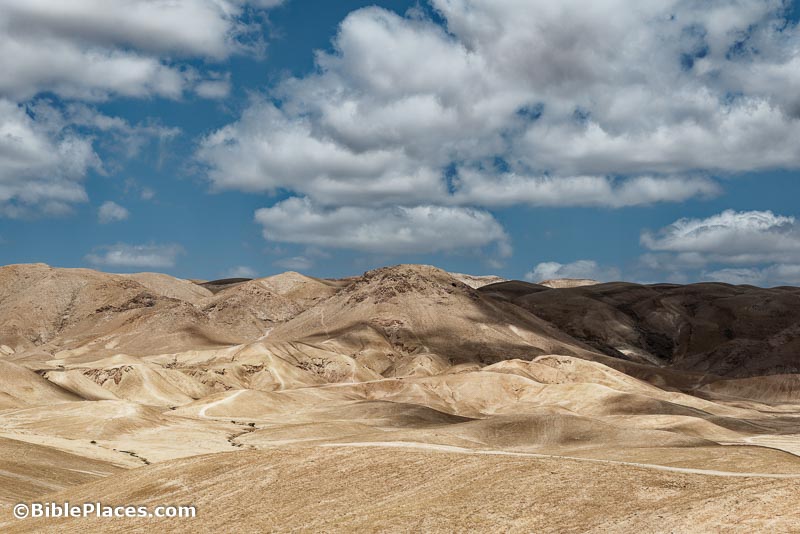
A view of Hyrcania taken a few weeks ago, from the east

“Researchers found traces of dysentery-causing parasites in material excavated from the cesspits below the two stone toilets that would have belonged to elite households” in Jerusalem. The underlying journal article is here.

A recreational swimmer discovered a shipwreck that included a cargo of 44 tons of marble blocks headed to the Roman port of Ashkelon or Gaza for an elite building project.

A 1st-century receipt was discovered in a 19th century excavation tunnel in Jerusalem.

“Tiny bones from prehistoric birds found at a birdwatching site in northern Israel have been identified as 12,000-year-old flutes.”

The “curse tablet” from Mt. Ebal has been published, but early reactions to the claims are not positive. The journal article is here.

Andy Cook has returned to the Pool of Siloam to give an update on why they haven’t discovered any more remains of the pool.

Carl Rasmussen writes about a new area in Caesarea being billed as the prison of Paul. Carl notes his misgivings with the identification.

In a recent article, Nadav Na’aman argues that the original center of Jerusalem was on the Temple Mount, not in the City of David. Haaretz provides a summary of the Tel Aviv journal article which is available to subscribers. (In my experience, Na’aman is quite good at being provocative but less good at being persuasive.)

Robert Mullins considers the implications of discovering the name of “Benyaw” inscribed on a storejar found at Abel Beth Maacah.

Chandler Collins raises questions about the hypothesis that Jerusalem’s population exploded because a mass of Israelite refugees arrived in the late 8th century BC.

Haaretz premium: “In Israel, everyone wants to excavate – from foreign volunteers to youth groups. But many archaeology experts, warning of damaged sites, now believe it’s time to slow down and focus on what’s already been unearthed.”

The summer issue of Biblical Archaeology Review includes stories on David and Solomon’s “invisible kingdom,” the lost treasures of the First Temple, and the Amorites.

HT: Agade, Joseph Lauer, Arne Halbakken, Ted Weis, Stephanie Durruty, Wayne Stiles, Alexander Schick, Gordon Franz, Explorator

The bulldozers working in the Pool of Siloam left this section for the archaeologists to carefully excavate. So far, no additional remains of the pool’s architecture have been discovered in this year’s work.

Excavations have uncovered an ancient farming system from the Middle Ages in the sand dunes next to Caesarea.

The Washington Post reviews the archaeological evidence for crucifixion.

In reporting on the recently published inscription from Jerusalem with possible ties to the Queen of Sheba, Bible History Daily notes some resistance by Christopher Rollston to the interpretation.

A new paper argues that Jews in the Roman army could have kept kosher.

Chandler Collins reviews proposed locations for Jerusalem’s Gennath Gate, often connected with the place of Jesus’s crucifixion and tomb.

A spring storm dropped snow on Mount Hermon and caused flooding that nearly cut off Eilat from the rest of the country.

In its Summer Institute this year, Jerusalem University College is offering three courses:

  • The Dead Sea Scrolls: Myth and Reality, taught by Adolfo Roitman, Curator and Director of The Shrine of the Book
  • Genesis 1-3 in its Ancient Near Eastern Context, taught by Oliver Hersey, President of Jerusalem University College
  • The Zionist Idea, taught by Jonathan Kaplan, Former Vice Provost of the Rothberg International School, Hebrew University of Jerusalem

This month only, Accordance Bible Software is offering the full version of Accordance 13 to everyone for free.

New resource: 14 Fresh Ways to Enjoy the Bible, by James F. Coakley. Though only one chapter is directly about Bible geography, the whole of this book looks like an excellent guide to better reading (Moody, 208 pages; $15).

HT: Agade, Arne Halbakken, Ted Weis, Alexander Schick, Explorator