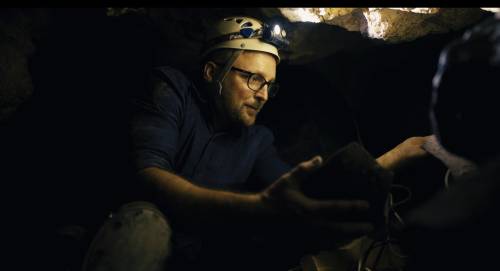
An impressive 50-meter long tunnel, of unknown date and purpose, was discovered near Ramat Rahel south of Jerusalem. The tunnel is well-built with a staircase and entrance, and it probably dates to the Roman period or earlier.

An 8-year-old boy found a Roman-era statuette fragment while on a family hike in Makhtesh Ramon.

The Great Isaiah Scroll exhibition re-opened to the public yesterday and will be on display for the next four months.

Two rare and ancient coins allegedly smuggled out of Israel were returned by the US this week. The Persian-era tetradrachm is only the second known of its kind.

Adele Berlin writes about Psalm 122’s perspective of ancient Jerusalem.

Danny Jones discusses new research on the origins of the Philistines on Digging for Truth.

New release: The Names of Jerusalem: Jewish, Christian and Islamic Traditions, by Aaron Demsky, Christophe Rico, Iraj Sheidaee (Polis Institute, $32)

Westminster Books is running a sale on the five available volumes of the Lexham Geographic Commentary. (One volume is yet to come.) They are excellent.

First time on sale for Kindle: The Realia Jesus: An Archaeological Commentary on the Gospel of Luke, by David A. Fiensy ($2.99; paperback $34; Logos $22)

HT: Agade, Ted Weis, Arne Halbakken
Share:

A new study will examine seal impressions discovered in Jerusalem to understand the city’s administrative systems in the Old and New Testament eras.

Ruth Schuster provides a good survey of the enigmatic Copper Scroll and then describes Shimon Gibson’s new theory that the scroll was a list of donations made to Bar Kochba in the early years of his rebellion. Joan Taylor agrees with the dating, but she believes the scroll gives a list of tithes given to the Temple cult after the Temple’s destruction.

A study of two of the Arad Ostraca suggests that the fortress’s administrators operated on a six-day week.

“A 2000-year-old stone weighing around five tons that had fallen off the Western Wall in Jerusalem and had been on permanent display at the Kirya military headquarters in Tel Aviv was returned to the Western Wall site.”

According to a new study, Pilate served as a prefect and also held procuratorial powers.

Two online lectures will be hosted by the Anglo-Israel Archaeological Society:

BibleStock has just released two new videos on their Coaching for Bible Teachers page. One is on the Gospels and connected to the 50-day reading plan on YouVersion and the other focuses on the seven churches of Revelation.

New release: Do You Like to Dig? A Children’s Introduction to Biblical Archaeology, by Beth Brewer (hardcover, Kindle)

On sale on Kindle: The People in Paul’s Letters: A Compendium of Characters, by Guy Manuell ($2.99)

Now available as an ebook, and discounted to $19.95 for a short time (reg. $52.95): Matthew’s Messiah: His Jewish Life and Ministry, by William Varner and David Hegg. I contributed more than sixty photographs.

HT: Agade

Share:

“A newly conserved ritual bath from the Second Temple period has been opened to the public at Tel Hebron.”

Forty-two pages of Paul’s letters in the 6th-century manuscript Codex H have been recovered using multispectral imaging to recover “ghost” text.

The latest issue of Jerusalem Journal of Archaeology is now online (open-access). One of the articles is about a new Hebrew ostracon from Lachish.

A recent book recounts a story of an archaeology professor who saw golden vessels from the temple in a basement in St. Anne’s Church.

Bryan Windle highlights the top three reports in biblical archaeology for the month of April.

The NY Times looks at the challenge museums face in securing artifacts from theft while at the same time maintaining a feeling of openness (gift link).

New release: Hippos (Sussita) of the Decapolis: The Civic Basilica and the Southern Bathhouse, by Arleta Kowalewska and Michael Eisenberg (Eisenbrauns, $130, but 30% off with code ANE26).

Claire Pfann, co-founder with her husband Stephen of the University of the Holy Land, died in February.

It’s not biblical archaeology or geography, but as the faculty editor, I am pleased with volume 3 of the TMU Journal of Biblical and Theological Studies.

I have not seen any AI-generated videos related to biblical archaeology until one showed up in my Google Alerts this week. Entitled “Ketef Hinnom: The Oldest Biblical Secret,” the 1.5-minute video is pure AI, from the information to the imagery. The essence of the report is accurate, but the photos are misleading, and not a single image of relevance ever appears (such as the site or the amulets). I fear we’ll see more of this, if not be swamped by it. Posted 4 days ago, the video already has 14,000 views.

HT: Agade, Alexander Schick, Explorator

Share:

Bible Archaeology Report lists the top ten discoveries related to Ezra and Nehemiah. Every discovery is illustrated by at least one photo, and the post has 27 footnotes pointing to additional resources.

Don Binder gives a little history of the Nea Church in Jerusalem, its excavation in the 1970s, and its inaccessibility ever since.

Bible Mapper has released a clickable, searchable Hebrew calendar that includes festivals and seasonal activities.

Lauren McCormick summarizes a recent article by Mark Wilson that argues that the Ethiopian eunuch may have been a Jewish administrator.

“Bread baked according to an ancient Roman recipe was sold for the first time in 2,000 years at Pompeii.”

According to a new study, the stadium at Perga was repurposed into a gladiatorial and execution arena, and five “Gates of Death” were designed to release animals into the combat area.

A exhibition on Troy will open in June at the Colosseum in Rome.

Significant changes are being made at four temples in Luxor to improve the visitor experience.

Three 18th-dynasty tombs in Luxor are being reopened after conservation work.

A new theory proposes that 16 ramps were used to build the Great Pyramid of Khufu in a period of as little as 14 years.

Christopher Rollston is on The Book and the Spade talking about Dead Sea Scrolls research related to the current exhibit at the Museum of the Bible.

The Vanderbilt Divinity Library is soft launching the new Art in the Christian Tradition website.

HT: Agade, Explorator, Roger Schmidgall

Share:

The Israel Museum will open to visitors on Monday, but the Great Isaiah Scroll exhibition is temporarily closed. Holy sites in Jerusalem re-opened this week.

Haaretz reports on the Great Isaiah Scroll exhibit that lasted not four months but four days. The article gives the history of the scroll since its discovery in 1947.

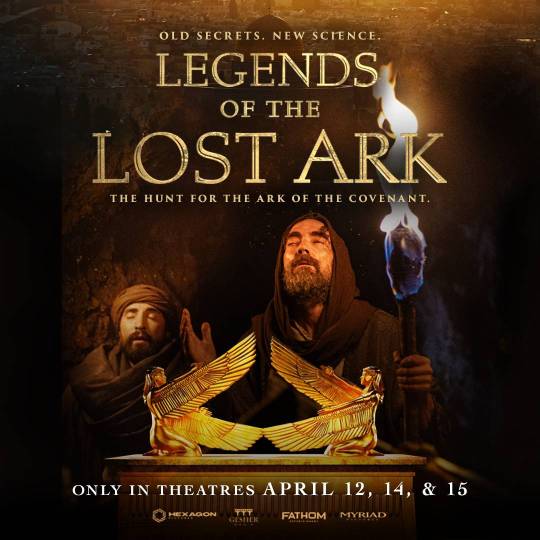
Legends of the Lost Ark, a docudrama with Chris McKinny, is in theaters for only three days: April 12, 14, and 15. Click here for showtimes in your area, tickets, and a link to the trailer.

Ran Silberman writes about the search for the ark of the covenant, and he asks if new technology might help to locate it underneath the Temple Mount.

Jerusalem Tracker 14.2 identifies the latest resources about Jerusalem in blogs, audio, video, and more.

New release: Jacob: The Story of a Family, by Jonathan Grossman (Koren, 769 pages, $35; Amazon)

Online lecture on April 23: “Hidden Treasures: Cryptic Cherubim in the New Testament,” by Chris McKinny. Chris will also be teaching a summer online course entitled “The Ark of the Covenant: A Biography.”

Zoom lecture on April 29: “New Excavations at Nessana, Negev: Late Antique Pilgrimage Hub on the Desert Fringe,” by Yana Tchekhanovets

Sy Gitin’s The Road Taken: An Archaeologist’s Journey to the Land of the Bible has dropped in price from $30 to $11.

HT: Agade, Alexander Schick, Explorator

Share:

I can’t count how many times I’ve been asked: where do you think the ark of the covenant is now? The group usually laughs when I say I’m pretty sure I saw it being hidden away in a warehouse in New York.

I usually then tick off the leading theories: the ark is hidden underneath the Temple Mount, the ark was taken to Mount Nebo, the ark is now in a church in Ethiopia, the ark was destroyed by the Babylonians.

But now there is a much better, and much more entertaining, answer to this perennial question. Archaeologist Chris McKinny, a longtime friend and partner on various BiblePlaces projects, has spent years researching the subject, and Gesher Media has produced a beautiful new docudrama that travels the world to bring the best evidence to light.

Legends of the Lost Ark is the perfect combination of academic scholarship and cinematic excellence, pulling the reader into the intrigue of where the symbol of God’s presence went after the Jerusalem temple was destroyed. Legends of the Lost Ark presents dramatic footage with expert analysis, including on-site reenactments, interviews with scholars, and a cast of more than 100 actors. The movie has already received the 2025 Silver Crown Award for Best Limited Theatrical Release at the ICVM (International Christian Visual Media) meeting.

“The Ark was not only lost — its story and significance have largely been forgotten,” said Dr. McKinny. “What happened to the Ark remains one of the most fascinating mysteries in human history. This film charts new territory in investigating the most ancient legends surrounding its disappearance.”

For the first time, three enduring legends surrounding the Ark’s disappearance are scrutinized through textual analysis, archaeological exploration, and expert theological debate. Through cinematic reenactments, the film vividly portrays the prophet Jeremiah’s desperate mission to safeguard the Ark during Jerusalem’s fall, placing audiences inside a pivotal moment in biblical history.

The movie will be in theaters for three days next week: April 12, 14, and 15. Tickets are available here. You can read more about the movie (here and here) and watch the trailer (here).

I hope you’re able to see it!

Share: