A $3 million grant will allow the National Campus for the Archaeology of Israel to open by the end of 2022, more than 8 years after its original schedule.

“A new study of trash heaps at rest stops along the ancient Incense Route in the Negev Desert shows it was a two-way street for trade.”

Hybrid conference on May 18: “The First International Academic Conference on New Studies in Temple Mount Research,” featuring many important scholars in Jerusalem studies. Registration and a small fee is required.

“Australia’s only academic program dedicated to the study of Ancient Israel was officially launched at the Australian Catholic University (ACU) last week.” The program will support a new archaeological excavation at Lachish.

In Haaretz, Ruth Schuster uses a recent essay published by Shimon Gibson to discuss the location of where Jesus was baptized. Don’t expect much; this is the worst article I’ve read this year.

Andy Cook has released a new video about the Dead Sea, including drone footage that shows how much the water has receded in the last century.

John DeLancey’s latest devotion from Israel is on Psalm 23. Another recent video shows his run up Masada’s Snake Path.

David Moster addresses the question, “What did ancient Hebrew sound like?” in a new 6-minute video.

Three Hebrew speakers—one Yemenite, one Samaritan, and one Israeli—have a 20-minute conversation to see if they can understand each other.

New release: His Inheritance – A Memorial Volume for Adam Zertal, edited by Ralph K. Hawkins, Erasmus Gaß, and Dror Ben-Yosef (Ugarit-Verlag, 2022).

Abigail Leavitt gives some background to the writing of her new book, The El-Burnat (A) Structure(s): Joshua’s Altar?

Philip Long is leading a tour around Israel now, and he describes some new sites in Jerusalem he visited earlier this week.

Aren Maeir shares photos from the (short) spring season at Tell es-Safi/Gath.

Walking the Text’s recommended resource of the month is Biblical Backgrounds. (I will have more to say about the resources of this fine organization soon, but I’m happy to spread the word now.)

HT: Agade, Joseph Lauer, Arne Halbakken, Charles Savelle
A farmer in the Gaza Strip discovered the head of a stone statue that may depict the Canaanite goddess Anat. Or not.

“Archaeologists have for a long time unearthed clay pots in medieval Jerusalem. But now, a new study shows that some of them were likely ‘ancient hand grenades.’”

A new study of Dead Sea sediment shows how climate change in the past has affected the level of the lake and the settlement history of the region. The underlying journal article is here.

The Israeli Antiquities Authority is investigating claims that antiquities on the Temple Mount were destroyed in recent riots.

The City of David YouTube channel has released a tour of Warren’s Shaft and the Gihon Spring, including a visit to a cave currently under excavation.

The Museum of the Bible and DIVE (Digital Interactive Virtual Experiences) is hosting a virtual tour of the Tomb of the Patriarchs in Hebron on May 11 ($20).

Leen Ritmeyer shares a number of reconstruction drawings of Capernaum’s octagonal church.

Bryan Windle shares ten thoughts on the lead curse tablet found on Mount Ebal.

Joel Kramer at Expedition Bible has just released a short video about the earliest mention of Yahweh on an ancient inscription found in Sudan. The video includes footage of Joel’s visit to the remote site.

Walking the Text has just announced an original television series called “The Sacred Thread.” The pilot episode has been completed, and you can watch the trailer here. They have some impressive footage.

HT: Agade, Joseph Lauer, Arne Halbakken, G. M. Grena

A new study authored in part by Chris McKinny and published in the Journal of Biblical Literature identifies the millo of Jerusalem with the fortifications around the Gihon Spring. The JBL article requires purchase, but Bible History Daily has a summary.

Henri Gourinard is writing a guidebook on the Emmaus Trail, and he provides a brief introduction to the trail for Bible History Daily.

A new Israeli reality TV show named “My Trip is Better” will pit five tour guides against each other in a five-day competition.

“Location, location, location” – Brad Gray explains the significance of geography in his “Lenses of Context” series for Walking the Text. The 20-minute episode includes many photos and maps.

Foreign archaeologists are returning to Gaza to restore archaeological sites and to train Palestinians in conservation (3-minute video).

Thousands of rare antiquities were confiscated . . . in a complex pre-dawn operation in the Nablus area on Monday following a months-long undercover investigation.”

NY Times: “For 10 days, a photojournalist drove across Jordan from north to south, visiting several of the country’s most treasured sites. Here’s what he saw.”

The Bible Mapper Blog has just posted its 100th map. The latest free maps include:

I join Henry Smith on the latest episode of Digging for Truth to talk about Queen Esther in Susa (25 min). In this first part of a two-part series, I describe the excavations of Susa, the layout of the city, and highlights of my visit to Iran.

HT: Agade, Joseph Lauer, Arne Halbakken, Explorator, Charles Savelle, Steve Ulrich, Keith Keyser

Construction work in the Gaza Strip has uncovered a Roman cemetery. There have been reports of looting.

Ongoing work at a quarry near Bethlehem has destroyed about 100 meters of a 1st-century aqueduct that brought water to Solomon’s Pools. There are calls on the government to stop the destruction.

Haaretz (premium) runs a short story about the Gal On Citadel, a Canaanite fortress in the Shephelah between Gath and Lachish. But, as Moshe Gilad writes, “it is advisable not to have too high expectations.”

Schoolchildren hiking in Nahal Besor discovered a coin with the head of Roman Emperor Valentinian I.

The latest episode of This Week in the Ancient Near East podcast questions whether there were really two synagogues in Magdala.

Peter Feinman surveys what prominent Egyptologists in the last century have thought about Israel’s exodus from Egypt.

Pharaoh Hophra ruled Egypt when Jerusalem fell to the Babylonians, and he is the subject of the latest archaeological biography on the Bible Archaeology Report.

A series of videos featuring Alexander Schick discussing the history of the Bible, Tischendorf, and the Dead Sea Scrolls is being released this month as the “focus series” by the Historical Faith Society (membership required).

On The Book and the Spade, John DeLancey discusses what’s new for tourists in Israel after returning from his first tour following Covid shutdowns.

HT: Agade, Joseph Lauer, Arne Halbakken, Explorator

Excavations at the “altar site” on Mount Ebal have uncovered an ancient amulet with Hebrew writing. There’s more about it in this lecture by Scott Stripling (beginning at about 34:38).

Zvi Koenigsberg recounts some of his story in working with Adam Zertal on the Mt. Ebal excavation, and the conclusion of the account provides more information about the recently discovered amulet.

Archaeologists are investigating a group of asphalt-coated skulls discovered in a cave in Nahal Hemer near the Dead Sea.

A 5th-century Byzantine church has been opened in Gaza after a three-year restoration project.

The Israeli government is allocating $3 million toward the preservation of archaeological sites in Judea and Samaria, with half of that allocated to reconstruction work at Sebastia (the ancient city of Samaria) and a significant amount to the winter palaces at Jericho.

Ruth Marks Eglash writes about the $50 million renovation project underway at Jerusalem’s Tower of David Museum, including the discovery that Suleiman’s Old City walls have no foundation.

Bryan Windle’s top 3 reports in biblical archaeology this month include two related to Egyptian pharaohs, a discovery on Mount Ebal, and a discoveries from a Jerusalem toilet.

Chris McKinny and Kyle Keimer discuss the geography of Judges in the latest episode of the Biblical World podcast.

Israel’s Good Name reports on a university trip to the site of Doq above Jericho and the Good Samaritan Museum. He includes many photos.

James Strange reflects on his work as an archaeologist and recent discoveries at Magdala. The story includes a 30-minute video interview.

Zoom webinar on Feb 10: “Tel Rehov: A Major Bronze and Iron Age City in the Jordan Valley,” with Amihai Mazar, Nava Panitz-Cohen, Nota Kourou, Naama Yahalom-Mack, and Robert Mullins.

Zoom webinar on Feb 20: “Excavations at Tel Gezer: A Personal Story,” with Sam Wolff.

I don’t think I’ve ever seen a media blitz like that carried out by Andrew Lawler, author of Under Jerusalem. His latest story is on Christianity Today’s website.

There is something special about hiking in Israel.

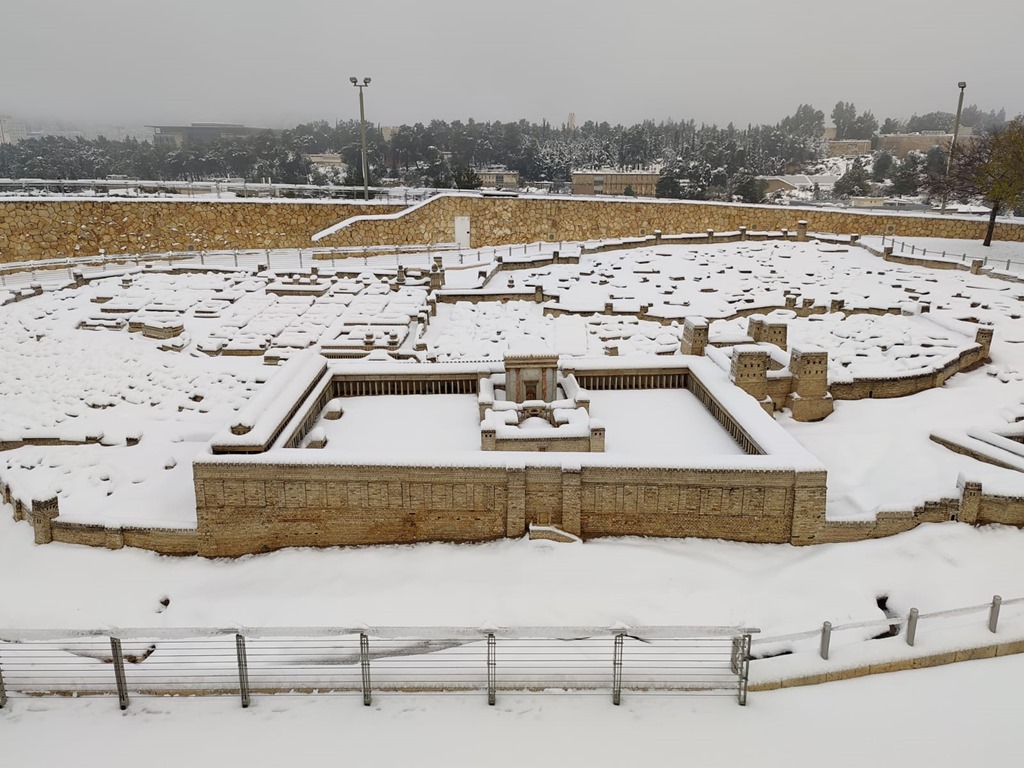
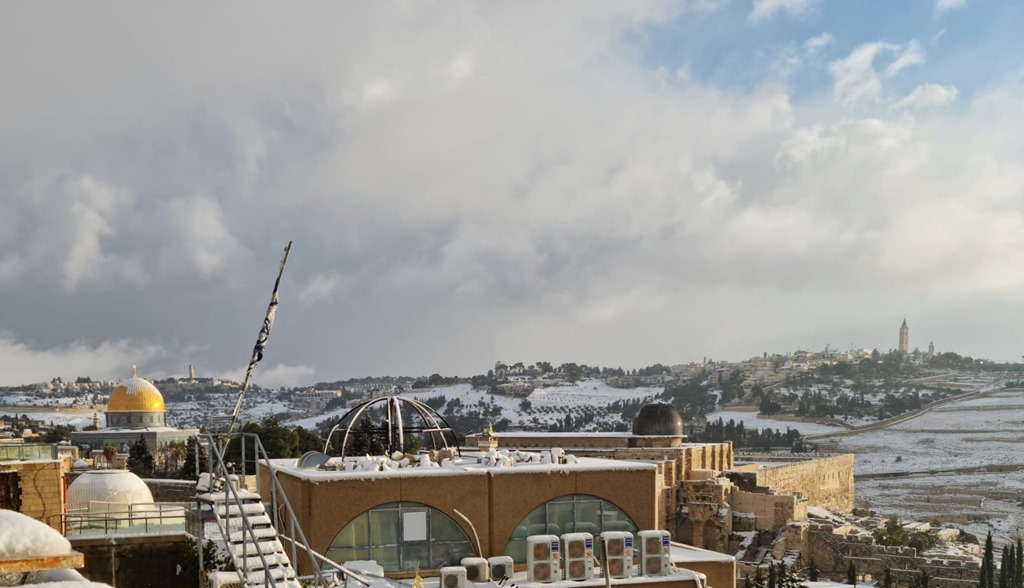
Snow fell in Israel this week, from the Golan Heights to the hills around Jerusalem. The Times of Israel has photos. Haaretz (premium) has more.

HT: Agade, Joseph Lauer, Arne Halbakken, Keith Keyser, Charles Savelle

Jewish Quarter snow

Snow in the Jewish Quarter and on the Mount of Olives. Photo by Miriam Siebenberg

BA6EAF83-6D81-4D2B-9E01-2387334F8571

Jerusalem model at the Israel Museum. Photo by a museum guard.

Israel’s Good Name reports on his tour of four sites in the Nahal Tirzah area, including a possible site for Gilgal and a Roman army camp.

“People may find it hard to believe that tiny little Israel has more than 300 wineries,” with more than 50 in the foothills between Tel Aviv and Jerusalem.

Foreign tourists are again allowed in Israel, and John DeLancey is posting daily updates about his group’s travels.

With the celebration of his 200th anniversary around the corner, Conrad Schick’s work in Jerusalem is highlighted by Bible History Daily. The article also notes that Shirley Graetz is working on a historical novel about Schick’s life.

Les and Kathy Bruce are leading an English/Spanish tour of Israel in April/May, and a Turkey/Greece tour in May.

Susan Laden and Rob Sugar share about the impact of Suzanne Singer on Biblical Archaeology Review.

New in paperback: Children in the Bible and the Ancient World Comparative and Historical Methods in Reading Ancient Children, edited by Shawn W. Flynn.

Zoom lecture on Jan 26: “The Roman Army in the Negev,” by Alexandra Ratzlaff ($7).

Jerusalem Seminary has announced its spring course offerings, including courses on the “Life and Land of Yeshua,” “Jewish Life and Literature,” and “Faith, Politics and Ministry.” The description and the various instructors in that last course look particularly interesting to me. You can see the full list here.

The latest free maps from Bible Mapper include:

Emanuel Hausman, founder of Carta Jerusalem Publishing House, died this week.

HT: Agade, Joseph Lauer, Explorator, Arne Halbakken