From The Daily Star:

Dozens of workers were busy covering old Sidon’s Frères archaeological site Monday, to protect a major new discovery unearthed by a delegation from the British Museum.
“A small contingent of the British Museum/Directorate General of Antiquities of Lebanon team of archaeologists discovered a new deeply concealed room,” read a statement released by the delegation.
The newly discovered monumental room is believed to be an extension of the underground Temple of Sidon, which dates back to the Bronze Age.
This finding comes as workers prepare the foundations of a new national museum, which will be established beside the archaeological site. Construction of the museum led to urgent excavations at the site last month.
Ten years ago, the delegation discovered an underground “holy of holies” room, dating back to 1300 B.C., where ancient residents are believed to have worshipped their gods. The newly discovered room was found adjacent to it, and is thought to be an extension of the site’s temple. It is believed to have been used by high-status members of the community.

The story continues to provide more of the significance of this discovery as well as plans for the new museum.

Sidon, College site Late Bronze underground cella, adr1307138864
Previously discovered basement room in temple of Sidon
Photo by A.D. Riddle
Share:

The largest treasure of gold coins ever found in Israel was recently discovered in the harbor of Caesarea. Most of the coins date to the Fatimid period (ca. AD 1000). There’s a close-up of a well-preserved coin here. Seven high-res images are available here.

The Jerusalem Post has photos and a video of the recent snowfall in Israel. Record snowfall was recorded in Istanbul, and the snow was heavy in Lebanon and Jordan. Yahoo has more photos of Jerusalem here. And Shmuel Browns has some photos from his neighborhood in the German Colony.
Leen Ritmeyer suggests that some paving stones on the Temple Mount pre-date the Roman destruction.

The next stop for the Passages exhibit is the happy town of Santa Clarita, California.

Some of the Dead Sea Scrolls are coming to the California Science Center next month, along with the Jerusalem IMAX movie.

Ever wanted to volunteer in Israel? Wayne Stiles suggests 15 volunteering opportunities.

James Pritchard’s HarperCollins Atlas of Bible History is not the best atlas out there, but it’s currently only $3.99 for Kindle. As one reviewer notes, the text may be more useful on the screen than the maps.

This week on the Book and the Spade: Herod’s palaces and ancient olive oil, with Clyde Billington.

Ferrell Jenkins explains how Pilate used coins to promote the emperor cult.

Codex Vaticanus is now online.

Aren Maeir’s recent lecture at GVSU is now posted on Youtube.

Eric Cline will be lecturing at the Oriental Institute in Chicago next week.

Gabriel Barkay, Zachi Dvira, and others involved in the Temple Mount Sifting Operation are coming on a fundraising tour in April and May. Check out their blog to learn how you can arrange talks or dinners with them.

The Islamic State is reportedly looting ancient sites “on an industrial scale.” Some people are trying to stop it.

HT: Ted Weis, Joseph Lauer, Charles Savelle, Jock Stender

Gold coins discovered in Caesarea harbor
Photo copyright: Clara Amit, courtesy of the Israel Antiquities Authority
Share:

The largest stone block known from antiquity has been uncovered in Baalbek. Its weight is estimated at 1,650 tons.

AirCamz’s new video provides the best views of Tel Burna I’ve ever seen.

Lawrence Mykytiuk provides evidence for Jesus’ existence outside the Bible in a new Biblical 
Archaeology Review article now online in its entirety.

If you’re interested in the various kinds of nets used in fishing on the Sea of Galilee, Ferrell Jenkins shares many photos.

Scientists at Chicago’s Field Museum recently opened the lid of the coffin of a 14-year-old boy.

Osiris statues have been discovered in the temple of Karnak.

The Book and the Spade looks at Shishak’s scarab.

Most of Syria’s World Heritage sites have been damaged by bombing or looting.

Travelujah describes some of the different tastes of Bethlehem.

Lamb & Lion Ministries is offering its new 2015 Holy Land Calendar for $5. I contributed several of the photos.

HT: Ted Weis, Agade

Share:

Here’s a photo of the Temple Mount ramp that is being dismantled.

Mike Rogoff’s article in Haaretz describes the various baptismal sites on the Jordan River and gives guidance on which one is best.

Matt Glassman writes about his time excavating this summer at Khirbet el-Maqatir.

This article on “gender studies” at Tel Abel Beth Maacah is really just a piece about someone’s experience on the dig.

A conference this week in the City of David focused on gold treasures discovered in Jerusalem. The article ends with an insightful comment by Gabriel Barkay.

The re-discovery of a fragment of a lead coffin from Tyre prompted a lengthy article about the subject in Haaretz. Paleojudaica suggests its relevance for the forged lead codices.

The land of 10,000 caves is profiled in this piece on Beit Guvrin’s bell-shaped quarry caves.

Ferrell Jenkins has collected his articles related to the route of the Exodus and the location of Mount 
Sinai.

Aviva Bar-Am details the history and significance of Ashkelon, the first national park in Israel.

Wayne Stiles has all the visual aids you need for thinking about Jericho: photos, videos, and a map.

HT: Agade, Joseph Lauer

Ashkelon tell aerial from northwest, tb121704841
Tell Ashkelon from the northwest
Photo from Judah and the Dead Sea
Share:
(Post by A.D. Riddle)

The ArchéOrient blog recently posted a piece by Rocio da Riva on the inscriptions and reliefs in Lebanon belonging to the Neo-Babylonian king, Nebuchadnezzar II. (This is the king mentioned in 2 Kings 24-25; 2 Chron 36; Jeremiah; Daniel; and elsewhere in the Bible.) The original article is in French, but Google Translate does an almost-semi-respectable job of producing an English version here.

The article mentions four places in Lebanon where Nebuchadnezzar left inscriptions and/or reliefs.

  • Nahr el-Kalb
  • Wadi Brisa, aka Wadi esh-Sharbin
  • Shir es-Sanam
  • Wadi es-Saba’

Three of these sites are in the northeast of the Lebanon Mountains, oriented in the direction of Riblah, Nebuchadnezzar’s headquarters in the west (2 Kings 25; Jer 39 and 52). The inscriptions/reliefs are located along routes which lead up into the mountains and which were used by the Babylonians for felling and transporting cedars of Lebanon for construction. The locations can be viewed here in Google Maps (if I did it right).

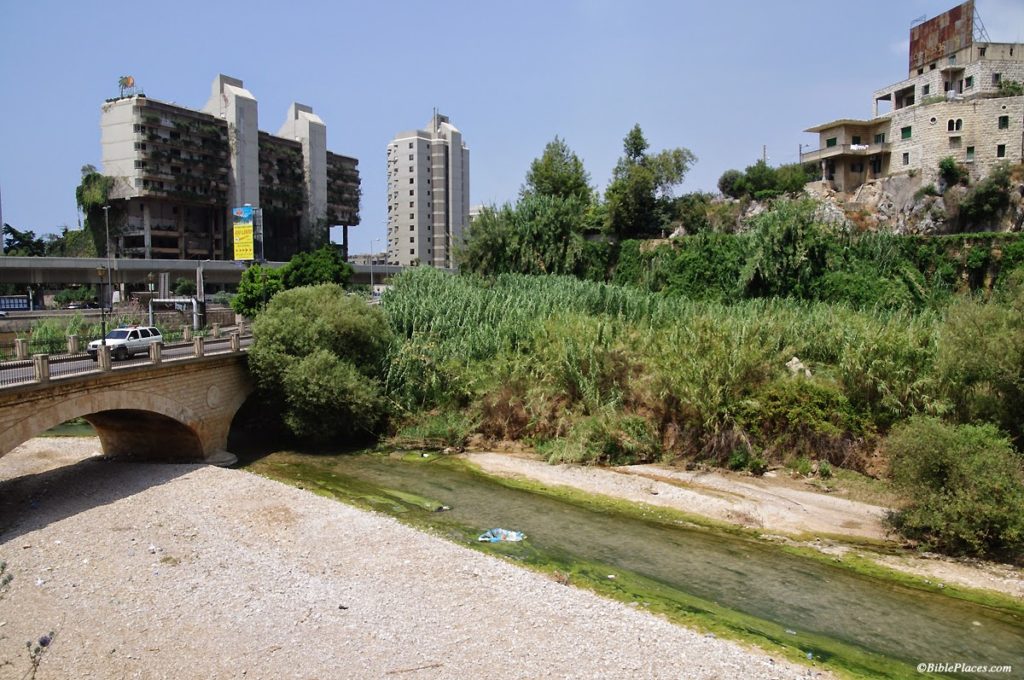
The Nahr el-Kalb inscriptions are alone on the other side of the Lebanon Mountains, at the mouth of a river named Nahr el-Kalb on the Mediterranean coast. (Well, not entirely alone, because on the opposite bank of the river is a rocky promontory where one will find nearly two dozen other stelae left by conquerers from Ramesses II in ca. 1276 B.C. to the “Liberation of South Lebanon” in A.D. 2000. See Seth’s post here.)

Nahr el-Kalb (“Dog River”).
The inscriptions of Nebuchadnezzar are secretly hidden
behind all the vegetation just right of the bridge.

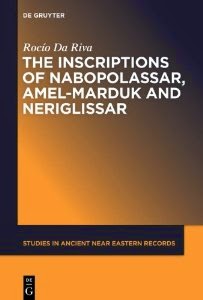
Da Riva has been working on the royal inscriptions of all the Neo-Babylonian kings. A lot of her recently-published work concentrates in particular on the Lebanon inscriptions listed above, but she has also just completed an edition of the inscriptions of Nabopolassar, Amel-Marduk and Neriglissar (cover shown below). Many of her articles are available at her Academia.edu page (sign up required).

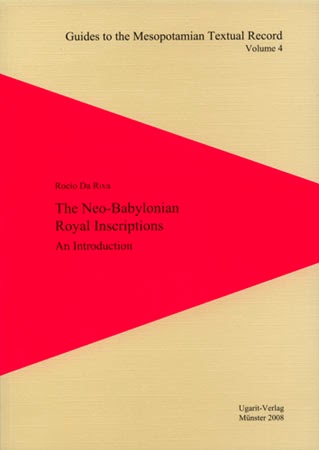
As a prelude to her editions of the Neo-Babylonian royal inscriptions, Da Riva published a short introduction entitled The Neo-Babylonian Royal Inscriptions: An Introduction (2008). We recommend especially the first 19 pages where one will find a very nice, up-to-date, historical summary of the Neo-Babylonian period.

HT: Jack Sasson

Share:

After 31 years of hosting The Book & The Spade, Gordon Govier shares some personal reflections.

An aging Lebanese potter laments the passing of his craft.

Archaeologists have found evidence of the “plague of Cyprian.”

Satellite images from the US State Department’s Cultural Heritage Center “document the scale of destruction that looters continue to inflict on archaeological heritage sites during the ongoing conflict in Syria.”

Identifying a complete set of Edward Robinson’s Biblical Researches in Palestine at archive.org is a bit confusing, but David Stark has posted links to volumes 1 and 2 (3 volumes from 1841 in a 2-volume set, 2nd/11th eds.) and volume 3 (the 1856 volume, Later Biblical Researches, 11th ed.).

Now on pre-pub for Logos Bible Software: Near East Archaeological Society Bulletin (1958–2013) (78 issues) – $99.95.

ASOR’s Archaeology Weekly Roundup has more.

I’ll be traveling the better part of the next two weeks and will not be posting much. If they discover an archive at Hazor, Gezer, or Gath, I’m sure that one of my fellow contributors will let you know.

HT: Charles Savelle, Jack Sasson, Joseph Lauer, Ted Weis

Share: