Excavations have identified a 2nd-century BC military fortress at Ashdod-Yam.

“Researchers have discovered 50 rare cave pearls, some of which contain ancient Greek artifacts from the Hellenistic era, in an underground water system near Jerusalem.”

Some scholars are questioning whether the oldest copy of the Ten Commandments—scheduled to be sold next week at auction—is authentic.

In a short video, Eitan Klein shows how a band of antiquities thieves were caught in the act, robbing a cave in the Shephelah.

Expedition Bible’s latest video looks at the archaeological evidence for the location of Jesus’s crucifixion.

John DeLancey filmed on location at the Ketef Hinnom tombs in Jerusalem.

Appian Media has released a new short film entitled “Explore Petra” (12 min). I’m curious how they got the drone footage.

Christopher Rollston explains why the Megiddo Mosaic is important on The Book and the Spade.

“New Orleans Baptist Theological Seminary held a 10th anniversary celebration for its Museum of the Bible and Archaeology” last week.

Eliezer Oren, longtime Professor of Bible, Archaeology, and Ancient Near Eastern Studies at Ben-Gurion University of the Negev, died this week.

Jerusalem University College has announced its online semester courses for the spring, including:

  • Archaeological Methods and Theory, taught by Chris McKinny and Kyle Keimer
  • Introduction to the Modern Middle East, taught by Oded Yinon
  • Jewish Thought and Practice, taught by Rabbi Moshe Silberschein
  • The Book of Revelation and the Seven Cities of the Apocalypse, taught by Chris Vlachos

HT: Agade, Gordon Franz, Alexander Schick, Arne Halbakken, Ted Weis

Share:

Recent excavations at Caesarea Philippi (Banias) indicate that Herod Agrippa II repurposed the sacred cave “into a nymphaeum-triclinium, a venue for Roman-style banquets in which water flowed around a central dining area and out through an aqueduct.”

“A recent excavation on Mount Zion in Jerusalem unearthed a fragment of a 16th-century Chinese porcelain bowl with ‘the earliest known Chinese inscription in Israel.’”

The Temple Mount Sifting Project is again dealing with a funding shortfall that may cause it to shut down.

Rabbi Avraham Stolik lectured on the discoveries related to the Pilgrimage Road leading from the Pool of Siloam to the Temple Mount (50 min).

Zoom lecture on Dec 8: “Women of Prominence and Power in First Temple Period Hebrew Inscriptions,” by Christopher Rollston ($10)

The latest issue of Israel Exploration Journal includes an article that suggests a “revolutionary reading” of the Tel Dan Inscription. (Available only to subscribers)

The latest issue of DigSight includes articles on the ivory comb from Lachish, recent conferences and lectures, and upcoming events.

In the latest episode of Biblical World, Kyle Keimer and Chris McKinny discuss the fundamentals of biblical archaeology. “If you wondered what biblical archaeology is and why you should care – this is the episode for you.”

HT: Agade, Gordon Franz, Roger Schmidgall, Arne Halbakken, Explorator

Share:

A team from Johns Hopkins believes they have identified alphabetic writing that dates to 2400 BC.

Israel Finkelstein and Tallay Ornan have published an article in Tel Aviv (open-access) of recent finds at Tall adh-Dhahab al-Gharbi, and they suggest that the site is biblical Mahanaim. (They locate Penuel at the adjacent site to the east, the reverse of how I would identify them based on the sequence in Genesis 32.) In any case, this is an important study on a pair of neglected sites. The article is summarized by Israel365 News.

Egypt’s Ministry of Tourism and Antiquities denies that the Great Pyramid is being destroyed.

Scientists have discovered hallucinogenic residue in a 2,000-year-old Egyptian vase.

Jaafar Jotheri, professor of geoarchaeology, shares his thoughts on the past, present, and future of archaeology and Assyriology in Iraq.

Zoom lecture on Dec 17: “Visual Strategies in the Art and Archaeology of the Achaemenid Empire,” by Pierfrancesco Callieri

The second Digital Ancient Near Eastern Studies Conference will be held as a virtual event on December 5 and 6.

J. Cheryl Exum, longtime professor at the University of Sheffield, died recently.

Colin Renfrew, founding director of McDonald Institute for Archaeological Research, died recently.

Bryan Windle reviews the top three biblical archaeological reports for the month of November.

Apparently, not everything in Gladiator II is historically accurate.

HT: Agade, Gordon Franz, Arne Halbakken, Ted Weis, Explorator

Share:

A 12-year-old girl found an Egyptian scarab while on a family hike near Hod HaSharon.

A 71-year-old Israeli researcher was killed when attempting to visit an archaeological site in southern Lebanon.

The stone inscription of the Ten Commandments that is up for auction must be put on public display, as a condition of its purchase. The current owner violated that requirement for the last eight years. Another website identifies the owner.

Aren Maeir’s new MOOC on ancient Jerusalem is now online, along with his previous MOOC on biblical archaeology. Both may be taken for free or for a small fee for certification. There’s also a one-minute “behind the scenes” video for the Jerusalem course.

The latest Jerusalem Tracker links to the newest books, book reviews, academic articles, news reports, podcasts, videos, and upcoming events related to Jerusalem.

On Digging for Truth, Scott Stripling reviews the 2024 excavation season at Shiloh. “Discoveries include a city gate, new technologies, sacrificial activity, and even gold.”

In the latest edition of “Discussions with the Diggers,” Bryan Windle interviews Abigail Van Huss (nee Leavitt), assistant dig director for the Shiloh excavations.

The new issue of Biblical Archaeology Review includes articles on monumental churches built to commemorate Jesus’s life, Egyptian statues from Hazor, and the ten lost tribes.

Cambridge University Press has inaugurated a new series entitled Elements in The Archaeology of Ancient Israel. The first volume is Edom in Judah: Trade, Migration, and Kinship in the Late Iron Age Southern Levant, by Andrew J. Danielson. It is available online until December 18.

A new 5-minute video by the Orthodox Union explains why Hebron and the Machpelah is important to the Jewish people. The video includes a few photos from a surreptitious exploration of the underground caves in 1981. Elsewhere Avi Abrams tells the story.

Correction: The Galilee boat on display in the Dead Sea Scrolls exhibit at the Reagan Library is only a replica. There is more information about the exhibit in this JNS article.

HT: Agade, Gordon Franz, Arne Halbakken, Ted Weis, Explorator

Share:

A new study of DNA extracted from the bones inside Pompeii’s famous plaster casts has largely debunked long-held assumptions based solely on the physical appearance and positioning of the casts.”

The Pompeii Archaeological Park is now limiting the number of daily visitors to 20,000 and using timed personalized tickets with the visitors’ full names.

In a new program sponsored by Airbnb, some tourists will be chosen to participate in a mock gladiatorial fight inside Rome’s Colosseum.

An amulet depicting the “prophet Solomon” was discovered in Karabük, Turkey.

The earring holes on King Tut’s famous golden mask indicate that it was originally created for a female or child.

“Scientists at Chicago’s Field Museum are studying Egyptian mummies using a mobile CT scanner.”

Ellie Bennett tells the story of one of the “Queen of the Arabs” mentioned in Assyrian inscriptions.

“On Sunday, November 17, 2024, from 10:00 AM to 4:00 PM, followed by a keynote from 6:00-7:30 PM, the George Washington University Department of Classical and Near Eastern Languages and Civilizations & the Capitol Archaeological Institute will co-host an international symposium focused on the Amarna Letters, a collection of 14th-century BCE diplomatic correspondence which offers a rare insight into the political dynamics of the ancient Near East.” Register here for the full day, or here for the keynote.

Virtual tour on Nov 20: “Rome’s Legendary Emperors: Nero, Hadrian, and Constantine”

Available for preorder on Logos: Archaeology and the Ministry of Paul: A Visual Guide, by David A. deSilva ($28). This is the first of three planned volumes.

New release: The Labors of Idrimi: Inscribing the Past, Shaping the Present at Late Bronze Age Alalah, by Jacob Lauinger (SBL Press, $58-$78; open-access ebook).

New release: The Archaeology of the ‘Margins’: Studies on Ancient West Asia in Honour of Peter M.M.G. Akkermans, edited by Bleda S. Düring and Jo-Hannah Plug (Sidestone, €15+; read online for free)

Barbara Aland, former director of the Institute for New Testament Textual Research, died earlier this week.

Dan Diffendale has posted many thousands of photos, organized by albums on Flickr. He has written a short guide to using them.

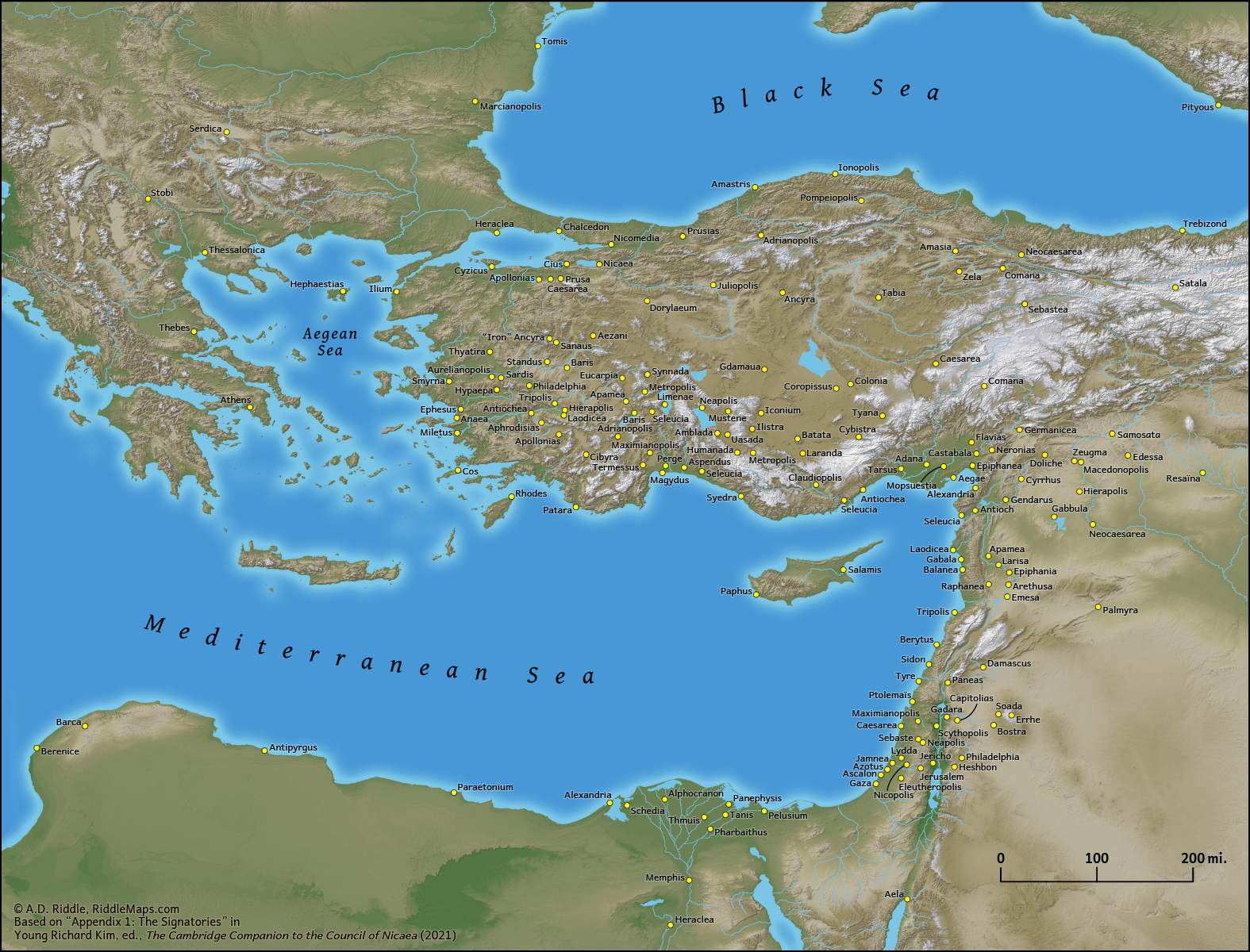
Biblical Field Studies are funded study trips to biblical sites in Turkey for Bible scholars and teachers in the Majority World. The program is designed to equip Christian teachers and professors who work in the Majority World by introducing them to the geographical, historical, and social contexts of early Christianity. The 2025 trip (June 11–18, 2025) will visit the sites related to the Seven Churches of Revelation and the Seven Ecumenical Councils.”

There will be no roundup next weekend. If you will be attending ETS or SBL, stop by the BiblePlaces booth and say hi.

HT: Agade, Gordon Franz, Arne Halbakken, Mark Hoffman, Ted Weis, Wayne Stiles, Paleojudaica

Share:

Archaeologists have discovered the first Middle Kingdom tomb in the Asasif region of Egypt, with many undisturbed remains.

A scholar claims that the “Passover Letter” from Elephantine has little or nothing to do with Passover.

Israel has been criticized for targeting Hezbollah forces located near Roman sites in Baalbek and Tyre.

The Museum of Fine Arts, Budapest, is hosting an exhibition until February 2 entitled, “Kingdom of Gods and Demons. Mesopotamia 1000-500 BCE.”

The final episode in Walking The Text’s “Life in the Roman Empire” series is on “Walking the Roman Street,” with Randall Smith. The link includes a pdf with comprehensive notes. You can also download the full Roman Empire study guide here.

Hybrid lecture at the Albright on Dec 11, 10:00 EST: “Man-Hunting in the Desert: The Ill-Fated Palmer Sinai Expedition of 1882,” by James Fraser (Zoom). A list of future events at the Albright is posted here.

The Oxford Handbook of Early Christian Archaeology is on sale for Logos ($18, reg. $75)

Everyone can take advantage of Wipf and Stock’s 50% off sale in conjunction with the AAR/SBL conference.

Ralph Jackson, long-time curator at the British Museum, died recently.

Carl Rasmussen shares a number of photos form the newly reopened The Museum Hotel in Antakya (biblical Antioch on the Orontes), which preserves the remains of extensive mosaics from the Hellenistic, Late Roman, and Byzantine periods.

HT: Agade, Gordon Franz, Arne Halbakken

Share: