Eggshells discovered in the City of David are the first evidence of chicken eggs used the diet of ancient Israelites.

A group of high schoolers discovered a rare gold coin from the time of Theodosius II (AD 420) on a class trip in Galilee.

A new archaeological visitor center has opened at Jokneam, at the base of Mount Carmel not far from Megiddo. The highlight is a 9th-century statue of the city’s ruler. There’s a slideshow on Facebook.

The partnership between Israel Finkelstein and Tel Aviv University physics professor Eli Piasetzky began when the latter was volunteering undercover at the Megiddo excavation.

The new Petra Museum has been inaugurated. It is located next to the main entrance to the site.

Flora Brooke Anthony provides examples of how Egyptians depicted in art their northern neighbors in the Levant.

Egypt’s Ministry of Antiquities Newsletter for March 2019 is now online.

Adriano Orsingher explains the purpose of Phoenician and Punic masks.

Salvage excavations in Larnaca, Cyprus, revealed more than 110 tombs from the Early Bronze to the Late Roman periods.

Lightning recently struck the Acropolis in Greece, closing it temporarily.

Emory University is receiving the Senusret Collection, “one of the most extensive collections of ancient Egyptian and Near Eastern artwork to be donated to a US museum.”

“Life Lessons from Israel: Dan” is the latest video produced by Biblical Israel Ministries & Tours.

Israel’s Good Name recounts his visit to Herodium.

Now is the time to register for the 2019 season at Tell es-Safi/Gath.

“The arched stone-built hall in Jerusalem venerated by Christians as the site of Jesus’ Last Supper has been digitally recreated by archaeologists using laser scanners and advanced photography.”

Carl Rasmussen’s posts this week focus on Jesus’s crucifixion, including (1) crucified man from Jerusalem; (2) bone box of Caiaphas; (3) Church of the Holy Sepulcher; and (4) the best rolling stone tomb in Israel.

Pilgrims in Jerusalem yesterday celebrated Good Friday and Passover.

Police arrested several people who were planning to smuggle two baby goats onto the Temple Mount for a sacrifice.

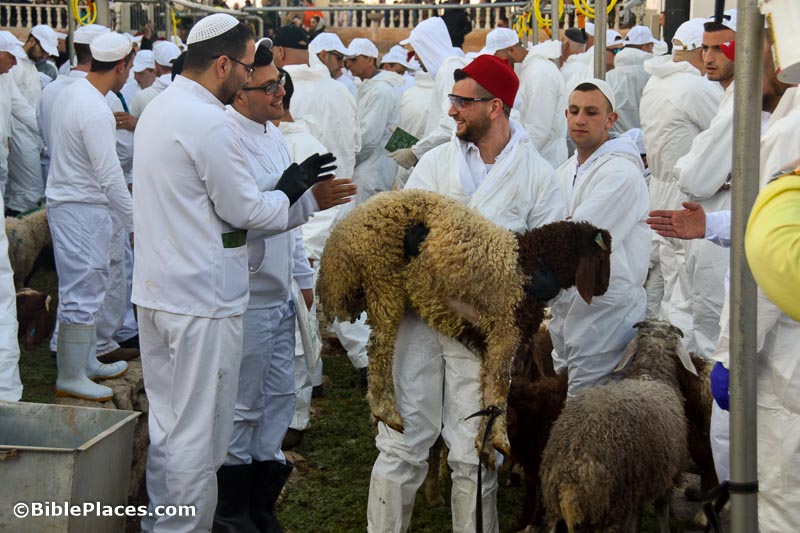
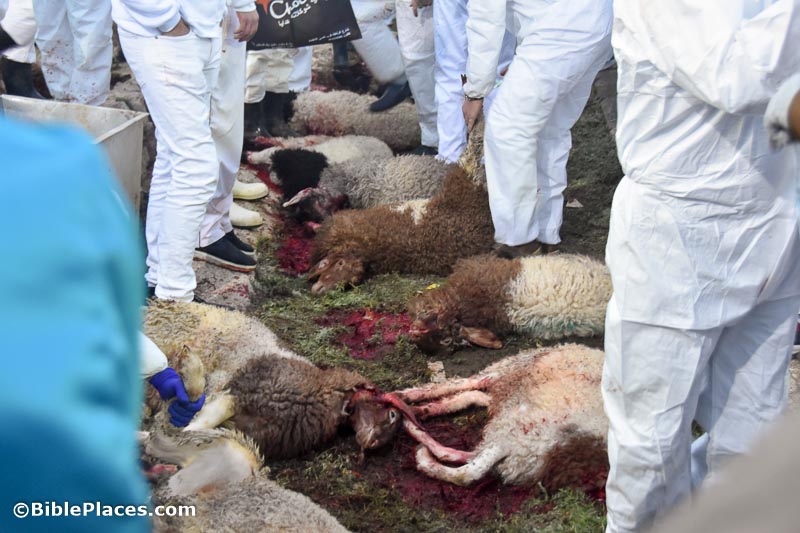
The Samaritans celebrated Passover on Thursday evening. See below for a few photos my son took at the event.

HT: Agade, Ted Weis, Steven Anderson, Chris McKinny
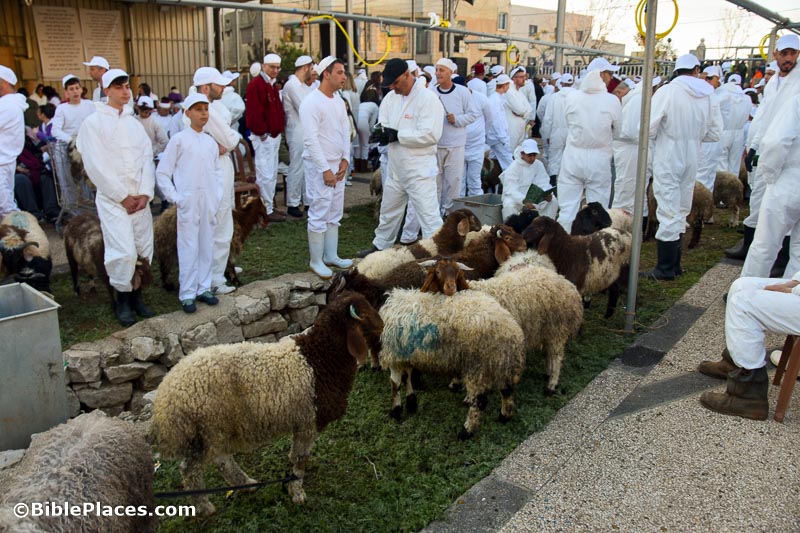
“He was led like a lamb to the slaughter…”

“And as a sheep before her shearers is silent, so he did not open his mouth…”

“He was cut off from the land of the living; for the transgression of my people he was stricken…”

An inscription written in the Persian, Elamite, and Babylonian languages has been discovered at Naqshe-Rustam, the royal necropolis of Persepolis.

Work on the sewer system in Kition, Cyprus, keeps revealing ancient remains from the Classical and Roman periods.

A decade of restoration work of King Tut’s tomb has been completed. The History Channel has many photos.

The vase that the British Museum realized was a mace is in fact a vase.

The BBC reports on several women whose interest in archaeology began with a childhood fascination with mummies.

Eisenbrauns is running a sale of 30-50% off of titles in the Duke Judaic Studies and Sepphoris Archaeological Report series.

Beit Shemesh and Kiriath Yearim are the subjects of discussion in this week’s The Book and the Spade.

Shmuel Browns shares several photos he took along the Alon Road in eastern Samaria.

If you have been to Israel before, answer a few quick questions to help Wayne Stiles as he puts together a video series to help travelers prepare for a Holy Land Tour.

It’s a slow week, so here’s a bonus quotation:

“My definition of archaeology, shared with students during almost forty years of teaching historical geography, is that archaeology is the science of digging a square hole and the art of spinning a yarn from it” (Anson Rainey, “Stones for Bread: Archaeology versus History.” Near Eastern Archaeology 64 (2001): 140.

HT: Agade, Ted Weis

The discovery of a cuneiform fragment at Tel Mikhmoret recorded a slave sale and revealed physical evidence of the presence of Babylonians in biblical Samaria.”

Authorities have recovered from antiquities thieves a Neolithic stone ritual mask that comes from the Hebron hills.

Archaeologists have found evidence for trephination in a Late Bronze tomb at Megiddo (Haaretz premium).

“In one of the largest tombs ever found in Luxor, Egypt, archaeologists have discovered a sarcophagus holding the mummy of a woman named Pouyou who lived during the 18th dynasty.”

Egyptian officials announced that treasures from the tomb of Tutankhamun will tour ten cities in the world prior to the 2020 opening of the Grand Egyptian Museum in Giza. The exhibit is currently in Los Angeles and then heads to Paris. The other cities have not yet been announced.

“Inside the Cloak-and-Dagger Search for Sacred Texts” is in this month’s issue of National Geographic. As you would expect, the text is engaging and the photos beautiful.

“National Geographic has commissioned leading British indie production company, Caravan to produce The Bible from Space, a two-part documentary special which reveals the truth behind the biggest, most incredible stories from the Old Testament.” You can be sure that any TV production which promises to “reveal the truth” does not.

Carl Rasmussen is having second thoughts about the route of Paul’s ship from Chios to Miletus.

Luke Chandler is leading a tour of Israel in June, with the option to stay longer and join an archaeological excavation.

SourceFlix has released a 4-minute video about Tel Dibon, including footage of an early-morning fly-over. Ferrell Jenkins writes about the same site and provides some nice photographs.

A board game dating to the time of Abraham, the Royal Game of Ur, is making a comeback in Iraq.

The online Massive Open Online Course (MOOC) entitled “Biblical Archaeology: The Archaeology of Ancient Israel and Judah” begins on Wednesday.

The Institute of Biblical Culture is offering your choice of a free class.

If you’re not a subscriber to the BiblePlaces Newsletter, you can sign up in a few seconds. We send about three issues a year, with one coming next week.

HT: Agade, Ted Weis, Charles Savelle

Archaeologists are uncovering more of the Minoan palace of Zominthos in Crete.

Political instability is threatening many historical sites in Libya, including remains of the Roman Empire in the city of Sabrath.

Archaeologists have discovered a tomb from the 5th Dynasty in Abusir, Egypt.

John Swogger explains his work as an archaeological illustrator in using informational comics to explain various aspects of archaeology.

The proliferation of sinkholes along the Dead Sea shore has resulted in new life next to the briny waters.

Some priests in Jerusalem have reenacted the Sukkot water-libation ceremony in the City of David.

The Ancient Coins of Israel is an informative 10-minute video produced by the Friends of the Israel Antiquities Authority.

The annual Batchelder Conference at the University of Nebraska Omaha will be held on November 9-10. The Friday plenary address will be by Jodi Magness on her excavations at Huqoq. (No info online at the time of this posting.)

The Albright Institute has announced its lecture and workshop schedule for October and November.

Carl Rasmussen has written a couple of posts related to city gates, including its defense and illicit worship.

Ferrell Jenkins has created an index of his articles related to church history.

Here’s a photo to add to your lecture slides: the 1974 passport for Ramses II.

HT: Judi King, Ted Weis, Charles Savelle, Agade, Jared Clark

Egyptian archaeologists announced the discovery of a mummification workshop, a gilded silver mask, and much more at the Saqqara necropolis of Memphis.

A sealed Ptolemaic-era sarcophagus has been discovered in Alexandria.

A museum in Alexandra, Egypt found a hidden space with pots and urns dating to the Greek, Roman, Coptic, and Islamic eras.

Two Old-Kingdom-period homes have been discovered near the Giza pyramids.

The June issue of the Newsletter of the Egyptian Ministry of Antiquities reports on archaeological discoveries, repatriated antiquities, and various other items.

13 verses of Homer’s Odyssey, possibly the earliest known copy, was found near Olympia in southern Greece.

A 3-D composition bust of Julius Caesar was unveiled by researchers at The Rijksmuseum van Oudheden.

A marble replica of the Winged Victory of Samothrace will be erected on the island this summer.

25,000 Greek and Roman illegally trafficked artifacts, worth $46 million, were recently seized in a raid across four nations.


Current Archaeology posts a response to the recent challenge to Carbon-14 dating in Iron Age Israel.

The latest issue of Atiqot is now online. Past issues are available here.

The J. Paul Getty Museum has acquired an illuminated medieval Hebrew manuscript known as the Rothschild Pentateuch.

Mark Hoffman has created a video from his explorations of the Via Egnatia between Neapolis, Philippi, Amphipolis, and Apollonia.

Carl Rasmussen’s ride in the back of the plane resulted in the opportunity to take some nice aerial photos of Istanbul.

HT: Joseph Lauer, Agade, Ted Weis, Charles Savelle, ANE-2, Explorator

“Archaeologists in Greece have uncovered rare jewels, coins and other artefacts while excavating tombs near the ruins of the classical city of Corinth dating to between the fourth and first centuries A.D.”

A preliminary report of the 2017 excavation season at Hala Sultan Tekke in Cyprus has been posted.

Participants interested in joining for the 2018 season will receive free accommodations and meals.

Iranian authorities have acted to prevent a gathering at the tomb of Cyrus the Great on the Persian king’s birthday.

Christopher Rollston believes that an erroneous construct form proves that the “Jerusalem Papyrus” is a modern forgery.

Lawrence Schiffman reflects on the history of the Dead Sea Scrolls 70 years after the initial discovery.

Carl Rasmussen shares a video with sounds of a Christian liturgy from the Hagia Sophia (and how they did it).

John DeLancey is posting daily on his current Egypt-Jordan-Israel tour.

BAS is celebrating the retirement of Hershel Shanks with a sale on some of his works.

“What’s So Funny: Discovering and Interpreting Humor in the Ancient World” is the title of a conference to be held in April at The Ohio State University.

You can try Logos 7 Platinum for free now through November 14.

HT: Agade, Ted Weis, Joseph Lauer, Charles Savelle