Archaeologists found Egyptian artifacts from the Late Kingdom period in a cave in southern Israel near Kibbutz Lahav.

Arad would like to become a tourist destination in southern Israel.

A researcher believes that the famous “Meidum Geese” painting from ancient Egypt is actually a modern fake.

Now is a good time to visit Egypt.

The 2,000-year-old date palm known as Methuselah has turned out to be male, but there is hope that another seed may produce a female plant. The scientist would like to produce an orchard of ancient date palm trees.

A large Iron Age fortification has been discovered at Ashdod-Yam, the port of the ancient Philistine city of Ashdod.

Eisenbrauns is having a big sale on excavation reports, including works on Ashkelon, Tel Malhata, Megiddo, Tell el-Borg, Timnah, and Dothan.

Tel Burna – The Late Bronze and Iron Age Remains after Five Seasons, by Chris McKinny, Deborah Cassuto, and Itzhaq Shai.

New from Zondervan: The Most Significant People, Places, and Events in the Bible: A Quickview Guide, by Christopher Hudson.

Larry G. Herr favorably reviews Biblical Lachish, by David Ussishkin.

A £2 million statue looted from Cyrenaica, Libya, was confiscated upon entry to the UK.

A new video shows ISIS destroying Iraq’s UNESCO World Heritage city of Hatra.

The British Museum has proposed lending the Elgin Marbles to Greece.

They’re using drones in Jordan to track the looting of ancient tombs.

Test your knowledge of Bible numbers with the BAR Anniversary Bible Quiz.

HT: Charles Savelle, Agade, Joseph Lauer, Ted Weis

Share:

A new “Rosetta Stone” has been discovered near Alexandria, with the text written in hieroglyphics and demotic script.

One hundred prehistoric cultic sites have been studied in the Eilat Mountains. The academic article on which the news story is based is available on academia.edu. And there are more photos here.

Roman-period mosaics have been discovered in an illicit excavation near Kerkenes, Turkey.

An unlooted Mycenean tomb has been excavated in central Greece from about 1200 BC.

The air pollution (aka “dust”) in Israel and the Middle East was extremely high this past week. Daily
Mail has some amazing photos and Exploring Bible Lands cites a relevant verse. Carl Rasmussen explains the positive effect.

The dust storm was followed by a snow/rain storm (with video). This storm exposed a large Byzantine storage jar on the beach of Yavne-Yam (with photo).

Since you’re reading this, you’re already familiar with one of the 5 Holy Land Blogs You Should Follow, by Wayne Stiles, but you may not be aware of all of the other ones.

Ferrell Jenkins is taking a closer look at Herod’s temples, beginning with the one at Caesarea Philippi (or better, Omrit?) and continuing with Caesarea on the Sea. Both posts are well illustrated.


The New York Times reports on questions about the origins of tablets from the Jewish exiles in Babylon now on display in Jerusalem.

An article in The Jewish Week describes some of what George Blumenthal has done to bring the world of biblical archaeology closer to all of us.

Which popular movies were filmed in Israel? Which ones were not? Those in the former category include “Exodus” and “Schindler’s List.” A longer list is available in this premium article at Haaretz.

Flames of Rome, by Paul L. Maier, is on sale for Kindle now for $1.99. This covers the period after Pontius Pilate and is also recommended if you like historical fiction from biblical times.

Just published: Robert Alter’s Strong As Death Is Love: The Song of Songs, Ruth, Esther, Jonah, and Daniel.

#5 on our list of Jerusalem favorites is Hezekiah’s Tunnel. The top four are coming on Monday on Twitter and Facebook.

HT: Jay Baggett, Charles Savelle, Agade, Joseph Lauer

Share:

From the Israel Antiquities Authority:

For the first time, grape seeds from the Byzantine era have been found. These grapes were used to produce “the Wine of the Negev” — one of the finest and most renowned wines in the whole of the Byzantine Empire. The charred seeds, over 1,500 years-old, were found at the Halutza excavation site in the Negev during a joint dig by the University of Haifa and the Israel Antiquities Authority. “The vines growing in the Negev today are European varieties, whereas the Negev vine was lost to the world. Our next job is to recreate the ancient wine, and perhaps in that way we will be able to reproduce its taste and understand what made the Negev wine so fine,” said Prof. Guy Bar-Oz of the University of Haifa, director of the excavation.
The archeologists know of “the Wine of the Negev” or “Gaza Wine” — named for the port it was sent from to all corners of the empire — from historical sources from the Byzantine period. This wine was considered to be of very high quality and was very expensive, but unfortunately, it did not survive to our day, so we do not know what it was that made it so fine. In earlier excavations in the Negev, archeologists found the terraces where the vines were cultivated, the wineries where wine was produced, and the jugs in which the wine was stored and exported, but the grape seeds themselves were not found.
[…]
This discovery is exciting for local wine growers and for the archeologists, and they all hope to reveal the secret of the Negev vines in order to recreate the ancient wine, and by so doing, to finally understand why it was famous throughout the Byzantine Empire — in Egypt, Greece, Italy, and Spain.

Read the full article here.

Winepress at Avdat, tb030607878
Reconstructed winepress at Nabatean city of Avdat
Photo from
Cultural Images of the Holy Land
Share:

A reporter visited the Kishle in Jerusalem on its recent opening. The article includes a nice photo and an audio version.

Portions of Jerusalem’s Decumanus have been uncovered near Jaffa Gate.

Leen Ritmeyer notes new building violations on the Temple Mount.

The Temple Mount Sifting Project is seeking volunteers who can assist them in raising money through crowd-funding.

Why should Jews and Christians be denied from praying on the Temple Mount while Muslims are
allowed?

“There is a little corner of Jerusalem that is forever India. At least, it has been for more than 800 years…”

The latest SourceFlix video short: Biblical Cities – From the Air.

A Palestinian archaeologist is claiming to have discovered the church where the martyr Stephen’s bones were buried. The site is near Ramallah (10 miles north of Jerusalem), and the claim is based on an inscription not shown in the article. Perhaps some Byzantines were trying to capitalize on the tourist trade, just as they plan to do to the site in the future.

A fortified site from the time of Persia’s conquest by Alexander the Great has been excavated near
Israel’s border with Gaza.

The laborers at the copper mines in the Timna Valley ate well, according to an analysis of bones from Slaves’ Hill.

Luke Chandler has a report on Yosi Garfinkel’s recent lecture on Khirbet Qeiyafa, including word on two more inscriptions.

Tourism in Israel was down 33% in October from the previous year.

If you can use financial help to excavate next summer at Tel Burna, check out this scholarship opportunity.

Ferrell Jenkins shares a beautiful photo of Mount Arbel and the Sea of Galilee.

HT: Ted Weis, Charles Savelle, Joseph Lauer, Keith Keyser

Share:

The Institute for the Study of the Ancient World is hosting a new exhibit, “When the Greeks Ruled Egypt: From Alexander the Great to Cleopatra.” The official website is here and the NYTimes covers it here.

Reuters has more about the Museum of the Bible planned for Washington, DC.

Hershel Shanks is no longer sure that the ivory pomegranate inscription is authentic.

A newly restored glass plate found in Spain and dating to the 4th century provides an unusual portrait of Jesus.

The remains of Burgin are now open to the public. This site in the Shephelah was inhabited by Jewish exiles returning from Babylon.

Marc Turnage provides a window into the Bible through four artifacts from the New Testament world in this 3-minute video.

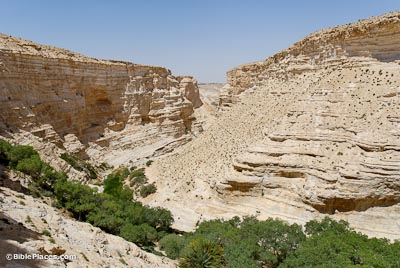
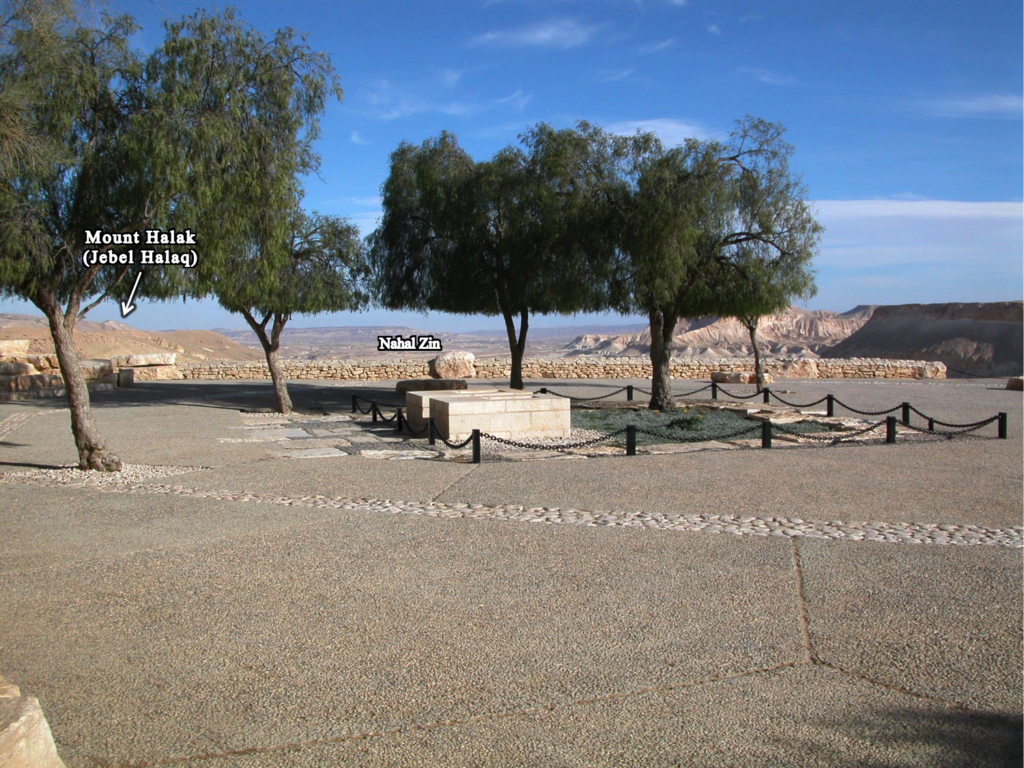
Wayne Stiles: “This wilderness area of southern Israel lets you see far—in more ways than one.”

The 46th anniversary of the transfer of the Abu Simbel temples was celebrated last week.

The Times of Israel: “Matching indigenous grapes with archaeological finds, Elyashiv Drori hopes to
recreate the drinks enjoyed by King David.”

The National Library of Israel has opened up some of its prized holdings for the first time ever.

Israel’s Ministry of Foreign Affairs has posted a preliminary list of 2015 excavations. If you prefer to avoid the summer, there is one in February.

Now online: The lecture schedule for the 17th Annual Bible and Archaeology Fest in San Diego next month.
The BAR Archive DVD 1975-2012 is on sale for 35% off for a limited time.
HT: Ted Weis, Mike Harney, Agade
Horvat Burgin view southwest from Achzib, Khirbet Beida, tb030407730
Horvat Burgin from Achzib
Photo from Judah and the Dead Sea
Share:

From the Jerusalem Post:

Using an innovative three dimensional technology, researchers have now made the Timna Valley Park the first setting in Israel where a large-scale rock engraving was scanned.
The project was headed by a team from the Computerized Archaeology Laboratory in the Institute of Archaeology at the Hebrew University of Jerusalem. The laboratory combines advanced mathematics and computing methods with modern, high-precision scanners to provide digital three dimensional models of archaeological finds. Dr. Leore Grosman directed the project by in collaboration with Assaf Holzer and the Timna Valley Park team, who provided important help and support.
The researchers’ first goal in scanning the engraving was to create a durable, long-lasting and accurate 3D model in case of future damage to the original. Their other goal was to create a precise model that will allow an objective study of the engraving, in order to gain a better understanding of the people who made it.

The full article includes an image of the 3-D model.

Timna Chariots engraving, adr1305175955
Chariots engraving at Timna Valley
Photo by A.D. Riddle
Share: