Archaeologists have discovered the oldest pearling town on an island in the Persian Gulf.

Writing for Christianity Today, Mark Wilson recounts the history of Antioch on the Orontes, including its significant place in the early church and the numerous earthquakes it has suffered.

Jason Borges provides some essential information for visiting Antalya, a beautiful city on the southern coast of Turkey. I would add a day-trip recommendation for Termessos.

This 10-minute video explains the ancient craft of parchment-making, in the city which gave its name to parchment (Pergamum).

“The coveted metal copper and a sheltered location turned the Cypriot village of Hala Sultan Tekke into one of the most important trade hubs of the Late Bronze Age.”

“The exhibition ‘The colours of the Romans. Mosaics from the Capitoline Collections,’ on show in Rome’s Montemartini Museum, has been expanded to include a new section presenting 16 newly restored works dating from the late Roman period and never before shown in public.”

Entrance to the Pantheon in Rome will no longer be free.

The most expensive coin ever sold at auction was sold using false provenance and the owner of the auction house has been arrested.

“Governments, law enforcement officials and researchers have linked a mounting number of the Met’s relics to looters and traffickers.”

New release: The Public Lives of Ancient Women (500 BCE-650 CE), edited by Lucinda Dirven, Martijn Icks, and Sofie Remijsen (Brill, $143).

HT: Agade, Arne Halbakken, Explorator

Share:

Researchers have launched a global contest with $250,000 in prizes for teams to use AI for decoding unrolled scrolls from Herculaneum.

The Moabite king Mesha is the latest subject of Bryan Windle’s archaeological biography series.

Nathan Steinmeyer explains the significance of the Cyrus Cylinder and its relevance to the Bible.

Jason Borges tracked down the Istanbul Airport Museum and explains how to find it.

“In a new study, genetics and archaeology combine to reveal the ancient origins of humanity’s first beast of burden,” the donkey.

The Codex Sassoon, to be auctioned off on May 16, will be displayed in Tel Aviv, Dallas, Los Angeles, and New York over the next two months.

Chris McKinny, Amy Balogh, and Kyle Keimer discuss “Biblical Geography—The Missing Ingredient” on the Biblical World podcast.

On This Week in the Ancient Near East podcast, “The Archaeology of Ancient Fingerprints, or Profiling Potters for Fun and Profit.”

HT: Agade

Share:

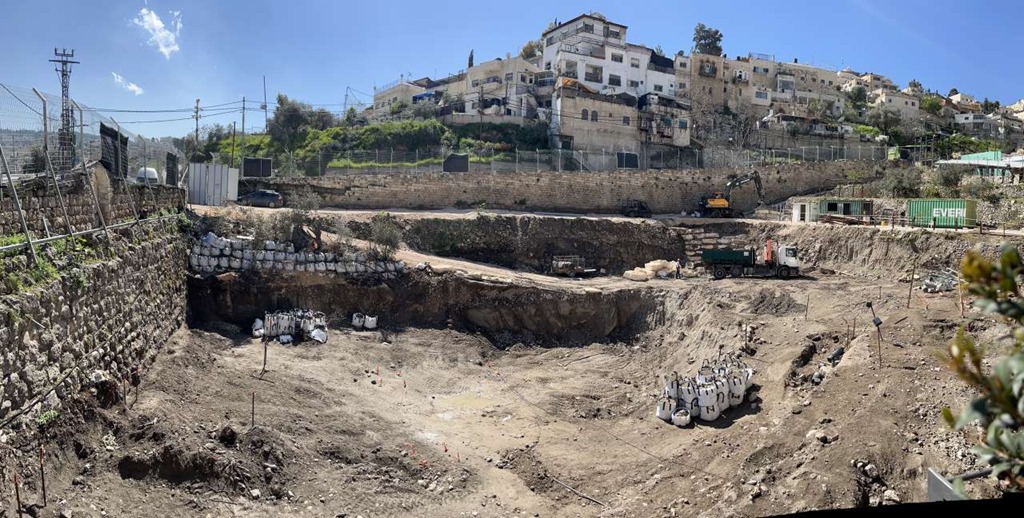
Andy Cook was at the Pool of Siloam excavations on Thursday, and he interviewed an archaeologist working there about what’s next.

“The recently renovated Davidson Center Archaeological Garden in Jerusalem’s Old City opened an exhibition on Monday featuring a number of rare and ancient artifacts related to the Temple Menorah.”

Joe Zias looks at some unknown inscriptions on the “Tomb of Absalom” in Jerusalem and suggests renaming the monument the “Tomb of Zacharias,” father of John the Baptist.

A Herodian wall and Second Temple period burial caves at Samaria-Sebaste has been destroyed by road construction.

“Military officials intercepted an antiquities-smuggling ring in the West Bank.” The Jerusalem Post story reports on several other recent antiquities busts.

A seven-mile stretch of the Jordan River south of the Sea of Galilee is being cleaned of its pollution and developed for tourism.

Aren Maeir recounts his two-day trek in eastern Samaria, including a climb up Sartaba.

Adam Montefiore, known as the English voice of Israeli wines, looks at the history of winemaking in the land of Israel.

Seetheholyland.net has added a page for the newly discovered tomb of Salome.

Phillip J. Long writes about the traditional location of the Garden of Gethsemane and the nearby grotto.

Accordance is offering 40-74% off on many graphics resources, including several of our photo collections. Ends Monday.

HT: Agade

Pool of Siloam March 20232635b

Pool of Siloam excavations, March 16. Photo by Andy Cook (Experience Israel Now)

Share:

Archaeologists working in the temple of Dendera discovered a Sphinx-like statue that may depict Emperor Claudius.

“Egyptian officials have released photos of an ancient scroll, the 52-foot-long (16 meters) Book of the Dead papyrus recently discovered in Saqqara. The 10 images show ancient illustrations of gods and scenes from the afterlife, as well as text on the document, which is more than 2,000 years old.” The released photos were first posted on the government’s Facebook page.

The British Museum’s Curator’s Corner provides a lesson in how to read ancient Egyptian hieroglyphs (27 min).

New release: Ancient Egypt, New Technology: The Present and Future of Computer Visualization, Virtual Reality and Other Digital Humanities in Egyptology, edited by Rita Lucarelli, Joshua A. Roberson, and Steve Vinson. (Brill, $174; free download)

The first-ever detailed study of the theater at Pergamum reveals that it is larger than the theaters at Smyrna, Ephesus, Miletus, or Aspendos. An aerial photo shows the locations of the theater, stadium, and amphitheater in relation to the acropolis.

Turkish Archaeological News has a roundup of major stories for the month of February. They also provide a damage assessment of cultural properties one month after the earthquake.

“The revamped archaeological museum of Argos in the Peloponnese and its upgraded display collection will soon reopen to the public.”

Archaeologists have discovered for the first time wooden stakes described by Julius Caesar and used as a kind of ancient barbed wire.

New research suggests that humans may have first begun riding horses around 3000 BC.

New exhibition at the San Antonio Museum of Art: “Roman Landscapes: Visions of Nature and Myth from Rome and Pompeii”

The Global Smyrna Meeting on the Seven Churches of Revelation will be held June 4 to 10, featuring many scholars in the field including Mark Wilson, Mark Fairchild, James Hoffmeier, David deSilva, and Ben Witherington.

HT: Agade, Arne Halbakken, Ted Weis, Mark Hoffman, Explorator

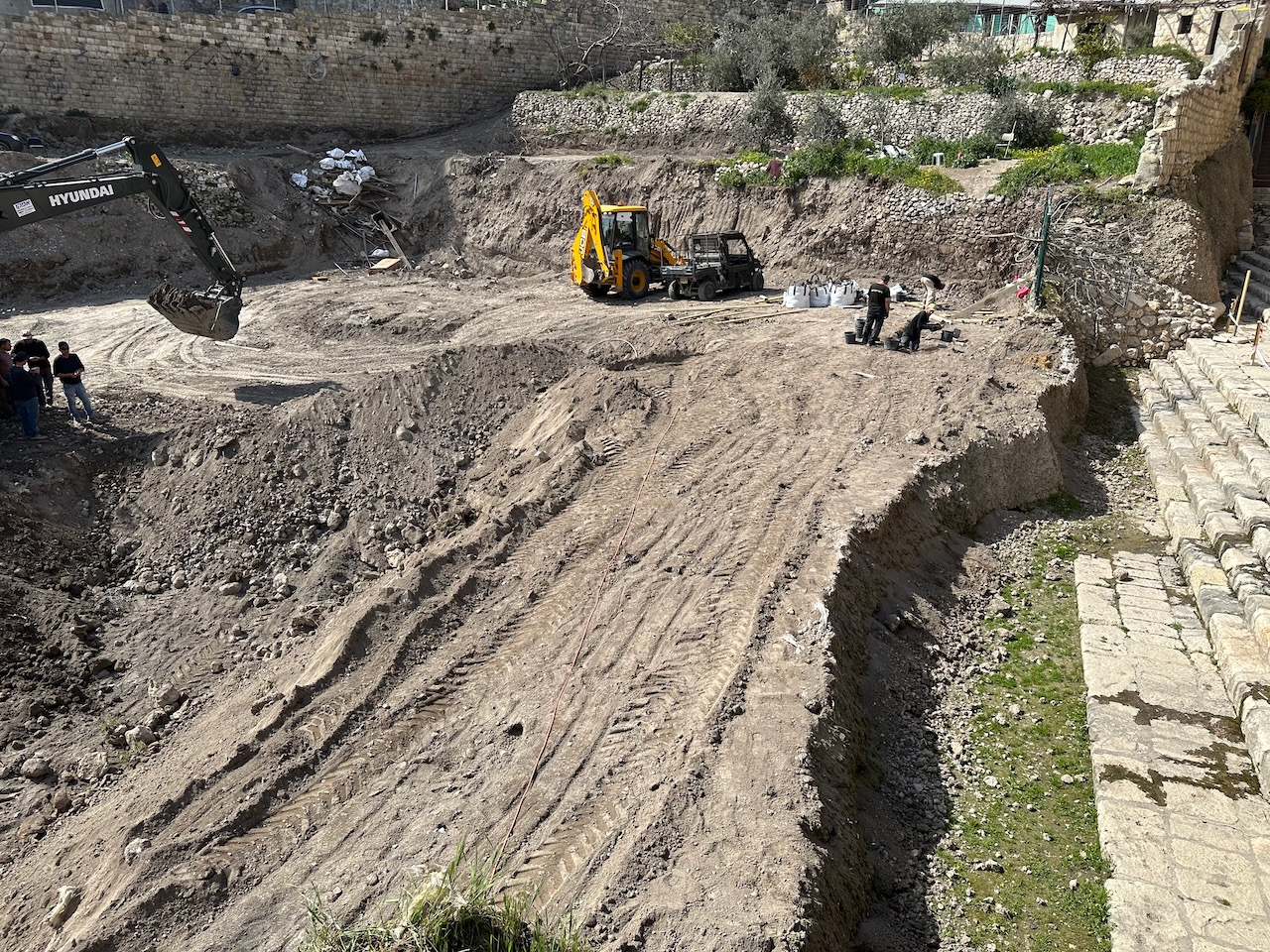
Pool of Siloam excavations in late February. Photo courtesy of John DeLancey.

Share:

A scan of the north side of the Great Pyramid of Giza detected a corridor measuring 30 feet by 6 feet.

“The Egyptian Ministry of Tourism and Antiquities announced on Friday the discovery of a group of tombs from the Persian, Roman and Coptic eras in the Al-Bhansa [Oxyrhychus] region.”

“Archaeologists excavating at the ruins of Old Dongola in Sudan have discovered ancient Egyptian hieroglyphics inscribed on sandstone blocks.”

Iran and China are collaborating to conduct underwater archaeological surveys in the Persian Gulf.

A curator at Manchester Museum describes the significance of the touring exhibition, “Golden Mummies of Egypt.”

The Art Newspaper reports on the full scale of earthquake damage to heritage sites in Turkey and Syria.

Hybrid lecture on March 9: “Iron in the Sky: Meteorites in Ancient Egypt,” by Victoria Almansa-Villatoro. Register here.

“Daniel—The Top Ten Archaeological Discoveries” is the latest episode on Digging for Truth.

Expedition Bible’s latest video is on the “Search for the Tower of Babel.”

New release: Esarhaddon, King of Assyria, by Josette Elayi

Bryan Windle highlights the top three reports in biblical archaeology in the month of February.

HT: Agade, Arne Halbakken, Gordon Dickson, Ted Weis, Explorator

Share:

“Archaeologists have uncovered early evidence of brain surgery after the discovery of two brothers buried beneath the floor of a late Late Bronze Age-era building” in Megiddo. The underlying journal article is here.

“A family found an ornamental 1,400-year-old clay figure on the ground while hiking through the hills south of the city of Modiin.”

Roman sarcophagi at Tel Kedesh were vandalized yesterday. It seems that the criminals believe that Deborah the prophetess’s tomb is located there.

The importance of the oldest known Canaanite sentence is the subject of a 5-min BBC video.

An Israeli team is using artificial intelligence and robots to put the pieces of ancient frescoes at Pompeii back together.

Emanuel Tov explains how the process of copying a Torah Scroll became sacred.

The Spring 2023 issue of Biblical Archaeology Review includes stories on Jeremiah’s journey to Egypt, first-century synagogues in Israel, the Mesha Stele’s possible reference to the “house of David,” volunteer excavation opportunities this summer, and more.

An exhibit at Christopher Newport University pays tribute to Richard Freund, showcasing “the treasures he found, the method he used to discover them, and what they represented to both his students and the world.”

Knowing the Bible has produced several dozen high-resolution maps, including base maps, all available for free, non-commercial use. Donations are appreciated.

Olive Tree Bible Software is offering a free download of The ESV Concise Bible Atlas. A short video explains how to use them on your device.

Eisenbrauns has released two new reference guides, both by David Moster: Biblical Hebrew Grammar Card and Biblical Hebrew Vocabulary Card. Use code NR31 to save 30%.

An Israeli intelligence officer tells the story of when he seized some of the Dead Sea Scrolls from Kando in Bethlehem.

HT: Agade, Explorator, Arne Halbakken, Gordon Dickson, Alexander Schick, Ted Weis

Share: