If you’re into mysteries and tracking down little details, there’s an endless supply of material in biblical studies and archaeology. George Grena latched on to one challenging and controversial issue in archaeology some years ago and he seems determined to become the world’s expert on LMLK seals. (LMLK seals were impressed on royal storejars in the time of Hezekiah. Nearly everything else about their interpretation is controversial.) Grena certainly has enriched the world with the extensive information that he has published online and in his book. That’s a little background to a recent blogpost in which he sheds some light on the little-known biblical town of Kephirah/Chephirah/Kefireh. In the time of Joshua, this was one of four cities of Gibeonites. Most people know of the treachery of the city of Gibeon, but may not recall that there were three other cities in their league, including one I saw every day for the last decade – Kiriath Jearim. Grena’s post begins with some interesting facts about Kephirah before discussing two LMLK seals.
Here’s a set I almost never see available for sale (and for many years I have had a continuous search for it going through ABEBooks). But it’s a bit out of my price range, so I’m passing it on to you.
The Survey of Western Palestine, Col. Sir Charles Warren; Capt. Claude Reignier Conder 1881, Published for the committee of the Palestine Exploration Fund (PEF), 1881-1889 – First Edition (according to bibliographic resources). A set of six cloth folios, being 11. Bookseller: Orr Hirschauge, Tel-Aviv Price: US$ 4500.00
View or Order this Book:
http://www.abebooks.com/servlet/ListingDetails?bi=1039913148&cm_la=want
Of course, if you just want the maps, in super high-resolution, you can get those electronically for $35. Or you can get the Index for free. Archive Books has the reprint set available for £2,995 ($5,966).
- Tagged Resources
If you’ve ever been walking around Israel and seen a hole in the ground and wondered what they found in it, or where you can find out, you’ll likely find your answer in Hadashot Arkheologiyot: Excavations and Surveys in Israel. This annual series is published in Hebrew and English by the Israel Antiquities Authority. Since 2005 the journal has moved to electronic-only format, which makes it easy for anyone to access without having to purchase the volumes or visit a specialized library.
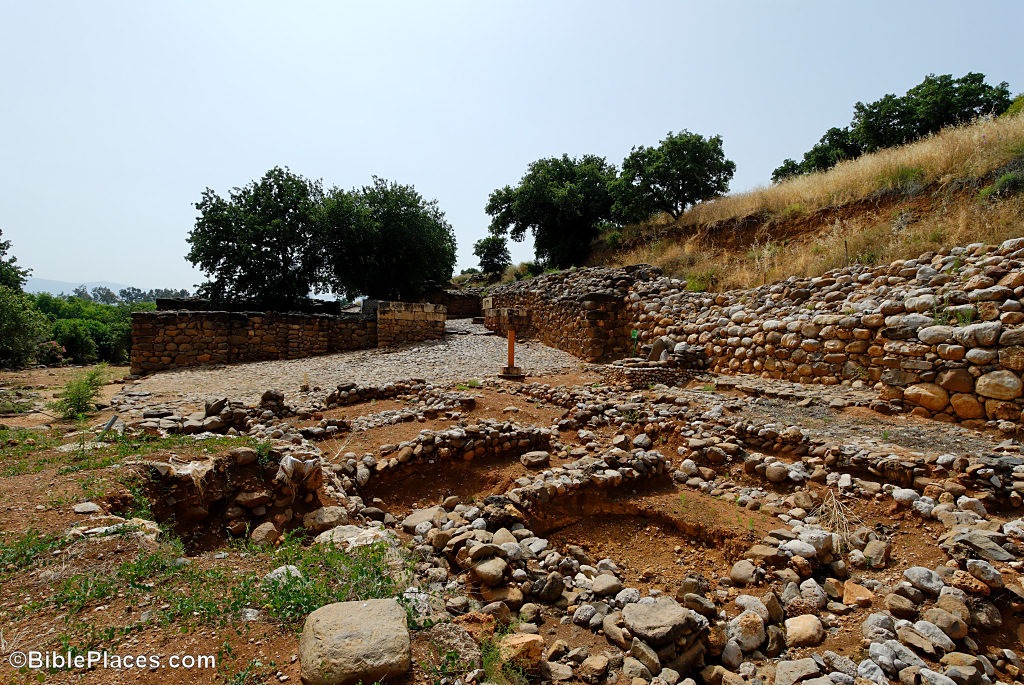
The 2008 issue was just published (HT: Jim West) and it includes reports from 11 excavations, some with illustrations. One of interest to Bible readers is Tel Gat Hefer. Usually spelled Gath Hepher, this is the hometown of Jonah son of Amittai, the prophet who went to Nineveh after being swallowed by a fish (2 Kings 14:25; Jonah 1:1). The report not only describes the recent excavations (only one 5m square), but notes that previous excavations “revealed significant architectural remains from Early Bronze II–III, Middle Bronze II–III, Iron I, Iron IIA–B and the Late Persian period.”
Interpreted, that means that the site was nearly continuously inhabited through the Old Testament period. Jonah lived in the 8th century B.C., which is part of Iron IIB. The Arab village of Mashhad is located on the slopes of the tell and expanding, which will make future study more difficult. One way to raise support for such an excavation would be to hold out promise of finding at sign at the town entrance: Welcome to Gath Hepher, City of Jonah the Prophet. In my thinking, such a sign (and probably a monument) existed for Jonah after his wonderful prophecy of 2 Kings 14 came true. But as soon as he went to Nineveh, the town likely disavowed their favorite son. The town, of course, was right: 30 years later it was destroyed by the Ninevites (cf. 2 Kings 15:29).
If you’re interested in present excavations, you can see that here.
- Tagged Resources
A book recently published by Oxford is currently available for free download in pdf format.
Understanding the History of Ancient Israel is edited by H. G. M. Williamson and sells for $99, but you can download the individual chapters in restricted pdf format without charge.
As you can see from the list of chapters below, there is quite a mix of archaeologists and biblical scholars. It is an interesting reality that archaeologists typically are more conservative than biblical/historical scholars. On the more conservative side are Mazar, Younger, and Lemaire. Those sometimes identified with the “minimalist” perspective include Whitelam and Davies. All will be thought-provoking, no doubt.![]()
As far as I can tell, there are a couple of downsides to the offer. 1) You have to download each chapter separately, and each one requires about five clicks. (It worked a little faster for me in IE than Firefox.) 2) The pdf files are all locked so that you can’t combine them into a single file (or otherwise copy any of the text; commenting and printing is allowed). I’m guessing that the publisher is offering this as a service to the larger public who wouldn’t purchase this book. Some will discover through this that the book is worth purchasing. It seems like a win-win situation to me, and I am appreciative to the publisher for doing this.
- H. G. M. Williamson: Preface; List of Abbreviations
- J. W. Rogerson: Setting the Scene: A Brief Outline of Histories of Israel
- Keith W. Whitelam: Setting the Scene: A Response to John Rogerson
- Hans M. Barstad: The History of Ancient Israel: What Directions Should We Take?
- Philip R. Davies: Biblical Israel in the Ninth Century?
- Lester L. Grabbe: Some Recent Issues in the Study of the History of Israel
- T. P. Wiseman: Classical History: A Sketch, with Three Artefacts
- Chase F. Robinson: Early Islamic History: Parallels and Problems
- Amélie Kuhrt: Ancient Near Eastern History: The Case of Cyrus the Great of Persia
- David Ussishkin: Archaeology of the Biblical Period: On Some Questions of Methodology and Chronology of the Iron Age
- Amihai Mazar: The Spade and the Text: The Interaction between Archaeology and Israelite History Relating to the Tenth–Ninth Centuries BCE
- Christoph Uehlinger: Neither Eyewitnesses, Nor Windows to the Past, but Valuable Testimony in its own Right: Remarks on Iconography, Source Criticism and Ancient Data-processing
- M. J. Geller: Akkadian Sources of the Ninth Century
- K. Lawson Younger, Jr: Neo-Assyrian and Israelite History in the Ninth Century: The Role of Shalmaneser III
- André Lemaire: West Semitic Inscriptions and Ninth-Century BCE Ancient Israel
- Marc Zvi Brettler: Method in the Application of Biblical Source Material to Historical Writing (with Particular Reference to the Ninth Century BCE)
- Graeme Auld: Reading Kings on the Divided Monarchy: What Sort of Narrative?
- Rainer Albertz: Social History of Ancient Israel
- Bernard S. Jackson: Law in the Ninth Century: Jehoshaphat’s ‘Judicial Reform’
- Nadav Na’aman: The Northern Kingdom in the Late Tenth–Ninth Centuries BCE
Oxford has more on the book here. The short description reads:
In popular presentation, some treat the Bible as a reliable source for the history of Israel, while others suggest that archaeology has shown that it cannot be trusted at all. This volume debates the issue of how such widely divergent views have arisen and will become an essential source of reference for the future.
- Tagged Resources
The Israel Antiquities Authority has posted the preliminary report (pdf) of the Qumran excavations (1993-2004) by Yitzhak Magen and Yuval Peleg. You may recall that a recent article in Biblical Archaeology Review indicated that these archaeologists conclude that Qumran was a pottery manufacturing site, not the home of the Essenes. They state their motivation for this report in the preface:
We felt it necessary to separately publish this article due to the fact that until now, most of the discussion regarding our new theory on the nature of the site has been in newspapers–in articles not initiated by us–and has been based upon unsubstantiated evidence from certain scholars.
The report is well written and illustrated with many beautiful photographs and drawings.
- Tagged Resources
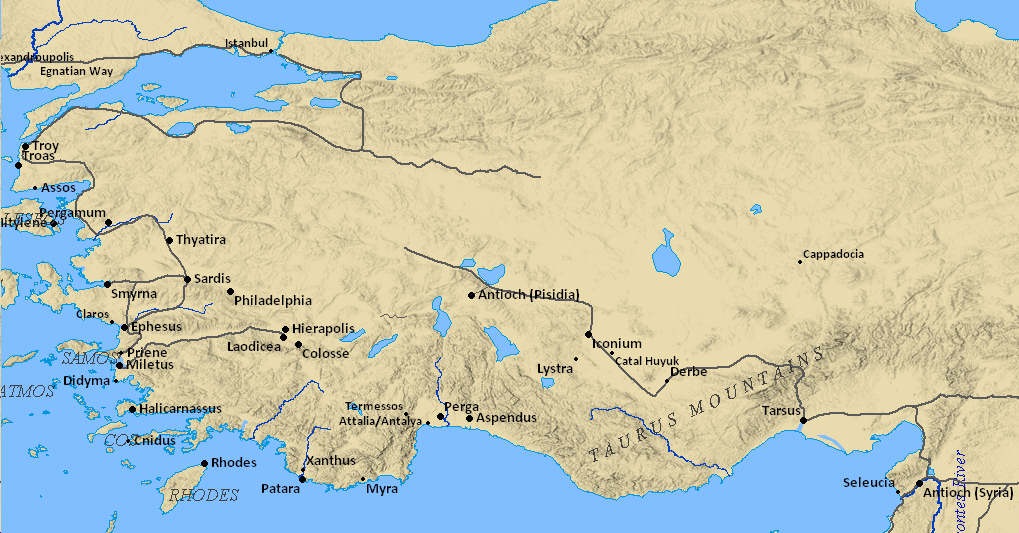
In yesterday’s Asia Minor Report, Mark Wilson has good news for those books you can buy only in Turkey:
Purchasing books published in Turkey has been difficult for scholars not living in Turkey. However, Ahmet Boratav of Ege Yayınları has just made ordering such books easier. His web site (www.zerobooksonline.com) is now available in English and features thousands of books, journals, and magazines. The home page features the Bookseller’s Choices as well as recent releases.
Registered surface shipping is included in the price for orders placed from anywhere outside of Turkey.
- Tagged Resources
The BiblePlaces Blog provides updates and analysis of the latest in biblical archaeology, history, and geography. Unless otherwise noted, the posts are written by Todd Bolen, PhD, Professor of Biblical Studies at The Master’s University.
As an Amazon Associate we earn from qualifying purchases. In any case, we will provide honest advice.