“Researchers found traces of dysentery-causing parasites in material excavated from the cesspits below the two stone toilets that would have belonged to elite households” in Jerusalem. The underlying journal article is here.

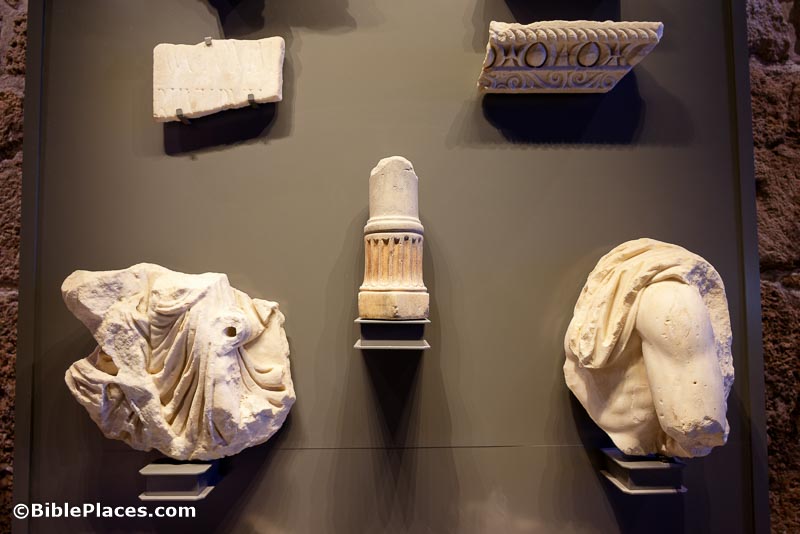
A recreational swimmer discovered a shipwreck that included a cargo of 44 tons of marble blocks headed to the Roman port of Ashkelon or Gaza for an elite building project.

A 1st-century receipt was discovered in a 19th century excavation tunnel in Jerusalem.

“Tiny bones from prehistoric birds found at a birdwatching site in northern Israel have been identified as 12,000-year-old flutes.”

The “curse tablet” from Mt. Ebal has been published, but early reactions to the claims are not positive. The journal article is here.

Andy Cook has returned to the Pool of Siloam to give an update on why they haven’t discovered any more remains of the pool.

Carl Rasmussen writes about a new area in Caesarea being billed as the prison of Paul. Carl notes his misgivings with the identification.

In a recent article, Nadav Na’aman argues that the original center of Jerusalem was on the Temple Mount, not in the City of David. Haaretz provides a summary of the Tel Aviv journal article which is available to subscribers. (In my experience, Na’aman is quite good at being provocative but less good at being persuasive.)

Robert Mullins considers the implications of discovering the name of “Benyaw” inscribed on a storejar found at Abel Beth Maacah.

Chandler Collins raises questions about the hypothesis that Jerusalem’s population exploded because a mass of Israelite refugees arrived in the late 8th century BC.

Haaretz premium: “In Israel, everyone wants to excavate – from foreign volunteers to youth groups. But many archaeology experts, warning of damaged sites, now believe it’s time to slow down and focus on what’s already been unearthed.”

The summer issue of Biblical Archaeology Review includes stories on David and Solomon’s “invisible kingdom,” the lost treasures of the First Temple, and the Amorites.

HT: Agade, Joseph Lauer, Arne Halbakken, Ted Weis, Stephanie Durruty, Wayne Stiles, Alexander Schick, Gordon Franz, Explorator

The bulldozers working in the Pool of Siloam left this section for the archaeologists to carefully excavate. So far, no additional remains of the pool’s architecture have been discovered in this year’s work.

Share:

[Due to some website issues, part 2 of the last Weekend Roundup was not sent out. You can read it here.]

A cave near ancient Shechem served refugees for at least eight different historical periods, from the Chalcolithic to the Mamluk periods.

El-Unuk, one of Adam Zertal’s six “Gilgal” sites, is under threat of destruction from construction work.

The Israeli government has approved an $8 million budget to restore and protect the ancient capital city of Samaria. The funding “will go toward establishing a tourism center at the site, building new access roads, mapping untouched areas, and increasing law enforcement to prevent illegal activity.”

Scott Stripling discusses the Mount Ebal Curse Tablet on the latest episode of Digging for Truth.

John DeLancey’s latest video was filmed in the 1st-century synagogue of Magdala.

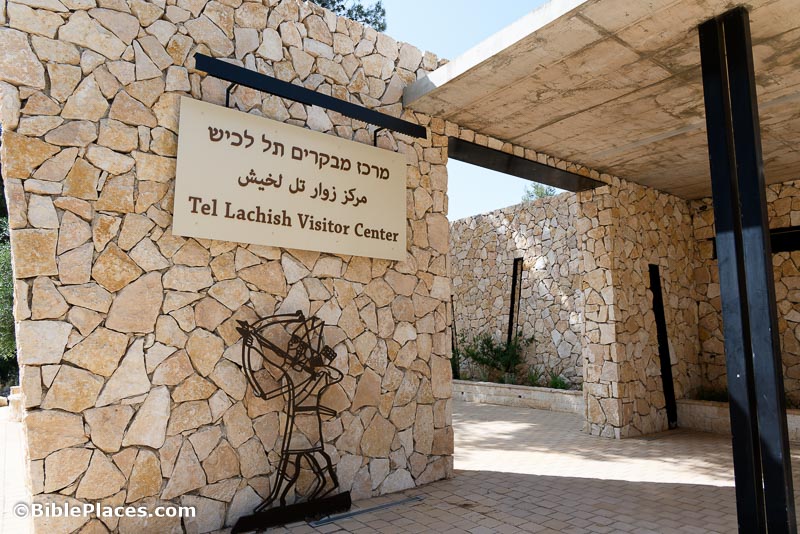
What are the Lachish Letters and why are they of importance to the Bible? Nathan Steinmeyer explains.

JNS has a story on the Inscriptions of Israel/Palestine project being run by Brown University.

In connection with a new exhibit at the Corning Museum of Glass, Ruth Schuster investigates the history and method of Roman glassmaking in the land of Israel.

Hybrid lecture at the Albright Institute on May 11: “Before the Nabataeans: Arabian Traders in the Negev Highlands,” by Tali Erickson-Gini and Martin David Pasternak

Zoom lecture on May 11: “Jesus Reading Scripture: Exploring the Archaeology of Worship in First-Century Synagogues,” by Paul Flesher ($6/$12).

The online lecture with Ken Dark on “Exploring the Archaeology of Jesus’ Nazareth” has been rescheduled to Friday, 12 May 2023 at 11:00am-12:30 pm ET.

Preserving Bible Times has released Session 5 of The Bible: Its Land & Culture! This session explores Two Different Worlds: Jewish or Hebrew and Roman or Gentile; Peter vs Paul; Deciphering the Roman World; and Roman Exceptionalism. Individual sessions are available here, and all 5 sessions are now available for purchase as a set ($40).

Paleojudaica links to articles that explore connections of King Charles III’s coronation with the Bible and the ancient Near East.

HT: Ted Weis, Explorator

Share:

A rare gold bead was discovered by a teenage volunteer in excavations on the “Pilgrimage Road” leading from the City of David to the Temple Mount.

Israel’s driest winter in 60 years ended with a week of heavy rainfall throughout the country. The recent rains filled Herod’s pools at the Tower of David Museum in Jerusalem. If you look at the photos, you’ll see that “filled” is a bit generous, but there is water where there usually is not.

“An extraordinary physical reconstruction of a Nabataean woman who lived in the Arabian peninsula more than 2,000 years ago has gone on display to the public.”

“Inside el-Janab Cave near Nablus, archaeologists have found first-ever solid evidence of Muslims fleeing Mongol forces sweeping through the Levant in 1260.”

The Book & The Spade is celebrating a remarkable 40-year run with an anniversary celebration in a live webinar on Wednesday, featuring Scott Stripling, a reflection back on the last four decades of biblical archaeology, and some prize giveaways.

Chandler Collins has posted the second issue of the Jerusalem Tracker, with an extensive roundup of news publications, and media related to Jerusalem from the last six months.

King Jehoram of Israel, the son of Ahab and victim of Jehu, is the subject of Bryan Windle’s latest archaeological biography.

In part 3 of Teaching The Text’s series on Ruth, Brad Gray explores the early encounters between Ruth and Boaz.

Volume 14 of the open-access e-journal Negev, Dead Sea and Arava Studies has been published. The articles are in English, Hebrew, and French.

New release: The Bible and Music, by James F. McGrath. Free download in several formats.

HT: Agade, Arne Halbakken, Explorator
Share:

Bryan Windle highlights the top three reports in biblical archaeology in January 2023.

Expedition Bible’s latest video considers whether the archaeological evidence supports the authenticity of the traditional tomb of Lazarus in Bethany.

Carl Rasmussen shares some musings from his recent tour of Israel.

In preparing a map for the Bible Mapper Blog, David Barrett identified the hill of Ammah in the pool of Gibeon story (2 Sam 2) with el-Qubeiba, which has also been identified as the Emmaus of Luke 24.

Antiquities police caught a couple of thieves at the bottom of a pit, after they had already caused irreversible damage to a 1st-century winepress in western Galilee.

Antiquities thieves who had discovered an ancient sarcophagus at the site of Samaria were caught by authorities.

Aren Maeir has collected a number of videos where he discusses the Philistines and his excavations of the city of Gath.

The Israel Antiquities Authority has begun moving into its new home at the Jay and Jeanie Schottenstein National Campus for the Archaeology of the Land of Israel in Jerusalem.

The Great Isaiah Scroll arrived at what is now known as the Albright Institute on February 19, 1948. To celebrate the 75th anniversary, Marcello Fidanzio will be lecturing on Qumran Cave 1 and the Great Isaiah Scroll on February 21 at the Israel Museum.

“The Tel Shimron Experience is a 5-day, 6-night archaeological excursion in Israel where you will have the opportunity to participate in a real archaeological dig.” The price is similar to a 3-week half-season, so you are effectively paying for the privilege of a shorter commitment.

A heygo tour of “The Colosseum Inside” is planned for tomorrow morning.

HT: Agade, Arne Halbakken, Explorator

Share:

“Accumulated disquiet among Israeli archaeologists over the widespread publication of sensational claims regarding ostensibly newly deciphered, once-in-a-lifetime biblical inscriptions in Jerusalem has spilled over into an open letter.”

A recent episode of This Week in the Ancient Near East discusses the way in which new alleged inscriptions in Hezekiah’s Tunnel were announced.

Israeli archaeologists discovered the oldest hoards of silver, attesting to its use as currency some centuries earlier than previously thought. The underlying journal article is here.

Excavations at Khirbat el-Masani revealed the remains of a Byzantine monk whose neck, hands, and feet bore heavy iron rings, perhaps as a symbol of his ascetic lifestyle.

“Newly uncovered remains of fabrics from the Far East dating to some 1,300 years ago in Israel’s Arava region suggest the existence of a previously unknown ‘Israeli Silk Road.’”

The United States has returned an 8th century BC cosmetic spoon, probably taken from the region of Hebron, to the Palestinian government. This the first such repatriation of an antiquity by the US to the Palestinian Authority.

The Palestinian Authority is apparently planning to construct homes on the area of the altar on Mount Ebal.

Walking The Text has begun a mini-series on Ruth, with a number of helpful maps and illustrations.

El-Araj, possibly Bethsaida, is the latest site featured in the “Digging In” series of the Biblical Archaeology. The article includes a 6-minute video taken on location.

Hybrid lecture on Jan 26: “Byzantine Bethsaida and the House of St. Peter,” by R. Steven Notley and Mordechai Aviam, at the Museum of the Bible.

New from Eisenbrauns: Yotvata: The Ze’ev Meshel Excavations (1974–1980) The Iron I “Fortress” and the Early Islamic Settlement, by Lily Singer-Avitz and Etan Ayalon

Aaron Demsky provides a extensive discussion of the location of Rachel’s tomb, concluding that it was near the border of Benjamin and Ephraim.

GTI Tours is offering a study tour specifically designed for those who have visited Israel before, with a variety of experiences most tourists don’t have.

The BAS Scholars Series includes four lectures, with a discount for purchase of all four:

  • Mar 5: “Holy City Hotspot: Exploring Jerusalem’s Acropolis,” with Andrew Lawler
  • June 4: “A Wise Woman and a Bearded Man: Ten Seasons of Excavation at Tel Abel Beth Maacah,” with Nava Panitz-Cohen
  • Sept 28: “Free Health Care Is a Miracle: Psalm 8, Jesus, and the Jerusalem Temple,” with Amy-Jill Levine
  • Dec 6: “The Life of Jesus Written in Stone: The Earliest Commemorative Churches in Roman Palestine,” with Jordan Ryan

HT: Agade, Joseph Lauer, Arne Halbakken, Gordon Dickson, Ted Weis, Wayne Stiles, Mondo Gonzales, Alexander Schick, Charles Savelle, Keith Keyser, Explorator

Share:

A seven-word inscription on an ivory comb discovered at Lachish and dated to about 1600 BC is the earliest Canaanite sentence ever found. “The inscription is a plea, a wish, or a desire that the small comb be successful in getting rid of the irritating lice.” The press release is here, and the underlying journal article is here.

Christopher Rollston: “Restorations are *not* a Good Foundation for Dramatic Proposals: Reflections on the New, So-called, “Hezekiah” Inscription.”

Two episodes have been released in Legio 2022, a documentary series about one of the excavations in the Jezreel Valley Regional Project.

Museum of the Bible and DIVE are hosting a virtual tour of Caesarea on December 7 ($20).

“A new multi-faceted project by the Yeshiva University Center for Israel Studies introduces the Samaritans to a wide and varied audience, and explores how they have managed to survive for millennia despite efforts by conquering powers to erase them.”

The Tel Burna Excavation Project has unveiled their 2023 season poster.

Yuval Gadot will give this year’s Howard Lecture at the University of Georgia on November 14 on “New Revelations from Zion: the Archaeology of Jerusalem from the Great Age of Reform.”

Mordechai Aviam will lecture on “Finding Bethsaida: From Biblical Jewish Village to the Church of the Apostles” on November 15, 7 pm, in New York City.

“Jerusalem: City of Change: New Archaeological Work, New Views, New Issues” is the title of a conference to be held at Boston University on November 16.

Friends of ASOR webinar on Dec 1: “Something from the Time of Jesus? Tourists, Souvenirs, and Buying the Holy Land,” with Morag M. Kersel ($12).

Jodi Magness will be giving the Schweich Lectures on Biblical Archaeology at The British Academy on December 5, 6, and 8, on the subject of “Ancient Synagogues.” The lectures will be recorded and posted and will also be published in book form.

New from Eisenbrauns: Tel Miqne 10/1: Tel Miqne-Ekron Excavations 1994–1996, Field IV Upper and Field V, The Elite Zone Part 1: Iron Age IIC Temple Complex 650, by Seymour (Sy) Gitin, Steven M. Ortiz, and Trude Dothan (30% off with code NR22).

The ASOR Blog has preliminary results of the Academic Genealogies of Near Eastern Scholars (AGNES) Project.

HT: Agade, Arne Halbakken, Joseph Lauer, Jared Clark, Wayne Stiles, A.D. Riddle, Explorator

Share: