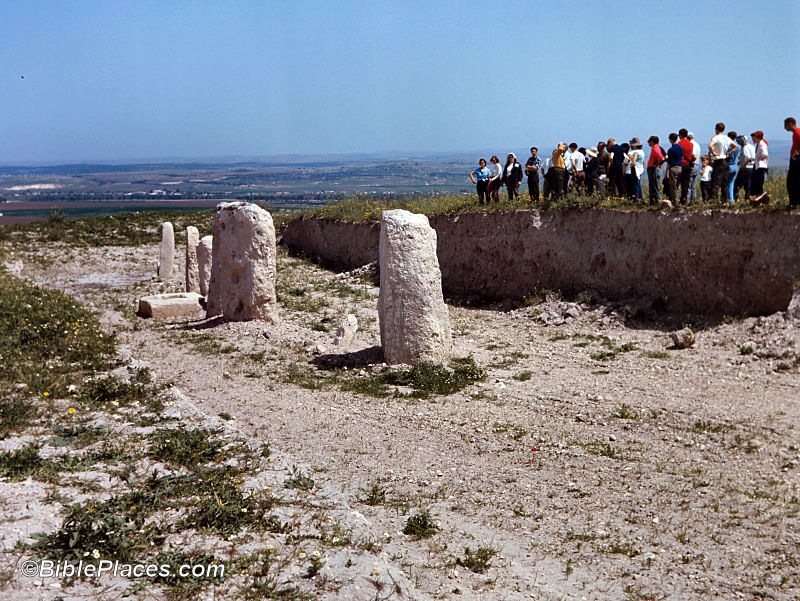
The Shephelah, or western foothills of Judah, is an ideal site for excavations because of
1) its rich history;
2) its close proximity to universities in both Tel Aviv and Jerusalem; and
3) its moderate climate. There’s enough work to be done in the Shephelah alone to occupy every archaeologist working in Israel for the next 100 years.
Tel Aviv University has been approved to renew excavations at Azekah. Though it is one of the most important sites in the Shephelah, it has only been excavated by Robert Alexander Stuart Macalister in a brief dig more than 100 years ago. Among other things, Azekah is mentioned in the Bible as near the place of the Philistine encampment when David defeated Goliath. It was one of the last two cities holding out against Nebuchadnezzar in 586 B.C. (see Jeremiah 34:6-7 and Lachish Letter #4). There are undoubtedly a lot of goodies buried under that pile of dirt.
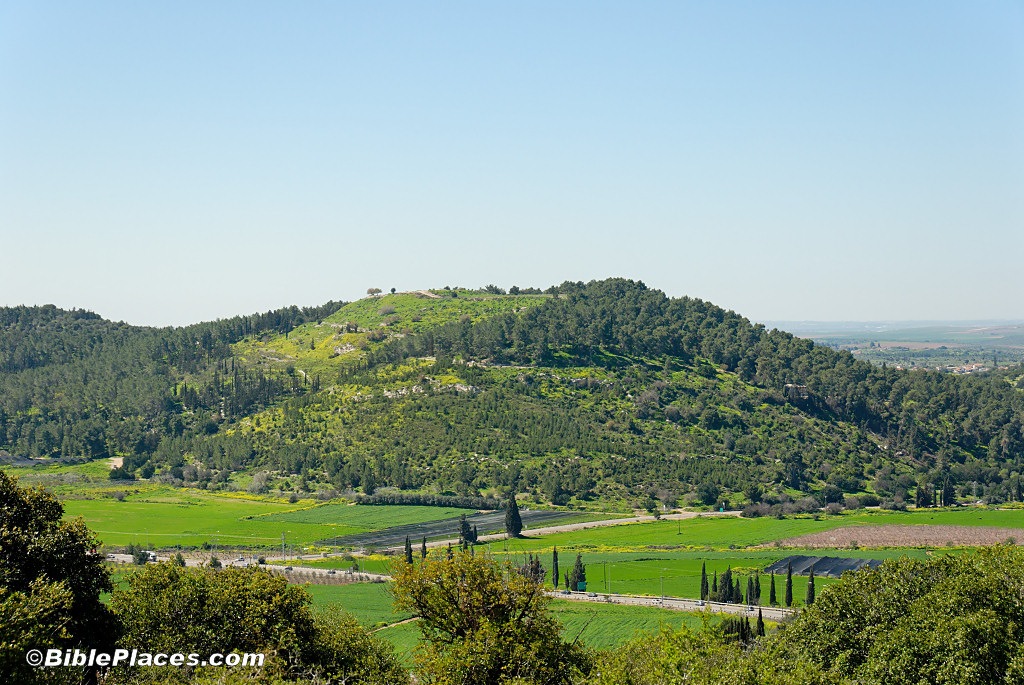
Azekah from the northeast
Bar Ilan University has been excavating Tel ‘Eton/Tell Aitun under the direction of Avi Faust. This year was their third season of excavation and they are finding a destruction level as well as a fortress in the style of a four-room house, only larger. The destruction level seems to pre-date Sennacherib’s 701 campaign because pottery is transition form between Lachish III and IV; but also not likely to be Sargon II’s 712/711 campaign since it appears he only visited cities on the coastal plain. Scholars have suggested that the site is biblical Eglon (for more on that, see The Sacred Bridge, 128). The website is viewable in MS Internet Explorer, but not Firefox.
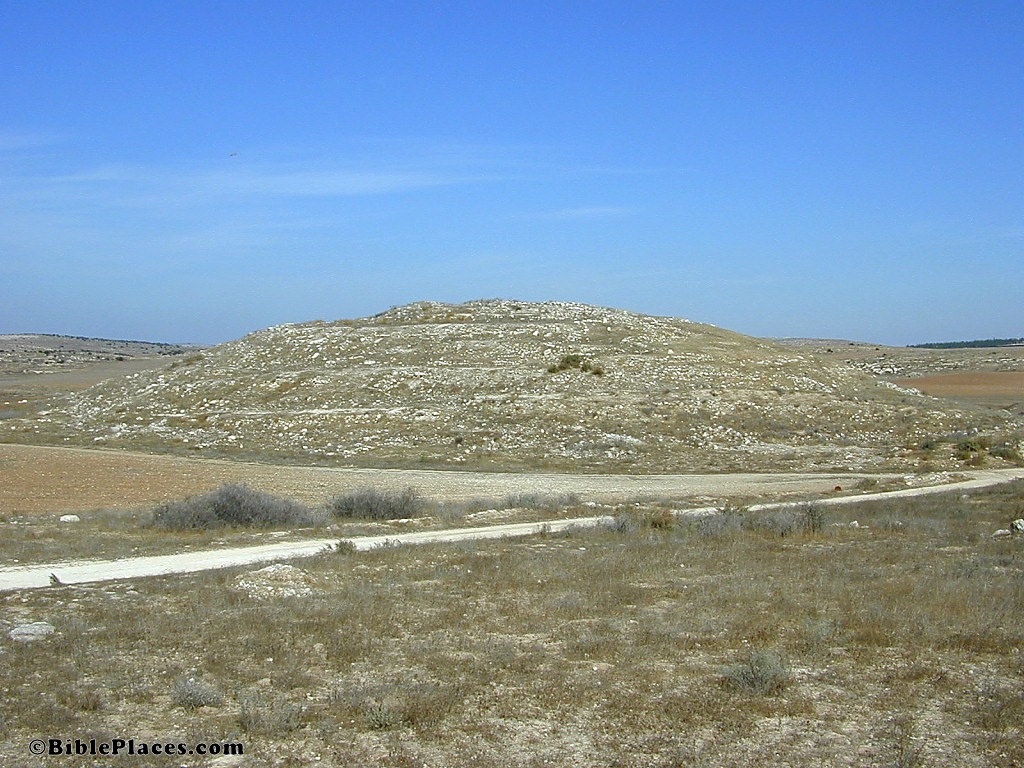
Tel ‘Eton, possibly biblical Eglon, from south
Khirbet Qeiyafa, located directly east of Azekah, is being excavated by Yosi Garfinkel of Hebrew University. They found a four-chambered gate dating to the 10th century B.C. with a casemate wall and two attached buildings. There was no previous occupation and the nearest subsequent occupation is Hellenistic, so it is virtually a single-period site for Iron IIA. They also found an ostracon (inscribed potsherd) with about 4-5 lines of writing, the contents of which are apparently more sensitive than Israel’s plans to bomb Iran. (This is a good reminder to thank those archaeologists who are quick to share their discoveries with all of their supporters.) The ostracon will be published by Misgav.