Those interested in the Temple Mount in Jerusalem are probably aware that the largest stone is visible on a tour of the “Western Wall Tunnels.” This massive monolith is located just south of Warren’s Gate and measures 43.4 feet (13.55 m) long. There is, however, a longer stone that was discovered only recently.

Western Wall with largest Herodian stone, tb123109463
Largest (known) stone in the Temple Mount

In Eilat Mazar’s survey of The Walls of the Temple Mount (reviewed here), she identified an even longer stone, and it has been seen by dozens of archaeologists and thousands of visitors for many years without its significance being realized.

The longest stone in the Temple Mount is in the photo below. Can you spot it?

Robinson's Arch from west, tb050312430
The pier of Robinson’s Arch

Eilat Mazar determined that the second course of Robinson’s Arch is actually a single stone. The break in the middle is simply a crack in a single stone, not the division between two stones. This stone beats out the other by 2.2 feet (0.7 m), measuring 45.6 feet (14.27 m) long. It is not nearly as tall, so the other retains its title as the largest.

Robinson's Arch from west, tb050312430-labeled
The pier of Robinson’s Arch with the longest stone identified

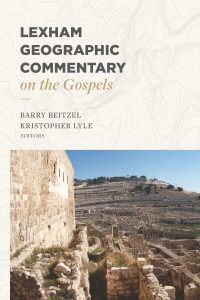
A final note: I learned about this discovery when preparing an essay for the recently released Lexham Geographic Commentary on the Gospels, edited by Barry J. Beitzel. Image result for Lexham Geographic Commentary  on the GospelsThat essay,
“Magnificent Stones and Wonderful Buildings of the Temple Complex,” provides more interesting details about the construction of the Temple and its surrounding structures. This commentary is included with purchase of a Logos 7 base package (silver and up). I plan to say more about this excellent work in the future. In the meantime, there’s a preview here, more details here, and a discussion group here.

I’m told they plan to release the volume as a standalone digital work, with hopefully a printed book to follow.

Share:

A new study concludes that the Roman siege ramp of Masada was never completed and thus was not used to conquer the site.


The Times of Israel has more on the latest discoveries at Omrit.

Syrian troops have recaptured Palmyra from ISIS and the latest damage is being assessed.

The site of the ancient temple of Artemis in Ephesus is suffering from neglect.

The Museum of Archaeological Excavations on Elephantine Island in Aswan has been re-opened after a six-year closure.

The National Museum of Egyptian Civilization in Cairo was opened to the public last week.

2,000 libraries around the world will receive true color photographs of the Sistine Chapel.

“A 19th-century view of the Egyptian temple complex of Karnak is to go on display at the British Museum for the first time this week.”

Wayne Stiles provides a brief history of the Temple Mount, with lots of photos.

John DeLancey of Biblical Israel Tours now has posts up for every day of his recent tour of Israel and Italy.

Gordon Govier interviews Randall Price about “Qumran Cave 12” on The Book and the Spade.

Gary Byers has written a well-illustrated post on the use of mudbricks in the Bible.

Steve Mason’s A History of the Jewish War, A.D. 66-74 is positively reviewed on the BMCR blog.

LandMinds interviews Guy Stiebel on his return to excavating Masada (40 min).

Eisenbrauns is offering 70-80% off dozens of feschriften, including The Fire Signals of Lachish (now
$21) and Exploring the Longue Duree (now $23).

The new issue of Biblical Archaeology Review includes articles on Laodicea and a banquet hall near
the Temple Mount.

BAS has launched a new video streaming site, with a special introductory offer of 75% off.

David Rubinger, photographer of the iconic scene of Israeli paratroopers at the Western Wall, has
died at the age of 92.

HT: Agade, Ted Weis, Paleojudaica

Share:

Tabgha’s Church of the Multiplication of Fish and Loaves has re-opened after 20 months of restoration following the arson attack.

Hebrew inscriptions discovered on a Roman-period capital point to the Jewish history of the Druze village of Pekiin.

The oldest known sickle blades have been discovered on the shore of the Sea of Galilee.

Archaeologists working at Omrit have discovered a house decorated with frescoes dating to circa AD 100.

Robert Cargill suggests that “Cave 12” provides evidence that parchment was produced at Qumran.

Israel’s Culture Minister has offered to trade two elephants to Turkey in exchange for the Siloam
Inscription from Hezekiah’s Tunnel.

Israel’s Good Name describes a morning hike in the Ramot Forest on the north side of Jerusalem where a herd of gazelles live and a wild boars were recently spotted.

Carl Rasmussen shares a photo of a mosaic depiction in Berea that shows Jesus climbing a ladder on to the cross.

The Temple Mount Sifting Project blog gives the back story on Zachi Dvira and how he came to direct this important project.

HT: Agade, Joseph Lauer

Share:

Israeli authorities seized dozens of stolen ancient artifacts in Acco recently.

January’s “Find of the Month” for the Temple Mount Sifting Project is a murex trunculus.

Wayne Stiles considers the history and geography of Bethsaida and makes a present-day application.

Philippe Bohstrom looks at the history and biblical connections of the Amorites in the first part of a series for Haaretz (premium) on the Peoples of the Bible.

Yonatan Adler investigates the archaeological evidence for Jewish ritual purity in the time of Jesus, focusing on ritual baths and chalkstone vessels.

A new exhibition at the Onassis Center in NYC begins on March 9: “A World of Emotion in Ancient Greece, 700 BC – 200 AD.”

The half-shekel Temple tax is once again being collected.

The ASOR Archive Photo of the Month shows the excavations at Bethel (Beitin) in 1934.

After decades of travel in the Holy Land, Ferrell Jenkins made it to biblical Ibleam and its water tunnel.

HT: Charles Savelle, Agade, Paleojudaica, Gordon Franz

Share:

“Siloam Street,” now dubbed “Pilgrims Way,” leading from the Pool of Siloam to the Temple Mount, was inaugurated recently.

Excavations begin this summer at Kiriath Jearim and applications for volunteers are being accepted.

Carl Rasmussen recently took the “Behind the Scenes of the Western Wall” in Jerusalem tour and shares some photos.

The Roman milestones on display along Highway 38 (the “Diagonal Route” in the Shephelah) have unfortunately been moved to KKL-JNF’s Givat Yeshayahu offices.

The 2016 issue of ‘Atiqot has been released.

The Fall 2016 issue of the electronic newsletter DigSight has been published.

Restoration work on the Church of the Nativity in Bethlehem is nearly halfway done.

Archaeologists will begin using robotic submarines in excavations of Atlit-Yam.

Who are the Christians in Israel today?

Islamic guards attempted to evict Gabriel Barkay for saying the words “Temple Mount” on the Temple Mount.

Reuters has created a photo story on the Sea of Galilee.

Wayne Stiles has written a great post on the many interesting sites in the Golan Heights.

The Atlanta Jewish Times has a story about the Biblical History Center in LaGrange, Georgia, and a second story about its founder, James Fleming.

“Ancient Jerusalem in VR” is now available on Google Play ($1.99)and the Apple store ($2.99). You can find some screenshots and videos here. Note: the support website is down at this writing.

You can now experience Petra with a 360º experience for Google Cardboard

HT: Ted Weis, Agade, Joseph Lauer, Charles Savelle, Explorator, Pat McCarthy, Paleojudaica

Share:

A stone bowl inscribed with the name “Hyrcanus” was discovered in the City of David. Since the name was common in the Hasmonean period, it is not clear if it belonged to one of the two rulers with this name. High-res images are available here.

A bronze coin with the image of Antiochus Epiphanes was discovered during maintenance work in the Citadel of David Museum in Jerusalem.

Mary Shepperson, a free-lance archaeologist working on five projects in Iraq, describes work in the new excavations of Charax Spasinou.

Archaeologists have discovered a large “lost city” about 150 miles north of Athens.

The Center for Ancient Middle Eastern Landscapes (CAMEL Lab) at the Oriental Institute of the
University of Chicago would like to announce that a substantial subset of its digital holdings of maps and geospatial data are now available for online public search and download.”

The Temple Mount Sifting Project is asking readers to Name That Find!

The IAA has completed a detailed survey of the village of Lifta ahead of its planned replacement by a new neighborhood.

Before and after photos reveals the significant war damage in the Syrian city of Aleppo.

Ferrell Jenkins recounts his 2002 visit to Aleppo and its museum.

New research suggests some ancient Egyptians believed a deceased woman had to briefly become male in the afterlife in order to be reborn. Reader Ted Weis notes that this theory corresponds with saying #114 in the Gospel of Thomas.

Egypt is trying to stop the auctioning of Egyptian relics around the world.

A stolen relief of Queen Hatshepsut has been restored to Egypt.

Bricks of ancient Babylon have been used in rebuilding houses in the area.

The Tower identifies “seven fascinating discoveries Israeli archaeologists made in 2016.”
Kudos to Dr. Chris McKinny!

Carl Rasmussen describes an “unknown” Christmas site near Bethlehem.

We wish all of our readers a Merry Christmas and Happy Hanukkah! We’ll be traveling for several weeks and roundups will return when we do.

HT: Joseph Lauer, Agade, Charles Savelle, Ted Weis

Share: