Two sets of large channels uncovered in the City of David (Givati Parking Lot) and dating to the time of King Joash (ca. 800 BC) have stymied investigators as to their purpose. Barnea Levi Selavan interviewed archaeologist Yiftach Shalev on location (15 min).

About 1,000 feet of the Upper Aqueduct bringing water to Jerusalem was discovered in a neighborhood south of the Old City. This is the longest section of this aqueduct ever discovered.

Bryan Windle highlights the top three reports in biblical archaeology in the month of August.

“The Western Wall Heritage Foundation conducted its biannual examination of the Western Wall stones on Tuesday in preparation for the influx of visitors expected around the Jewish High Holy Days.”

The Albright Institute has just opened applications for fellowships, awards, and internships for the next academic year.

The toilets of Iron Age Jerusalem are the subject of the latest episode of This Week in the Ancient Near East podcast.

Seetheholyland.net has added an article on the Church of St. John the Baptist in the Muristan, the oldest intact church in Jerusalem, built around the year 1070. The article includes photos of this rarely open church.

Mitchell First has written a short biographical article on Josephus.

John Delancey shares a video shot from the top of the Redeemer Lutheran Church in Jerusalem.

Brad Gray looks at the viticulture context behind Jesus’s words in John 15.

Leen Ritmeyer shares several reconstruction drawings and a photo of the Middle Gate of Jerusalem mentioned in Jeremiah 39.

HT: Agade, Arne Halbakken, Alexander Schick, Will Varner, Ted Weis, Explorator
Share:

Archaeologists working on Mount Zion have discovered, for the first time ever, destruction levels from the Romans and the Babylonians in the same space. Shimon Gibson believes that the evidence from the Persian period suggests that Nehemiah’s wall included not only the City of David but also the Western Hill.

“Ground-penetrating radar is revealing the secrets of a Roman legion camp near Tel Megiddo, including the ancient camp’s amphitheater for combat training.”

Chris McKinny and Joe Uziel write about “The Millo: Jerusalem’s Lost Monument” in the forthcoming issue of Biblical Archaeology Review. They discuss the subject in a video interview with Nathan Steinmeyer.

Bible Archaeology Report has created a list of the top ten discoveries related to the book of Isaiah.

Jerusalem Seminary has been given a grant to provide discounts on tuition for their fall courses. The grant also enables increased scholarships.

Jordan has a severe water crisis.

A rockslide at the waterfall in Nahal David at En Gedi led to the death of an 8-year-old boy and injuries to eight others. The Yonatan Bar David mentioned in the article is from Yad HaShmonah.

Amnon Ben-Tor, the director of excavations at Hazor since 1990, died on Tuesday at the age of 88.

An expanded edition has just been released of Amnon Ben-Tor’s Hazor: Canaanite Metropolis, Israelite City (Israel Exploration Society, 180₪)

Conference on Sept 11-12 at Ariel University: “Boundaries and Influences in the Archeology of Israel and the Eastern Mediterranean”

Ferrell Jenkins shares photos of carob pods like those that were eaten by the prodigal son.

The Bible Mapper Blog is now the Bible Mapper Atlas, with more than 150 maps freely available. You can find lists organized by historical event and by region here.

HT: Agade, Arne Halbakken, John Black, Alexander Schick, Explorator

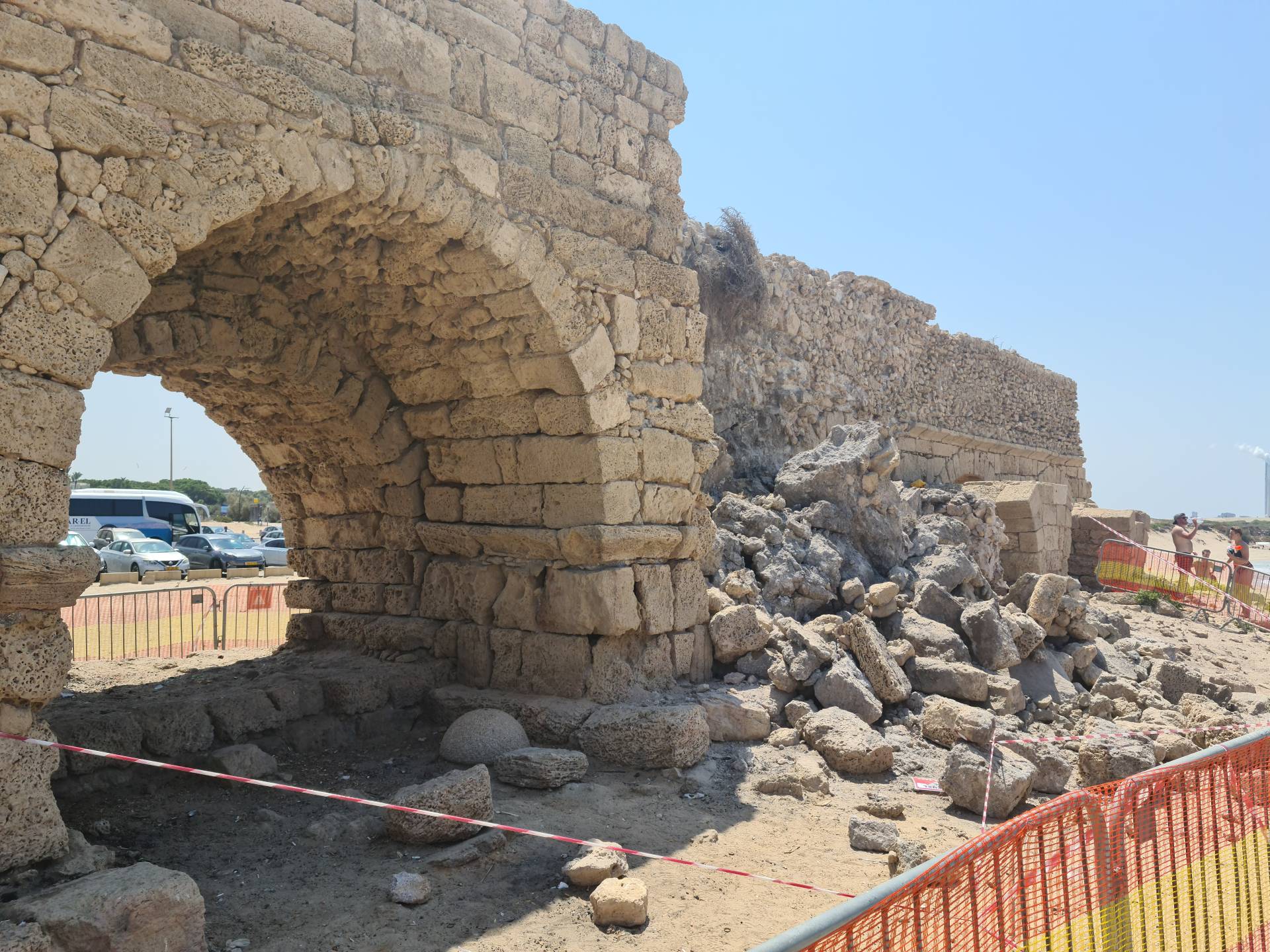
The recently collapsed section of the Roman aqueduct at Caesarea. Photo by Michael Schneider

Share:

Excavations conducted during the laying of a water pipe not too far from Lachish revealed the “most ancient gate ever discovered in Israel.” They are dating it to about 300 years earlier than the Early Bronze gate at Tel Arad. The gate has already been backfilled.

Archaeologists excavating Tel Shimron announced the discovery of a massive Middle Bronze monument that was 15 feet tall and covered the entire acropolis. The monument was very well-preserved because soon after its construction it was filled in with gravel.

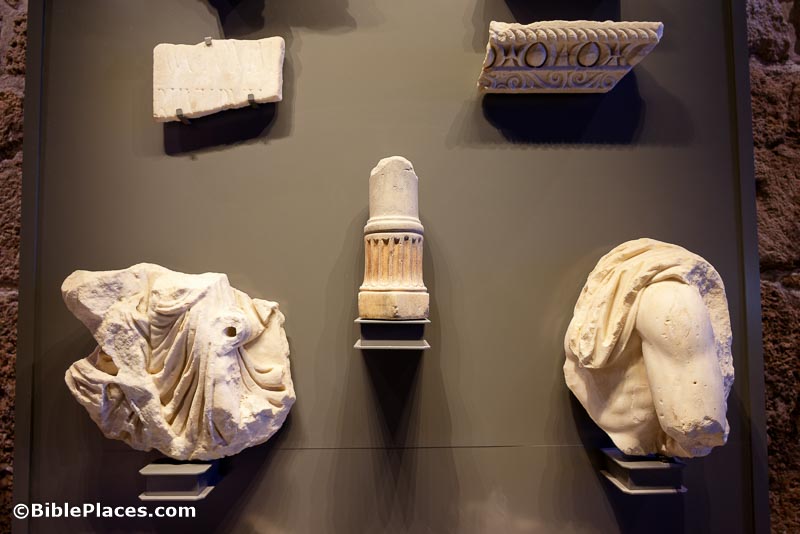
A beautiful Herodian ceiling panel was discovered in secondary use in the Ophel excavations (YouTube).

One of the arches in Caesarea’s Roman aqueduct collapsed on Friday.

A suspension bridge crossing the Hinnom Valley is now open to pedestrians (YouTube).

Zedekiah’s Cave (aka Solomon’s Quarries) reopened earlier this month, and Zahi Shaked gives a 30-minute tour.

Some Jews and Christians are arguing over the right to pray in the area of a possible tomb of Elisha at Stella Maris on Mount Carmel.

Israeli officials are considering loaning the Megiddo Mosaic, which comes from an early Christian building, to the Museum of the Bible. (Ilan Ben Zion’s AP article is a disappointment.)

WUNC interviews Jodi Magness upon the completion of her 11-year excavation of the Huqoq synagogue.

Aviva and Shmuel Bar-Am write about some of the many ritual baths that have been discovered throughout Israel. The article includes many photos.

Abigail Leavitt recounts various sites she visited this summer in Jerusalem. She has another post about a tour of the Shephelah.

“The Jewish National Fund, KKL-JNF, recently welcomed guests to visit the ancient Jewish synagogue in Ma’on, located in Israel’s southern Negev desert.”

Tour Caesarea virtually with DIVE (Digital Interactive Virtual Experiences) on August 30 ($20).

Joel Kramer goes to Mamre in the latest episode from Expedition Bible.

There are a number of late-summer festivals being held around Israel.

New release: The Changing Landscape of Israeli Archaeology: Between Hegemony and Marginalization, by Hayah Katz (Routledge, $42/$136).

The latest Jerusalem Tracker has been posted, with a roundup of news, publications, and media.

It may be hard to believe, but apparently there are unscrupulous shopkeepers in the Old City of Jerusalem.

HT: Agade, Gordon Dickson, Al Sandalow, Will Varner, Arne Halbakken, Roger Schmidgall, Keith Keyser, Wayne Stiles, Explorator

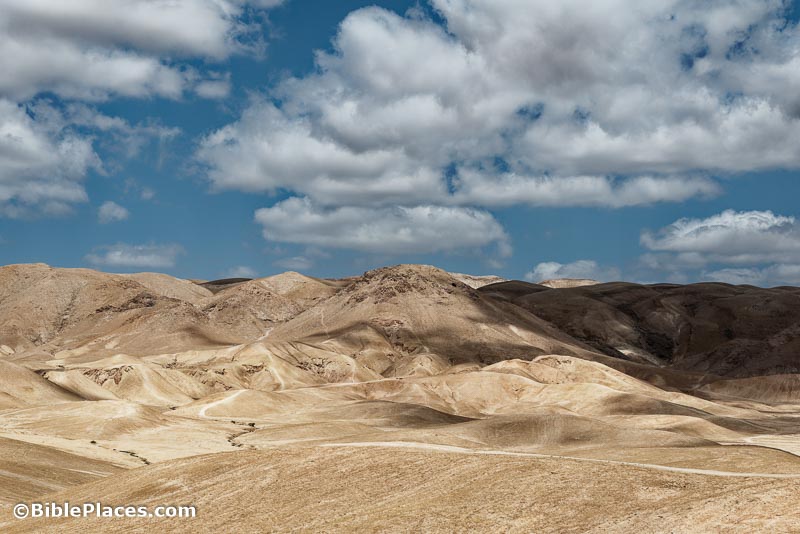
With the Israeli military gone, there are no obstacles to visiting Hyrcania in the Judean wilderness.

Share:

The Times of Israel has the best summation of the Huqoq synagogue excavations that I’ve read.

Melanie Lidman writes a story about the University of Haifa’s School of Archaeology and Maritime Cultures, the only underwater archaeology certification program in Israel.

The Israeli government has a plan to protect Jewish archaeological sites in Area C of the West Bank. Of 3,000 antiquity sites in the West Bank, about 80% are in Area C.

The Times of Israel writes about the opportunity for the public to join conservation work at Gezer on Thursdays in the month of July.

Archaeologists are using chemical imaging technology in ancient Egyptian tombs to analyze the process in which the walls were painted.

So many tourists are visiting the Acropolis of Athens this summer that they will be implementing crowd control measures for the first time ever, including time-slot system for groups and electronic ticketing. There is also talk of enlarging the Propylaia.

The BBC shares the latest discoveries at Pompeii, including serpents, frescoes, and yes, more skeletons.

Charging for admission to Rome’s Pantheon may make the site like the Colosseum—impossible to visit without joining a tour at many times the ticket price.

The NY Times has a lengthy story of Shelby White’s antiquities collection, pieces she has returned, and artifacts recently seized.

BiblePics is a new AI tool that allows users to chat with biblical characters.

New release: Hesi after 50 Years and 130 Years: Beginning a New Generation of Research, edited by John R. Spencer, James W. Hardin, and Jeffrey Blakely (Eisenbrauns, $70 with code NR23)

New release: West Semitic Inscriptions & the Hebrew Bible (AOAT 410), by Bob Becking (Ugarit-Verlag, €123; Amazon)

I have not seen the new “Borderland: Israel in the Time of Jesus” exhibit at The Creation Museum in Kentucky, but the exhibit book contains hundreds of the best reconstruction artwork I’ve ever seen—everything from Herod’s temple at Caesarea to a Jewish funeral and much more. This link gives a video preview of the book, and the book may be purchased here ($30-45).

HT: Agade, Arne Halbakken, Explorator, Ted Weis

It’s always better when artifacts stay at the site and are not transported to some distant museum. The new visitors’ center at Caesarea provides archaeological displays and visual presentations that enhance the site experience.

Share:

Scholars at UNI Graz claim that a 3rd century BC papyrus has evidence of a binding, making it the oldest book in the world discovered. The press release is in German, but the video of the press conference is partly in English. Brent Nongbri offers some thoughts.

A network of stone walls along the Nile River provide evidence of ancient hydraulic engineering.

“A team of computer scientists and archaeologists from the University of Bologna in Italy has developed a new tool for identifying archaeological sites using artificial intelligence … [which] reached a predictive accuracy of over 80 percent.”

“A team of archaeologists and computer scientists from Israel has created an AI-powered translation program for ancient Akkadian cuneiform, allowing tens of thousands of already digitized tablets to be translated into English instantaneously.”

The square in Rome where Julius Caesar was assassinated has been opened to the public.

Renovations of the Carthage Museum will begin in 2025 and expand the exhibition space to three times the current size.

The book of Esther’s independence from classical sources makes it “more important as a historical source for Achaemenian history than has traditionally been assumed.”

“An ancient Hebrew Bible and more than 100 Roman coins were recovered by Turkish military police.” The photo with the article is not the seized manuscript.

New release: A Jew in the Roman Bathhouse: Cultural Interaction in the Ancient Mediterranean, by Yaron Z. Eliav (Princeton University Press, $45; save 30% with code P321).

New release: Wounded Tigris: A River Journey Through the Cradle of Civilization, by Leon McCarron (Simon & Schuster, $29)

New release: Famine and Feast in Ancient Egypt, by Ellen Morris (75 pages, Cambridge University Press, $22; free download until July 3).

In the latest episode of Thin End of the Wedge, Agnès Garcia-Ventura discusses the historiography of Assyriology.

Mark Janzen is guest on The Book and the Spade discussing the historicity of Moses.

Now that the Plutonium at Hierapolis (aka the gate to Hades) is open, Carl Rasmussen shares photos and explains what you are looking at and how the ancient rites were carried out.

HT: Agade, Alexander Schick

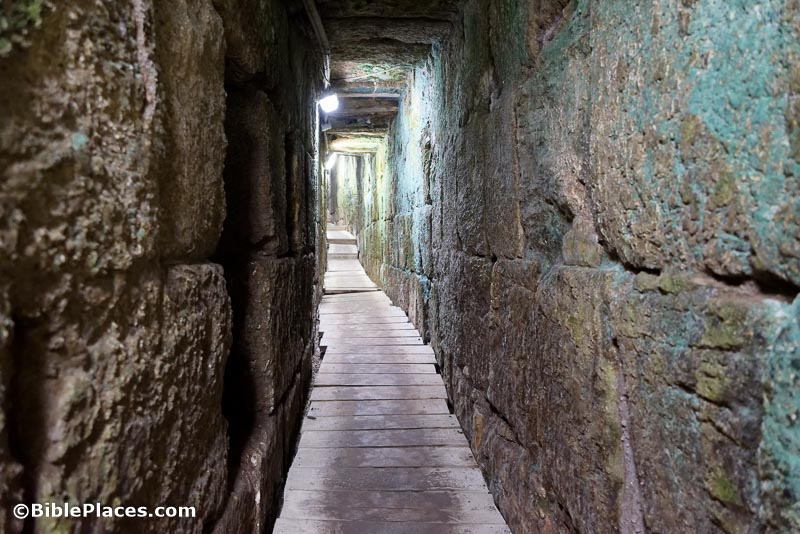
The worst experience in Jerusalem is walking through the drainage channel under the Siloam street. Unless you’re under 5 feet tall.

Share:

The Tower of David Museum in Jerusalem reopened on June 1 after a $50 million renovation. The Times of Israel explains what’s new.

The Israeli government has approved spending more than $100 million in the next five years on various projects in Jerusalem, including on excavations in the Western Wall Tunnels and the City of David National Park.

To judge from this recent promo video, Israel’s Ministry of Tourism is seeking a different kind of tourist. This video also seems to embody the adage that advertising is another form of lying.

The IAA discovered three ossuaries in a Roman-period burial cave near Kafr Kanna (Cana) that had recently been looted.

A traffic stop near Ramallah led to the discovery of dozens of 10th Roman Legion floor tiles that had recently been illegally excavated.

Israeli police arrested a suspect in possession of dozens of coins illegally excavated in Jerusalem, including a rare coin from the reign of Antigonus Mattathias II.

A three-week operation led to the capture of thieves illegally excavating a Roman-Byzantine site near Nazareth.

The latest volume of the Journal of the Ancient Near Eastern Society includes articles on 1 Samuel 5, the Gezer Calendar, the altar at Tel Dothan, and the story of Dinah. Articles are open-access.

Preprints for a festschrift for Tallay Ornan are available on Academia.

New release: Pushing Sacred Boundaries in Early Judaism and the Ancient Mediterranean: Essays in Honor of Jodi Magness (Brill, $211)

New release: History of Ancient Israel, by Christian Frevel (SBL, $75)

On pre-order sale at Logos: “A Virtual Walk Through the Land of the Bible,” by Charlie Trimm

Logos has just released The New Encyclopedia Of Archaeological Excavations In The Holy Land.

Logos has a sale on The New Moody Atlas of the Bible this month ($10).

Rafael Frankel, retired archaeologist from the University of Haifa, died last week. Some of his publications can be seen here.

Weston Fields, longtime managing director of the Dead Sea Scrolls Foundation, died on May 25. A list of his publications can be seen here.

HT: Agade, Joseph Lauer, Arne Halbakken, Ted Weis, Alexander Schick, Explorator

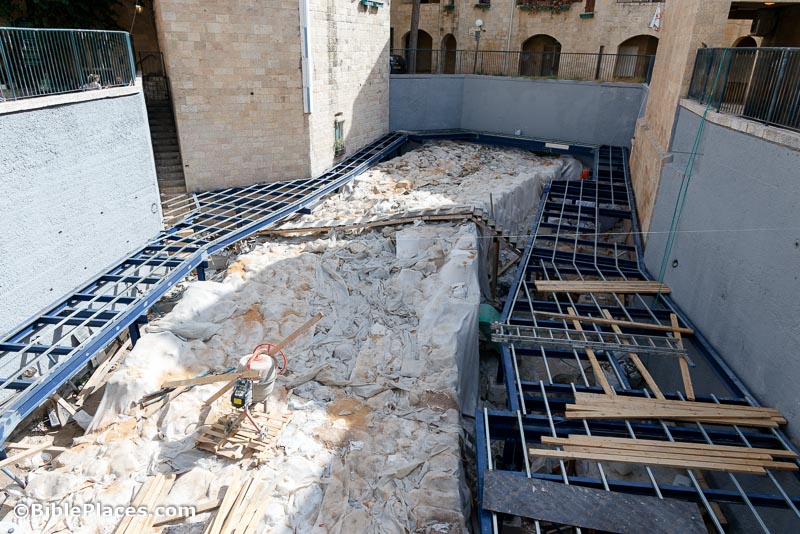
The viewing area for the Broad Wall in Jerusalem will be transformed once they complete construction of these new walkways. Amazing that it took 50 years to get around to this.

Share: