High school students excavating in Ramat Beit Shemesh have uncovered remains of a Jewish village from the first century AD.

Aviva and Shmuel Bar-Am describe the recently opened Mikveh Trail south of the Temple Mount.

“Did archaeologists find the royal banqueting complex of King Herod the Great in Jerusalem?”

Carl Rasmussen shares an unusual photo of a cross in Jerusalem.

The predators center (walk-through exhibit) at Hai Bar Yotvata is now closed.

Israel’s Good Name recently paid a visit to the Jerusalem Bird Observatory.

John DeLancey has a wrap-up of his latest Israel tour. You may resonate with some of his concluding observations.

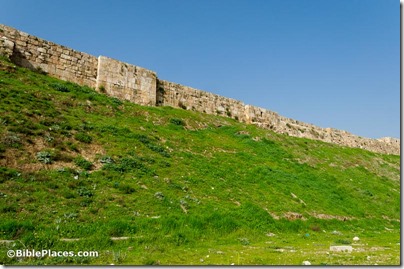
This week on The Book and the Spade, Clyde Billington and Gordon Govier discuss the Jebusite and Roman walls of Jerusalem.

Simon Gathercole lectured recently on “The Journeys of Jesus and Jewish Geography” at the Lanier Theological Library.

Gary Shogren suggests his favorite 5 New Testament archaeological discoveries of recent years.

Appian Media is getting closer to reaching its fundraising goal so they can finish the “Following the
Messiah” series.

Douglas Clark of LaSierra University will be leading a team of scholars to create the Madaba 
Regional Archaeological Museum.

Construction workers have discovered a tomb from the Neo-Assyrian period in Erbil, Iraq.

Restoring the Mosul Museum will not be easy without any remaining artifacts.

A new walking trail and viewing terraces have been created to attract more tourists to the Titus Tunnel near the ancient port of Seleucia.

Archaeologists have discovered 38 graves in an ancient Jewish cemetery in Rome.

The tourist company Roma Experience now offers visitors to Domus Aurea an augmented reality experience with 3-D glasses that brings to life Nero’s palace as it was in the first century.

In a new article “The Old Testament and the Ancient Near East: Profits and Losses” published on the ABR website, Eugene Merrill identifies “five clear profits,” “three claimed profits,” and “two mixed blessings.”

The National Post loves Eric Cline’s 480-page tome, Three Stones Make a Wall: The Story of Archaeology. An illustrated excerpt discussing the antiquities trade has been posted on the ASOR Blog. The Bible and Interpretation has posted his Megiddo chapter.

Karl Katz, the first curator of the Israel Museum, has written an autobiography entitled The 
Exhibitionist, which is reviewed by Asher Weill.

Eisenbrauns has published another valuable study (at a much more affordable price than many academic publishers): The Shephelah during the Iron Age, edited by Oded Lipschits and Aren M. Maeir, with articles about Gezer, Beth Shemesh, Azekah, Qeiyafa, Gath, Zayit, Burna, and Halif. Maeir’s chapter on Gath is online.

William Kelly Simpson and Louis H. Feldman died recently.

HT: Agade, Ted Weis, BibleX

Share:

Archaeologists have discovered a Crusader ship that wrecked in the harbor of Acco.

A replica of a 2,500-year-old ship discovered at Ma’agan Michael launched yesterday from Haifa.

That colossus they recently dug up belongs not to Ramses II, but to Psamtik (Psammetichus) I of the 26th Dynasty.

High-tech imaging is revealing the text of erased and recycled parchments at St. Catherine’s Monastery in the Sinai.

Carl Rasmussen has visited the Archaeology Museum of Nazareth and shares photos of Crusader capitals that depict scenes from the New Testament.

Philippe Bohstrom considers the problem of diving thieves who are looting antiquities from the ocean floor.

The Huis Marseille Museum of Photography in Amsterdam is hosting a spring exhibition about 19th-century photography in Egypt.

A World of Emotions: Ancient Greece, 700 BC – 200 AD has opened at the Onassis Cultural Center in New York.

The founder of Elad, the City of David Foundation, has been awarded the 2017 Israel Prize.

You can get caught up on what happened in the Gezer excavations last year by watching a 16-minute video.

How do you do math in Roman numerals?

After a successful fundraiser and launch of the initial episodes of “Following the Messiah,” Appian Media kicked off a new campaign to raise funds to complete the series. In the first few days, they’ve already raised more than half of their goal. You can pitch in here.

Jodi Magness will be lecturing on “The Archaeology of Qumran and the Dead Sea Scrolls” at William Jessup University on March 23. You can register here.

This week’s program on The Book and the Spade is an interview with Clyde Billington entitled, “Dead Sea Scrolls and the Sinai Inscription.”

Wayne Stiles is leading a trip to Israel this fall and there’s an early-bird discount if you sign up soon.

HT: Ted Weis, Charles Savelle, Agade, Joseph Lauer, Paleojudaica

Share:

David Bivin has long lived within close proximity of the Roman road that runs from Jerusalem to Emmaus. He has led a number of tours along this route as well, showing pilgrims the way that Jesus walked with two disciples on the day of his resurrection (Luke 24). I had the privilege of being on one of those tours about 20 years ago. But Bivin is no longer guiding these trips because these ancient remains are being gradually destroyed by neglect and construction projects.

This situation has been a burden for Bivin for some time now, and for years he has talked of writing an article to document the destruction, with hope that someone might listen and act. A few weeks ago he published just such an article, beginning with the identification of Emmaus, detailing the archaeological finds at the site, and then presenting evidence of the road’s deterioration.

The article is lavishly illustrated with maps, photos, videos, a chart, and several slideshows showing the conditions over from the last several decades.

He writes:

When I first became acquainted with the Roman road below Motza, some of the pavement and many of the curbing stones were still clearly visible. Sadly, over the past recent decades I have watched as the Roman road has fallen prey to severe erosion, such that in many places the remains of the road have been completely obliterated. The IAA’s report notes that the condition of the Roman road is poor, adding that “the road in its present state is torn up, and often it is accompanied by the smell of sewage.” The odor of which the IAA’s report complains, is undoubtedly caused by the sewage pipe, which follows the path of the ancient Roman road.

In his conclusion, he notes:

Despite the probable construction of the Roman road below Motza after the time of Jesus, the route it follows traces the same path Jesus and his two disciples followed to Emmaus. The ravine is so narrow that any road built in it could not have been more than a few meters to the left or right of path on which Jesus and his disciples walked. It is therefore a shame to see the remnants of this potent reminder, which has withstood the passing of so many centuries, disappearing so dramatically in so short a time.

This is an important article that should never need to have been written. Well-preserved Roman roads in Israel are sparse, and this one’s proximity to Jerusalem and its connection to New Testament history should have ensured its protection by authorities. We can only hope that someone will listen before it is too late.

Roman road to Moza, possible Emmaus, tb030803362
Remains of the Roman road to Emmaus in March 2003
Highway 1 new construction at Moza aerial from northwest, ws120514762-labeled
Aerial view showing relationship of Roman road to modern Highway 1 from Tel Aviv to Jerusalem
Share:

A new study concludes that the Roman siege ramp of Masada was never completed and thus was not used to conquer the site.


The Times of Israel has more on the latest discoveries at Omrit.

Syrian troops have recaptured Palmyra from ISIS and the latest damage is being assessed.

The site of the ancient temple of Artemis in Ephesus is suffering from neglect.

The Museum of Archaeological Excavations on Elephantine Island in Aswan has been re-opened after a six-year closure.

The National Museum of Egyptian Civilization in Cairo was opened to the public last week.

2,000 libraries around the world will receive true color photographs of the Sistine Chapel.

“A 19th-century view of the Egyptian temple complex of Karnak is to go on display at the British Museum for the first time this week.”

Wayne Stiles provides a brief history of the Temple Mount, with lots of photos.

John DeLancey of Biblical Israel Tours now has posts up for every day of his recent tour of Israel and Italy.

Gordon Govier interviews Randall Price about “Qumran Cave 12” on The Book and the Spade.

Gary Byers has written a well-illustrated post on the use of mudbricks in the Bible.

Steve Mason’s A History of the Jewish War, A.D. 66-74 is positively reviewed on the BMCR blog.

LandMinds interviews Guy Stiebel on his return to excavating Masada (40 min).

Eisenbrauns is offering 70-80% off dozens of feschriften, including The Fire Signals of Lachish (now
$21) and Exploring the Longue Duree (now $23).

The new issue of Biblical Archaeology Review includes articles on Laodicea and a banquet hall near
the Temple Mount.

BAS has launched a new video streaming site, with a special introductory offer of 75% off.

David Rubinger, photographer of the iconic scene of Israeli paratroopers at the Western Wall, has
died at the age of 92.

HT: Agade, Ted Weis, Paleojudaica

Share:

The Vatican and the Jewish community of Rome are collaborating on a new exhibition on the menorah.

Whenever Mosul is liberated from ISIS, a strategic plan will be in place for restoring its heritage.

Restoration work is underway on a colossal statue of Rameses II that once stood in the Karnak Temple.

Israeli border officials caught a Palestinian smuggler bringing in 53 ancient coins from Jordan.

Digital Giza is a virtual 3D model of the Giza Pyramids, and includes information about the history and archaeology of the site.

In an excerpt from his latest book, Eric Cline compares the archaeology of Masada with Josephus’s report and identifies discrepancies. Among his conclusions is that Josephus made up the story of the mass suicide to protect the Romans.

The updated Appian Media website has all 5 free episodes of “Following the Messiah” as well as a new subscription area with additional video clips and photographs.

Wayne Stiles visits the famous Cave of Machpelah in Hebron to see what it teaches about life, death, and God’s promises.

Ferrell Jenkins posts on several interesting ossuaries. See also a link in the comments to two of Tom
Powers’s articles on another ossuary probably related to the New Testament.

HT: A.D. Riddle, Charles Savelle, Joseph Lauer, Mike Harney, Ted Weis, Agade

Share:

Tabgha’s Church of the Multiplication of Fish and Loaves has re-opened after 20 months of restoration following the arson attack.

Hebrew inscriptions discovered on a Roman-period capital point to the Jewish history of the Druze village of Pekiin.

The oldest known sickle blades have been discovered on the shore of the Sea of Galilee.

Archaeologists working at Omrit have discovered a house decorated with frescoes dating to circa AD 100.

Robert Cargill suggests that “Cave 12” provides evidence that parchment was produced at Qumran.

Israel’s Culture Minister has offered to trade two elephants to Turkey in exchange for the Siloam
Inscription from Hezekiah’s Tunnel.

Israel’s Good Name describes a morning hike in the Ramot Forest on the north side of Jerusalem where a herd of gazelles live and a wild boars were recently spotted.

Carl Rasmussen shares a photo of a mosaic depiction in Berea that shows Jesus climbing a ladder on to the cross.

The Temple Mount Sifting Project blog gives the back story on Zachi Dvira and how he came to direct this important project.

HT: Agade, Joseph Lauer

Share: