Forty-four pure gold coins were recently found hidden in a wall during excavations at the Banias archaeological site.” The coins were minted in the reigns of the last two Byzantine emperors before the Muslim conquest in AD 635.

Mahmoud Hawari has a brief report on the Khirbat al-Mafjar Archaeological Project at Jericho.

As a follow-up to his previous post about a 1st-century synagogue at Chorazin, Carl Rasmussen shares some photos taken earlier this week on the current restoration project.

Leen Ritmeyer shares a number of reconstruction drawings from the Double Gate in Jerusalem, which he identifies with the Beautiful Gate of Acts 3.

The Museum of the Bible and DIVE (Digital Interactive Virtual Experiences) are hosting a virtual tour of the Kidron and Hinnom Valleys on November 9. The cost is $20.

Ferrell Jenkins provides some history and photos of Tirzah, the second capital of the northern kingdom of Israel.

Zoom lecture on Oct 26: “One Site, Two Peoples: Phoenicians and Jews at Kedesh of the Upper Galilee,” by Andrea Berlin

Bryan Windle has written another well-illustrated archaeological biography, this one on Hazael, the Aramean king who boasted of defeating Israel and the “house of David” in the famous Tel Dan Inscription.

New release: Encyclopedia of Material Culture in the Biblical World. A New Biblisches Reallexikon, edited by Angelika Berlejung with P.M. Michèle Daviau, Jens Kamlah, and Gunnar Lehmann (Mohr Siebeck, $223).

Eretz Magazine has created a new travel guide to the Herodium, lavishly illustrated with photos, maps, and reconstructions.

New subscribers to Approaching Jerusalem (Chandler Collins) receive a free e-booklet, “Golden Heights: Five Accessible Panoramas of Jerusalem.”

HT: Agade, Arne Halbakken, Alexander Schick, Ted Weis, Explorator, Paleojudaica

“The discovery of hidden hieroglyphics within Tutankhamun’s tomb lends weight to a theory that the fabled Egyptian queen Nefertiti lies in a hidden chamber adjacent to her stepson’s burial chamber.”

“Silphion cured diseases and made food tasty, but Emperor Nero allegedly consumed the last stalk. Now, a Turkish researcher thinks he’s found a botanical survivor” (subscription).

Sam Mirelman describes the Babylonian Akītu Festival and the Ritual Humiliation of the King.

Owen Jarus gives a lengthy survey of the history of Babylon.

The Peabody Museum of Archaeology at Harvard University is hosting an event on International Archaeology Day on Oct 15.

Phillip J. Long has written a new book, The Book of Enoch for Beginners: A Guide to Expand Your Understanding of the Biblical World.

Dan Reynolds will be speaking at the PEF on Oct 13 on “The Inheritance of Christ: Christian Pilgrimage in the Holy Land Before the Crusades, c. 800 – c. 1099.”

“September 2022 proved to be a banner month for discoveries in the world of biblical archaeology.” Bryan Windle reviews the top three.

HT: Agade, Keith Keyser, Arne Halbakken

Geomagnetic surface surveys at Khirbet al-Minya on the northwestern shore of the Sea of Galilee have revealed an earlier Jewish or Christian settlement.

A new study of the Solomonic-era copper mines at Timna reveals that the enterprise came to a sudden halt around 850 BC because the miners overexploited the sparse desert acacia and white broom trees used to fuel their furnaces (Haaretz subscription).

Carl Rasmussen links to a video that shows evidence for a first-century synagogue at Chorazin. He also shares a photo of the synagogue in 1967 before reconstruction began.

Here is a video of the 7th-8th century AD shipwreck recently discovered off the coast of Israel.

“Hundreds of ancient decorated toga pins, earrings, rings and figurines of animals and idols were found in the home of a man who used to be an antiquities dealer in northern Israel.”

Albright Institute lecture on Oct 27: “The Austrian Expedition to Tel Lachish (2017-2022),” by Katharina Streit & Felix Höflmayer. Register to join by Zoom here.

Marc Zvi Brettler explains the Hakhel Ceremony, in which the assembly gathers together every seven years to read the Torah. This event will be celebrated at the Western Wall on October 11.

Ferrell Jenkins shares a photo of sheep grazing near Tirzah, the second capital of the northern kingdom.

HT: Agade, Keith Keyser, Arne Halbakken

“Archaeologists have uncovered the granite sarcophagus of a high-ranking official from the reign of Ramesses II at Saqqara.”

“Archaeologists in Egypt have uncovered a nearly 1,000-year-old cache of gold and silver coins behind a temple in Esna, a city located along the Nile River.”

Egyptian authorities are struggling with looting taking place in the area of ancient Memphis.

Writing for Archaeology magazine, Jason Urbanus explains how King Tutankhamun’s family forever changed the land of the Nile.

Newest episode on This Week in the Ancient Near East: “Sticky Fingers in the Valley of the Kings, or Howard Carter and the Case of King Tut’s Tomb.”

Michael Homan died last week.

Sarah C. Schaefer reflects on why Gustave Doré’s biblical illustrations are well-known but his name is not.

A new exhibit, High Tech Romans, is running at the Landesmuseum in Mainz, Germany, through January 15.

All 44 presentations from this year’s IBC Conference on “John: His Life, Legacy & Last Words” is now available as a digital download for $99.

HT: Agade, Joseph Lauer, Arne Halbakken, Keith Keyser

Archaeologists discovered an intact burial cave from the 13th century BC on the Palmachim Beach south of Tel Aviv. Unfortunately the cave was plundered while it was being excavated.

Scientists have identified the earliest use of opium in a 14th century BC burial pit at Tel Yehud.

Here are many more photos of the beautiful Byzantine mosaic floor discovered in the Gaza Strip.

“An ancient shipwreck found off the shore of Israel and loaded with cargo from all over the Mediterranean shows that traders from the West still came to port even after the Islamic conquest of the Holy Land.”

Drew Longacre answers nine common questions about the Dead Sea Scrolls.

John DeLancey and Kyle Keimer discuss the excavations at Tel Dan (40 min).

Rocco Buttliere built a model of Jerusalem in the 1st century using 114,000 Legos.

Five perfectly red heifers, required for the ritual purification of those who have touched a dead body, arrived in Israel from a ranch in Texas on Thursday, as the Temple Institute continues preparations to lay the ground for the construction of the Third Temple in Jerusalem.” There is hope that they will produce a herd that will be a tourist attraction for Christians.

New release: The Social Archaeology of Late Second Temple Judaea From Purity, Burial, and Art, to Qumran, Herod, and Masada, by Eyal Regev (Routledge, 2022; $128; eBook $39)

Bryan Windle has written an archaeological biography for King Pekah, one of the last kings of Israel.

I had what may be a unique experience in my life this week – three articles I wrote were published within a few days of each other. Rather than pass over them briefly here, I’ll plan to say more in separate posts in the next few weeks.

HT: Agade, Joseph Lauer, Arne Halbakken, Wayne Stiles, Charles Savelle, Keith Keyser

Hundreds of hieroglyphics have been discovered in a tunnel in Hattusa. There are more photos in these articles in the Turkish press.

“Zahi Hawass recently said that he is certain that a mummy he is currently studying will turn out to be that of Queen Nefertiti.”

The arrest of three antiquities thieves near ancient Memphis resulted in the discovery of ancient tunnels leading to two New Kingdom rooms engraved with hieroglyphics.

Egyptian archaeologists are seeking to have the role of Egyptians recognized in the discovery of King Tut’s tomb and the deciphering of the Rosetta Stone.

All of the artifacts from King Tut’s tomb will be displayed in the Grand Egyptian Museum, expected to open in November.

“Discovering King Tut’s Tomb” opened a few weeks ago in Las Vegas, and the exhibit includes animations, virtual reality pods, and more than 300 replicas of artifacts. Elsewhere in town the National History Museum houses the King Tut exhibit formerly displayed at the Luxor Hotel & Casino.

Leon Mauldin notes the 200th anniversary of the decipherment of the Rosetta Stone that occurred a few days ago.

Egypt has passed a new law imposing penalties on those entering archaeological sites or climbing antiquities without a permit.

Djémila in Algeria has some of the best preserved ruins from the Roman empire.

Sites in Iraq are opening to tourists after destruction by IS forces.

Discover Magazine reviews our lack of knowledge about the hanging gardens of Babylon.

Tom Metcalfe asks, “What’s the world’s oldest civilization?”

Opinion piece: “Some US museums will overlook the dubious origins of acquisitions if it suits their purposes.” The focus is on a group of statuary discovered in southwestern Turkey in 1967.

Five ancient sundials have been discovered in Jordan, and a professor is seeking to raise awareness of their use in antiquity. The professor who authored a study on it believes that the situation would be improved with the establishment of a dedicated astronomy museum.

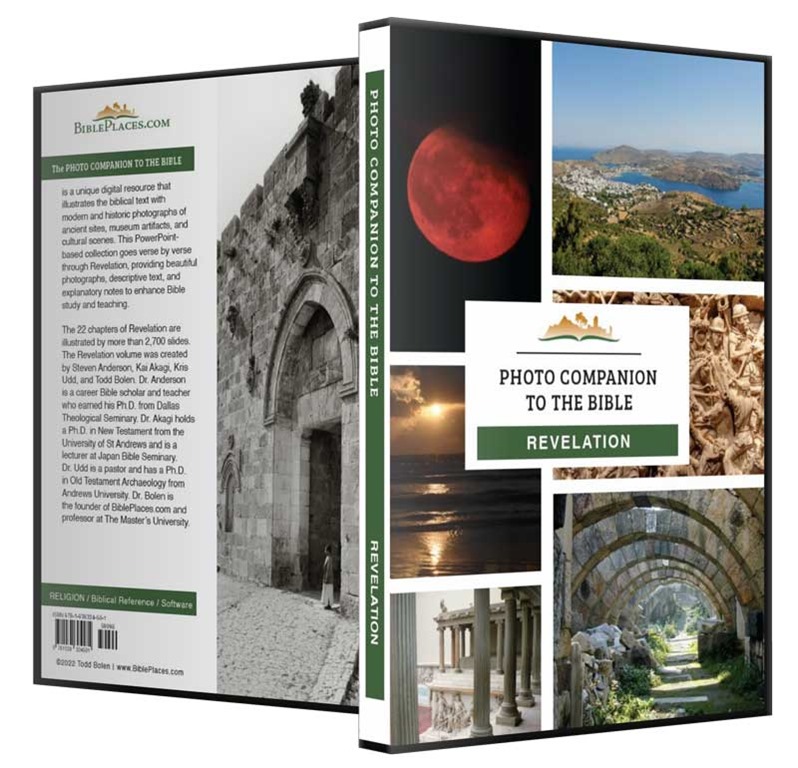
Bryan Murawski offers four tips for preaching geography-heavy texts. (Anybody else suspect that he has never heard of the Photo Companion to the Bible?)

The Babylon Bee reports that archaeologists have found the red pens used to write the words of Christ in the New Testament.

HT: Agade, Joseph Lauer, Arne Halbakken, Charles Savelle, Explorator, George Grena