Somehow I’ve managed to avoid buying BibleWorks for all these years (using Logos instead), but now I see a new version has been announced. There are a lot of new features apparently, but the one of interest here are the satellite maps. In their words:

BibleWorks comes with a set of beautiful satellite maps that you have to see to believe! The collection includes a full set of editable site and terrain overlays for major locations in Israel and Egypt, along with detailed overhead and elevation data and a comprehensive list of archaeological sites. You can even create your own map views, select sites to display, annotate key locations and trace journeys or battle lines.

If you haven’t seen it already, take a look at my review of Electronic Maps for Bible Teaching. (And no, I still haven’t made it to doing Part 2.)

Update: The program is for sale from Rejoice Christian Software for $349 with free shipping. In my experience, they usually offer the lowest prices.

Share:

There are a variety of excavations inside and outside Israel for those interested in “biblical archaeology.” There are a few lists of these, including one in Biblical Archaeology Review (in Israel) and Archaeology Odyssey (outside Israel).

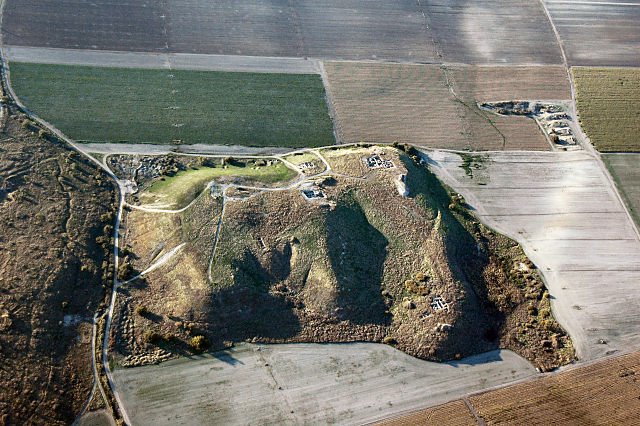
There are two that I would particularly recommend, both for the sites’ biblical significance as well as the teams that are involved. Hazor and Gezer were two of the most important sites in ancient Israel, with mention in the ancient sources as early as the 2nd millennium B.C. Both are also noted as cities that Solomon fortified (1 Kings 9:15). This year however will be the first time that both sites are being excavated at the same time.

A new expedition is beginning at Gezer under the direction of Dr. Steven Ortiz, of New Orleans Baptist Theological Seminary, together with Sam Wolff of the Israel Antiquities Authority. They will be excavating from June 4 – July 7, are accepting volunteers for a minimum of 2 weeks. Ortiz is a well-trained archaeologist who is also a committed evangelical believer. I expect that the excavation team will include many believers, making it a better option for Christians than other digs (some of which are known for a more party-like atmosphere on the weekends). For more information, see GezerProject.org.

Excavations are continuing at the northern site of Hazor under the direction of Dr. Amnon Ben-Tor of Hebrew University. The evangelical group, the Associates for Biblical Research, is planning to participate for a third season. The dates for the ABR program (which includes touring) are June 27 to July 16. Ben-Tor is highly respected in the field, and Hazor is a site where much of interest has been revealed. If you are interested in participating with ABR at Hazor, see their website.

Both are recommended without reservation!

Share:

I’ve been talking about this for much of the last year in BiblePlaces newsletters, but now it’s in process. The Holyland Hotel model is leaving the Holyland Hotel, in route to the Israel Museum. 

This recent Haaretz article certainly has a catchy first sentence, if you don’t realize what she is talking about.

At the end of January, the Temple Mount will be sawed into pieces and carted away. Not the real Temple Mount, of course, but its miniature model on the hillside next to the Holyland Hotel in southeast Jerusalem. The mountain and the temple compound built by King Herod are part of a model of Jerusalem in 66 C.E., on the eve of the revolt against the Romans that ended in the destruction of the city.

Last week I was at the museum and peeked over the wall and saw that parts of the city had been put in place. But it still looked like parts of the foundation were incomplete. It will take some time, I imagine. Hopefully it will be open before the summer tourists arrive.

The model is moving because of the construction of high-rise apartment buildings near it.

UPDATE: Ferrell Jenkins has a photo of the model being dismantled on his Biblical Studies Info Blog.

Share:

The Jerusalem Post has a follow-up story with photos on the excavation of an apparently Jewish town near Jerusalem. What makes this one remarkable is that it was inhabited between the First and Second Jewish Revolts (70-132 A.D.), at a time when little is known about Jews in Judea archaeologically. One problem with this identification is that no mikva’ot (Jewish ritual baths) have been discovered, but this may be owing to the limited excavation area. In fact, the entire dig is being conducted on a traffic island on the ancient “Road of the Patriarchs” (Watershed Ridge). That makes the excavation six meters wide and 360 meters long. Alas, the site will probably be destroyed when the light rail is constructed in 2007.

Share:

Periodically I am asked to recommend tours to various countries of the biblical world. I usually don’t have good answers for them. That is not because there are not lots of tours, but because they aren’t ones that I can be comfortable recommending. But I just received this email and can recommend the trip to you. Dr. Mark Wilson is a scholar who knows Turkey like few others.

This May 14–31 I will be leading a study tour to Turkey, and would like to invite you to join our group. The tour theme is “The Journeys of Paul in Asia Minor in their Historical and Geographical Setting.” During our travels we will visit almost every site in Turkey connected with Paul. Full tour details with the itinerary and costs are posted on the homepage of our web site: www.sevenchurches.org.

A unique feature of the trip is our participation in the Ephesus meeting on May 28. For more details on this event, see http://www.ephesusmeeting.com/.

Share:

The news: Arutz-7 is reporting initial approval of a promenade to be built along the entire perimeter of the Sea of Galilee. A Knesset committee has approved construction though the bill has to pass several additional votes before final approval is given. According to the article, youth volunteers have already been at work on 35 kilometers of the route. In 2000, a paved sidewalk was constructed on the north end of the lake in preparation for the Pope’s visit. One reason given for constructing the new path is to allow free access to the lake in spite of numerous illegal fences and barriers which have been erected.

My take: while one could argue that construction of a promenade will harm the natural environment, it also gives greater access to the area which is not currently available. If one wants to walk or bike ride around the lake today, one is largely restricted to the modern highway which is both dangerous and at times distant from the shore.

Sidenote: While I and many of my students have ridden around the lake on rented bikes, only two have run all the way around it in a single day. That’s nearly 40 miles as the road goes. I’m guessing that neither David Miller nor Will Custis ever do it again!

This is the view most of the way as you walk around the Sea of Galilee.
Share: