Today is release day for A History of Ancient Israel! We are excited to see it available for many friends, colleagues, and students who have encouraged us over the years we’ve researched and written.
Last week I began a series to help readers see why Michael Grisanti and I wrote this book. In the previous post, I looked at David’s rise to the throne in order to answer this question: What does a careful study of archaeology, geography, and chronology reveal that readers commonly overlook in familiar biblical accounts? Today I want to do that for David’s reign.
One of the most significant events of David’s life was his capture of Jerusalem. History would never be the same. In considering this event, I explore:
- how David’s interest in Jerusalem contrasts sharply with Saul’s disinterest
- the importance of Jerusalem’s geographical setting
- the water system that Joab may have used
Bible readers can easily overlook the details of how David administered his kingdom. But there are a number of interesting matters that I investigate, including:
- how the list of royal supervisors named in the Bible provides insight into David’s expanding kingdom
- why David was not—and could not have been—a priest
- how David ensured that Solomon would be king, not only through a private ceremony but also through a national assembly
In my review of archaeological evidence for David’s reign, I explain:
- why we should not be surprised that so little archaeological evidence survives
- how recent discoveries from excavations in the City of David and the Ophel relate to David’s reign
- why Khirbet Qeiyafa is so important to understanding the nature of David’s kingdom
In writing about David’s sin and its consequences, I show:
- why David’s sin against Uriah was even more treacherous than is usually recognized
- how David’s behavior toward his sons created a national nightmare
- what three factors were the most significant in sparking Absalom’s rebellion
I’ve spent years studying the life and reign of David, and I’ve pulled it all together in a single narrative, showing how the geographical setting, archaeological discoveries, and chronological details provide insights and clarity to the biblical account.
Along the way, I also offer several proposals, including a theory that Khirbet Qeiyafa was Ephes-dammim, a rejection of a two-year coregency between David and Solomon, and my reasons for suggesting that Solomon’s Temple should instead be called “David’s Temple.” I propose a location for Nob, and I note a curious case of geographical reversal in Absalom’s rebellion. I provide a reconstruction of the first decade of David’s reign along with a detailed timeline for his forty years on the throne. My hope is that readers will never think about David the same way again!
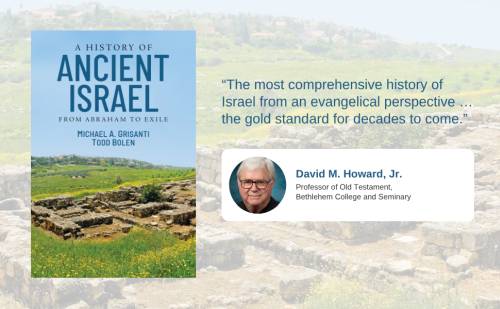
The book is available today from Amazon. For other options, see the latest BiblePlaces Newsletter. Note that the 40% discount offer from Zondervan expires tomorrow.