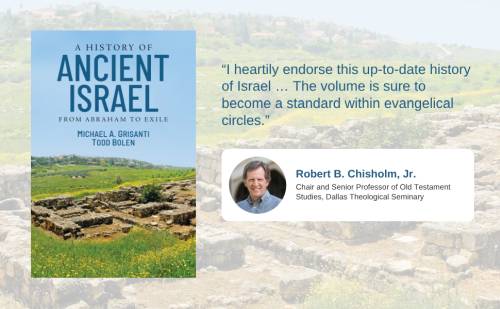
What A History of Ancient Israel offers is a synthesis of biblical and extrabiblical evidence to provide a complete account of each historical era. My studies in both master’s and doctoral programs emphasized biblical geography and archaeology in the service of history, and this book is my way of sharing the insights I’ve gained over three decades of teaching in the classroom and guiding students in the field. Today I want to show you how this approach helps illuminate the reign of Solomon.
In looking at the evidence, it’s clear that the descriptions of Solomon’s wealth were not exaggerated:
- New discoveries at the copper mines of Faynan and Timna correspond chronologically with the reign of Solomon
- A network of dozens of fortresses in the Negev corresponds with Solomon’s control of the trade routes for the copper industry
- Archaeological evidence connects the kingdom of Sheba with Jerusalem and supports Solomon’s two maritime trade networks
Solomon’s character has been misunderstood in a number of ways:
- Solomon’s severe actions in securing his throne were not ruthless but righteous
- Solomon’s division of the nation into twelve administrative districts did not favor Judah at the expense of the northern tribes
- Solomon’s sin was not in acquiring great wealth but in how he used it
Archaeological discoveries provide more help in reconstructing Solomon’s temple than many realize:
- Two significant features from Solomon’s temple can be seen on the Temple Mount today
- Temples discovered at Tell Tayinat are similar to Solomon’s temple in design, orientation, twin pillars, and the palace next door
- The ancient temple at Ain Dara sheds light on the temple’s side chambers, the dimensions of the holy of holies, and the puzzling biblical description of its “windows”
There is more information about Solomon’s reign than most readers expect, and I’ve tried to pull it all together in a retelling that answers both old and new questions. I observe that Solomon’s foreign marriages began before he became king, that 1 Kings 6:1 is important for more than its famous reference to 480 years, and that Egypt’s apparently contradictory foreign policy toward Solomon was strategic. I explore the importance of Solomon’s four encounters with the Lord, discuss the high point of his reign, and conclude by noting that “no other period in Israel’s history came closer to realizing the establishment of God’s kingdom on earth.” It is a fascinating era filled with surprising contrasts!