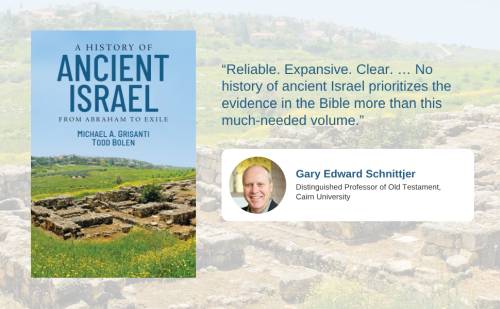
A common criticism of conservative histories of ancient Israel is that they merely retell the biblical account. I think there are some books that are guilty as charged. But the book that I co-wrote with Michael Grisanti is much more than a retelling of the biblical narrative. We draw upon a broad range of ancient sources, both literary and archaeological, and bring them together to illuminate the historical record in ways that would not otherwise be possible. To illustrate the value of our approach, I am writing a series of posts highlighting insights gained from each era of Israel’s history. Today our focus is on the early years of the Divided Monarchy.
Beginning with the division of Solomon’s kingdom, one point I’m eager to make is that we should not reduce the causes of this division to a single factor:
- Rehoboam played the fool, to be sure, in spurning the counsel of the elder advisers.
- Yet the fault lines had begun to form earlier in the reign of Solomon, and even earlier in the reign of his father David.
- Few observers at the time would have recognized the decisive factor: divine judgment for Solomon’s idolatry.
Chronological reckoning is as difficult as it is important. I want readers to understand:
- Three key principles that help us make sense of the sometimes-confusing chronological records of the kings of Israel and Judah.
- How Asa’s remarkable faith in the Lord that led to his victory over Zerah was followed only one year later by his shocking lack of faith when Baasha attacked.
- Why Asa’s debilitating foot disease may explain the timing of Jehoshaphat’s accession to the throne.
The first fifty years of the Divided Kingdom were characterized by some striking trends:
- The northern kingdom experienced assassination after assassination and repeated dynastic upheaval, while the southern kingdom enjoyed relative stability under the Davidic dynasty.
- Of all of the kings during these fifty years, only one is said to have done what was right in the Lord’s eyes, and even he ended his reign under the shadow of divine rebuke.
- The two kingdoms were at war with each other for most of these fifty years, but the rise of a new dynasty in Israel under Omri paved the way for peace.
Pharaoh Shishak’s campaign against Judah and Israel provides a remarkable example of how biblical, Egyptian, and archaeological data can be brought together:
- Both Kings and Chronicles report that the Lord raised up Shishak to invade Judah as punishment for turning away from the Lord.
- The Egyptian records are much more extensive than the biblical ones. At the temple of Karnak, Shishak inscribed a list of more than 150 places associated with his campaign, providing evidence for reconstructing his route and revealing something the Bible does not tell us: he also invaded the northern kingdom.
- Archaeological evidence further illuminates the campaign. Scholars have associated destruction at as many as two dozen sites with Shishak’s invasion, and a remarkable fragment of a stela bearing his name was found at Megiddo.
What I have found over and over in my study of Israel’s history is that bringing individual facts and seemingly isolated events together often reveals more than studying them separately. When we weave the evidence into a coherent historical narrative, we discover connections that would otherwise remain hidden and gain clarity about events that once seemed inexplicable or confusing.
I’ve had many “aha” moments while studying, traveling, teaching, and writing, and I’ve tried my best to capture them in the pages of this book. My hope is that readers will experience some of those same moments of discovery—and share in the delight of seeing the history of ancient Israel come into sharper focus.