A study of sheep and goat teeth indicates that shepherds traveled with their flocks between Galilee and the Golan Heights during the 10th to 8th centuries BC, despite ongoing conflicts between the Israelites and the Arameans.

The Times of Israel reports on the mass grave for children discovered at Azekah.

A Byzantine church in Nahariya was hit by a Hezbollah rocket but the large mosaic floor was not damaged.

Yana Tchekhanovets writes about the site of Nessana, a “a prominent Christian center and a vital caravan hub, facilitating travel to Sinai and the Egyptian monasteries” in the Byzantine period.

BibleStock’s first reading plan is now live on the YouVersion Bible App. This is the first reading plan on the app that features video from Israel. The 50-day plan takes you through the Gospel of Mark.

The first five episodes of The Sacred Thread: Season 1 have been released, and the final two will be released by the end of the month. The season finale will be celebrated with a special livestream event on Sunday, April 26 at 8:00 pm Eastern.

Available for pre-order: Archaeology, Jesus, and the Gospel of John: What Recent Discoveries Show Us, edited by Paul N. Anderson (Eerdmans, 650 pages, $100)

Jerusalem University College has announced its Summer Institute Online Series:

  • Treasures in the Book of Joshua, taught by Hélène Dallaire
  • The Land and the Logos, taught by Petra Heldt
  • Biblical Women in Jewish and Christian Art, taught by Shulamit Laderman
  • The Ark of the Covenant: A Biography, taught by Chris McKinny
  • Finding Bethsaida: An Exemplar in New Testament Historical Geography, taught by Steve Notley

Gary Byers discusses the history of the tabernacle on Digging for Truth.

On the Biblical World podcast, Chris McKinny and Kyle Keimer discuss the best archaeological finds of 2025 (part 2).

New maps have been created by Bible Mapper Atlas, including:

HT: Agade

Share:

Turkish Archaeological News rounds up the top stories for the month of March.

Owen Jarus asks what happened to the Minoan civilization.

Bryan Windle reviews the top three reports in biblical archaeology in the month of March.

Why did the Israelites make a golden calf? John Drummond gives a good answer.

New release: Phoenician Inscriptions, by Robert D. Holmstedt, Aaron Schade, Philip C. Schmitz (SBL Press, 396 pages, $70; Amazon)

Baker Academic is offering 40% off new books with code BARSPRING26, including:

Gordon Govier writes about the Dead Sea Scrolls now on display at the Museum of the Bible. The museum also extended its exhibition of the Megiddo Mosaic through December.

HT: Agade, Alexander Schick, Explorator

Share:

The Israel Museum will open to visitors on Monday, but the Great Isaiah Scroll exhibition is temporarily closed. Holy sites in Jerusalem re-opened this week.

Haaretz reports on the Great Isaiah Scroll exhibit that lasted not four months but four days. The article gives the history of the scroll since its discovery in 1947.

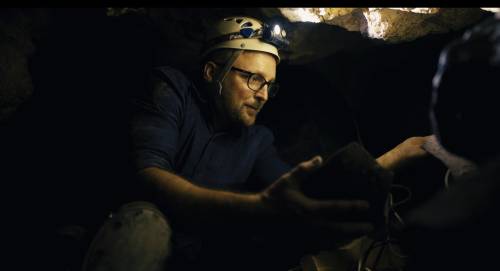
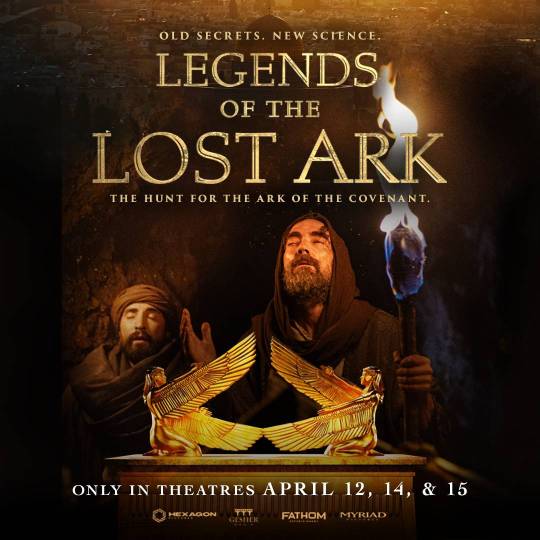
Legends of the Lost Ark, a docudrama with Chris McKinny, is in theaters for only three days: April 12, 14, and 15. Click here for showtimes in your area, tickets, and a link to the trailer.

Ran Silberman writes about the search for the ark of the covenant, and he asks if new technology might help to locate it underneath the Temple Mount.

Jerusalem Tracker 14.2 identifies the latest resources about Jerusalem in blogs, audio, video, and more.

New release: Jacob: The Story of a Family, by Jonathan Grossman (Koren, 769 pages, $35; Amazon)

Online lecture on April 23: “Hidden Treasures: Cryptic Cherubim in the New Testament,” by Chris McKinny. Chris will also be teaching a summer online course entitled “The Ark of the Covenant: A Biography.”

Zoom lecture on April 29: “New Excavations at Nessana, Negev: Late Antique Pilgrimage Hub on the Desert Fringe,” by Yana Tchekhanovets

Sy Gitin’s The Road Taken: An Archaeologist’s Journey to the Land of the Bible has dropped in price from $30 to $11.

HT: Agade, Alexander Schick, Explorator

Share:

I can’t count how many times I’ve been asked: where do you think the ark of the covenant is now? The group usually laughs when I say I’m pretty sure I saw it being hidden away in a warehouse in New York.

I usually then tick off the leading theories: the ark is hidden underneath the Temple Mount, the ark was taken to Mount Nebo, the ark is now in a church in Ethiopia, the ark was destroyed by the Babylonians.

But now there is a much better, and much more entertaining, answer to this perennial question. Archaeologist Chris McKinny, a longtime friend and partner on various BiblePlaces projects, has spent years researching the subject, and Gesher Media has produced a beautiful new docudrama that travels the world to bring the best evidence to light.

Legends of the Lost Ark is the perfect combination of academic scholarship and cinematic excellence, pulling the reader into the intrigue of where the symbol of God’s presence went after the Jerusalem temple was destroyed. Legends of the Lost Ark presents dramatic footage with expert analysis, including on-site reenactments, interviews with scholars, and a cast of more than 100 actors. The movie has already received the 2025 Silver Crown Award for Best Limited Theatrical Release at the ICVM (International Christian Visual Media) meeting.

“The Ark was not only lost — its story and significance have largely been forgotten,” said Dr. McKinny. “What happened to the Ark remains one of the most fascinating mysteries in human history. This film charts new territory in investigating the most ancient legends surrounding its disappearance.”

For the first time, three enduring legends surrounding the Ark’s disappearance are scrutinized through textual analysis, archaeological exploration, and expert theological debate. Through cinematic reenactments, the film vividly portrays the prophet Jeremiah’s desperate mission to safeguard the Ark during Jerusalem’s fall, placing audiences inside a pivotal moment in biblical history.

The movie will be in theaters for three days next week: April 12, 14, and 15. Tickets are available here. You can read more about the movie (here and here) and watch the trailer (here).

I hope you’re able to see it!

Share:

Israel aims to become the leader in archaeological knowledge within three years as they develop an open database and transform it into an advanced scientific repository using Google’s artificial intelligence tools.

A volunteer at the Temple Mounting Sifting Project this week discovered a seal impression from the First Temple period with Egyptian symbols.

Joshua Berman wonders if the biblical account of the exodus was “mockingly subverting an earlier Egyptian text.”

Alon Gildoni and Ron Milo created “Haggadah on the Map,” with a printable pdf version and an online interactive version. The Times of Israel interviewed Gildoni.

A newly excavated fortress at Tell el-Kharouba in northern Sinai might be related to the Way of Horus which the Lord led the Israelites away from during the exodus.

Ruth Marks Eglash reports on the excavations in the Kishle, just south of the Tower of David complex in Jerusalem.

Archaeologists discovered a cache of ostrich eggs near the remains of a campfire used by desert nomads in southern Israel.

“Recent excavations in Egypt’s Kalaya region in the Beheira governorate have uncovered a fifth-century CE building that offers a detailed glimpse into early Coptic monastic life.”

A new study has identified a female beast hunter in a now-lost ancient Roman mosaic.

Woo Min Lee argues that Sennacherib’s claim that he “shut [Hezekiah] up like a bird in a cage” was a declaration of victory, not defeat.

The latest issue of Biblical Archaeology Review includes articles on the Last Supper, sights and smells of synagogues, the “Diaspora Revolt” against Rome, and the Roman siegeworks built around Jerusalem in AD 70.

Greek Reporter has an article about the synagogue at Delos, the oldest one known outside the land of Israel.

Greece will be establishing two new underwater archaeological sites that will be open to divers.

New release: The Untold Story of the Kingdom of Judah, by Oded Lipschits (De Gruyter Brill, $88)

New release: Pencil and Dust. Women Who Shaped Archaeology in Greece and the Greek World, edited by Sylviane Déderix and Maguelone Bastide (École française d’Athènes; $11)

New online course: “The Archaeology of Ancient Israel: A View from Mesopotamia,” by Paul Collins (Anglo-Israel Archaeological Society; £50-£100)

HT: Agade, Arne Halbakken, Explorator

Share:

Archaeologists have found evidence of a visitor from India in Egypt’s Valley of the Kings.

“A reassessment of damaged 3,500-year-old statuary adds to evidence that Queen Hatshepsut wasn’t the villain that scholars long took her to be” (gift link).

A new study suggests that the destruction of the Jewish temple on Elephantine Island was caused by the same Hananiah, a descendant of Sanballat, who had been the governor of Samaria. The underlying journal article is here.

“An American archaeological mission from New York University has completed the restoration of a granite head of Ramesses II at his temple in Abydos.”

“The restoration of the gateway of King Ramesses III at the Karnak Temples has been completed, alongside the discovery of a rare stone stela dating to the reign of the Roman Emperor Tiberius.”

The exhibition “Ramses and the Pharaohs’ Gold” is now on display in London.

A special exhibition entitled “A Bestiary of Ancient Nubia”opens next month at the ISAC Museum.

“Iranian archaeologists have launched an interactive map that geolocates cultural sites in the country that have been damaged during the war.”

New release: Ancient Iran in the ISAC Museum: From Prehistory to the Achaemenid Period, by Abbas Alizadeh (ISAC Museum Publications 3; $30 print; open-access)

Expedition Bible’s latest video goes looking for the traditional location where the Israelites crossed the Red Sea.

HT: Agade, Explorator

Share: