Aaron’s tomb in Jordan will re-open to Israeli tourists after the site was closed following a group that allegedly prayed there.

A researcher claims that the world’s oldest chess piece was discovered in Jordan.

Sara Toth Stub explains what happened to Petra after it was abandoned by the Nabateans.

It’s not clear where Egyptians came up with five million African sacred ibises, but a DNA study shows that they were not raised in breeding farms.

Archaeologists have discovered five lion mummies in excavations in Saqqara.

3-D scans of the bust of Nefertiti are now available online.

The Ilisu dam will soon flood Hasankeyf, one of the oldest known and continuously inhabited settlements in the world.

The Central Baths at Pompeii have now been opened to tourists.

A reconstruction of the god Moloch is part of an exhibit on Carthage in Rome.

Cyrus, king of Persia, is the latest subject in Bryan Windle’s series of bioarchaeographies.

Save the date: the annual conference of the Institute of Biblical Context, now redubbed the Infusion Bible Conference, will be held on June 8 to 10, 2020 in west Michigan. The topic is “Paul and His Roman World.”

Gift subscriptions are now available for Walking the Bible Lands.

HT: Agade, Joseph Lauer, Explorator, Keith Keyser

Share:

“Colorful remains of mosaics from a 3rd century synagogue in the ancient town of Majdulia are the earliest evidence of synagogue decoration in the Golan.”

“A group of archaeologists, architects and researchers petitioned the High Court of Justice . . . to stop a controversial plan to build a cable car to the Western Wall in Jerusalem’s Old City.”

The latest in the Life Lessons from Israel video series focuses on the Talmudic Village of Katzrin.

Aviva and Shmuel Bar-Am write about a number of small archaeological sites in Pisgat Zeev, a northern suburb of Jerusalem.

Israel21c: Fabulous photos of 5 picturesque places to visit in Israel. The sites include Banias, En Gedi, Masada, Beth Shean, and Caesarea.

Archaeologists are hoping to continue excavations at el-Ahwat, possibly the biblical Harosheth HaGoyim, before modern construction destroys remains.

Israel’s Good Name visited the Horns of Hattin during a reenactment of the famous battle between the Crusaders and Saladin.

Carl Rasmussen reports on his visit to the “real” Bethsaida.

Luke Chandler, Ferrell Jenkins, Chris McKinny, and BibleX note the release of three new volumes in the Photo Companion to the Bible series.

HT: Agade, Joseph Lauer

Share:

There will be no roundup next weekend, but if you’re at ETS or SBL, stop by the BiblePlaces booth and say hello to me, A.D., Kris, Chris, and Christian. Kaelyn, Charity, Caden, and Mark will be around as well. I’ll be presenting a couple of papers at ETS, so you’re invited to attend if you’re interested in the archaeology of Esther or the chronology of David. The complete program is online here.

Meg Ramey describes her walk along the route from Troas to Assos, following in Paul’s footsteps.

Professor Aykut Çınaroğlu has been buried in the cemetery next to his excavation site of Alacahöyük, according to his request in his will.

Climbing the pyramids and other “thuggish acts toward Egyptian antiquities” are now illegal and will result in imprisonment or a fine.

Three shipwrecks from ancient and mediaeval times and large sections of their cargoes have been discovered off the small Aegean island of Kasos.”

Excavations on the Greek islet of Chryssi south of Crete have uncovered large quantities of murex shells.

Lucas Grimsley writes about his experience in excavating in Cyprus.

Brent Davis talks about the challenges of trying to crack Linear A.
“Entering Early Christianity via Pompeii” is a resource from The University of Manchester to provide a “virtual guide to the world of the New Testament.” It looks interesting.

St John Simpson of the British Museum explains how they work with law enforcement to fight antiquities looting.

The Jerusalem Post explains the significance of the Washington Pentateuch.

“The National Library of Israel (NLI) and Google have announced that 120,000 books from the library’s collection will be uploaded to Google Books for the first time as part of their collaboration.”

The Gustav Jeeninga Museum of Bible and Near Eastern Studies at Anderson University is being re-opened after being re-located.

The NY Times has a story on this week’s re-opening of the University of Pennsylvania Museum of Anthropology and Archaeology.

New book: The History and Archaeology of Phoenicia, by Helene Sader ($50).

Eisenbrauns has a sale of 40-50% off selected festschriften.

HT: Agade, Charles Savelle, Keith Keyser, Explorator

Share:

Leen Ritmeyer has written an informative and well-illustrated post on the significance of Shiloh and the recent excavations. Ritmeyer’s reconstruction drawings are available for purchase in his image library, including his new drawing of Shiloh.

A government committee in Jerusalem has authorized the construction of a cable car to the Dung Gate.

A $37 million visitors’ center has been opened at the Huleh Valley Nature Reserve.

Anthony Ferguson shares 5 surprising details about the discovery of the Dead Sea Scrolls from Weston Fields’ history.

“The only project agreed on by Israel and Jordan that could possibly, in the foreseeable future, help save the Dead Sea from further shrinkage is stuck in a byzantine web of politics, bilateral tensions and Israeli foot-dragging.” This is a well-researched article on a subject frequently in the news.

Excavations have resumed at Tell Ziraa in Jordan, with the recent discovery of an Iron Age house with several dozen loom weights.

Colin Cornell considers whether the Jews living in Elephantine worshipped a goddess in addition to Yahweh.

Egyptian authorities have announced the discovery of a cemetery in Ismailia that dates to the Roman, Greek, and pre-dynastic eras.

The October issue of the Newsletter of the Egyptian Ministry of Antiquities is online.

History Magazine has the story of how Howard Carter almost missed King Tut’s tomb.

Two vast reproduction Assyrian statues were unveiled in Iraq on Thursday as part of a project designed to restore the cultural heritage of Mosul.”

Wayne Stiles explains the significance of the Arch of Titus and the relevance of an olive tree planted beside it.

“A team of international scholars versed in culinary history, food chemistry and cuneiform studies has been recreating dishes from the world’s oldest-known recipes.”

In a 10-minute video, David McClister explains who Flavius Josephus was.

On sale for Kindle:

Tim Bulkeley has died. He began his biblioblog in 2004 and was a regular encouragement to me over the years. He will be missed.

HT: Agade, Charles Savelle, Keith Keyser

Share:

We have collected 40 items so far from the last two weeks, and I’ll think we’ll break it up into three parts, going through Monday.

If you’ve prayed at all for those affected by the Saugus High shooting, thank you. My oldest sons graduated from the school, and my two daughters are students there now. They were not on campus at the time, but they have friends who were wounded and traumatized. Our church is a central gathering place for students as they process everything. You can pray that we will be faithful and wise. And now to the stories…

National Geographic is the latest to report on the Siloam Street excavations and the attendant controversy, along with various other recent Jerusalem excavations. They do so, as you would expect, with beautiful photos.

Israel’s Good Name describes a day of excavating in the Mount Zion Archaeological Dig.

I bet you don’t know how many inscriptions we have that may be related to Sergius Paulus, the Roman proconsul when Paul and Barnabas visited Cyprus. Bryan Windle provides photos and details in this well-researched archaeological biography.

Now online: The ACOR Newsletter for Summer 2019

A British scholar explains a little of the history of aerial photography in Jordan.

Bible Mapper has begun a new blog, with a number of helpful maps already posted.

New book: The Canaanites, by Mary Ellen Buck ($15)

An interview with Father Eugene provides some background on the new Terra Sancta Museum in Jerusalem.

A leopard was apparently spotted in Samaria. The video is in Hebrew, and the footage is in infrared(?), but it may be the first sighting in decades.

Jessica Halfin suggests “11 biblical experiences in Israel you’ll never forget.” It’s a good list.

My friend John Black and his wife Doro are leading a more affordable Israel tour in February and they have a few remaining spots.

HT: Agade, Charles Savelle, Keith Keyser

Share:

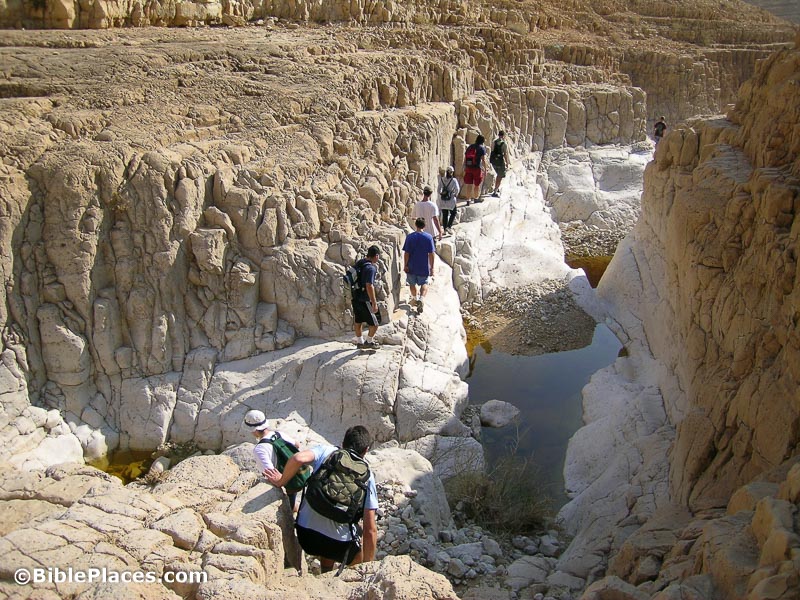
I believe that there is no better way to experience Israel than by hiking it. That doesn’t mean that your first trip to Israel should be a pure hiking tour. I would suggest instead that you first learn the land as a whole, and that requires being on a bus so you can cover the ground. But as you have opportunity on that or subsequent trips, you will find that nothing is as rewarding as walking through the land. The air you breathe, the dust you kick up, the surprises you see, the connections you make—all of these are vastly different than the view from the bus window.

It’s not necessarily easy going on a hike, especially if you’re not traveling with someone with experience. The best hiking maps are in Hebrew, and the logistics can be challenging as well. But if you’re not in a hurry and you make some preparation, you can have a successful trip with memories that last a lifetime.

Over the years, a few people have written books (in English) for hiking in Israel. (Here’s an older one I like.) But trails are altered and the books become dated and go out of print.

Israel by Foot is a new website dedicated to helping hikers in Israel. The creator, Erez Speiser, wrote me some weeks ago to ask about the possibility of writing a guest post for this blog. But I love what he is doing and I would rather tell you myself.

I predict that Erez’s website is going to change some of your lives. Because you will start reading of the possibilities, get motivated, and then realize that you really could do this.

There are a number of options on Israel by Foot, but readers of this blog might start with “Bible Walks,” where Erez (who created all of the content himself) gives detailed descriptions for about five hikes, including the distance, the climb, the best time of year, directions to the trail head, and Google Map points. That is all free; for $5 you can purchase a detailed hiking map and GPS files for any particular hike. (You know how much you’ll be willing to pay for a detailed map in English when you are lost? :-))

I love the “Inn to Inn Hikes” section. That’s because I don’t enjoy hiking so much with 40 pounds on my back. Multi-day hikes are just much more difficult logistically. (I led a 11-day hike for a couple dozen people once, but it worked so beautifully because we had a trail van carrying our sleeping bags and food. Heavy backpacks would have completely changed the calculus.)

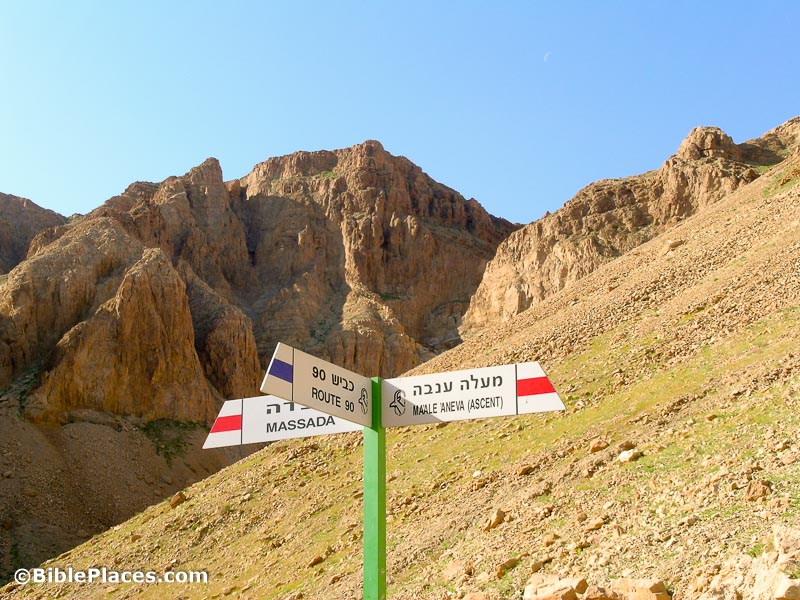
Just reading the options for the “Inn to Inn” will motivate some of you to start planning for your 30th wedding anniversary trip or your 60th birthday present to yourself or something! How about: Judean Desert (Arad to En Gedi via Masada) in 4-6 days. Or Sea to Sea (across the Upper Galilee) in 5 days. Or the northern (and most beautiful!) section of the Israel National Trail – from Dan to Arbel!

Erez has another section of single-day self-guided hikes. These are easier to incorporate into another trip. There are several dozen options listed in various regions of Israel.

You might consider if a “hiking-based” trip could be a way to spend some quality time with some of your older kids. Or maybe a person you disciple or a small group you lead. Some married couples are ideally suited for trips like this. I know there are lots of other places to travel, and this is not on the cheaper end for those living outside of Israel, but I believe that amazing memories are made when (1) you are walking outdoors (2) in a place where you are surrounded by the Bible and (3) you are feeling a small measure of pain.
Share: