I just noticed that the early-bird discount ends next Wednesday for the Institute of Biblical Context conference in June. If you were thinking about attending, now is the time to secure your spot. I’m looking forward to it, and I hope to meet some of you there, either for the first time or to catch up.

I previously explained why I think this is an outstanding conference, but I’ll note here the theme for each day:

  • Day 1: The Shepherding Context
  • Day 2: Shepherding Stories in the OT
  • Day 3: Shepherding Stories in the Gospels

I predict that many attendees will go away saying, “I’ll never think about sheep and shepherds the same way again!”

Share:
(Posted by Michael J. Caba)

This series of posts examines the historical reliability of the New Testament books of Luke and Acts by comparing these books to other ancient textual sources and the archaeological record. Supplemental information of additional interest is often given as well.

The text in Luke 3:3-6 speaks of the ministry of John the Baptist and makes reference to “the book of the words of Isaiah the prophet.” Interestingly enough, we now have an actual ancient copy of the book of Isaiah referred to by Luke, which, having been penned in ca. 125 BC, was written prior to the time Luke wrote his work. This ancient text, commonly called the Great Isaiah Scroll, is a well-preserved copy of the Old Testament book of Isaiah. Further, this same scroll is featured in the Shrine of the Book at the Israel Museum in Jerusalem. The entire scroll is shown in the following photo, which can be seen in more detail by clicking to enlarge.
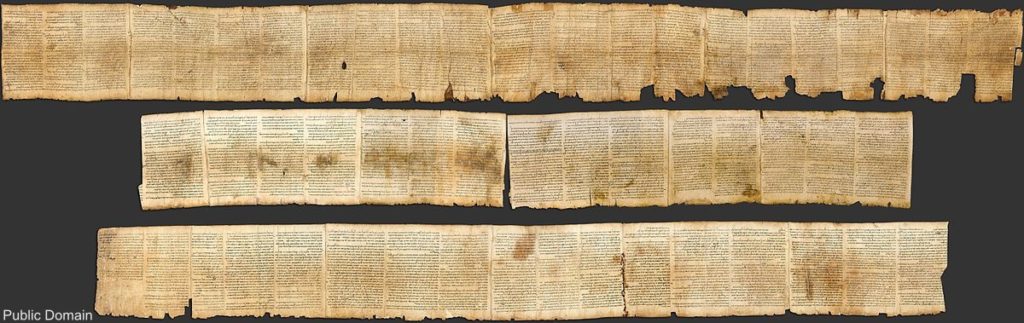
Having been found in 1947, the Great Isaiah Scroll was one of the first of the Dead Sea Scrolls to be discovered, and—with the exception of some small damaged portions—it contains the entire text of the biblical book of Isaiah. Moreover, a handy digital version that scrolls electronically and has a translation app is now available to the public. This digital version is part of the larger Digital Dead Sea Scrolls collection.

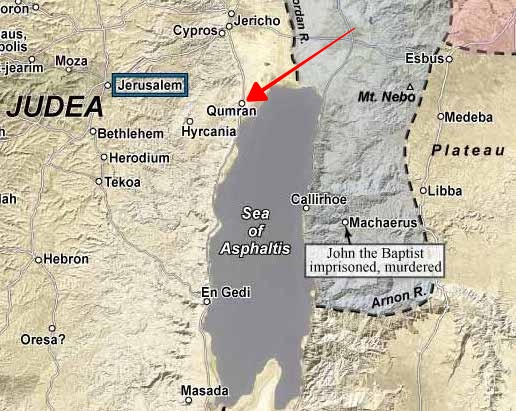
The Dead Sea Scrolls, which contain nearly all of the Old Testament books plus a number of other ancient works, were found in caves located in the hills around the ancient community of Qumran, which is designated by the red arrow on the following map cropped from the Satellite Bible Atlas.

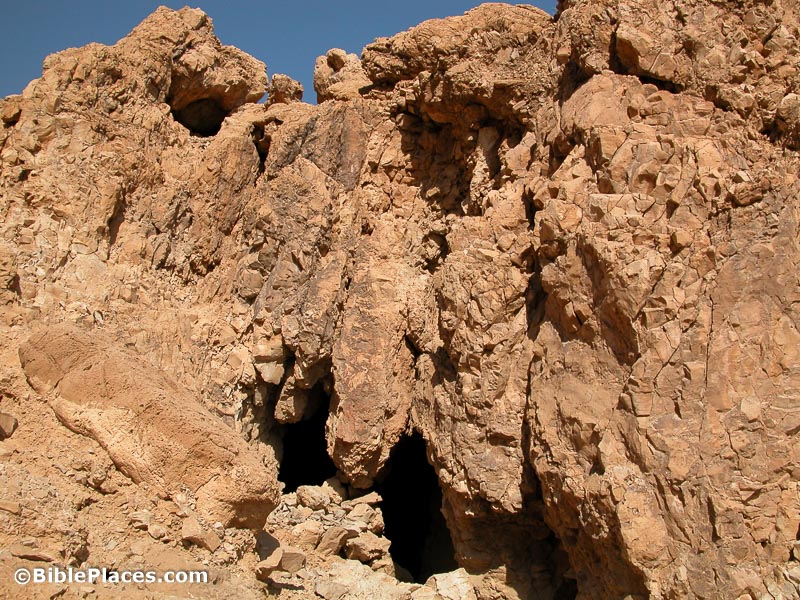
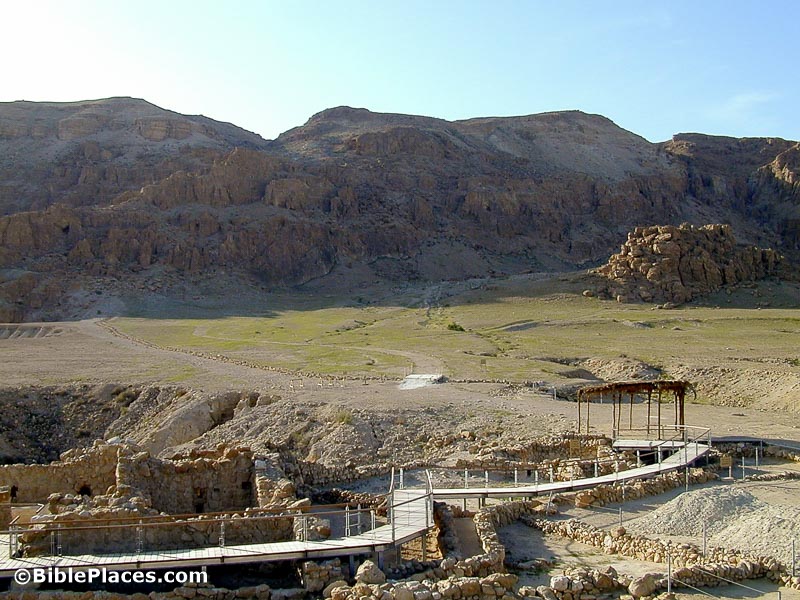
The following photo shows a general view of the slopes west of Qumran where some of the caves are located.

The next photo shows the exterior of Cave 1 in which the Great Isaiah Scroll was found.

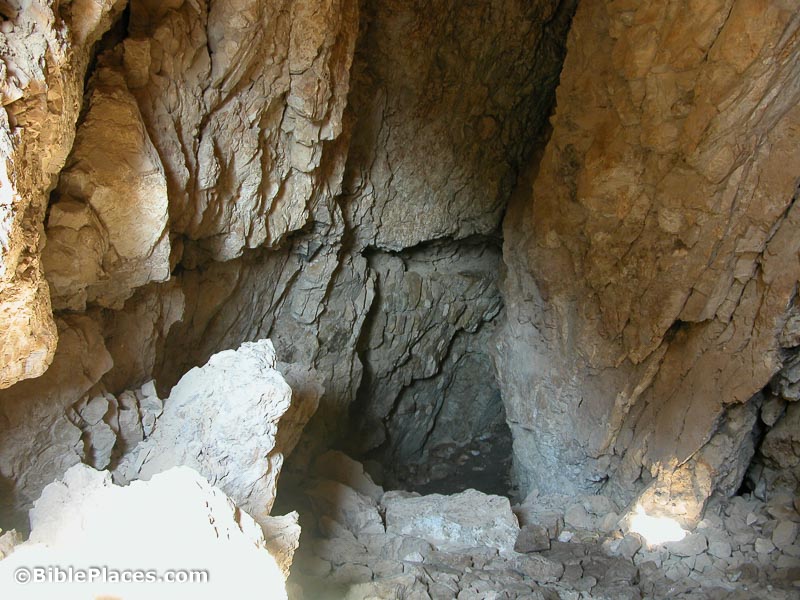
This final photo displays the interior of Cave 1 in which the first seven scrolls, including the Isaiah Scroll, were discovered.

Commonly thought to be written between 200 BC and AD 70 by a group of Essenes inhabiting the community of Qumran, the Dead Sea Scrolls, including the Great Isaiah Scroll, represent a simply unrivaled collection of ancient biblical manuscripts. Further, though they do not deal with Jesus or the early Christians directly, they are a tangible remnant of the era during which Jesus lived.

For other similar correlations between the biblical text and ancient sources, see Bible and Archaeology – Online Museum.
Share:

Coins from the Jewish Revolt (AD 66-70) were found on March 26 by Dr. Eilat Mazar during renewed excavations at the Ophel.

“Elaborate decorations including stucco from the time of Nero have been found in the remains of a villa and bath complex in the outskirts of Rome.”

The February 2018 edition of the Newsletter of the Egyptian Ministry of Antiquities reports the latest archaeological discoveries, meetings, projects, and more.

A new study suggests that King Tut was not a sickly boy but a warrior king.

The Getty Conservation Institute announced that its restoration of the tomb of King Tut in Egypt is near completion.

The Nicholson Museum in Australia was surprised to discover an Egyptian coffin in their possession for more than a 150 years actually contains a mummy.


The Times of Israel profiles a tattoo parlor in Jerusalem that has been inking Easter pilgrims for centuries.

A schedule for the Haifa Phoenician Series 2018 is now online.

David Laskin attempts to look at ancient Rome through the eyes of Josephus.

The Albright Institute has posted its program for April and May.

Joan Taylor asks what Jesus looked like.

Ferrell Jenkins shares a photo of an unusual sunrise on the Sea of Galilee. Leon Mauldin provides a wrap-up of their trip in Israel and Jordan.

Israel’s Good Name visited Ein Bokek and Ami’az Plateau.

HT: Mike Harney, Ted Weis, Agade, Jared Clark, Joseph Lauer

Share:

Appian Media is preparing to film their second Bible-based video series focusing on Israel’s United Monarchy. Searching for a King will focus on the lives of Saul, David, and Solomon, and like their previous Following the Messiah series it will be available for free online.

But to make that happen, they need our support. They are nearing their goal of $120,000, but they need the last $10,000 now to close the gap. If you think that high-quality, accurate videos filmed on-site in Israel are a valuable resource for people all over the world, I encourage you to consider chipping in. Every little bit helps, and everyone benefits.
searchingforakingpromo1
Share:

Archaeologists have discovered the oldest port in Iraq, a large harbor built by the Sumerians circa 2000 BC.

A US organization has kept the traditional tomb of Nahum in Iraq from collapsing.

Scholars have identified an ancient Greek medical text by Galen that was later covered by a 10th-century copy of the Psalms.

Fifteen years after 15,000 antiquities were looted from the Baghdad Museum, half of them have still not been located. Many have likely been sold on the antiquities market.

Mapping Mesopotamian Monuments is a topographical survey of rock reliefs, historical monuments and architecture that covers all historical periods from ancient to modern.”

Touring Jordan: Ferrell Jenkins shares a photo of the Jabbok River and Leon Mauldin posts shots of Tell es-Saidiyeh (Zarethan?) and a sunset over the Dead Sea.  

Apollo Magazine reports on the famous mosaics of Medeba.

In celebration of the acquisition of CDL Press, Eisenbrauns is offering a 30% discount on all volumes in the Cornell University Studies in Assyriology and Sumerology series. Use discount code CUSAS.

Clyde Billington is on The Book and the Spade this week discussing the Roman camp at Megiddo.

Aren Maeir was honored on his 60th birthday with a festschrift prepared for him by more than 100 contributors!

Professor Ephraim Stern, director of the Dor Project from 1980 to 2000, passed away Friday evening in Jerusalem.

James F. Strange has died.

HT: Agade, Charles Savelle, PaleoJudaica

Share:

An 86-year-old guide hiked the Nabatean Spice Route from Petra to Avdat over five days. On the last day they discovered a lost portion of the route.

The process of clearing mines from the area around the baptismal site on the Jordan River has begun.

A new study reveals that “pigeons played a central role some 1,500 years ago in transforming the Byzantine Negev into a flourishing garden.”

Philippe Bohstrom provides a good summary of where things stand with the seal impression of Isaiah.

Itzhaq Shai and Chris McKinny explain Canaanite religion at Tel Burna in the 13th century BC.

Israel’s Good Name recently spent the day at En Gedi, taking photos around the area and visiting the ancient synagogue.

An Israeli shepherdess is raising sheep so she can sell pricey shofars.

Passion Week begins tomorrow and Wayne Stiles is making available a free video series tracing

Jesus’s final days from Palm Sunday to Easter Sunday.

50% off retail price on the entire inventory of Wipf & Stock! They have some great books! Use code INV50 through April 3. Here are three of their books I love:

Or search their 300-page catalog here. (Sale includes books not listed in that catalog.) Or find Biblical Studies here.

HT: Agade, Charles Savelle, PaleoJudaica

Share: