Wayne Stiles has a new book out: Waiting on God: What to Do When God Does Nothing. That might not sound like a book with a strong connection to biblical geography and history, but it is. The book released yesterday, but I’ve already read a large portion of a pre-release copy and it is outstanding.

Wayne looks at life through the lens of the story of Joseph, pulling in his extensive background knowledge to reveal aspects you’ve almost certainly never heard. I taught through Genesis twice this past year and didn’t expect to learn many new things, but I did.

Here’s a short endorsement I wrote:

Every page of Stiles’s book is characterized by practical wisdom, careful research, and vivid writing. I love his insights and personal stories and found I just wanted to keep reading. Best of all, I appreciate how we see from Scripture how we can trust God no matter what.

I highly recommend the book. It’s available for $11.66 at Amazon. And if you send Wayne your receipt before Monday, he has some great free bonuses worth a lot more than $11.66. Seriously, you can’t lose. And you might want to go ahead and pick up a few extra copies for upcoming Christmas or birthday gifts. The book’s message is relevant for all.

Share:

A feature story in the Worcester Magazine describes the discovery of the Dead Sea Scrolls.

The latest issue of Biblical Archaeology Review is out and it includes a story on Kadesh Barnea.

A new exhibit at the Ismailia Museum in Egypt features discoveries made during recent expansion work on the Suez Canal. One of the artifacts on display is a gift from Ramses II to his father Seti I.

Cary Summers, President of the Museum of the Bible, gives a lecture on foods of the Bible.

Paleojudaica notes two top-ten lists of archaeological sites to see in Israel.

Marlena Whiting writes at the ASOR Blog on milestones in ancient Palestine and Arabia.

BibleX notes three dangers associated with studying Bible backgrounds.

Wayne Stiles provides 10 reasons a tour to Israel belongs on your bucket list. But let me add: the longer you wait, the less the trip will benefit you. Go now, or pay for your kid or grandkid to go.

(BTW, I know the best school in the world for college students to attend in Israel.)

HT: Joseph Lauer, Agade, G. M. Grena

Share:

A mikveh from the first century has been discovered in a southern Jerusalem neighborhood. This one was unusual because of the numerous wall paintings. Leen Ritmeyer comments here. You can access high-res photos here.

Excavations at Horvat Kur near the Sea of Galilee have exposed the mosaic floor of a Byzantine-era synagogue. For background and a map, see our previous post.

Nicholas Reeves believes that he has identified two unrecognized doorways in King Tut’s tomb, one of which leads to the undisturbed tomb of Nefertiti. The Economist gives a summary; Reeves’s published article may be read at academia.edu.

An exhibition with hundreds of Egyptian artifacts discovered underwater opens next month in Paris.

Lebanese authorities are working to halt the antiquities trade that passes through their country.

Babylon 3D has many beautiful reconstruction images of the ancient city.

The Museum of the Ara Pacis in Rome is hosting an exhibition on how the Roman Empire and its people ate.

Two suspects have been indicted on charges of setting fire to the Church of the Multiplication of
Loaves and Fish at Tabgha.

International Bible Study Week provided participants in Jerusalem with three days of lectures and one day of touring.

Thomas Levy announces the publication of papers from a 2013 symposium on the exodus. (ASOR Blog requires subscription.)

Karaites follow the Mosaic Law but not the rabbinic law expounded in the Mishnah and Torah. There are about 25,000 of them living in Israel today.

The threat of ISIS is pushing Iraq to digitize the Baghdad National Library.

The Megalithic Portal provides many articles on sites in Israel.

Where is the Land of Uz? Wayne Stiles considers the evidence and suggests some application.

HT: Joseph Lauer, Agade, Ted Weis, Ryan Jaroncyk, Mark Vitalis Hoffman

Share:

The Jerusalem Post carries a brief notice of the discovery of the Iron Age gate along with two photos.

Archeologists at Bar-Ilan University, headed by Professor Aren Maeir, have discovered the fortifications and entrance gate to the biblical city of Gath in the Philistines, which was once the home of the giant Goliath.
[…]
Professor Maeir said that the gate is among the largest ever found in Israel and provides substantial evidence that Gath was once one of the most influential cities in the region.

I think that everyone already agreed that Gath was one of the most influential cities in the region, but finding a gate doesn’t hurt.

Maeir links to several related stories on his blog.

Share:

This season’s excavations at Tel Kabri uncovered 120 huge wine jars.

Three reliefs have been discovered from the Middle Kingdom site of al-Hoody near Aswan.

Leen Ritmeyer explains the significance of a small window on the Temple Mount.

John Bartlett shares his recollections from excavating with Kathleen Kenyon in Jerusalem.

Ferrell Jenkins shares photos and information about Maresha of the Shephelah.

SourceFlix has released a video short on the Walls of Jericho.

Available at last: Tell er-Rumeith: The Excavations of Paul W. Lapp, 1962 and 1967, by Tristan J.
Barako and Nancy L. Lapp.

The British Library and the National Library of Israel are partnering to digitize at least 860 Hebrew manuscripts. The British Library’s current collection is here.

HT: Ted Weis, Joseph Lauer, Agade

Share:
(Post by A.D. Riddle)

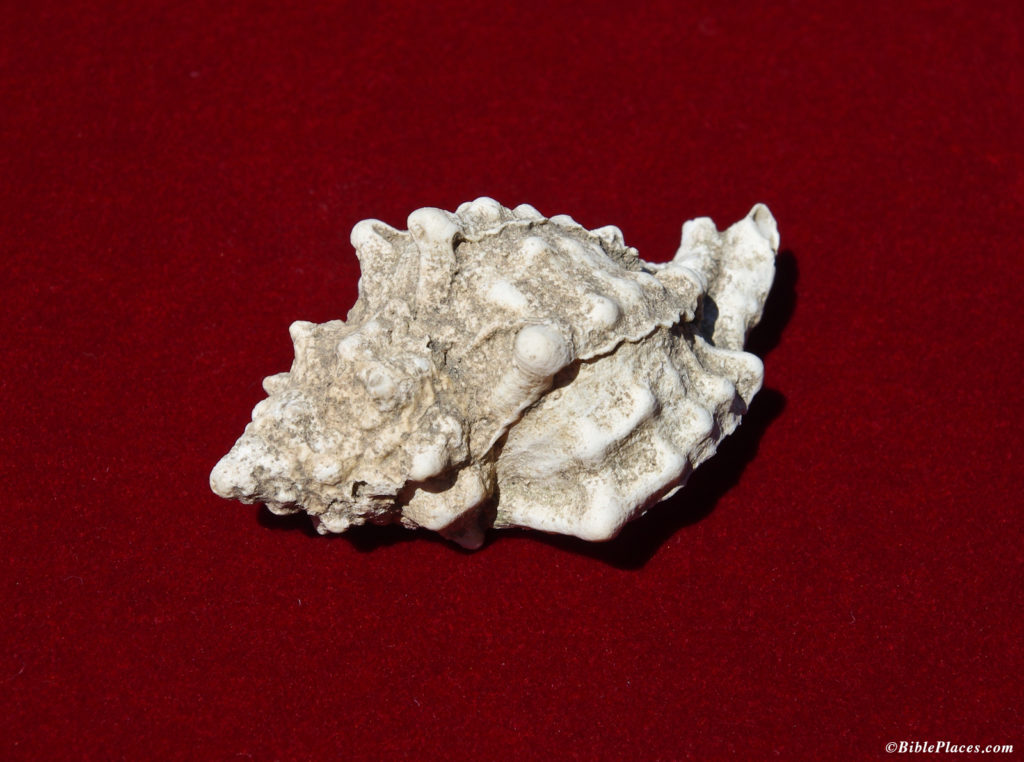
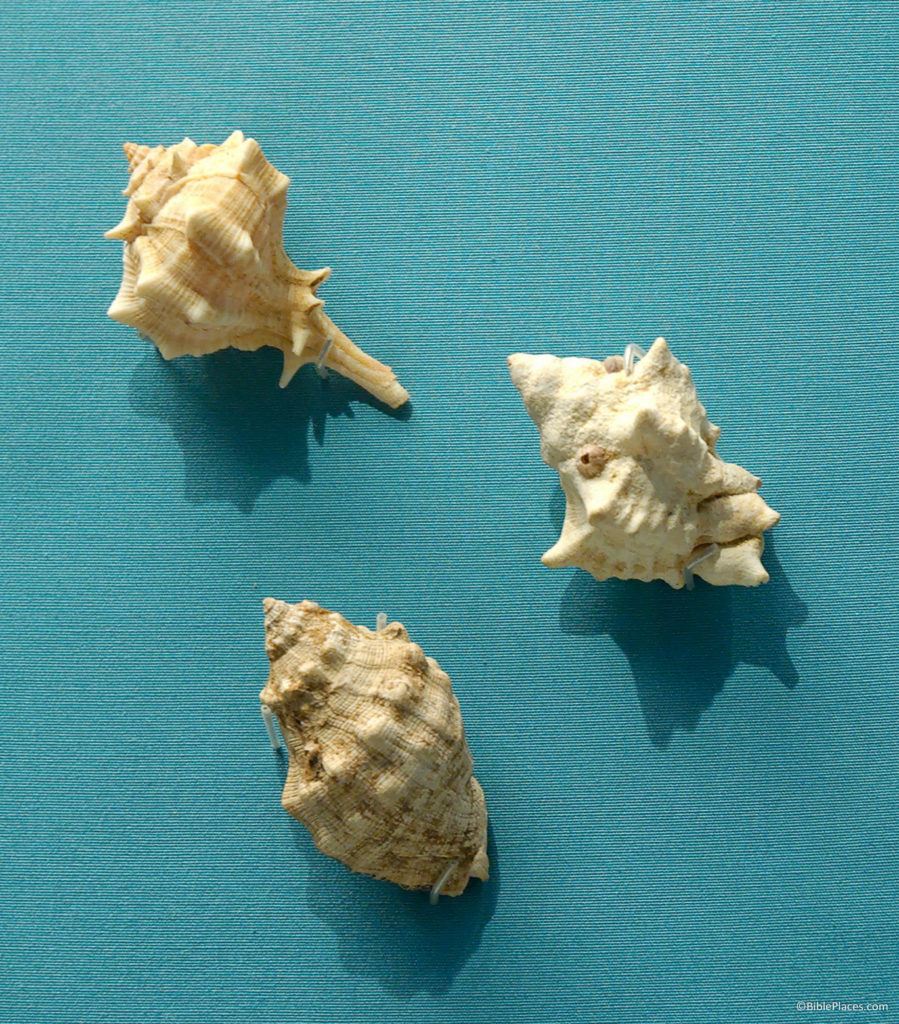
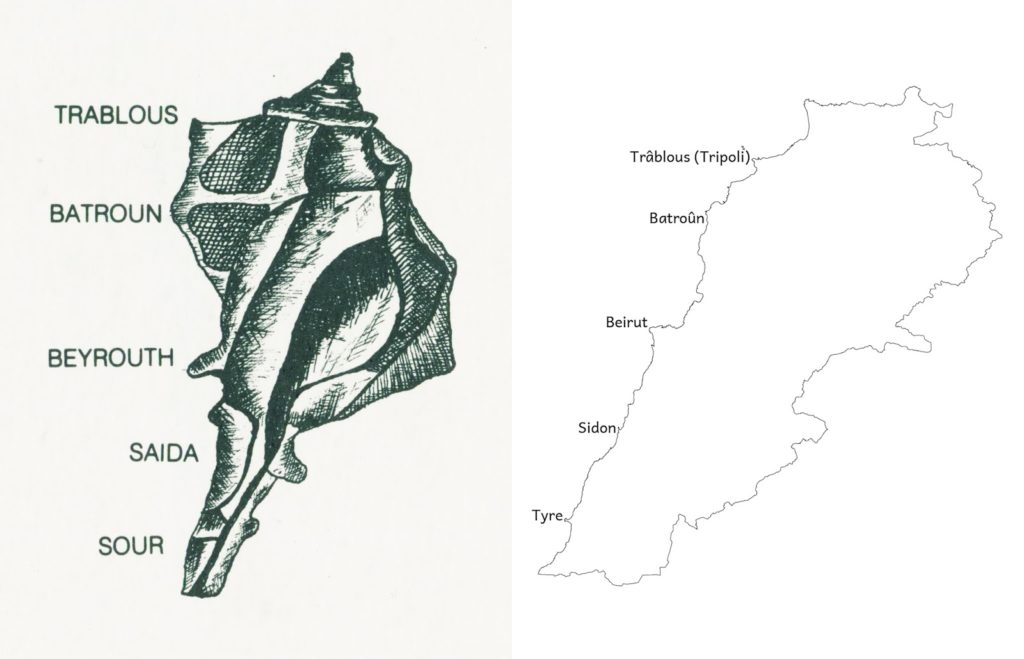
The journal Hannon: Revue libanaise de géographie is published by the Lebanese University in Beirut. The cover of the journal depicts a map of Lebanon using the shape of a Murex mollusk shell—a pretty clever idea, I thought. The sea snail that calls these shells home was extracted by the Phoenicians to create a purple dye.
Cover graphic of Hannon journal compared to a map of Lebanon.

Murex shell from Sidon.

Three species of Murex at the British Museum.

Ferrell Jenkins has written several informative blog posts about the purple dye.

Share: