Two things frequently bother me about news stories: what they say and what they don’t say. An example of this is the recent story about the Byzantine church discovered at Shiloh. The Telegraph has the only report of this discovery I’ve seen.


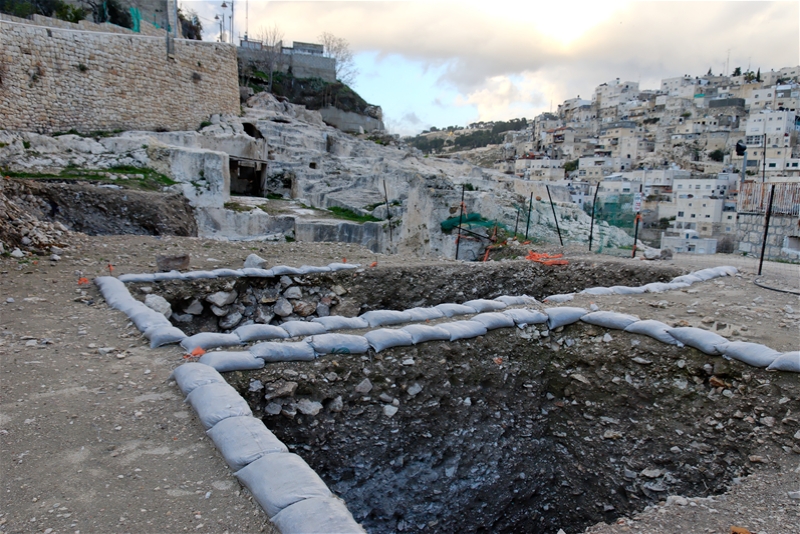
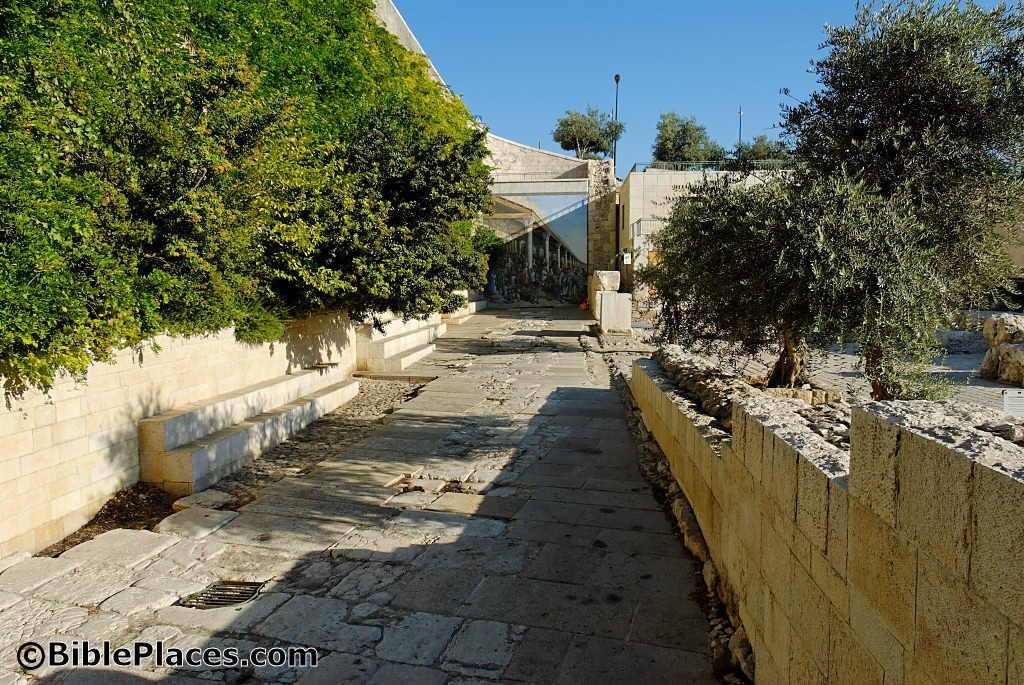
Shiloh from west

I wish they had not said:

Headline: ‘Church of the Ark’ found on West Bank

That’s a fine name, I suppose, except that there is no evidence that the ark was ever in this church or associated with this church. Yes, the ark of the covenant was at the same city where the church was found, but that was about 1,400 years before the church was built.

“The church dates to the late 4th century, making it one of Christianity’s first formal places of worship.”

I guess someone fears that this story will have no interest if it’s not labeled the “first” or “one of the first.” But it’s nonsense. Byzantine Christians built many churches in the Holy Land before this one, including the Bethlehem Church of the Nativity, the Jerusalem Church of the Holy Sepulcher, and the Mt. of Olives Eleona church. If you count last year’s “earliest church ever found” at Megiddo, the best the Shiloh church can claim is that it was built in the first hundred years of church building in the the Holy Land. I guess that doesn’t sound as exciting.


Shiloh from east

“The team at Shiloh is considering whether to dig under the beautiful mosaics that they have uncovered, in order to find traces of the Ark.”

You’ve got to be kidding me. No one, and I mean no one, thinks that traces of the ark are underneath that church. Maybe, and that’s a very unlikely maybe, there are traces of the tabernacle underneath the church. But most scholars who have ventured to guess believe that the tabernacle was located on the north side of Shiloh, while this church is on the south side.

“We have to decide whether to fix the mosaics here or take them to a museum,” said Mr Aharonovitch.

There are two problems with taking the mosaics to a museum: 1) The mosaics lose much of their significance to the visitor because they are ripped out of their context. It is much better to allow the visitors to Shiloh to see the mosaics where they were discovered. 2) It’s unlikely any museum visitor would ever see them anyway, because museum space is very limited and mosaic floors are very common.


Mosaic from newly discovered church

David Rubin, a former mayor of Shiloh, said: “We believe that if they continue to dig they’ll reach back to the time of the Tabernacle.”

This implies that archaeologists haven’t already discovered remains at Shiloh from the time of the Israelites. Indeed, they uncovered much from this time in the excavations of Israel Finkelstein in the 1980s.

I wish they had said:

This isn’t the first Byzantine church discovered at Shiloh. I suppose that it takes some of the drama away when you learn that about 50 yards away a Byzantine church sits that was excavated 80 years ago. A third church is less well-preserved but is known as the “Pilgrim’s Church.” It’s quite possible that there are other churches yet unexcavated.


Apse of Byzantine church, mostly unexcavated

The church is located next to and underneath the “Mosque of the Orphans” (Jame Yetim). This would help the knowledgeable reader to know the precise location of the church. The long-abandoned mosque appears to be untouched, but I wonder if there was some political motivation to not publicize the specific location of the excavation.


Excavation of Byzantine church around “Mosque of the Orphans”

The inscription that mentions Shiloh is important evidence in confirming the identification of the site.
A translation, even tentative, of the inscription would be helpful. (Is this the inscription in question? 

UPDATE: Theoblogian has begun a translation of it. UPDATE Jan-2: Dr. William Varner and Brian Gee have provided this translation: Lord Jesus Christ, remember and consider worthy in your kingdom Eutonius your bishop and Germanus your holy regional bishop. Draw near to Him and be enlightened.)

There are some nice photos of the excavation by Eyal Dor Ofer here.

Share:

A good follow-up to the Beyond Cyprus post is yesterday’s article in the Star-Telegram about a reporter’s visit to Jordan.  The article is well-written and interesting, but the author doesn’t mention some of my favorite sites in Jordan, including:

  • Macherus – where John the Baptist was beheaded
  • Penuel and Mahanaim – where Jacob wrestled with the angel
  • Medeba – location of the oldest map of the Holy Land (from 580 A.D.)
  • Amman acropolis – where Uriah was killed following David’s adultery
  • Kerak – capital of the Moabites (ancient Kir/Kir-hereseth)

Too few students of the Bible go to Jordan, and those that do, usually miss the best places.  The University of the Holy Land periodically does a two-week trip in Jordan; it is led by Dr. Ginger Caessens and is excellent.  Their website indicates the next one planned is June 2008.

One other thought from the Star-Telegram article: Bethany beyond the Jordan is quickly becoming over-commercialized.  And it is very likely not the place mentioned in the Bible.


Mountains of Edom
Share:

The best multimedia Bible ever made, as far as I know, is iLumina.  Over the last couple of years, it has been released in several versions, but now I see that the Gold Premium edition (a step above the Parent-Teacher-Student edition) is out and available for the very good price of $50 (retail is $90). 

I’ve given a number of copies of iLumina to friends and it has always been well received (and we’re giving a few more this year). 

The program includes:

multiple commentaries, including the Life Application Study Bible Notes, concordances, interactive charts, interactive maps, DIGITAL animations and virtual tours, photographs, and discussion Bible study questions, plus much more….

  • 22 Volume Searchable Bible Encyclopedia
  • 35 animations and 25 virtual tours
  • 10,000 Bible Study notes
  • 8,900 in-depth articles
  • 200 maps and Bible charts
  • 1000 HolyLand Photos
  • 478 Guided Study and Quizzes
  • Full search and concordance features
  • New Living Translation and KJV
  • and more!

Personally, I’m not so enamored with the Bible translations or the Bible study notes (you can find these in plenty of books and software programs).  But I love some of the reconstructions, screenshots, and photos. 

For lots of details and the discounted price, see Sunday Software.

Share:

If I could do only one trip to the Middle East to learn about the Bible, I would go to Israel. Second, Turkey and Greece, though for most only western Turkey would be included in the itinerary (and I profited more from eastern Turkey than western). Jordan and Egypt would be next. Near the bottom of the list would be the islands of Cyprus, Crete, Malta, Rhodes, and the city of Rome. If someone can do it all, then they’ll gain from it, but most have to choose one or two trips, and for that, I recommend they skip some things. But this recommendation probably isn’t necessary because there aren’t many trips going to these places as part of a biblical tour anyway. I can’t speak to Lebanon, Syria, Iraq and Iran because I haven’t been. Yet. I do think a second trip to Israel is worthwhile, moreso than a first trip to some of the biblical countries.

I would not recommend someone to try to do Israel and Turkey/Greece on the same trip. This is because there is just so much to digest and you don’t have the time necessary to do that if the two are put together on an initial trip. Israel largely introduces one to the Old Testament world; Turkey and Greece are a new window into the NT arena. I do believe understanding these “worlds” is very valuable for understanding the Scriptures, even apart from seeing the biblical sites themselves. You just understand Paul better when you see the gods they were worshipping in his day, see the temples that dominated the cities, and see the way of life of the Greek people.

Share:

Anyone can tell you that in traveling to a region you will develop a new interest in that region’s modern history. The area is now “on your map” and you can understand things that were formerly of little personal significance. The observation has been made many times that Israel’s mention in the news of the US is disproportionate to its size. But I wonder if part of the reason for that is that many Americans (both Jews and Christians) have visited Israel. Some people are interested in Israel simply because it’s the biblical land, but I would guess that having visited (or having family) there is an even greater reason.

On Cyprus, the major event in modern history was the invasion of the northern half of the island by Turkey in 1974. This issue was relatively unknown to me before this trip, so it was interesting to watch my thinking on the subject evolve as I was exposed to more information. After one day in the southern half of the country, esp. southern Nicosia, it was very easy to emphatize with the Greeks who had lost so much in the invasion. The signs they had posted there as we crossed over to the North were very bold and graphic. Clearly the Turks were animals who deserved the condemnation of the world. But after spending a day in the North and reading and thinking more about the situation, I became convinced that there was a very real other side to the story.

I still don’t know a lot, but I can also make some conclusions based on my experience with other conflicts in the world and in history. This is also true given what the world and UN have (and have not!) done since the invasion. Yes, it’s true that no other country in the world has recognized the Turkish Republic of North Cyprus (thus the Turks were in the wrong), but it’s also true that much more significant pressure could have been applied if the world/UN had thought it necessary (let alone discuss EU entry). But they saw it too – there were injustices on both sides. Yes, the Turks took away land of the Cypriots, but yes, the Turks were not treated well by some of their Greek neighbors.

Ultimately, I think it’s like a lot of regional conflicts – there are many losers and most of them are not the ones who personally deserve the loss.


White cliffs of Alamanou beach
Share:

The museums of Cyprus are loaded. I didn’t take many photos because most of the museums didn’t allow photos. And I didn’t go to all of the museums because I just got tired of them. You see lots of the same stuff. But it’s still quite amazing just how much stuff there is, from such a small island. And it’s also impressive how advanced the cultures were.

The material culture in Israel is quite primitiv e in comparison – in Cyprus they had beautiful pottery, with lots of decorations and fancy designs. The best pottery in the Israel Museum is not as nice as the average material here, from the same periods. The books mention that a lot of the pottery has been removed from the island to other museums around the world (especially the Met in NY). The hotel owner this morning told us that there are no museums in the world that don’t have something from Cyprus. That may be an exaggeration, but it certainly says something about the culture here. It also is telling that very few people could tell you anything about the history of Cyprus.


Idols from Archaic and Hellenistic periods

Share: