Haaretz has broken the story of the discovery of Herod’s tomb.  The excavating team has been working on it for weeks (or months) and managed to keep it a secret until the night before the press conference.  The length of the article may mislead as to what the writer has learned.  He reveals only one new fact: Herod’s tomb was discovered by Ehud Netzer between the upper and lower palaces of Herodium.  Everything else in the story is well-known background.

The main question I’ve been getting concerns the authenticity of the find.  On this, there is only one piece of relevant evidence at this time: the tomb was discovered by Ehud Netzer.  He is a highly respected archaeologist in Israel, and he’s been looking for the tomb for a long time.  I think that if he was one to jump to premature conclusions, he would have done so long ago.  Instead, he has proposed possibility after possibility and acknowledged coming up short.  I can’t imagine that he wouldn’t be making such an announcement without solid evidence.

Ehud Netzer is sometimes known as “Mr. Herod” because of his excavation of numerous Herodian sites, including Jericho (1973-87, 1998), Caesarea (1975-76, 1979), possible family tomb of Herod in Jerusalem (1977), Masada (1989), and Herodium (1970-present, with breaks).  Netzer is professor emeritus in the Department of Classical Archaeology at Hebrew University.


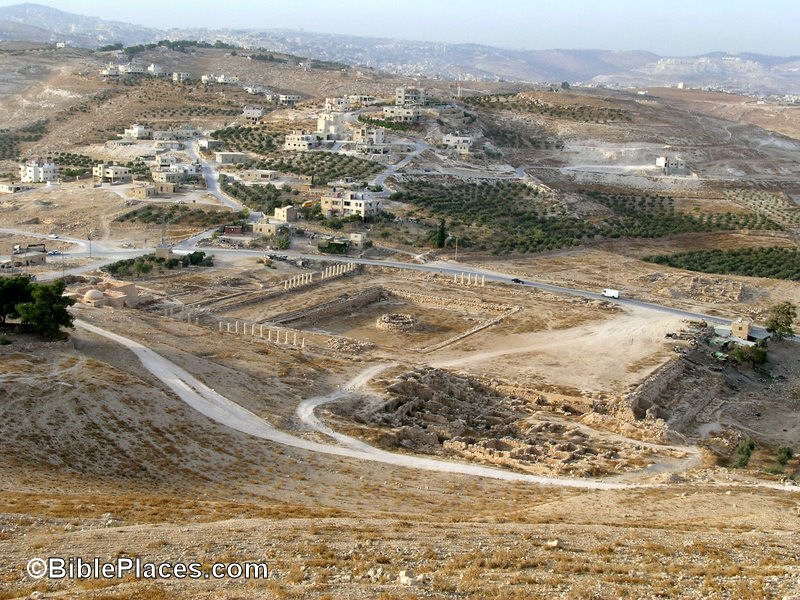
View of lower Herodium from upper palace 
Some new, unpublished BiblePlaces photos of Herodium can be viewed here
Share:

This story is about a week old, but I didn’t have time to comment on it before.  Here is the complete text from the Jerusalem Post.

First Temple wall found in City of David
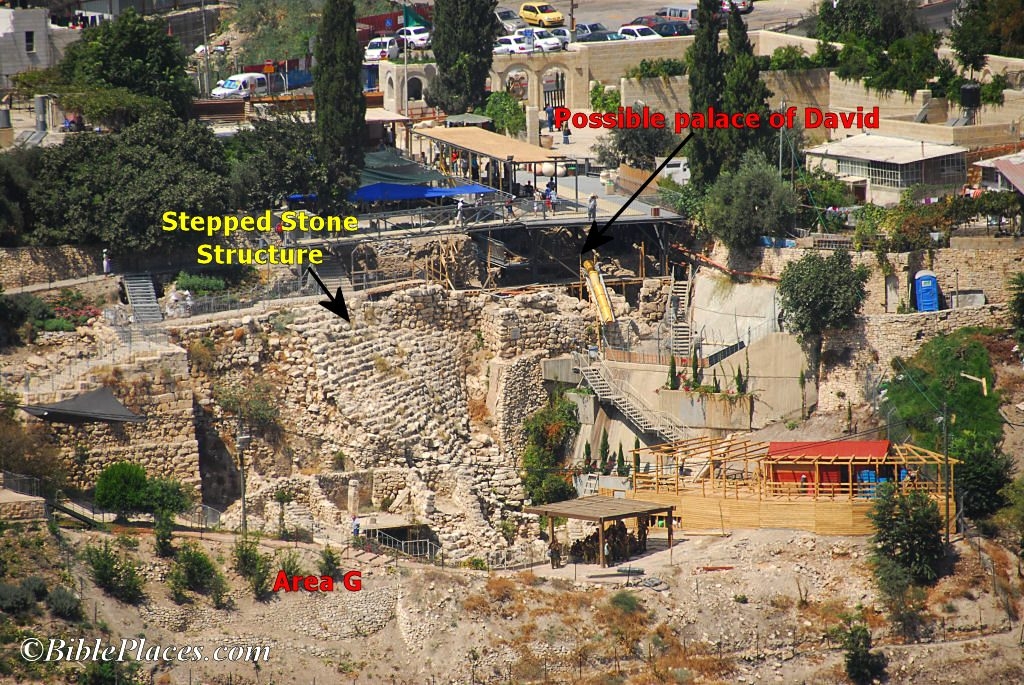
A wall from the First Temple was recently uncovered in Jerusalem’s City of David, strengthening the claim that it is the site of the palace of King David, an Israeli archeologist said Thursday.
The new find, made by Dr. Eilat Mazar, a senior fellow at the Shalem Center’s Institute for the Archeology of the Jewish People, comes less than two years after she said she had discovered the palace’s location at the site just outside the walls of the Old City.
The monumental 10th century BCE building found by Mazar in 2005 following a six month dig has ignited debate among archaeologists about whether it is indeed the palace built for the victorious David by King Hiram of Tyre as recounted in Samuel II:5.
A 20-meter-long section of the 7-meter-thick wall has now been uncovered. It indicates that the City of David once served as a major government center, Mazar said.
Mazar estimates less than a quarter of the entire wall has been uncovered so far, and says that it is the largest site from King David’s time ever to have been discovered.
The dig is sponsored by the capital’s Shalem Center, with academic backing from the Hebrew University of Jerusalem.

A few comments:

1) As noted elsewhere, the headline is unfortunate.  Mazar did not find, and does not claim to have found, any portion of a wall of a temple.  The missing word is “period” – Mazar found a wall from the “First Temple period,” which is equivalent to Iron Age II (1000-586 B.C.).

2) This story strikes me as a publicity-getter, as it lacks much substance.  No photos or diagrams are included, and details are sparse.  This accords with the rather secretive approach being taken in this dig.  I can give personal examples, but will not.

3) I have trouble believing that a 7-meter-thick wall was found, and if it was, I hardly believe that it belonged to a palace (and not to the city itself). That’s the same thickness as the Broad Wall, which is one of the largest fortification walls in the entire country.  The City of David is a small area; a 7-meter wall would take away a significant percentage of the living area.

4) I am also suspicious of Mazar’s dating until more is published (and the experts confirm it). That’s not because I don’t believe in the biblical account of David (actually, I do), but because I think that sometimes archaeologists jump to desired conclusions too quickly.

5) I have significant objections to Mazar’s interpretation of the Bible as regards David’s palace.  Elaboration on that will have to wait for another time.


Excavation area from the east

Share:

Aren Maeir has posted a short report from his visit to Eilat Mazar’s excavation in the City of David. 

Mazar just concluded a six-month season and has uncovered more of the monumental building that she believes may be identified with the palace of David.  Maeir says:

The structure is in fact very impressive, and it appears, based on the finds from below this astounding structure, that it was built no later than the late Iron Age I, since no later finds were found in the fills below this structure. Also, in one area, Iron Age IIA pottery was found in a context of secondary construction and use of the building. What this clearly means is that in the verly late Iron Age I, or the very early Iron Age IIA (whether you date this to late 11th/early 10th, or late 10th), there were substantial public architectural activities in Jerusalem. 

Read the whole post and the comments, especially the one by Zachi Zweig.  This is the sort of stuff that newspapers should be covering, not the silly nonsense so often featured.  Mazar’s findings may radically affect our understanding of Jerusalem in ancient times, and that’s without regard to whether she has found David’s palace or not.

Elsewhere, Ronny Reich told a group of us today about some 200 bullae, a beautiful carved pomegranate, and a huge quantity of fishbones that have been discovered in the City of David in the last couple of years.  These are significant because they date to the 9th century B.C. and have Phoenician elements.  Reich suggests that these may be related to influence from the northern kingdom via Queen Athaliah.  An article is due out on this in Qadmoniot (Hebrew) in the near future, with an English translation to follow in another journal.

Share:

The Jerusalem Post reports on the finds that we speculated on before (with photos).  While they certainly uncovered some new things in the dig, the article does not mention any surprising finds.  In short, any archaeologist could have predicted that digging in this place would reveal:

The Valley Cardo (aka Eastern Cardo): the full 35 foot (11 m) width of the street was uncovered. 

This same street was uncovered about 150 feet (50 m) to the south.

A ritual bath (mikveh) from the Second Temple period.  They have found 150 of these all over the city.

A portion of the Lower Aqueduct which brought water from Solomon’s Pools to the Temple Mount. 

Numerous remains of this aqueduct have been found elsewhere, including slightly to the south outside the Old City wall.

An escarpment.  The article suggests that this a significant discovery, but scholars have long believed that the natural defenses of the Western Hill made it more difficult for the Romans to capture in 70 A.D.  Any casual observer can see the steep drop-off as one approaches the Western Wall from the west.  For a while, some believed that the Western Hill must have been fortified on its eastern side in order to explain why it took the Romans a month to conquer the area.  But no evidence of a wall has ever been discovered, and Josephus, who describes the city’s fortifications at length, never mentions a wall in this area. 

These remains will be preserved under a new building for the Western Wall Heritage Foundation. 

This is the same organization that controls access to the tunnel excavations north of the prayer plaza.


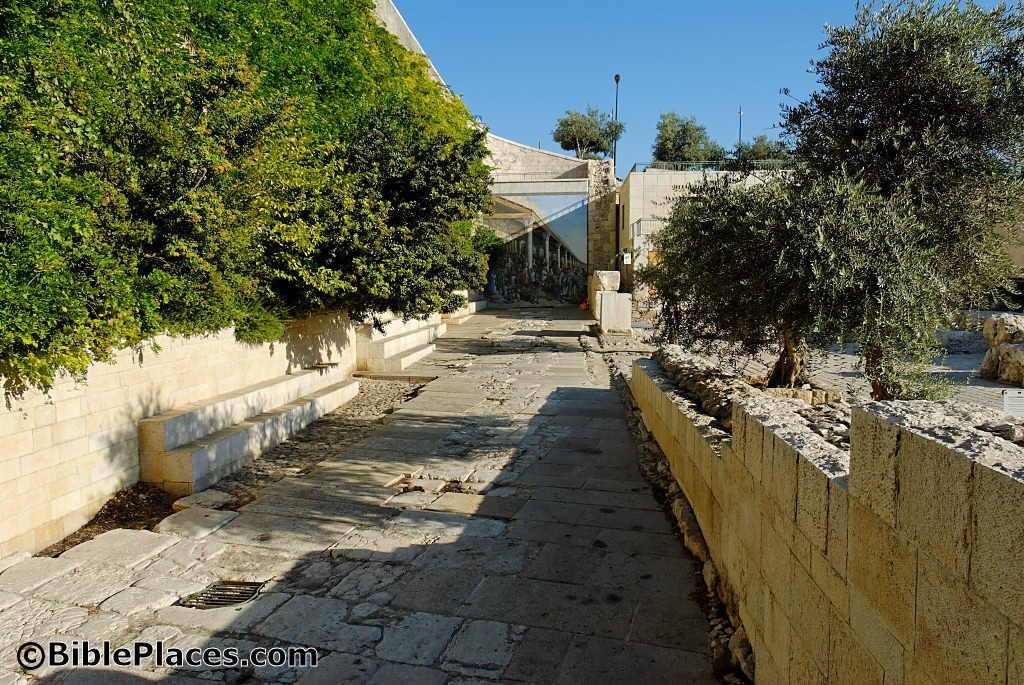
Valley Cardo near Dung Gate (south of excavation area)
Share:

Haaretz has an article that reports a new proposal by Boaz Zissu of Bar Ilan University (the Hebrew version has a small photo and map).  He suggests that Nob is near a quarry that he excavated on the northern end of the Kidron Valley.  The strange thing is that he comes to this conclusion based on what he did not find.  He found a quarry, but no ancient settlement.  He found pottery, and concludes that it must have come from somewhere nearby, and perhaps that somewhere was Nob.  Perhaps.

In favor of his identification is this: his site is between Anathoth and Jerusalem, which matches the general location given in this important geographical passage:

Isaiah 10:28-32 (NIV) “They enter Aiath; they pass through Migron; they store supplies at Micmash. They go over the pass, and say, “We will camp overnight at Geba.” Ramah trembles; Gibeah of  Saul flees. Cry out, O Daughter of Gallim! Listen, O Laishah! Poor Anathoth! Madmenah is in flight; the people of Gebim take cover. This day they will halt at Nob; they will shake their fist at the mount of the Daughter of Zion, at the hill of Jerusalem.”  (Cf. Neh. 11:32.)

Source: Pictorial Library of Bible Lands, vol. 3, Jerusalem

Against his identification is the fact that he found pottery from the end of the Iron Age, but an important biblical passage indicates that Nob was inhabited in the early Iron Age (1 Sam 21-22).  Though not mentioned explicitly, most believe that the tabernacle was located at Nob when Saul ordered the slaughter of the priests.  The absence of pottery from Iron IIa doesn’t prove that the quarry is not (near) Nob, but before an identification can be made with any certainty, such pottery must be found.

Of greater concern is the apparent methodology.  I stress “apparent” because I am basing this on the newspaper article and not on the archaeologist’s proposal itself (and there may be a great gulf between the two).  The problem seems to be that a site is found (or apparently found) and it is assumed to be a certain prominent place mentioned in the Bible.  In fact, there are several places that this site could be, as you can see from the Isaiah passage quoted above.  Scholars are reasonably certain where Anathoth is (modern Anata), and no one doubts the location of Jerusalem.  But there are two other sites that are yet unidentified and this quarry could be related to either of them.

There are hundreds of unidentified tells and hundreds of sites mentioned in the Bible and other ancient texts that we cannot locate.  Matching the two is not always easy, especially in a land where inscriptions are rarely preserved. 


Source: Survey of Western Palestine, Sheet 17

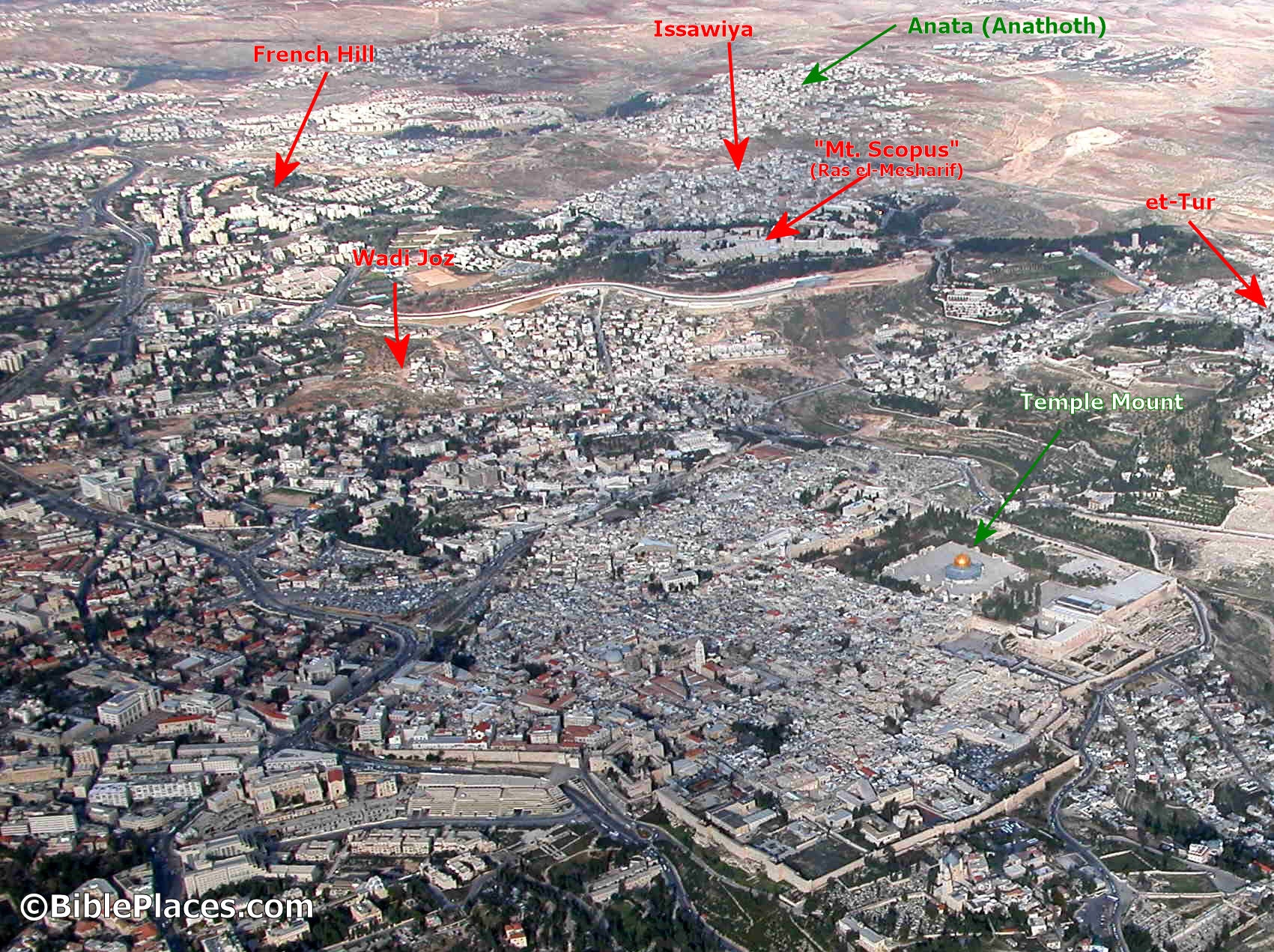
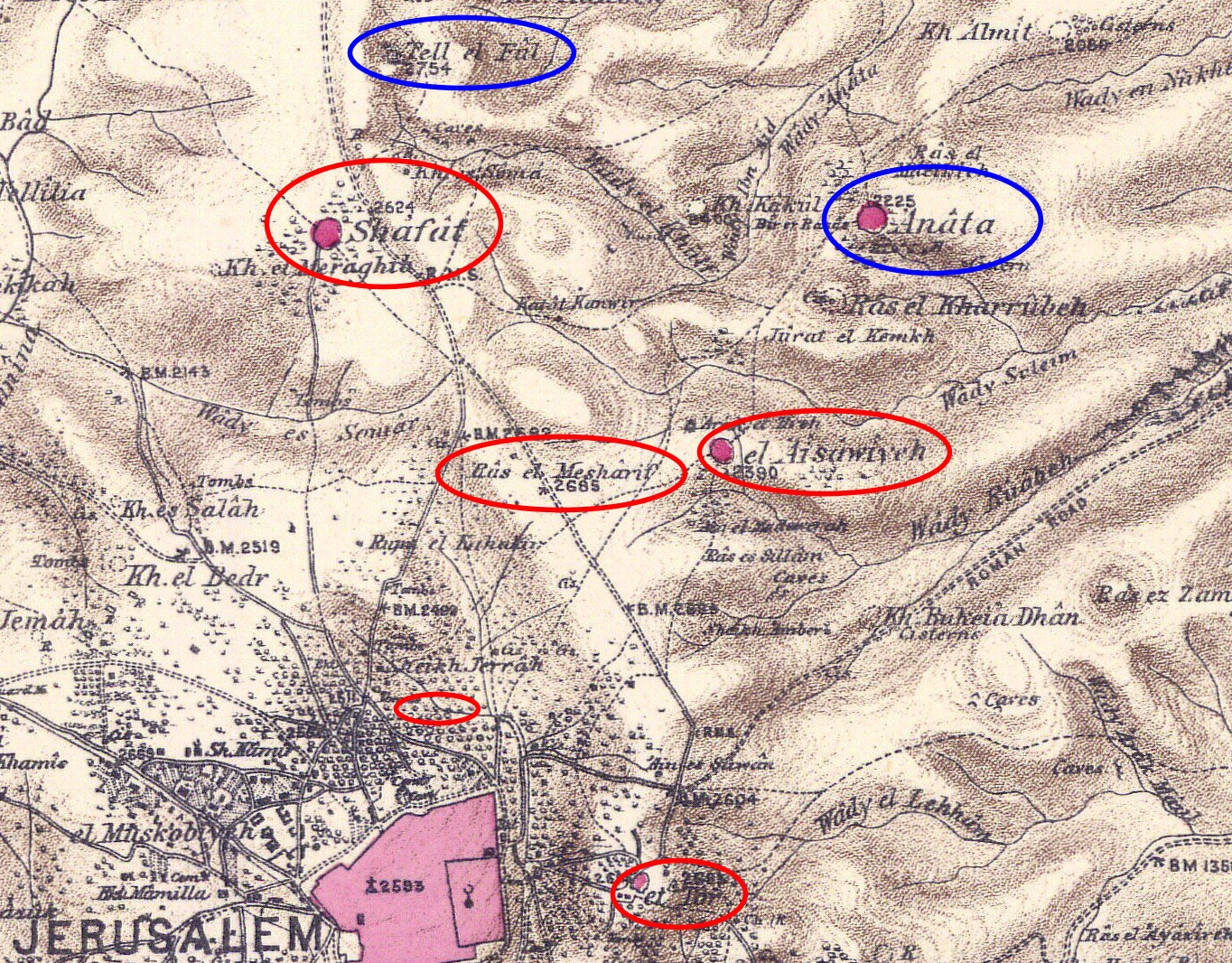
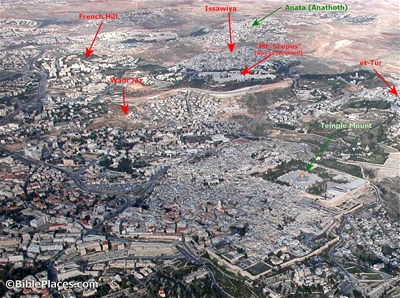
Most geographers follow Albright in locating Nob near what is known today as Mt. Scopus (Ras el-Mesharif).  This is where Edward Robinson was looking as well, though his attempts to find ruins were “without the slightest success” (Biblical Researches 2:150).  Aharoni suggested that Nob was just over the hill at Isawiyeh (Land of the Bible, p. 393), but Rainey thinks either Madmenah or Gebim could be Isawiyeh and Nob is el-Mesharif or further south, et-Tur (Sacred Bridge, p. 235).  An important factor in these identifications is Isaiah’s mention of shaking the fist at Jerusalem, implying that the two can see each other.

Everyone agrees that the solution cannot be determined without archaeological remains from the time periods in which the site is mentioned in the historical texts.
Share:

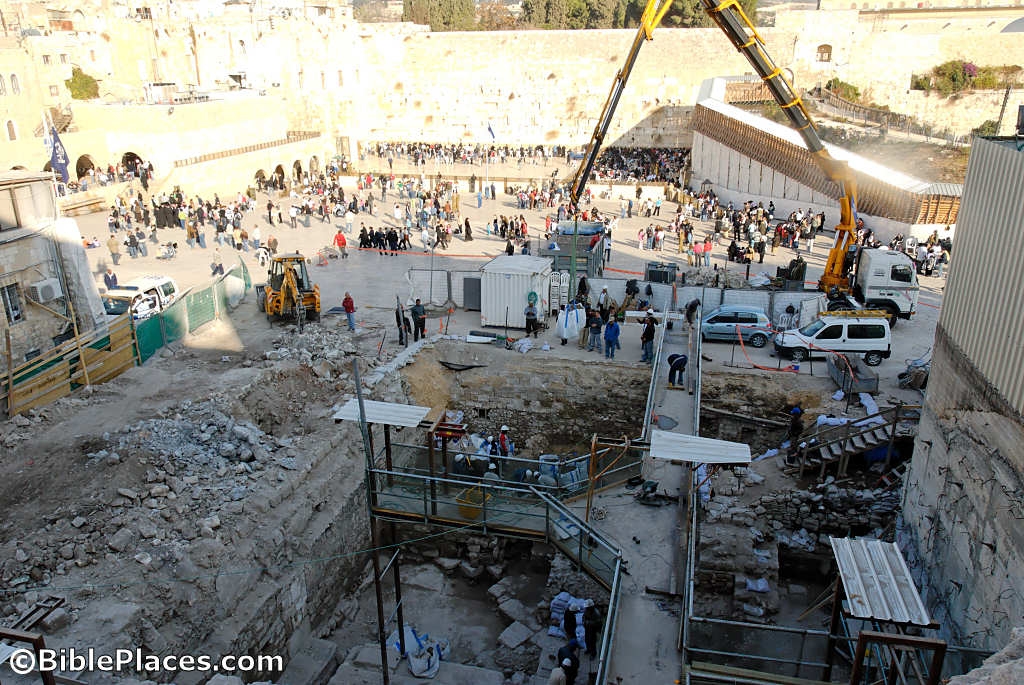
About a week ago, there were reports that excavations at the Western Wall prayer plaza had “uncovered the remains of Jewish homes from the Second Temple period as well as a Herodian water conduit.”  

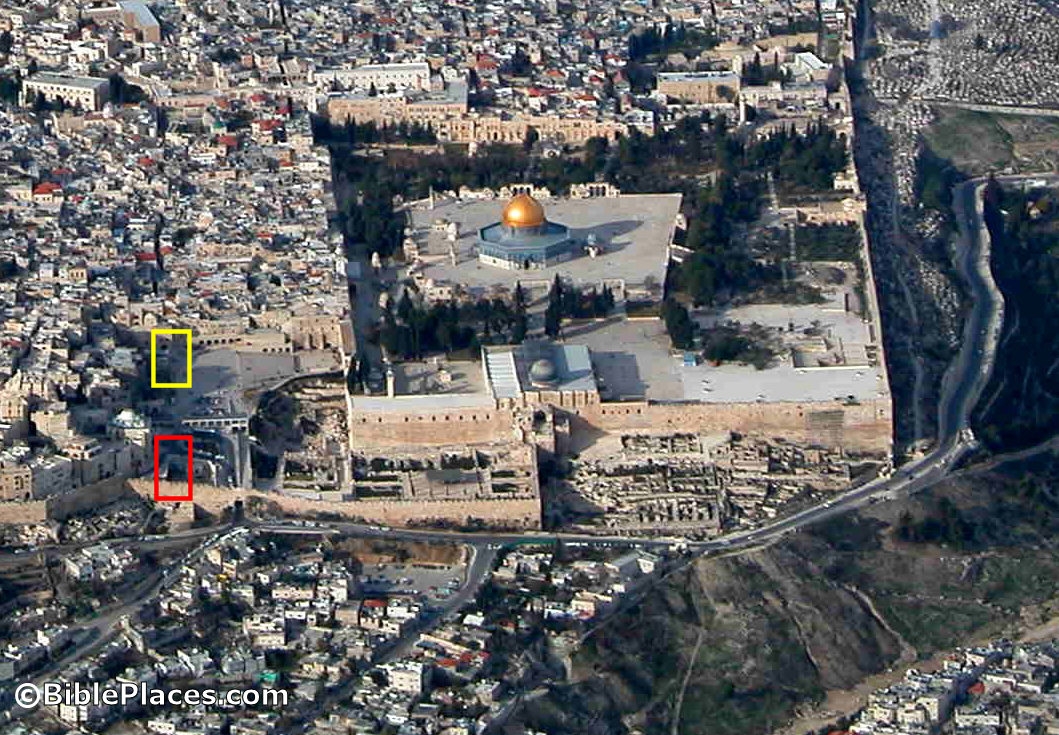
In the photo below, you can see the relation between the excavations and the Western Wall.  While we were there, the crane moved the white container (middle) from the area at left, suggesting that excavations will be extended in that direction.  In fact, you can see the tractor beginning to break up the ground.

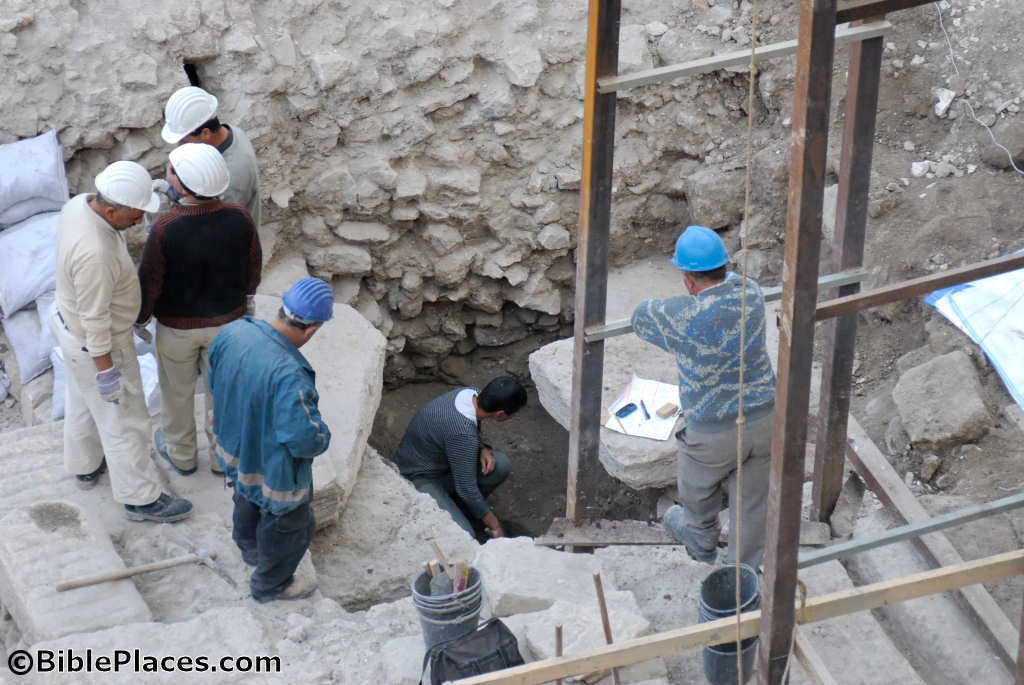
In the close-up below, it looks like large hewn slabs (paving stones?) have been removed in order to excavate beneath them. 

My guess is that those large paving slabs are part of the Byzantine “Valley Cardo,” which has been discovered to the south. 

(Yellow box = present excavations; red box = Byzantine Valley Cardo previously revealed)
Share: