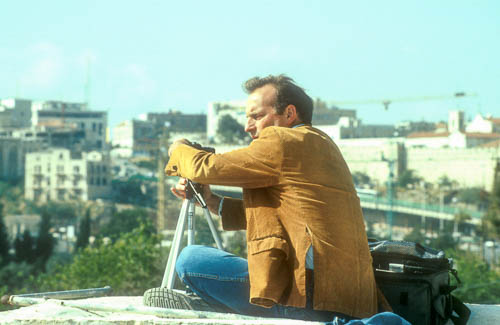
The Pilgrims’ Road, leading from the Pool of Siloam to the Temple Mount, was inaugurated this week, and visitors can now walk the full length.

A hoard of bronze coins found at Tel Huqoq in Galilee provides insight into the little-known Third Jewish Revolt against the Romans in AD 351.

“Over the course of millennia, inhabitants of the Levant used irrigation to mitigate the effects of climate change and maximize the production of olives and grapes, demonstrating resilience and ingenuity.” The underlying journal article is here.

Scholars at Tel Aviv University’s School of Computer Science have developed a new tool to analyze the writing on the Dead Sea Scrolls.

Achia Kohn-Tavor is on The Book and the Spade to talk about the excavations at el-Araj/Bethsaida, including the recent fire.

Turkiye Today has a history of Israel’s requests that Turkey send the Siloam Inscription back to Jerusalem.

The latest issue of Near Eastern Archaeology is dedicated to Megiddo in the Iron Age. A subscription is required for access.

“After 800 years of silence, a pipe organ that researchers say is the oldest in the Christian world roared back to life Tuesday, its ancient sound echoing through a monastery in Jerusalem’s Old City.”

BibleStock has released a new teaching video for the Parable of the Sower which “includes links to some amazing drone footage of the fields around the northern shoreline of the Sea of Galilee.”

David M. Jacobson has posted some recent articles on Academia:

The Feast of Trumpets (aka Rosh Hashanah) begins Monday evening.

Tom and Joann Doyle hosted me on their Uncharted Ministries podcast (Spotify, Apple), and we had a fun time reminiscing about Israel, photography, teaching experiences, excavations, Isaiah, my family, my “legacy,” and more. This is the most personal interview I’ve ever done, and the experts at Uncharted loaded up the YouTube version with lots of photos.

HT: Agade, Gordon Franz, Explorator

Share:

Archaeologists excavating 15 miles east of Tel Aviv uncovered “the largest [ancient] Samaritan site outside of the Samaritan homeland,” including colorful mosaics, two ritual baths, and lots of coins and oil lamps.

“Israeli archaeologists discovered rare preserved lamp wicks believed to be some 4,000 years old during excavations for a new neighborhood in Yehud, in central Israel.”

A ceramic bearing reed impressions is the “find of the month” for the Temple Mount Sifting Project.

The Times of Israel has more about the effects of the wildfire that burned the excavation site at el-Araj, likely the New Testament site of Bethsaida.

John DeLancey writes and shares photos from his time volunteering at the Tel Eter excavation.

Megiddo: A City Unearthed, A Past Imagined marks 100 years since ISAC’s first major archaeological expedition (1925–1939), which revealed layers of palatial complexes, fortifications, and elite material culture.”

Correction: Eric Cline’s upcoming lecture will be on Sept 9, not Sept 8.

Zoom lecture on Sept 18: “Excavations of Crusader Akko,” by Danny Syon, sponsored by the Anglo-Israel Archaeological Society.

The latest issue of Tel Aviv has been released, and it includes open-access articles about Tel Azekah, Manasseh’s wall in Jerusalem, and Late Roman mansion in the Givati Parking Lot excavations in Jerusalem.

“The top three reports in biblical archaeology from August 2025 included reports of gold, silver, and a monumental structure in Jerusalem.”

HT: Agade, Arne Halbakken, Gordon Franz

Share:

The big announcement we’ve been waiting for from the Pool of Siloam excavations came this week as the archaeologists revealed that they found a massive dam wall that dates to between 805 and 795 BC. King Joash died in 796, so one of his last accomplishments must have been the creation of a large reservoir. The underlying study is here.

“Archaeologists from the University of Haifa have uncovered the earliest evidence of bronze production in the Southern Levant, dating back about 3,000 years, in a site [el-Ahwat] that might have been part of the early Israelite kingdom.” The underlying journal article is here.

Omri Abadi and Boaz Zissu reconsider the purpose of the two huge ritual baths at the Tomb of the Kings in Jerusalem. The underlying journal article is here.

A bill to make put archaeological sites in the West Bank under the jurisdiction of the Israel Antiquities Authority is controversial. (The lengthy article includes an impressive aerial view of excavations on the slope of the Herodium.)

The latest video from Expedition Bible is about the archaeology of Capernaum.

This quarter’s Jerusalem Tracker lists all the latest publications, stories, videos, and events related to Jerusalem.

The fall issue of Biblical Archaeology Review includes stories on the latest southern Temple Mount excavations, Samarian scribes in Hezekiah’s court, marine archaeology, and more.

The latest issue of ‘Atiqot is dedicated to crafts and industry in the Southern Levant. All articles are open-access.

ASOR webinar on Sept 10: “Holier than Thou? The Temples at Tel Moza and Reflections of Ritual Practices in Ancient Judah,” by Shua Kisilevitz. The webinar is free but donations are appreciated.

Now available for pre-order: Lexham Geographic Commentary on the Historical Books, Volume 1: Joshua–Ruth, edited by Barry Beitzel (Logos, $49)

The Lachish Letters are the subject of the second post in Bible Archaeology Report’s “Letters from the Biblical World” series.

HT: Agade, Gordon Franz, A.D. Riddle, Arne Halbakken, Andy Cook, Joseph Lauer, Explorator

Share:

“A rare coin depicting Queen Berenice II of Egypt that dates back to Jerusalem’s Hellenistic era was discovered in the City of David.” The 3rd-century BC gold coin, found in sifting of material excavated in the Givati Parking Lot, may challenge the scholarly view on Jerusalem’s importance at the time.

The discovery of a Byzantine-era mosaic medallion inscribed “Peace be with the elders” leads archaeologists working at Hippos to believe that they have discovered “the world’s oldest home for the elderly.”

“A lead weight bearing a Greek inscription about 2,150 years old was seized this week in an intelligence-based operation by the Israel Antiquities Authority’s Theft Prevention Unit at an antique shop in Jerusalem.”

Golan Shalvi writes about the rise of the Israelite dye industry in light of discoveries at Tel Shiqmona.

According to a new study, “silver was used as currency in ancient Israel more than 1,000 years before the invention of the coin, and earlier than in Egypt and Greece.”

The Flora Palaestina Ethnobotanical website is an educational resource that “preserves the historical legacy of plant use in this region, contributing to its conservation, research, and development.”

Charlie Trimm’s “A Virtual Walk Through the Land of the Bible” was released this week on Logos ($24).

Walking The Text’s latest recommended resource is Heart of the Holy Land, by Paul Wright.

Last week, I noted the open access availability of volume 1 of the Western Wall Plaza Excavation report; indeed, all of the volumes and all of the IAA Reports are available.

The Lanier Center for Archaeology at Lipscomb University is celebrating its five-year anniversary, and their press release provides various updates, including the hiring of our longtime friend and partner, Chris McKinny. Chris will be starting a new excavation of a New Testament site in Galilee. The LCA has 25 PhD students enrolled.

Alumni of the IBEX semester program are invited on a reunion tour next summer.

HT: Agade, Gordon Franz, Alexander Schick, Arne Halbakken, Explorator

Share:

“Researchers have discovered a 4,000-year-old handprint on a tomb offering from ancient Egypt.”

“During the 2025 excavation season, archaeologists in the ancient city of Laodicea have unearthed a 2,050-year-old Roman-era assembly building with a never-before-seen architectural design in Anatolia.”

An excavation in Diyarbakır, Turkey, uncovered a mosaic with a “Star of David with a cross motif and six lines of text written in Ancient Greek.” Not quite: the star is eight-pointed and not a “Star of David.”

“The restoration project of the 2,200-year-old theater in the ancient city of Assos, Çanakkale, northwestern Türkiye, has reached its final stage.” Also at Assos, archaeologists continue to bring to light a Hellenistic stoa.

Excavations continued this summer at Amathus on the oldest known Iron Age palace in Cyprus.

“New excavations clarified the long-debated ‘return to Pompeii’ theory and confirmed that survivors reoccupied the devastated city after the 79 CE eruption of Mount Vesuvius.”

The IOSOT Berlin 2025 conference has a number of papers and panels relevant to our areas of interest. The full program is online here.

Eisenbrauns has four new books out, and you can save 30% off the prices below with code NR25:

In a 3-minute video for Tyndale House, Caleb Howard reads from a cuneiform text that is related to biblical history.

The Friends of ASOR are hosting an archaeological tour of Cyprus with highlights including “exploring Idalion with Dr. Pamela Gaber, investigating the new excavation areas around Kalavasos with Dr. Kevin Fisher, conversing with Dr. William Dever over dinner, and touring and dining at the Cyprus American Archaeological Research Institute with Dr. Lindy Crewe.”

“The top three reports from the world of biblical archaeology in July 2025 included discoveries related to flint, clay, and human remains from Israel and Egypt.”

HT: Agade, Gordon Franz, Joseph Lauer, Arne Halbakken, Explorator

Share:

“A four-line ancient Aramaic inscription, possibly inked by Jewish rebels from the Bar Kochba Revolt against the Romans in the 2nd century CE, has been discovered in a cave in the Judean Desert.”

An ivory fragment depicting a woman’s head was discovered in a layer of 7th-century BC fill material near the City of David’s eastern wall.

Rescue excavations along Route 60 north of Jerusalem uncovered a sophisticated ancient water system that includes “six water springs, a 200-meter-long channel, and, most recently, a large wall.” A local guide thinks it can become “a central attraction in Benjamin.” There is a video in Hebrew here (4 min).

After years of abandonment, a crocodile farm in the Jordan Valley underwent a “culling operation” in which 262 crocodiles were shot. Shev Tov Sasson was there on the morning of the operation, on his way to a night birding expedition near the Dead Sea.

The Tel Burna team is preparing to begin excavations at Tel ‘Ether later this month and they welcome volunteers.

The latest issue of Near Eastern Archaeology (subscription) is the first of two to commemorate the centennial of the University of Chicago excavations at Megiddo. The first issue provides articles providing introduction, background, and Bronze Age material. The second issue will focus on the Iron Age. (There is also a conference about Megiddo on October 9, but I’ve only yet found a flyer in Hebrew.)

“Jewish sages in Late Antiquity were not detached from the land but actively involved in the robust wine culture of the Roman-Byzantine world.”

BibleStock has released a new coaching video, this one exploring the Kidron Valley and how it connects the suffering David and the suffering Jesus.

Shmuel Browns notes that the En Gedi Nature Reserve remains closed, and he posts some photos of En Prat.

Lecture on Aug 13: “The Heartland of Judah: Excavations at Biblical Libnah,” by Steven M. Ortiz ($10)

The Albright Institute is hosting a book launch on September 3 (in-person and Zoom) for Ancient Jewish Food in Its Geographical and Cultural Contexts: What’s Cooking in the Talmuds?, by Susan Weingarten 

New release: The City of Gaza in the Roman Period: The Numismatic Evidence (First Century BCE–Third Century CE), by Yoav Farhi (Israel Numismatic Society, 500 pages, $175)

Biblical Backgrounds has released some new wall maps – some smaller, some larger, and some sets.

HT: Agade, Gordon Franz, Joseph Lauer, Arne Halbakken, Explorator

Share: