A seven-year-old boy found a 3,400-year-old figurine at Tel Rehov.

Archaeologists working at Timna in southern Israel found some remarkably well-preserved fabrics from the time of David. You may recall that for a long time scholars denied there was any activity at the site during the time of the United Monarchy.

A €1.6 million Israeli-German project will use digital tools to put the fragments of the Dead Sea Scrolls back together again.

A major renovation of the Church of the Nativity in Bethlehem is underway.

Two artists covertly scanned the bust of Nefertiti and have now released a 3-D dataset.

Two guards at Dayr al-Barsha in Middle Egypt were killed by looters.

Adam Prins recently presented a seminar at the Albright Institute on “3D Models in Archaeological Excavation Recording: The JVRP Method.”

An exhibition of two recent treasure hoard discoveries provides insight into Roman life in England.

A series of lectures will be given at Tel Aviv University for the annual celebration of “Aharoni Day” this coming Thursday.

Project Mosul is a new website that “solicits photographs of antiquities and uses 3-D modeling software to create a virtual record of what was lost in the attack.”

Now online: Bryant Wood’s critique of Steven Collins’ northern location of Sodom.

Wayne Stiles explains five ways the Lord taught his people to walk by faith in the land of Israel.

The Zondervan Illustrated Bible Backgrounds Commentary, Old Testament e-book volumes are on sale for $4.99, ending today.

HT: Ted Weis, Joseph Lauer, Agade

Share:

A farmer on a hike with his family near the Horns of Hattin discovered a scarab depicting Thutmose III.

An ancient canal system used 2,000 years ago to irrigate terraced agricultural plots has been unearthed at an excavation near the Roman-era fortress Metzad Bokek in southern Israel.”

A boat from the Third Dynasty has been discovered at Abusir in Egypt.

A recently uncovered first century AD fresco found in London is described as the earliest one of the earliest surviving frescos from Roman Britain.

A shipwreck from 2000 BC has been discovered by Turkish researchers in Marmaris Hisarönü Gulf in the Mediterranean.

Accuweather has identified five archaeological discoveries preserved by nature, including the Dead Sea Scrolls.

Eilat Mazar says that plans to expand the prayer area near Robinson’s Gate will “absolutely ruin the site.” The Grand Mufti is also opposed. An artist’s rendering is here.

David Ilan will be lecturing on “How Ancient Israel Began: A New Archaeological Perspective” at
Grand Valley State University in Allendale, Michigan, on February 9, 6:00 pm.

Aren Maeir has been appointed to the board of the Israel Parks and Nature Authority. (Now we know who to blame if the parks aren’t perfect!)

Sy Gitin’s eulogy for Trude Dothan is now posted at the Albright Institute’s website. The Biblical
Archaeology Society honors her memory by making 8 articles by and about her free to the public.
Wayne Stiles explains Amos’s sarcastic wordplay on the place name “Lo Debar.”

ASOR has posted a “post-mortem” on the Jehoash Inscription, but I doubt it will convince anyone not already convinced.

Nimrud Rising is a new project that uses “innovative digital technology solutions to create an immersive virtual reality recreation of Nimrud.”

On the anniversary of James Michener’s birthday, Benjamin Glatt explores the origins of The Source.

The Palestine Exploration Fund reveals the identity of the “mystery objects.”

The Associates for Biblical Research has received a $10,000 matching gift pledge towards its excavations of Khirbet el-Maqatir.

HT: Agade, Ted Weis, Pat McCarthy, Charles Savelle, Joseph Lauer

Share:

Several Aramaic and Greek inscriptions with the word “rabbi” have been found in the cemetery of Sepphoris at the time when Rabbi Yehuda HaNasi was alive.

A large church in the underground city of Nevşehir in Cappadocia has been discovered with many colorful frescoes. They estimate that the church dates to the 5th century.

Turkey is planning to restore Göbekli Tepe in order to boost tourism.

The Metropolitan Museum of Art is using lighting to restore the original colors to the Temple of Dendur.

The botching of the repair job on King Tut’s beard has resulted in a disciplinary hearing for eight officials.

Egypt is trying to revive tourism with 3-D scans of the pyramids, opening of new museums, and a highly publicized radar study of King Tut’s tomb.

Photography is once again permitted in the Egyptian Museum with purchase of a camera ticket.

Trude Dothan, long-time excavator of Philistine sites, died this week.

Lost photos of Lawrence of Arabia have been discovered in the archives of the Public Records Office of Northern Ireland.

A short piece at the Jerusalem Post remembers Edward Robinson on the anniversary of his death in 1863.

Clay tablets suggest that the Babylonians invented astronomical geometry long before the Europeans did.

Can you identify these “mystery objects” discovered in the PEF collection?

Dale Manor is on The Book and the Spade this week talking about his on-going excavations of Tel Beth Shemesh.

Tim Frank’s Daughter of Lachish is now available on Kindle. I really enjoyed this work of historical fiction set in the biblical world. (I explain why in my review on Amazon.)

HT: Agade, Ted Weis, Joseph Lauer, Charles Savelle

Share:

A 12th-century BC inscription from Lachish is shedding light on the
development of the alphabet.

The BASOR article is available through JStor (subscription required).

The New York Times reports on questions raised by the Magdala Stone.

The city of Beit Shemesh has discarded plans to build a neighborhood near Khirbet Qeiyafa.

The Temple Mount Sifting Project is seeking suggestions for the significance
of a design
incised on an ancient potsherd.

A golden medallion with a depiction of a menorah is on display at the Israel
Museum for the first time.

The latest issue of Biblical Archaeology Review includes articles on upcoming excavations, a Jewish building in Turkey, and the Jerusalem model’s 50th anniversary.

The latest Near Eastern Archaeology is a special issue on “Crime and Punishment in the Bible and the Near East.”

Carl Rasmussen recommends some websites he checks each day.

Ginger Caessens is teaching Historical Geography of Jordan this summer. This is the best way to learn about “the other half” of the biblical lands.

The Palestine Exploration Fund Blog is beginning a series on Duncan
Mackenzie’s work at Beth Shemesh
.

Wayne Stiles shows how a Bible story at Ein Kerem helps us to wait
on God
.

New Inscriptions and Seals Relating to the Biblical World, edited by Meir
Lubetski and Edith Lubetski is positively reviewed in the RBL.

Amazon is offering 25% off any one book (up to $10 off), good through Sunday.

HT: Agade, Joseph Lauer, Ted Weis

Share:

Archaeologists have found another ancient olive press at Shiloh.

The oldest known artifact of smelted lead has been discovered in a burial cave in the Negev.

George Athas provides some analysis of the Hezekiah seal impression.

Hoards: The Hidden History of Ancient Britain,” an exhibit at the British Museum, illustrates the action of the parable in Matthew 13:44.

HaDavar Biblical Museum is now under construction in Hong Kong.

The Associates for Biblical Research have cancelled their Winter Dig for this year and are considering postponing next summer’s excavation.

PEF and the Early Exploration of the Holy Land is the title of a conference being held at the University of Haifa in December.

The Mount Carmel forest fire led to the discovery of a farming community from the first century.
‘Atiqot 83 is now online.

Wayne Stiles explains the providential irony in the discovery of the Tel Dan Inscription.

The government is appealing the transfer of the Davidson Center Archaeological Park to management by Elad.

ASOR will be posting some of the presentations from the Annual Meeting on their website.

Andy Naselli recommends the Jerusalem IMAX movie, now on DVD. I agree.

CBD is running a big sale on Craig Keener’s 4-volume commentary on Acts through Monday ($138; Amazon: $192).

A free (pdf) book from HCSB: Exalting Jesus in Exodus (requires email address).

Logos Bible Software is also giving away a free book a day during Advent.

Happy Hanukkah!

HT: Agade, Charles Savelle

Share:

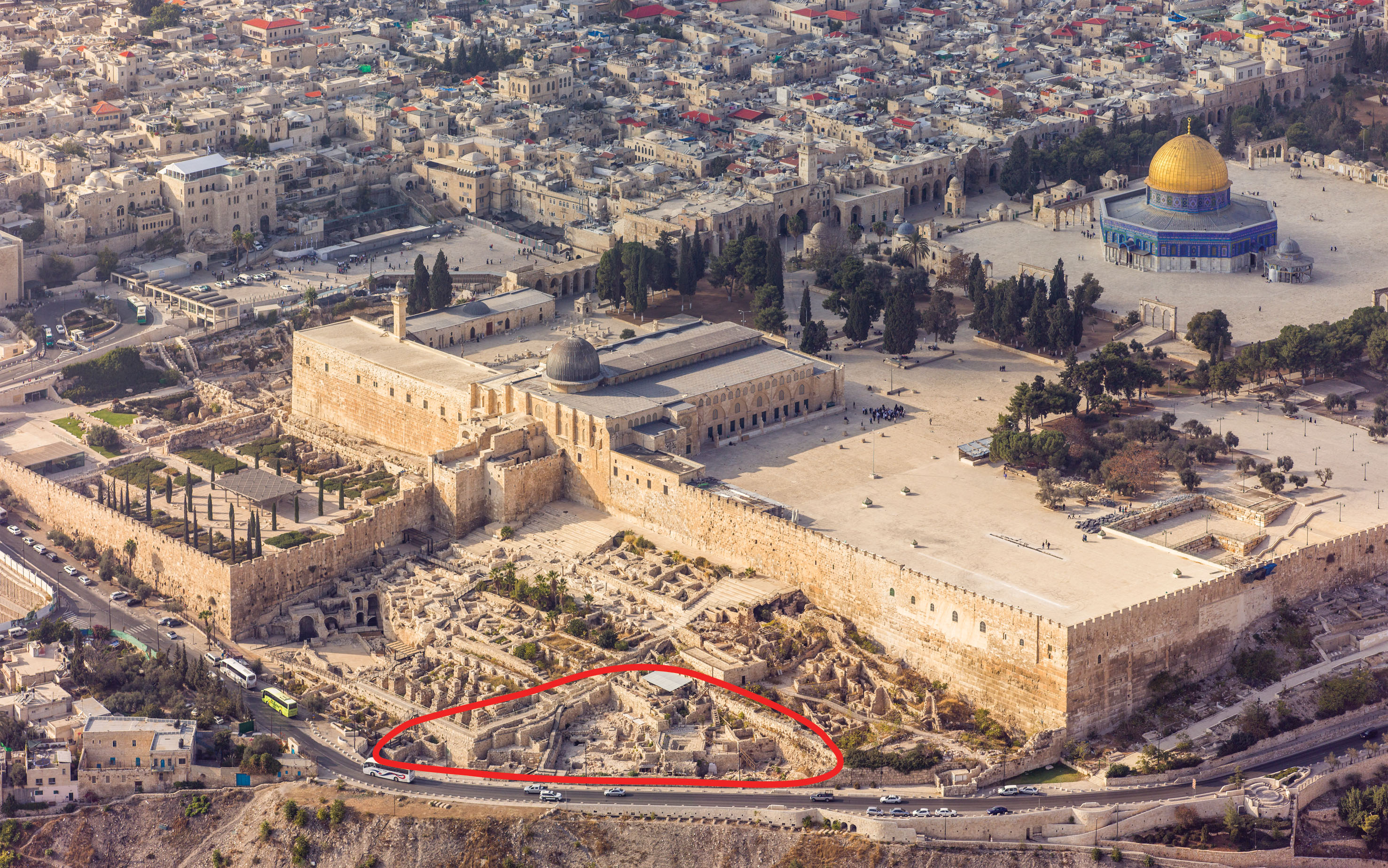
A personal seal impression belonging to King Hezekiah has been discovered in excavations south of Jerusalem’s Temple Mount. The tiny inscription reads, “Belonging to Hezekiah (son of) Ahaz king of Judah,” and is the first of its kind to be discovered in an excavation.

From a press release from the Hebrew University:

Measuring 9.7 X 8.6 mm, the oval impression was imprinted on a 3 mm thick soft bulla (piece of inscribed clay) measuring 13 X 12 mm. Around the impression is the depression left by the frame of the ring in which the seal was set.

The impression bears an inscription in ancient Hebrew script:

“לחזקיהו [בן] אחז מלך יהדה”
“Belonging to Hezekiah [son of] Ahaz king of Judah”

and a two-winged sun, with wings turned downward, flanked by two ankh symbols symbolizing life.

hu151202_Mazar_Tadmor_big

The bulla originally sealed a document written on a papyrus rolled and tied with thin cords, which left their mark on the reverse of the bulla. This bulla came to light, together with many pottery sherds and other finds such as figurines and seals, in Area A of the excavations (2009 season), supervised by Hagai Cohen-Klonymus.

The bulla was discovered in a refuse dump dated to the time of King Hezekiah or shortly after, and originated in the Royal Building that stood next to it and appears to have been used to store foodstuffs. This building, one of a series of structures that also included a gatehouse and towers, was constructed in the second half of the 10th century BCE (the time of King Solomon) as part of the fortifications of the Ophel — the new governmental quarter that was built in the area that connects the City of David with the Temple Mount.

Photo courtesy of Andrew Shiva

The bulla was found together with 33 additional bullae imprinted from other seals, some bearing Hebrew names, their reverse showing marks of coarse fabric and thick cords that probably sealed sacks containing foodstuffs.

The full press release, along with a 10-minute video, is posted here.

Share: