This week’s edition of The Book and the Spade features Matthew Adams in a discussion of new excavations east of Megiddo (direct link here).

BibleX provides links to a new resource called ASORtv.

Ferrell Jenkins provides a new illustration for the story of the serpents in the wilderness.

Derbe is one of the last sites on Paul’s itinerary to remain unexcavated. That has now changed with a new project by Selçuk University.

A preliminary report of the 2013 excavation season at Tel Kabri is now available.

L. Y. Rahmani and Robert J. Bull died this week.

HT: Jack Sasson

Derbe from west, tb041105424
Derbe from the west
Photo from Eastern and Central Turkey
Share:

Leen Thobias has some impressive 360-degree images of Israel and Jordan here.

It must be a bit discouraging when you find in your sealed excavation locus a beer bottle cap. (Photos here.)

Theories about the identity of Khirbet Qeiyafa are discussed in this Haaretz article. The most helpful section is what everyone agrees on.

A Tel Aviv professor wants to know if a mound of stones in the Sea of Galilee marks the place where Jesus walked on water.

If you’ve been waiting to see the new Samson mosaic found last summer at the Huqoq synagogue, you should check out Jodi Magness’s new article in Biblical Archaeology Review, currently online for free.

The anarchy in Egypt has not been good for archaeological sites and museums.

Archaeologists have found evidence that cinnamon was produced on the northern coast of Israel in ancient times.

Fifteen foreign archaeological teams are preparing to begin fifteen projects in Saudi Arabia.

Foundation Stone shares a 7-minute video showing some results from this summer’s excavations at Azekah.

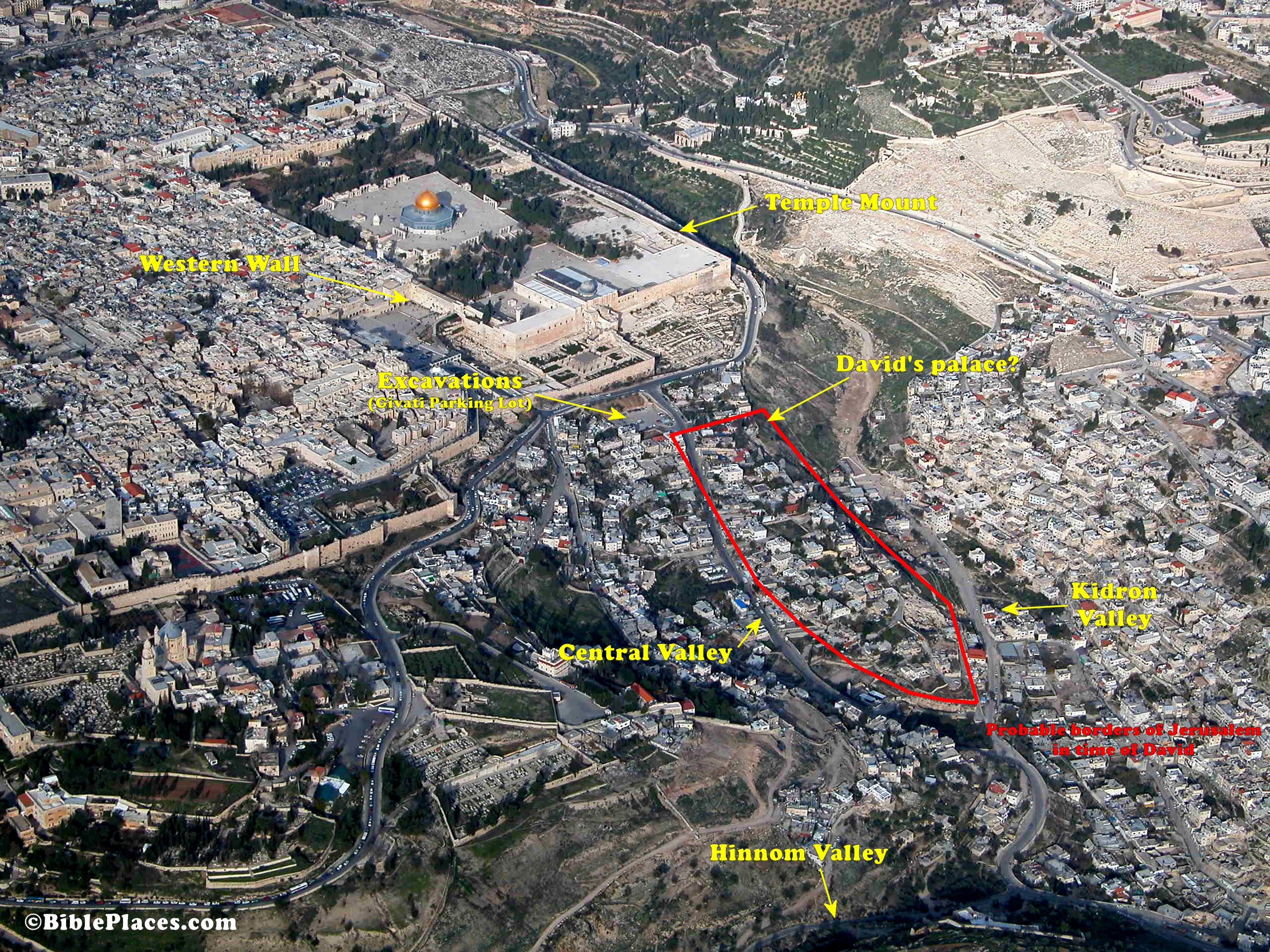
Leen Ritmeyer has created some new reconstruction drawings of Jerusalem throughout its history.

HT: Joseph Lauer, Jack Sasson

Share:

Ynetnews reports on the recently reopened Siebenberg House.

Miriam Siebenberg lives in a very unusual house – unusual because of the fact that her home was built on top of another home, one that existed over 2,000 years ago.
Within the ancient walls of Jerusalem’s Old City, Miriam and her husband Theo purchased a house after the Six-Day War, eventually discovering that it contained a treasure trove of history buried deep underground.
In the Siebenberg’s house, a collection of archaeological artifacts discovered after years of digging in the basement, appear on display. Arrowheads, ink-wells, coins, ancient pottery, a glass cup and pieces of jewelry including a bronze key ring, likely used in the Second Temple era by a woman to unlock her jewelry box, can all be seen in the display.
But even more intriguing is what lies beneath their home. One can see the remains of an ancient Jewish residence and a way of life that dates back to the days of King Solomon and the Second Temple period.
“The further we dug, the more history we uncovered,” Seibenberg told Tazpit News Agency in an exclusive interview.
[…]
During more than 18 years of unearthing, the Siebenbergs discovered a ritual bath, known as a mikveh used by Jews during the Second Temple era, an aqueduct, a Byzantine water cistern, and even empty burial chambers believed to have been used by Jewish royalty in the 10th century B.C. during King Solomon’s reign.
Eventually, the remnants of the base wall of what is believed to be a Jewish home that stood 2,000 years ago, were also uncovered as were ancient Hasmonean stones, including one with a menorah engraving. Evidence of the Roman destruction of the Second Temple in 70 C.E. was also discovered – a line of ash sealed into sedimentary rock was sent to a special lab in South Africa for testing, which found that the ashes were indeed from that time.

The full story is here and includes photos.

HT: Joseph Lauer

Share:

Fortifications from the 8th century BC were discovered in the first season of excavations at Ashdod-Yam, the harbor city of Philistine Ashdod. The official website is here.

Gordon Govier and I talk this week on The Book and the Spade about the latest archaeological discoveries in Israel, including the Samson mosaic at Huqoq and the Sphinx fragment at Hazor (direct link here).

The Israel Exploration Society recently observed its centennial, an event celebrated by an op-ed in the Jerusalem Post.

Amnon Ben-Tor reviews the finds from the controversial tenth century BC at Hazor.

Ferrell Jenkins describes Assyrian ruins that will soon be flooded by the Tigris River.

Exploring Bible Lands has a break-down of places shown in the Jerusalem IMAX 3D trailer. The
movie opens in theaters next month.

Ziyaret Tepe, citadel Neo-Assyrian Bronze Palace with later pits, adr1005212203
Neo-Assyrian Bronze Palace at Ziyaret Tepe
Photo from Eastern and Central Turkey
Share:

An enormous refuse pit from the Byzantine period was recently excavated near Apollonia-Arsuf.

A large Crusader hospital in the Muristan of Jerusalem’s Old City has recently been revealed to the public following recent excavations and renovations. The project is covered by other new sources including the Jerusalem Post.

Grave robbers are taking advantage of Egypt’s political mayhem to loot the tombs of Saqqara, Dashur, Luxor, and Aswan.

Sean Freyne passed away on Monday.

The Kindle version of the Holman Bible Atlas is on sale for $4.74.

HT: Jack Sasson

6
A group of Samaritan oil lamps found near Apollonia-Arsuf. Photograph by Pavel Shargo, courtesy of the Institute of Archaeology, Tel Aviv University.
Share:

From the Jerusalem Post:

Archeologists say they have found remains of the ancient Jewish village of Shikhin, located in the central Galilee, which could be instrumental in the study of Jewish life in the region and the origins of Christianity.
Dr. Mordechai Aviam of Kinneret College’s Institute for Galilean Archeology and co-director of the Shikhin expedition, said on Sunday the findings so far include evidence of an ancient synagogue and remnants of pottery production.
The expedition is a joint project led by Aviam, Samford University Religion Professor James Riley Strange and Kentucky Christian University Biblical Studies Professor David Fiensy.
Aviam said the project, which has included two years of excavations thus far, would help to answer crucial historical questions surrounding the identity of the Galileans.
“Who were the Galileans?” he asked. “Where they remnants from the First Temple period? Were they people who came from Judea? Were they people who converted [to Judaism]?” Aviam noted that the village is mentioned along with neighboring city Sepphoris (modern Tzipori) by first-century historian Flavius Josephus, and in the Talmud as a village home to many potters.

The story continues to describe the record number of oil lamp molds that have been discovered at the site.

HT: Joseph Lauer

Share: