We lived within a mile of each other in the Judean hills for a decade, but we only “met” online years later. I was astonished that an Israeli rabbi had written a book about the archaeology of Esther (set in modern Iran). Somehow we connected by email, and when his book on the archaeology, geography, and history of Jeremiah came out, I was happy to recommend it.

I did not know at the time that Rabbi Yehudah Landy z”l was from an illustrious line of rabbis, a direct descendant of the Vilna Gaon. Nor did I know about his impressive rabbinical training, his founding of a yeshiva, or his deep knowledge of the Babylonian and Jerusalem Talmuds. (He completed these dozens of times in his life!)

I did know that he was a licensed Israeli tour guide, an expert author of books in both Hebrew and English, and a kind and humble man. Once, I needed a photo of a biblical site in the Judean hill country where I had previously lived—and where he still did. He provided that photo with permission to include it in the Photo Companion to the Bible.

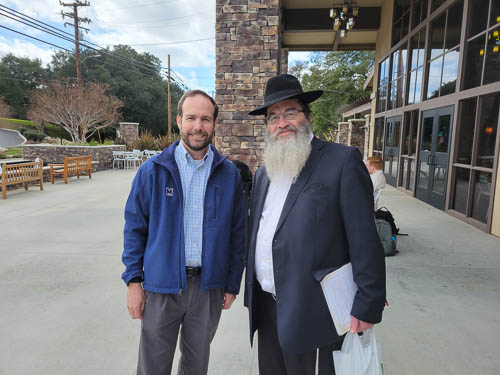
A few years ago, he was traveling to the Los Angeles area, and he went to some extra effort to travel up to The Master’s University. Perhaps he was intrigued by this evangelical Christian school that thirty years ago established its own campus in Israel. We enjoyed a wonderful visit and tour of the TMU campus, with a few head turns at the unusual sight of a visiting rabbi. One topic of our discussion was the book he was finishing on the archaeological and geographical background of Joshua; I was glad to hear of his progress.

Within a few weeks of his return to Israel, Rabbi Landy responded to an email with a brief reply that he was “in need of serious medical treatment.” Since then I have prayed for his healing. I wrote to him a few times and always assumed the best when I didn’t hear back. But I learned last week that he died in the fall of 2023. He was only 64, and an online source said he had a brain tumor.

Much was lost with his passing. I can only imagine what he still planned to do with his encyclopedic knowledge of Scripture, the land, and Jewish writings. I can only imagine the personal impact he had on others, wide enough to reach this Gentile Christian living in California.

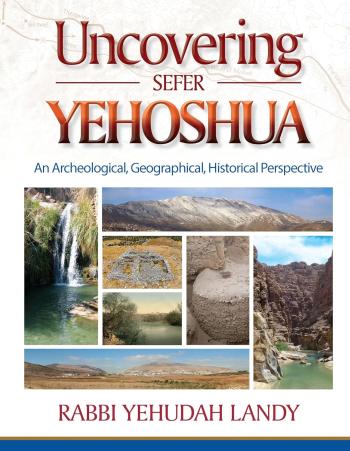
The reply that informed me of his passing also included the happy note that his book on Joshua has recently been published in English. This is indeed something for which to give thanks. The Lord sustained his life so that he could finish this work which he had spent years researching and writing. Of all the books in the Bible, none is as “land-focused” as Joshua, which makes this such a valuable work for someone with his areas of expertise.

Understanding Sefer Yehoshua (the Book of Joshua) is a beautiful book, attractively laid out with 1-3 photos on nearly every one of its 300 pages. The 32 chapters walk through the biblical text, beginning with an introduction on “The History of Torah Research on the Land of Israel.” Some chapter titles are:

  • The Borders of Eretz Yisrael
  • Crossing the Jordan
  • Conquest of Yericho
  • The Extent of Yehoshua’s Conquest
  • Apportioning the Land by Lottery
  • Shiloh and the Mishkan (Tabernacle)

About ten chapters are devoted to the individual tribal inheritances, and a couple others focus on the cities of refuge and the Levitical cities. A lengthy final chapter addresses “Archeological Findings.”

An obvious value of this book to most of my readers is Rabbi Landy’s knowledge of the works of Jewish sages. This is rarely considered in atlases or commentaries on Joshua. Another strength of this book is the precise topographic maps, utilizing satellite imagery and marked with cities and borders based on Rabbi Landy’s careful research.

In the book’s introduction, Rabbi Landy notes a few of the unique contributions that he makes in the pages that follow. These include:

  • A fresh understanding of Joshua’s battle with the northern kings at the waters of Meirom
  • An original proposal on where the tribes of Israel stood on Mounts Gerizim and Ebal
  • A novel interpretation of Joshua’s cryptic response to the tribes of Joseph in Joshua 17:14-18

Rabbi Landy has gifted us with a valuable resource that I believe will be treasured by many. Not only Bible students and teachers, but future writers of atlases, commentaries, and works of historical geography will benefit tremendously from his years of research and travel. By publishing his work both in Hebrew and in English, he has ensured that it will reach the broad audience it deserves. The book is available from the publisher and from Amazon.

Rabbi Landy will be greatly missed, but we can be thankful that he used his time and talents in ways that will help many to better understand the Bible. May his memory be for a blessing.
Share:

Bryan Windle has begun a series of posts on Jericho and Joshua’s conquest based on his extensive research.

Pomegranates may be one of the seven species of the land of Israel, but right now it’s not economical to farm them and so production has plummeted.

Nathan Steinmeyer explains why the Jewish holidays appear to jump around from year to year.

The NY Times reports on the effect of the Gaza War on archaeological artifacts in the area (gift link).

Haaretz has a paywalled article about the future of the Rockefeller Museum.

Chris McKinny and Kyle Keimer dive into the history of biblical archaeology on the latest episode of the BiblicalWorld podcast.

The 28th Annual Bible and Archaeology Fest will be held in Boston on Nov 21 to 23, with an online option available. Speakers include Aaron Burke, Eric Cline, Glenn Corbett, Erin Darby, William Dever, Pamela Gaber, Yuval Gadot, Mark Goodacre, James Hoffmeier, Ann Killebrew, Mary Joan Winn Leith, Jodi Magness, Eric Meyers, Carol Meyers, Elizabeth Schrader Polczer, Thomas Schmidt, William Schniedewind, and James Tabor.

Online on Oct 4: Jerusalem Seminary is hosting a free lecture by Noel Rabinowitz on “Jesus, Atonement and the High Holidays.” If you are registering for a semester course, you can write “Bible Places” in the “who referred you” field and the registration fee will be waived.

Available at a pre-pub discount on Logos: Faith-Affirming Findings: 50 Archaeological Discoveries That Validate the Historicity and Reliability of Scripture, by Paul D. Weaver (Kregel, $25)

Zach Miller recently hosted me on his What Your Pastor Didn’t Tell You podcast to discuss the Mesha Stele and how it relates to 2 Kings 3.

HT: Agade, Gordon Franz, Joseph Lauer, Explorator

Share:

The Israel Antiquities Authority: “To the best of our knowledge, no damage has been caused thus far to archaeological artifacts under the responsibility of the Israel Antiquities Authority, and no reports have been received regarding damage to exhibits in museums.” Some precautions have been taken.

The opening of the Grand Egyptian Museum will be delayed until later in the year due to the Israel-Iran war.

The Garden of Hercules in Pompeii has been restored and reopened to the public following “the planting of 800 ancient roses, 1,200 violets, 1,000 ruscus plants, cherry trees, vines, and quince trees.”

A team of researchers is working to recreate Egyptian blue, and they created 12 different recipes for the endeavor.

Officials in Rome have unveiled a new piazza around the Mausoleum of Augustus.

Looting and trafficking of ancient artifacts has increased in Syria since the fall of the government.

Bible History Daily asked a few scholars for their perspective on a new study dating the Dead Sea Scrolls earlier than previously believed. Rollston, for example, knows that the calibrated dates are in error since we know that Daniel 8-11 cannot be dated to earlier than the events occurred in 167 BC.

New website: Iron Age Hebrew Ostraca in the Silicon Age – Computerized Paleography – “our research in the last few years has focused on solving some problems, avoiding others and shedding new light on literacy in biblical Israel and Judah through statistical analysis.”

Conference on June 25-27: “Exodus in Transdisciplinary Perspective,” at UC San Diego, with a YouTube livestream.

New from Preserving Bible Times: Encounters with Jesus, by Doug Greenwold, in audiobook format

Preston Sprinkle invited me on to his Theology in the Raw podcast to talk about archaeology and the Bible, including Jericho, David, and Hezekiah’s Tunnel (YouTube, Apple, Spotify). He kicked it off by recalling comments I wrote on his archaeology paper 25 years ago.

HT: Agade, Ted Weis, Alexander Schick, Explorator

Share:

Archaeologists working at Tel Shimron have found a cache of rare cultic objects from a Middle Bronze monumental structure. The collection includes two bull statuettes.

The Temple Mount Sifting Project has conducted a quantitative analysis of pottery from the Iron Age IIB-C, finding that the characteristics are similar to that of the Ophel excavation.

After Christopher Rollston’s dismissal of interpretations of recently discovered inscriptions, Pieter Gert van der Veen pushes back.

Titus Kennedy summarizes archaeological and historical evidence for the Israelite exodus and settlement in Canaan.

Scott Stripling is on Digging for Truth discussing the location where Jesus cast the demons into the herd of pigs. He seems to be unaware of the data I presented in an article in the Lexham Geographic Commentary on the Gospels.

The Jerusalem Post shares a story about the history of Jericho written with the help of AI. And here’s another one about King Tut’s tomb.

Online discussion on Nov 14: “Standing Firm on Mount Zion Amid Conflict,” with Oliver Hersey, Jon Kaplan, and Bernard Sabella. Registration is free, and the event will be recorded.

Aren Maeir’s new Massive Open Online Course (MOOC) on ancient Jerusalem will be online soon. A trailer has just been released.

Preserving Bible Times has released “The Real Birth of Jesus,” a session with Doug Greenwold “with added imagery that conveys the real cultural and historic context of this world-changing event.”

Walking The Text has launched a merch shop with a variety of outerwear and tees, with designs intended to promote conversations about God’s Word and its context. Brad Gray introduces the shop in a short video.

HT: Agade, Gordon Franz, Arne Halbakken, Charles Savelle

Share:

The ancient Eshtemoa synagogue south of Hebron was vandalized by graffiti and fire this week.

The Jerusalem Post has a better article on the previously reported study on the balm of Gilead.

Bryan Windle identifies the top ten discoveries related to the book of Jeremiah.

John Monson is a guest on The Book and the Spade to discuss muons and the archaeology of Jerusalem.

James Hoffmeier will be lecturing at the Bible Seminary in Bonn on November 6-7 on the subject of “Israel and the Exodus.” He will lecture in English, and registration is required. Recordings will be made available to those who register.

John DeLancey, of Biblical Israel Ministries and Tours, has begun a new series entitled “Israel on Location.”

Accordance has a sale going on now for Carta and Jewish resources.

Walter E. Aufrecht, a scholar best known for his work on Ammonite inscriptions, died last week.

HT: Agade, Gordon Franz, Arne Halbakken

Share:

Archaeologists looking at satellite images have discovered three temporary Roman army camps in the northern Arabian desert, possibly evidence of a military campaign that led to the annexation of the Nabatean kingdom in AD 106.

“Archaeologists from the Leiden Turin Expedition to Saqqara have uncovered an ornate tomb dating to the early Ramesside period (c. 13th century BCE) that belonged to Panehsy, the overseer of the Temple of Amun.”

Bryan Windle gives the top three reports in biblical archaeology in the month of April.

“The Zeugma Mosaic Museum in Antep, southeastern Turkey, has reopened after being closed for over two months due to the devastating earthquakes that struck the area in February.”

Writing for Ami Magazine, Lawrence Schiffman considers the irony of ancient Jewish art work from Dura-Europos sitting in a museum in Damascus.

Helen Gries, a curator at the Vorderasiatisches Museum in Berlin, considers how “multiple narratives” come together in the Ishtar Gate of Babylon.

The Roman bust of Nero that was discovered in a Goodwill store in Texas is returning to Germany next month.

The Greek Reporter makes some suggestions as to why the ancient Greeks reclined to eat and drink.

BAS’s Bible & Archaeology Fest XXVI will be back in person as well as livestreamed on Nov 17-19 in San Antonio, Texas.

The latest video from Expedition Bible will likely be popular: Exodus Pharaoh Explained (22 min)

HT: Agade, Arne Halbakken, Explorator

Share: