Aviva Bar-Am has written an informative article about ancient Jezreel and its modern counterparts in the Jerusalem Post.  The first half discusses the battles around the village in 1948 and the kibbutz that was established there.  The second half describes the biblical and archaeological significance, including this part:

Although archeologists have uncovered portions of a tower, found the city gate and dug to the bottom of the moat, the biblical Jezreel is overgrown with weeds and there isn’t much to see (I am also not sure how safe it is – there are open pits). It is much more fun to spend time at the tel’s excellent recreation site, centered by a striking monument to Palmah troops who fell here in 1948. From the heights of the tel you have a fantastic view of the Harod and Beit She’an valleys. Enjoy the shade produced by the fruit trees in the lovely reconstruction of Naboth’s plot.
You can also follow a lovely biblical trail on the northern edge of the mountain down the slope for about 35 minutes (allow about 50 minutes for walking back up). A delightful surprise awaits you at the bottom: the Jezreel Spring. It is one of 48 freshwater, full springs that lie under the mountain, the result of geological changes that occurred when the Syrian African Rift raised Mount Gilboa and lowered the valley.
Before you jump into the inviting pool, set within a grove of eucalyptus trees, look for a shaft a few meters from the end of the trail. It leads underground to a tunnel which you and your kids can enter (with a flashlight!), walk through water and end up on the other side of the road in a canal that leads directly to the pool.
The spring, of course, is mentioned in the Bible (isn’t everything in this region?) “The Philistines gathered all their forces at Aphek, and Israel camped by the spring in Jezreel…” [I Samuel 29:1].

The full article is here.

HT: Joe Lauer

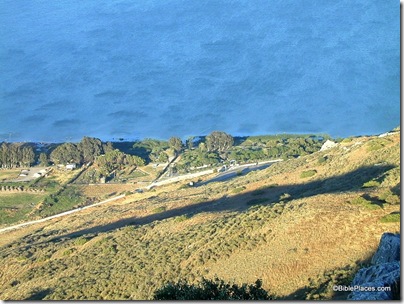
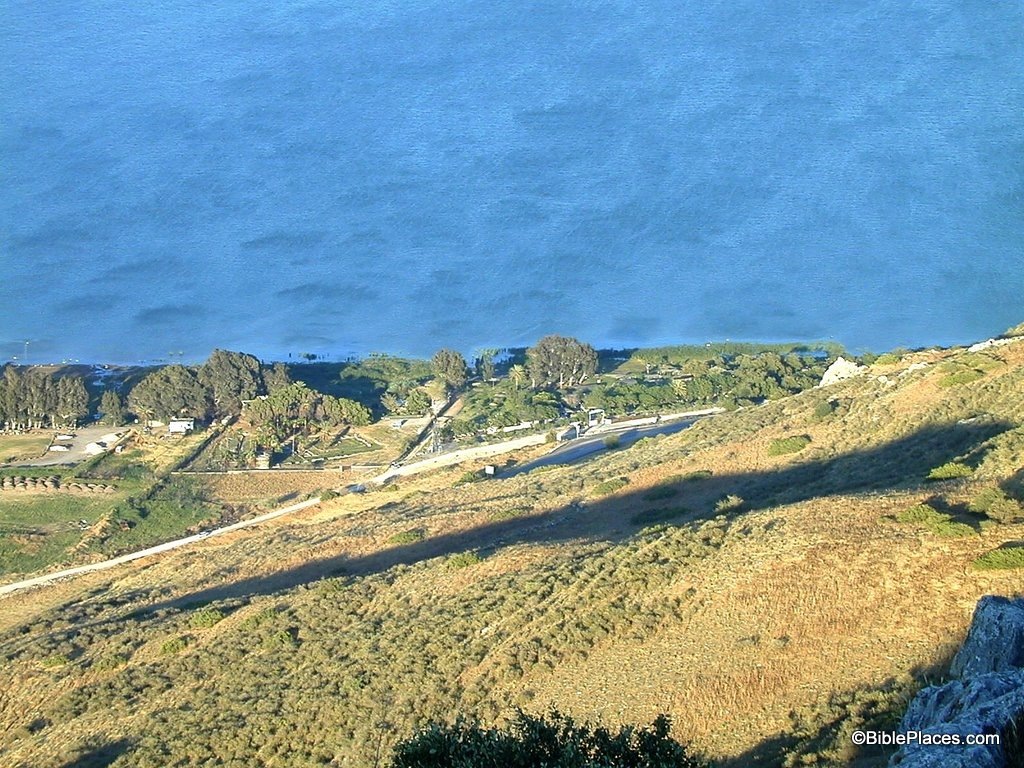
Harod Valley, Mt Gilboa, Jezreel aerial fr w, tb121704019 captions Tell Jezreel and Mount Gilboa from west
Share:

Eric Cline writes on the ANE-2 list:

The co-directors of the Kabri Archaeological Project (KAP) would like to announce that a pdf of the preliminary results from the 2009 excavation season is now available at:
http://digkabri.files.wordpress.com/2008/10/preliminary-report-on-the-results-of-the-2009-excavation-season-at-tel-kabri.pdf If the direct link does not work for some reason, please go to http://digkabri.wordpress.com/, click on "2009 Season," and then click on the link there to download the pdf. Links to the results of previous seasons (2005, 2006, 2007, and 2008) are also listed at http://digkabri.wordpress.com/, under the "Previous Results" link
KAP Publications which have already appeared are: E.H. Cline and A. Yasur-Landau, "Poetry in Motion: Canaanite Rulership and Aegean Narrative at Kabri," in EPOS: Reconsidering Greek Epic and Aegean Bronze Age Archaeology: 157-165, S.P. Morris and R. Laffineur, eds. Aegaeum 28. Liège: Université de Liège. 2007. A. Yasur-Landau, E.H. Cline, and G.A. Pierce, "Middle Bronze Age Settlement Patterns in the Western Galilee, Israel," Journal of Field Archaeology 33/1 (2008) 59-83.

The report’s abstract reads:

The 2009 excavations at Tel Kabri, the capital of a Middle Bronze Age Canaanite kingdom located in the western Galilee region of modern Israel, lasted from 21 June to 30 July 2009. A highlight of the season was the discovery of numerous fragments of painted plaster, from both a previously-unknown Minoan-style wall fresco with figural representations and a second Aegean-style painted floor.

Share:

This article will set some to thinking about how their tour itineraries will change.  Others will wonder how this might play into the fulfillment of the “battle of Armageddon.”  From the Jerusalem Post:

A battle is raging over the pending construction of a new international airport in Megiddo, in the Jezreel Valley.
According to the Transportation Ministry, the number of people flying to and from Israel annually is expected to double, from 15 million to 30 million, in the next 20 years, creating urgent necessity for a new airport. The regional council in Megiddo, however, vehemently opposes the initiative.
“It [the airport] is absolutely absurd and does not serve the national interest of the State of Israel, which is the preservation of open areas, including the preservation of the significant agricultural land reserves of the Jezreel Valley, tourism development and rural areas with ecological environmental sensitivity,” the Megiddo regional council said in a statement this week.
Though officials say the airport would undoubtedly increase tourism to the area, local authorities, residents and environmental organizations are actively opposing its construction. Yoel Sigal, the strategic planner for the Megiddo Municipality, is leading the campaign against the project.
“The selling of the Jezreel Valley” represents one of the worst elements of Israeli development policy, he said on Tuesday. Under the National Development Plan, the valley is defined as an area for farming. If the region became an urban center, it would effectively merge Afula, Nazareth and Haifa and would destroy one of the most important agricultural zones of the country, he said.
Furthermore, the airport project would reduce agricultural output and add to the country’s increasing dependency on imported field crops.
Previous transportation minister Shaul Mofaz appointed former OC air force Maj.-Gen. (res.) Herzl Bodinger to head a committee on the future of air transport in Israel. The Bodinger Committee’s recommendation to build an international airport in Megiddo was approved by the cabinet on February 1.
The 400-dunam (40 hectare) airport site, which is 60 km. away from Ben-Gurion Airport, is projected to cost $35 million. It is not at the same location as the existing Megiddo Airport, which handles local traffic.

Continue reading here.

Megiddo and Jezreel Valley aerial from west, tb121704968

Megiddo and Jezreel Valley, view to northeast
Share:

Gordon Franz has just posted three transcribed interviews with staff members of the Hazor excavations, including Amnon Ben-Tor, Sharon Zuckerman, and Orna Cohen.  

“Hazor is Number One…”: An interview with Amnon Ben-Tor

“Where is the Archive at Hazor?”: An interview with Sharon Zuckerman

“It is the Best Job in the World”: An interview with Orna Cohen

Cohen is a conservator, and she comments on the controversy of the James Ossuary.  She believes that the second half of the inscription is original, but the first part is forged.

I had the pleasure of looking at and checking the James Ossuary and I gave my comments on it.  I think the ossuary is authentic and a real one, but the inscription on it, I am convinced there are two hands that wrote the inscription.  To my opinion, part of the inscription is faked, part is original.  Of course, there are things that go on in trial now.  They are still trying to figure out what is faked and by whom it was made.  To my opinion, the name Joshua [on the ossuary] is real.  The inscription reads: “Ya’acov bar Yosef achi Yehoshua.”  [Translation: Jacob, or James, the son of Joseph, the brother of Jesus].  So the first part, I think is added.  My professional opinion is almost against all the others that think the last name [on the inscription]; “bother of Jesus” (Joshua) is a fake.  So my opinion was against the others [at the trial].  I checked and it’s according to the patina in the letters.  There was a fake patina of just dirt that was put in these letters on purpose so I cleaned part of it and underneath there was the original, yellowish patina that based on my experience, was the original one.  It was not on the first part of the inscription but it was on the last part of the inscription.  That is what I gave as my opinion.

Share:

The Pope has begun a week-long visit to Jordan and Israel with words of respect for Islam.  From the JPost:

“My visit to Jordan gives me a welcome opportunity to speak of my deep respect for the Muslim community, and to pay tribute to the leadership shown by his majesty the king in promoting a better understanding of the virtues proclaimed by Islam,” Benedict said shortly after landing in Amman.

A traveler sends along photos from Nazareth of Muslim preparations for the Pope’s visit.  The large building in the background is the Church of the Annunciation, which the Pope is scheduled to visit on Thursday.

nazareth_welcome
nazareth_welcome2

Share:

If you’re interested in the visit of the Catholic Pope to Israel next month, the Israel Ministry of Tourism has established a website: Holyland Pilgrimage: A Bridge for Peace.  Questions of just how interested in peace the pope is have been raised following reports of his plans to meet with a terrorist-supporting mayor in Galilee.

The ministry has also created a 5-minute video in preparation for the visit.  The video features stunning aerial photography of numerous sites in Israel and is worth watching even if the pilgrimage doesn’t get you excited.

Share: