In case you were wondering, the Western Wall is closed too. (Perhaps not technically, but the rabbis are issuing edicts on behalf of the Health Ministry.)

Greece has closed all of its museum and archaeological sites until March 30 because of a shortage of guards.

A study commissioned by the Museum of the Bible argues that all 16 of the “Dead Sea Scroll” fragments that they own are forgeries. National Geographic’s extensive report includes a statement by Emanuel Tov that questions that conclusion.

A student identified that a display of medieval artifacts included a sword from the Early Bronze Age.

“It Happened Here” – Life Lessons from Israel: Beersheba – this 6-minute video is #21 in the series by Biblical Israel Ministries and Tours.

The Ecole Biblique in Jerusalem is celebrating its 100th anniversary this year. Their website includes a number of links to related presentations (in French).

“The Institute of Archaeology of The Hebrew University of Jerusalem is very pleased to announce the establishment of The Roger and Susan Hertog Center for the Archaeological Study of Jerusalem and Judah.” Some generous scholarships for M.A., Ph.D., and post-doc programs require application by May 1.

A couple of our blog readers saw the recent post about “Israel by Foot,” and then combined a hiking trip in Galilee with a tour of Israel we recommended with John and Doro Black. They share their experiences and various travel tips on their website dubbed “The Hitched Hikers.”

Carl Rasmussen shares photos and directions to a well-preserved portion of the Herodian aqueduct three miles north of Caesarea.

Emperor Hadrian was quite the traveler, a fact illustrated in this presentation of coins from all over the Roman Empire.

Eric Cline is on The Book and the Spade this week talking about his new book, Digging Up Armageddon.

Ferrell Jenkins was allowed to take one, and only one, photo in the tomb of Rekhmire in the Valley of the Nobles in Egypt.

HT: Agade, Ted Weis

Share:

Israel is moving forward on plans to extend the high-speed train line to a station near the Western Wall in the Old City of Jerusalem.

Restoration work has begun on the floor of the Church of the Holy Sepulcher.

Two ritual baths south of Jerusalem are overflowing with water following the winter rains.

$1.3 million has been given to support marine archaeological research off Israel’s coast.

Volunteer applications are being accepted for excavations at Tell Keisan this coming September.

A BBC documentary describes the discovery of a hoard of silver decadrachm coins in Gaza, and what happened to them next.

Egypt has sentenced the brother of an ex-minister to 30 years in jail for smuggling antiquities.

Iran’s Basij Resistance Force is apparently threatening to destroy the historic tomb site of Esther and Mordecai, located in Hamedan.

Wayne Stiles was at Colossae last week and he reflects on the significance of the site and Paul’s letter to the church.

An archaeology park featuring a Roman theater is being developed in Ankara.

Debate continues over whether a skull unearthed 120 years ago near Pompeii belonged to Pliny the Elder.

Italian archaeologists have found underneath the Roman Forum an ancient shrine and sarcophagus that was likely dedicated to Romulus.

A conference on “Sheshonq (Shishak) in Palestine” will be held in Vienna on March 6-7.

Ferrell Jenkins answers questions about the six water jugs at the wedding of Cana.

Herod Antipas, ruler of Galilee during Jesus’s ministry, is the subject of the latest archaeological biography by Bryan Windle.

To listen to the latest episodes on The Book and the Spade, see this page.

HT: Agade, Ted Weis, Keith Keyser, Explorator

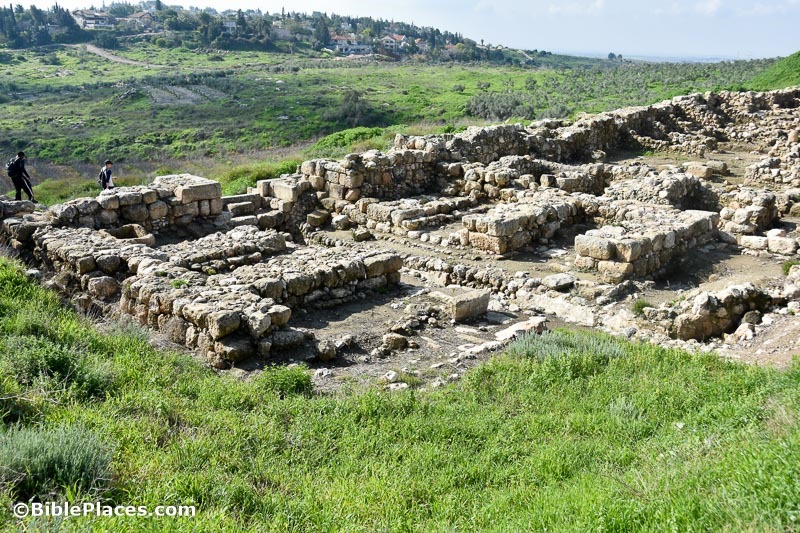
Gezer Solomonic gate from northeast, mjb1902200736

This week on our Facebook/Twitter/Instagram streams we featured sites related to Israel’s kings, including this one of the gate at Gezer that was built by King Solomon’s administration.

Share:

Archaeologists believe that a well-preserved complex at Horvat Tevet, near Afula in the Jezreel Valley, served as a royal estate for Israel’s kings.

Archaeologists working at Tell Damiyah (biblical Adam) are uncovering a religious complex that dates to 700 BC.

Ann Killebrew shares about her experience and discoveries made in the last decade of excavating Tel Akko.

16 tombs from the 26th dynasty have been found at Al-Ghoreifa in Egypt.

New research of the mummified remains of Takabuti, held at the Ulster Museum, reveals the Egyptian had genetic roots to Europe and was likely stabbed to death.

Ueli Bellward explains the complex water collection system of Petra, including how its flash flood system enabled the city to survive.

Archaeologists are concerned about the increasing popularity of Gobekli Tepe.

A story in Discover magazine explains how archaeologists know where to dig.

Archaeologists believe that they have found a second example of crucifixion, discovered near Venice.

The AP has a number of photos of a massive locust invasion in eastern Africa.

Caesarea’s ancient theater stage is undergoing a major renovation.

John DeLancey has just wrapped up another tour of Israel, blogging about each day.

Holly Beers is on The Book and the Spade discussing her new book, A Week in the Life of a Greco-Roman Woman.

Bryan Windle identifies the top three reports in biblical archaeology in the month of January.

BiblePlaces.com celebrated its 20th anniversary this week, and we are thankful for many encouraging words, including reflections from Mark Hoffman, Ferrell Jenkins, Leon Mauldin, and Charles Savelle.

HT: Agade, Ted Weis, Cam von Wahlde, Joseph Lauer

Share:

Few people will get excited about a “large stone found at Beth Shemesh,” but if you claim that the ark of the covenant sat there, that’s another matter. The archaeologist helpfully notes that the stone is located in the wrong place, and I’ll add that the temple dates to the wrong century and the stone looks to be much too small to qualify as a “large stone” in Israel.

An ancient seawall near Haifa allegedly was built to prevent flooding caused by climate change in the Neolithic period. The journal article on which these stories are based is here.

“A small 1st century factory that produced fermented fish sauce — arguably the most desirable foodstuff of the Roman era — was recently uncovered during excavations near the southern coastal Israeli city of Ashkelon.”

A Bronze Age painting of an Asian monkey on a Greek island suggests that trade and cultural contacts were more far-reaching than previously known.

“Two large tombs have been discovered and excavated at the site of the ancient city of Pylos in southern Greece, suggesting that Pylos played a surprisingly prominent role in early Mycenaean civilization.”

Archaeologists have found physical evidence of the mysterious pointy “head cones” found in Egyptian art.

“Egypt’s Ministry of Antiquities witnessed a fortuitous weekend, discovering rare red granite Ramses II statue and seizing 135 relics in a Kidney dialysis centre.”

The homes of ancient Egyptians, Mesopotamians, and “Israelis” are presented in this collection of 40 photographs.

Shawn Zelig Aster has written a short but interesting article explaining how Assyria treated ambassadors from Israel, Judah, and other nations in order to turn them into emissaries for Assyrian ideology.

Bryan Windle pulls together all of the evidence, and a number of photographed inscriptions, in his archaeological biography of Quirinius.

Carl Rasmussen shares a few photos from his visit to the new museum at Caesarea Maritima.

The final Stars Wars movie is the latest Hollywood production to be filmed in Jordan’s Wadi Rum.

Phillip J. Long is quite positive in his review of the new Lexham Geographic Commentary on Acts through Revelation.

Don McNeeley provides a summary of the presentations given at the 2019 meeting of the Near East Archaeological Society.

Pac McCarthy (seetheholyland.net) has written a hymn with a Holy Land theme. A video recording is now on YouTube.

HT: Agade, Ted Weis, Keith Keyser, Joseph Lauer, Mark Hoffman

Share:

“The Amman Theatre Statue is the ninth standing male figure discovered in Amman.” Joel S. Burnett and Romel Gharib try to explain why there are so many.

A pink granite statue of Ramses II, almost 3.5 feet tall, has been discovered near Giza.

Archaeologists have discovered the oldest known church in Ethiopia, one that indicates Christianity had spread there not later than the 4th century.

“Decorative pavements in the floor of a recently unearthed Roman house in Pompeii offer a glimpse into the life and work of an ancient land surveyor.”

Leon Mauldin looks to the Isthmian Games for background to Paul’s athletic imagery.

The “find of the month” at the Temple Mount Sifting Project is the fragment of an ancient key.

The Jerusalem Post has published four articles on Masada, including one by Jodi Magness and another by Lawrence H. Schiffman.

The destruction of Caesarea’s harbor is the subject of National Geographic’s Overheard podcast.

Jewish worshipers are again praying on the Temple Mount.

There are no archaeologists who believe that the temple was in the City of David, not even Eli Shukron.

David Moster explains why the letter heh is the “swiss army knife” of biblical Hebrew.

All 5 (available and future) volumes of the Lexham Geographic Commentaries are for sale now in Logos format.

The approach of Christmas is a good time for an illustrated archaeological biography on Caesar Augustus.

Robert Cargill introduces the “New BAR,” including a re-designed cover, an expanded table of contents, a new section called “Epistles,” a change of typeset, and the elimination of “jumps” from all articles.

Philip J. King, longtime professor at Boston College and president of ASOR and SBL, has died. Three of his most helpful books are:

BAS is having a warehouse closeout sale, with all books priced at either $5 or $9. There are some good deals, including recent books on Caesarea, Hazor, and Megiddo.

HT: Agade, Charles Savelle, Ted Weis

Share:

Discoveries:
Tablets excavated at Gezer and the nearby Tel Hadid indicate that Israelites were not living in the area following the Assyrian invasions in the late 8th century BC (Haaretz premium).

A new study by Tel Aviv University has determined that the kingdom of Edom was flourishing in the 12th and 11th centuries BC, led in part by a high-tech copper network. The underlying journal article is available here.

Tin ingots from the 13th-12th centuries BC discovered near Haifa were apparently mined in Cornwall, England.

“Egyptian authorities have unintentionally discovered several historical monuments dating back to the Greco-Roman and Ptolemaic era in roughly 20 archaeological sites in the east and middle of Alexandria.”

A temple of Ptolemy IV was discovered in northern Sohag, Egypt, while drilling for a sewage drainage project.

An archaeologist in Aphrodisias, Turkey, discovered a Roman milestone that had long been used as a table base in a coffee shop.

Excavators continue to work to expose the forum area in ancient Alexandria Troas.

Nadav Shragai reports on the Adonijah seal impression and other discoveries that have come as a result of the excavations at the foundations of the western wall of the Temple Mount.


Museums and Exhibits:
The Bank of Israel in Jerusalem has opened an archaeological exhibit featuring “several spectacular ancient coin caches,” one of which includes more than 10,000 large coins.

Two Roman statues discovered last year near Beth Shean are joining the permanent collections of the Gan Hashlosha–Sahne Museum.

The largest-ever exhibition of treasure from King Tut’s tomb will be on display at the Saatchi Gallery from November 2, 2019 to May 3, 2020.

The Palestinian Museum in Bir Zeit recently won the Aga Khan Award for Architecture. The museum does not have a permanent collection.

New York’s Metropolitan Museum is returning a beautiful gold coffin of a high-ranking priest to Egypt after learning the item was stolen and its import papers forged.


Books:
Available at a pre-pub discount on Logos: Zondervan Handbook of Biblical Archaeology, by Randall Price and Wayne House.

Two new books from the Oriental Institute:

  • Discovering New Pasts: The OI at 100, edited by Theo van den Hout. Purchase ($134). Free download.
  • 100 Highlights of the Collections of the Oriental Institute Museum, edited by Jean M. Evans, Jack Green, and Emily Teeter. Purchase ($80). Free download.

The Times of Israel reviews Jodi Magness’s new book, Masada.

The German Protestant Institute of Archaeology in the Holy Land (GPIA) has produced a catalogue of the exhibition “Tall Zirā’a—Mirror of Jordan’s History.”

In tomorrow’s roundup, we’ll cover tourism, lectures, and videos.

HT: Agade, Joseph Lauer, Ted Weis, Keith Keyser, Explorator, Jared Clark

Share: