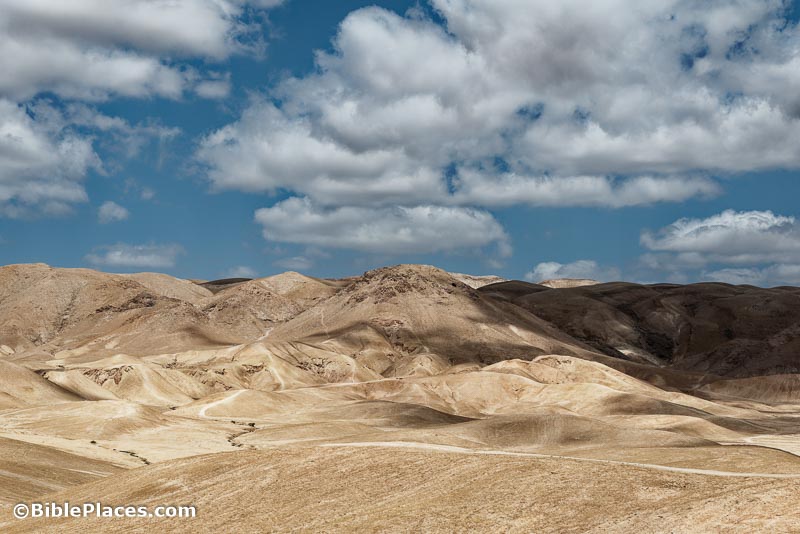
The Times of Israel gives an update on Israel’s decade-long systematic attempt to survey and excavate the caves of the Judean wilderness ahead of looters.

Ruth Schuster writes about a new theory that the Buqeia Valley east of Jerusalem was occupied around the time of King Josiah by quasi-military herders. The article includes some beautiful photos of the area.

Haaretz summarizes a new article that “examines the archaeological and historical evidence for the existence of Jewish gladiators in the first to fourth centuries.”

The latest issue of Biblical Archaeology Review includes articles on Jerusalem’s Millo, Baal, and Constantinople.

Leen Ritmeyer writes about archaeological evidence for Jews in exile in Babylon.

“An ancient Roman statue believed to depict the daughter of the emperor Marcus Aurelius, and valued at $5 million, has been seized by New York officials.”

“A British auctioneer has pleaded guilty to numerous charges relating to the sale of rare ancient coins, including a hoard discovered by Palestinian fishermen.”

The synagogue that housed the Cairo Geniza has been completely renovated.

Chandler Collins has posted part 2 of his historical study of the excavations of the Stepped Stone Structure in Jerusalem.

The Anglo-Israel Archaeological Society has posted some lectures on their new YouTube channel, including:

New release: Excavating the Land of Jesus, by James Riley Strange (Eerdmans, $30). Phillip J. Long has a review here.

HT: Agade, Joseph Lauer, Arne Halbakken, Keith Keyser, Alexander Schick, Alexander Schick

Four Roman swords were discovered in a cave near En Gedi. Three are spatha swords, and all were likely stolen from Roman soldiers by Jewish rebels during the Bar Kochba revolt.

The swords were discovered incidentally while doing multispectral imaging on a 7th-century BC inscription in the cave. The new reading of the inscription may include the word “salt.”

An Israeli teenager discovered an bronze Roman ring at Sussita/Hippos.

i24News visits the “dig for a day” program in the caves of Bet Guvrin.

The German Protestant Institute for Archaeology will celebrate its 125th anniversary with a conference in Jerusalem on October 16-17.

Jordan Ryan is a guest on The Book and the Spade discussing the 2023 excavation season at Tel Shimron.

Abigail Leavitt shares a number of photos from her walk around the Old City of Jerusalem.

The IBEX program in Israel where I taught for some years is featured in the new issue of The Master’s University Magazine.

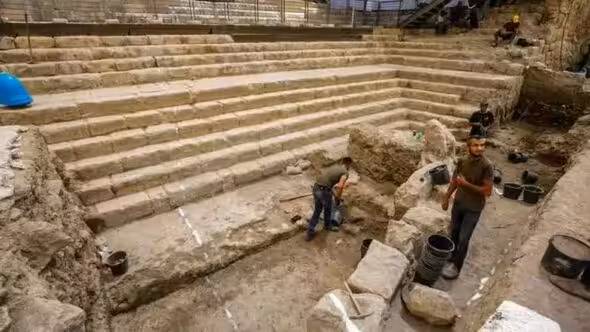
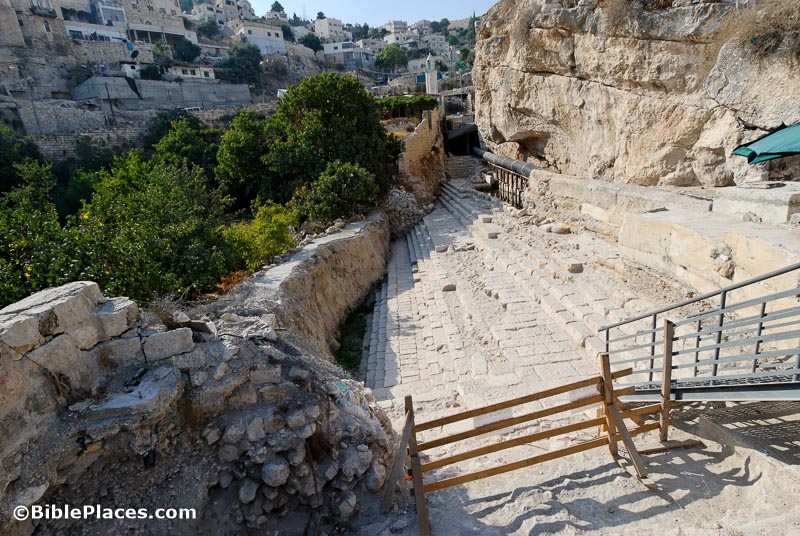
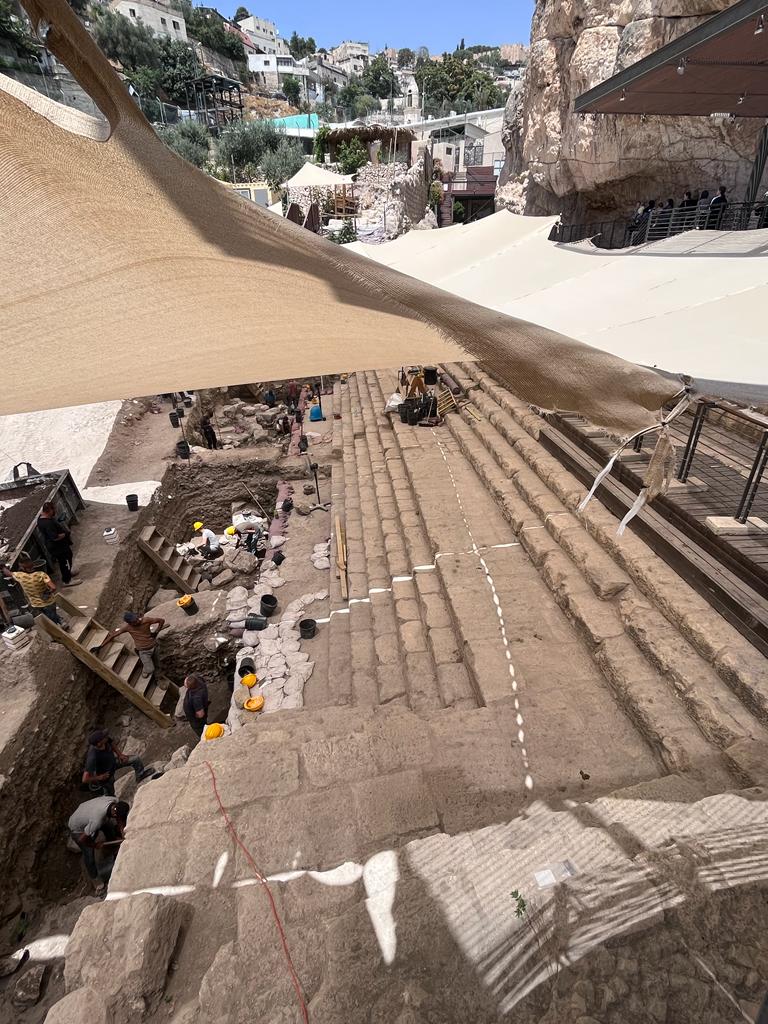
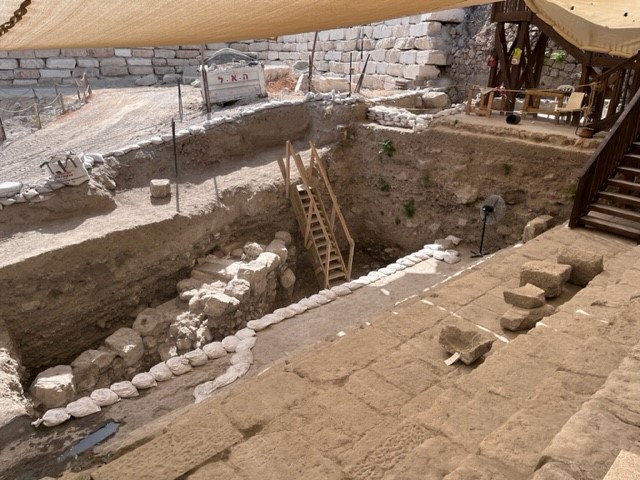
Was a major discovery related to the Pool of Siloam made this week? Some unreliable websites suggest something new was revealed. The regular sources seem to be ignoring it, though The Jerusalem Post has recycled this reporting, with a completely irrelevant photo. When you read beyond the headline, the claim is that eight steps were discovered. A comparison of the published photo with earlier photos suggests that a portion of the lowest flight of steps, previously partially revealed, has now been fully exposed along with a portion of the reservoir and walls within.

Pool of Siloam steps. The wooden boards are located on the second (of three) flight of steps, filling in gaps in preserved stones. Photo published with the news reports this week, courtesy of the City of David Foundation. Comparison with the photos below indicates that this was taken earlier this summer.

Pool of Siloam in 2006, with three flights of stairs. The lowest flight is not fully exposed.

Pool of Siloam last month, showing third flight of steps and on-going excavations in pool below the steps. Some walls appear to be visible within the pool. Photo by John Black.

Pool of Siloam on Wednesday, September 6, showing wall inside the area of the pool. Photo by John Black.

HT: Agade, Joseph Lauer, Arne Halbakken, Alexander Schick, Ted Weis, Gordon Dickson

Two sets of large channels uncovered in the City of David (Givati Parking Lot) and dating to the time of King Joash (ca. 800 BC) have stymied investigators as to their purpose. Barnea Levi Selavan interviewed archaeologist Yiftach Shalev on location (15 min).

About 1,000 feet of the Upper Aqueduct bringing water to Jerusalem was discovered in a neighborhood south of the Old City. This is the longest section of this aqueduct ever discovered.

Bryan Windle highlights the top three reports in biblical archaeology in the month of August.

“The Western Wall Heritage Foundation conducted its biannual examination of the Western Wall stones on Tuesday in preparation for the influx of visitors expected around the Jewish High Holy Days.”

The Albright Institute has just opened applications for fellowships, awards, and internships for the next academic year.

The toilets of Iron Age Jerusalem are the subject of the latest episode of This Week in the Ancient Near East podcast.

Seetheholyland.net has added an article on the Church of St. John the Baptist in the Muristan, the oldest intact church in Jerusalem, built around the year 1070. The article includes photos of this rarely open church.

Mitchell First has written a short biographical article on Josephus.

John Delancey shares a video shot from the top of the Redeemer Lutheran Church in Jerusalem.

Brad Gray looks at the viticulture context behind Jesus’s words in John 15.

Leen Ritmeyer shares several reconstruction drawings and a photo of the Middle Gate of Jerusalem mentioned in Jeremiah 39.

HT: Agade, Arne Halbakken, Alexander Schick, Will Varner, Ted Weis, Explorator

Archaeologists working on Mount Zion have discovered, for the first time ever, destruction levels from the Romans and the Babylonians in the same space. Shimon Gibson believes that the evidence from the Persian period suggests that Nehemiah’s wall included not only the City of David but also the Western Hill.

“Ground-penetrating radar is revealing the secrets of a Roman legion camp near Tel Megiddo, including the ancient camp’s amphitheater for combat training.”

Chris McKinny and Joe Uziel write about “The Millo: Jerusalem’s Lost Monument” in the forthcoming issue of Biblical Archaeology Review. They discuss the subject in a video interview with Nathan Steinmeyer.

Bible Archaeology Report has created a list of the top ten discoveries related to the book of Isaiah.

Jerusalem Seminary has been given a grant to provide discounts on tuition for their fall courses. The grant also enables increased scholarships.

Jordan has a severe water crisis.

A rockslide at the waterfall in Nahal David at En Gedi led to the death of an 8-year-old boy and injuries to eight others. The Yonatan Bar David mentioned in the article is from Yad HaShmonah.

Amnon Ben-Tor, the director of excavations at Hazor since 1990, died on Tuesday at the age of 88.

An expanded edition has just been released of Amnon Ben-Tor’s Hazor: Canaanite Metropolis, Israelite City (Israel Exploration Society, 180₪)

Conference on Sept 11-12 at Ariel University: “Boundaries and Influences in the Archeology of Israel and the Eastern Mediterranean”

Ferrell Jenkins shares photos of carob pods like those that were eaten by the prodigal son.

The Bible Mapper Blog is now the Bible Mapper Atlas, with more than 150 maps freely available. You can find lists organized by historical event and by region here.

HT: Agade, Arne Halbakken, John Black, Alexander Schick, Explorator

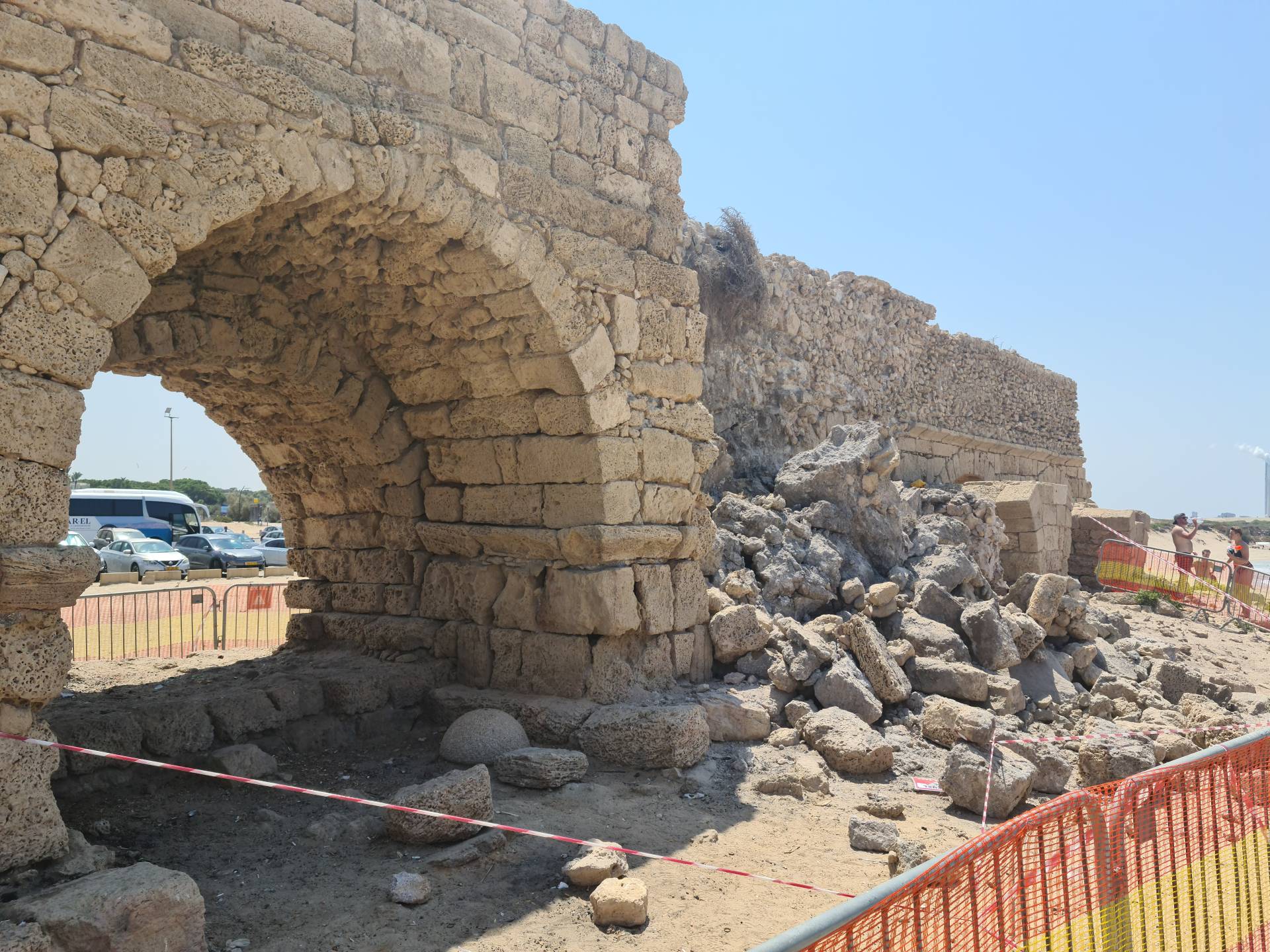
The recently collapsed section of the Roman aqueduct at Caesarea. Photo by Michael Schneider

Excavations conducted during the laying of a water pipe not too far from Lachish revealed the “most ancient gate ever discovered in Israel.” They are dating it to about 300 years earlier than the Early Bronze gate at Tel Arad. The gate has already been backfilled.

Archaeologists excavating Tel Shimron announced the discovery of a massive Middle Bronze monument that was 15 feet tall and covered the entire acropolis. The monument was very well-preserved because soon after its construction it was filled in with gravel.

A beautiful Herodian ceiling panel was discovered in secondary use in the Ophel excavations (YouTube).

One of the arches in Caesarea’s Roman aqueduct collapsed on Friday.

A suspension bridge crossing the Hinnom Valley is now open to pedestrians (YouTube).

Zedekiah’s Cave (aka Solomon’s Quarries) reopened earlier this month, and Zahi Shaked gives a 30-minute tour.

Some Jews and Christians are arguing over the right to pray in the area of a possible tomb of Elisha at Stella Maris on Mount Carmel.

Israeli officials are considering loaning the Megiddo Mosaic, which comes from an early Christian building, to the Museum of the Bible. (Ilan Ben Zion’s AP article is a disappointment.)

WUNC interviews Jodi Magness upon the completion of her 11-year excavation of the Huqoq synagogue.

Aviva and Shmuel Bar-Am write about some of the many ritual baths that have been discovered throughout Israel. The article includes many photos.

Abigail Leavitt recounts various sites she visited this summer in Jerusalem. She has another post about a tour of the Shephelah.

“The Jewish National Fund, KKL-JNF, recently welcomed guests to visit the ancient Jewish synagogue in Ma’on, located in Israel’s southern Negev desert.”

Tour Caesarea virtually with DIVE (Digital Interactive Virtual Experiences) on August 30 ($20).

Joel Kramer goes to Mamre in the latest episode from Expedition Bible.

There are a number of late-summer festivals being held around Israel.

New release: The Changing Landscape of Israeli Archaeology: Between Hegemony and Marginalization, by Hayah Katz (Routledge, $42/$136).

The latest Jerusalem Tracker has been posted, with a roundup of news, publications, and media.

It may be hard to believe, but apparently there are unscrupulous shopkeepers in the Old City of Jerusalem.

HT: Agade, Gordon Dickson, Al Sandalow, Will Varner, Arne Halbakken, Roger Schmidgall, Keith Keyser, Wayne Stiles, Explorator

With the Israeli military gone, there are no obstacles to visiting Hyrcania in the Judean wilderness.

“Experts from Rome have wrapped up weeks of careful archaeological work in one of the most sensitive parts of the Church of the Holy Sepulchre,” the area in front of the Edicule.

A 1,500-year-old “magic mirror” from the Byzantine period was discovered by a 17-year-old Israeli taking part in a Young Leaders’ Survival Course at the Usha archaeological site in northern Israel.”

“A rare 2,500-year-old marble disc designed to protect ancient ships and ward off the evil eye was discovered by a lifeguard” near Palmachim Beach.

“Archaeologists excavating the site of Legio—the legionary camp of Rome’s Sixth Legion located at the foot of Tel Megiddo in northern Israel—have unearthed the remains of a small amphitheater used not for performances but rather for brutal combat training exercises.”

Aren Maeir mentions four sites in the Jezreel Valley that are being excavated this summer. Of Tel Shimron, he writes that they have discovered “some of the nicest and most important finds ever found in Israel!”

A rare half-shekel coin dug up in the Ein Gedi nature reserve was inscribed with the words ‘The Holy Jerusalem’ in Hebrew.”

Scott Stripling discusses the latest results from the excavations at Shiloh on CBN News. Or listen to the two recent episodes of The Bible and the Spade.

UNESCO’s World Heritage Committee will be voting soon on whether to include Jericho on its list.

Aviv and Shmuel Bar-Am have written an informative article about the best viewpoints in Jerusalem (though I think they left one of the best out).

A fox was spotted along the wall of Jerusalem’s Temple Mount.

Jonathan Klawans recommends a visit to the Benedictine Monastery of the Resurrection in the village of Abu Ghosh.

“The director of the Israel Museum, Denis Weil, has resigned just a year and a half after taking up the position.”

New release: The Two Houses of Israel: State Formation and the Origins of Pan-Israelite Identity, by Omer Sergi (SBL Press, $55)

Walking The Text’s recommended resource of the month is Experiencing the Land of the Book, by Charles H. Dyer.

Israeli authorities have taken actions to protect Tel Aroma in Area B from destruction by vandals.

Guiding tours of the Dead Sea on his boat, Noam Bedein is making new discoveries, including a bubbling brook and new rock formations.

HT: Agade, Arne Halbakken, Explorator

The newest national park in Israel is Hippos. Now this Roman-Byzantine site in the Decapolis boasts paved paths, clean restrooms, and of course, a shop.