“Israeli archaeologists have been left scratching their heads over the discovery of a large tomb containing dozens of skeletons, many of them women, who were buried more than 2,500 years ago in the midst of the Negev desert, at an ancient crossroad far from any known settlements at the time.”

According to Yosef Garfinkel, five sites in Judah indicate that Judah was expanding into the Shephelah already in the 10th century. The underlying journal article is here.

Chris McKinny provides an overview of all of the excavation areas at Tel Burna after their first week of their 13th season.

The Greek Reporter has a well-illustrated story on the Bird Mosaic and the sigma-shaped glass-gold table found in Caesarea.

Martine van den Berg reports on the first-ever “Friends of ASOR Tour to Israel and the Palestinian Territories.” They had quite a few experiences that the average tourist doesn’t get.

After a three-year renovation, Solomon’s Quarries/Zedekiah’s Cave has reopened to visitors. It now includes a multimedia show. The article includes a video report by i24 News.

Ron Simkins discusses “Creation and Ecology in Ancient Israel” on the Biblical World podcast.

Lisa LaGeorge gives a good answer to the question, “What difference does it make if I go to Israel?”

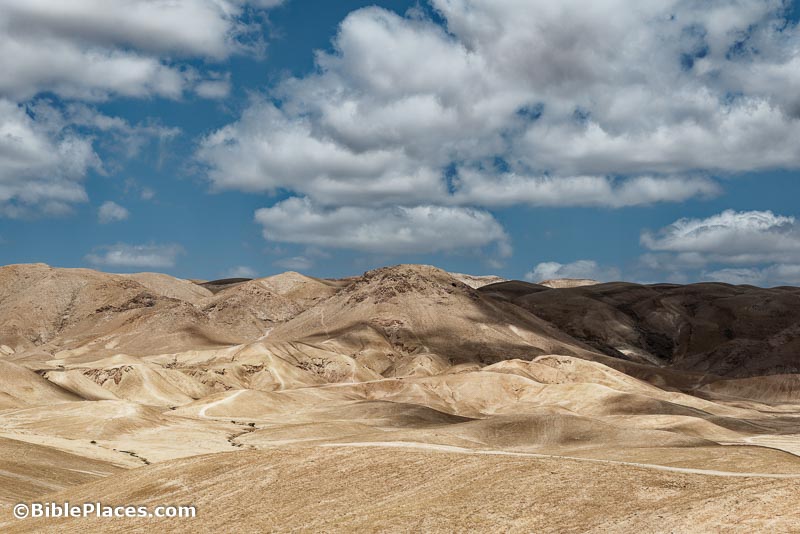
Ferrell Jenkins shares a photo of a beautiful view that he took in the Judean hill country between Bethlehem and Hebron.

Zoom lecture on July 12: “The King is Dead, Long Live the King: Murder, Poetry, and Scribal Culture in Ancient Egypt,” by Margaret Geoga ($7)

The NY Times reports on Christian tourism to Saudi Arabia, though the reporting seems limited to a single tour group.

A large Roman-period mosaic discovered near Homs, Syria, depicts Greek soldiers in the Trojan War as well as the god Neptune and forty of his mistresses.

A conference will be held at Oxford on July 5 entitled “The Aramaeans B.C.: History, Literature, and Archaeology”

The oldest completely hand-sewn boat in the Mediterranean dates to the Iron Age I and is remarkably well-preserved.

A fresco newly discovered at Pompeii looks like a pizza but is more likely a focaccia covered with fruit.

Bryan Windle reports on the top three stories in biblical archaeology for the month of June.

What do real archaeologists think of Indiana Jones?

HT: Agade, Arne Halbakken, Ted Weis
A new study claims that Tel Shikmona near Haifa was home to a large Israelite purple dye factory that supplied the prestigious color to Solomon’s temple in Jerusalem from about 850 to 750 BC.

Steve Notley has proposed an explanation for how the New Testament village of Bethsaida came to be known in Arabic as el-Araj, which means “the lame man.”

Abigail Leavitt reports on the final week of excavating at Shiloh, with mention of the discovery of a scarab and a bulla.

Ronit Vered reports on the new exhibition at the Israel Museum entitled “The Feast.”

Joel Kramer has just released a video about the Mesha Stele (Moabite Stone).

The latest episode of Digging for Truth focuses on King Hazael of Aram.

In the latest Biblical World podcast episode, Kyle Keimer discusses Hezekiah’s preparations for the Assyrian invasion, the subject of his dissertation.

The latest edition of Tel Aviv has been published, and a number of the articles are open-access.

Accordance Bible Software has a number of photo collections on sale as well as works from Carta.

Ferrell Jenkins posts some photos of the Dead Sea from his recent trip (also here).

Bryan Windle’s latest archaeological biography is on Aretas IV, the only Nabatean king mentioned in the Bible.

HT: Agade, Ted Weis

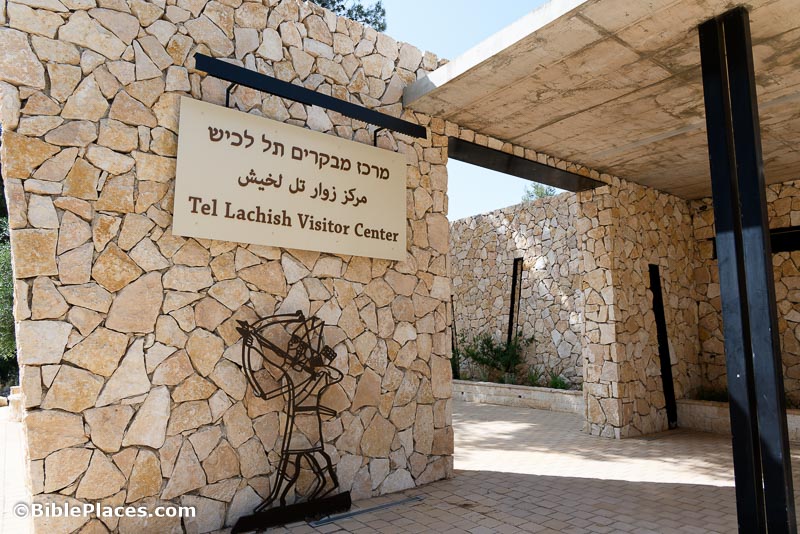
Soon visitors to Tel Lachish will have public restrooms to use. There may well also be some displays of artifacts, replicas, or reconstructions.

“A woman walking along the Palmahim Beach discovered an over 3,000-year-old figurine of the Egyptian goddess Hathor floating in the water.”

A group of first-graders discovered an Egyptian scarab on a field trip to Azekah.

The first-ever excavations of the Hasmonean fortress at Hyrcania recently began.

Abigail Leavitt is reporting on her experiences in the excavations of Tel Shiloh, most recently with Week 3. Tim Lopez gives his perspective in Spanish.

“Thousands who were illegally holding antiquities in their homes returned the items during a two-week campaign this month, the Israel Antiquities Authority and Ministry of Heritage reported.” One of the more impressive artifacts returned is a small anchor from the Roman period.

Writing for Christianity Today, Gordon Govier explains how archaeological discoveries have strengthened the case for the historicity of David.

Chandler Collins reflects on Nadav Na’aman’s recent proposal to place the earliest city of Jerusalem on what is today’s Temple Mount.

The “Road of the Patriarchs” is the subject of a new TBN documentary.

Bryan Windle is on Digging for Truth discussing Hoshea, the last king of the northern kingdom of Israel.

Zoom lecture on June 29: “The Jewish Character of Jerusalem in the Early Roman (Second Temple) Period as Attested by Archaeological Records,” by Ronny Reich.

Chandler Collins is inviting participation in his online “Biblical Jerusalem and Its Exploration” course this fall as well as his Jerusalem study tour offered in March by the Biblical Archaeological Society in collaboration with Jerusalem University College.

Other JUC courses offered online this fall include:

  • Archaeology of Religions in the Bible, by Chris McKinny and Kyle Keimer
  • Cultural Backgrounds of the Bible, by Oliver Hersey
  • The Life and Times of Paul, by Chris Vlachos

James Riley Strange reflects on the life of Dennis E. Groh, who died in April.

HT: Agade, Explorator, BibleX

A view of Hyrcania taken a few weeks ago, from the east

Gabriel Barkay was recently interviewed by ICEJ. Among other things, he says that he recently finished a book about material culture in the Song of Songs.

Gordon Franz is the latest subject in the Discussions with the Diggers series at Bible Archaeology Report. He relates the story of the discovery of the Ketef Hinnom silver amulets.

Chandler Collins has published the third issue of his “Jerusalem Tracker” newsletter, providing a list of every new publication related to Jerusalem’s history.

Bryan Windle describes the top three reports in biblical archaeology in the month of May.

The first batch of commercially available ancient yeast, discovered at Goliath’s hometown of Gath, will begin shipping later this year.

Chemical analysis of Middle Bronze grave goods at Megiddo reveals the extensive use of wine in funerary rituals.

Arleta Kowalewska and Craig A. Harvey explain what we know about Roman bathhouses in the southern Levant.

“Dor Zlekha Levy’s One Tongue audiovisual project revives Proto-Semitic, the ancestral language of Hebrew and Arabic, in song.”

Hybrid lecture on June 22 at the Albright: “The 2022 Season of the Megiddo Expedition,” by Matthew J. Adams

Hybrid lecture on July 13 at the Albright: “Back to Tell Qasile: Current Research of Old Excavations,” by Amihai Mazar

Arieh O’Sullivan tells the story of his family’s relationship with Samson’s tomb and the tomb’s transformation in recent years.

The latest episode from Walking The Text: “Jesus in Galilee, Part 3: Religious Jews of the (Evangelical) Triangle.”

“Lessons from the Land: The Kings” is the latest series produced by Appian Media. The 13 episodes are about 5 minutes each.

HT: Agade, Joseph Lauer, Arne Halbakken, Ted Weis, Stephanie Durruty, Wayne Stiles, Alexander Schick, Explorator

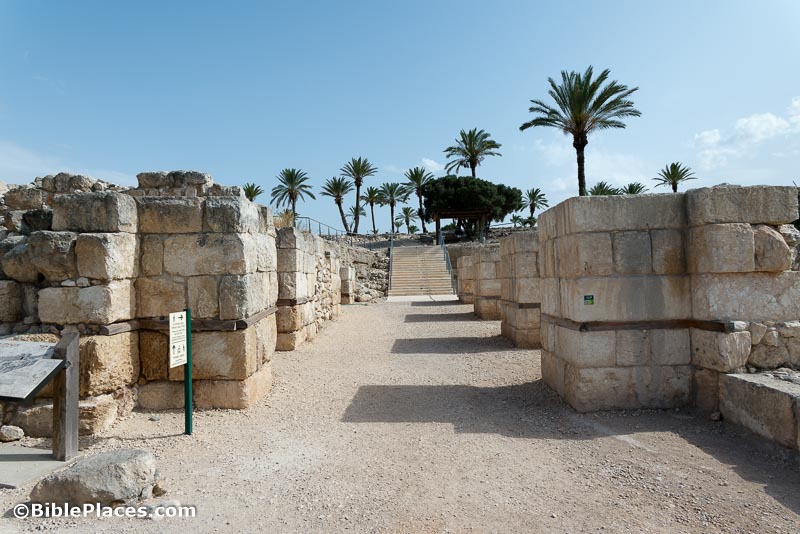
Nearly a century after the Americans dismantled half of the Solomonic gate, the Israelis have restored it. Now visitors can walk through the six-chambered gate as they can at Hazor and Gezer.

The Tower of David Museum in Jerusalem reopened on June 1 after a $50 million renovation. The Times of Israel explains what’s new.

The Israeli government has approved spending more than $100 million in the next five years on various projects in Jerusalem, including on excavations in the Western Wall Tunnels and the City of David National Park.

To judge from this recent promo video, Israel’s Ministry of Tourism is seeking a different kind of tourist. This video also seems to embody the adage that advertising is another form of lying.

The IAA discovered three ossuaries in a Roman-period burial cave near Kafr Kanna (Cana) that had recently been looted.

A traffic stop near Ramallah led to the discovery of dozens of 10th Roman Legion floor tiles that had recently been illegally excavated.

Israeli police arrested a suspect in possession of dozens of coins illegally excavated in Jerusalem, including a rare coin from the reign of Antigonus Mattathias II.

A three-week operation led to the capture of thieves illegally excavating a Roman-Byzantine site near Nazareth.

The latest volume of the Journal of the Ancient Near Eastern Society includes articles on 1 Samuel 5, the Gezer Calendar, the altar at Tel Dothan, and the story of Dinah. Articles are open-access.

Preprints for a festschrift for Tallay Ornan are available on Academia.

New release: Pushing Sacred Boundaries in Early Judaism and the Ancient Mediterranean: Essays in Honor of Jodi Magness (Brill, $211)

New release: History of Ancient Israel, by Christian Frevel (SBL, $75)

On pre-order sale at Logos: “A Virtual Walk Through the Land of the Bible,” by Charlie Trimm

Logos has just released The New Encyclopedia Of Archaeological Excavations In The Holy Land.

Logos has a sale on The New Moody Atlas of the Bible this month ($10).

Rafael Frankel, retired archaeologist from the University of Haifa, died last week. Some of his publications can be seen here.

Weston Fields, longtime managing director of the Dead Sea Scrolls Foundation, died on May 25. A list of his publications can be seen here.

HT: Agade, Joseph Lauer, Arne Halbakken, Ted Weis, Alexander Schick, Explorator

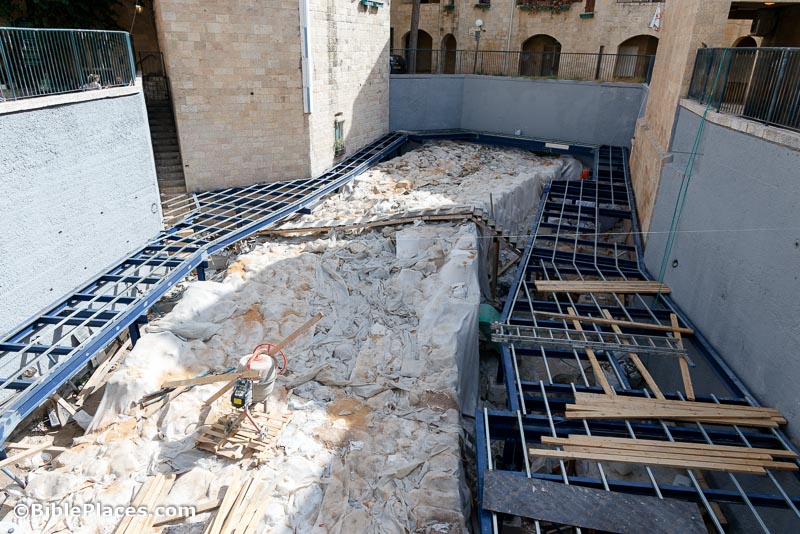
The viewing area for the Broad Wall in Jerusalem will be transformed once they complete construction of these new walkways. Amazing that it took 50 years to get around to this.

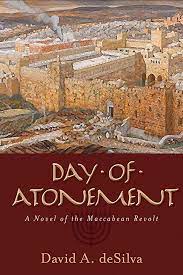
If you asked me for a list of historical fiction related to the biblical world that needed to be written, I’m not sure that the Maccabean Revolt would have been in the top 5. What I discovered, however, in reading David A. deSilva’s Day of Atonement: A Novel of the Maccabean Revolt, is that it really should be near the top. The book came out in 2015 but I only learned of it recently, and I wanted to mention it here in case you missed it as well.

To be sure, this is not really a book about the “revolt” per se. That is, it’s not a war story set in the midst of the battles between the Jews and the Seleucids. Instead, the book is about the people and events that led up to the great conflict. And this is perfect for what I needed.

Names that I knew on paper became living and breathing people, and you really feel like you make acquaintance with the high priests Honiah (Onias III), Jason, and Menelaus. Antiochus Epiphanes, one of the little horns of Daniel’s prophecies, is more human than I had considered. Most interesting are the characters whom deSilva has created who agonize over, or embrace, the increasing Hellenization of Jerusalem.

I loved being transported into Jerusalem in the year 171 BC and watching the construction of the gymnasium while overhearing the Jewish residents debate how far was too far. The uprising didn’t occur in a vacuum, and deSilva reveals various political, social, and religious threads that led a bunch of farmers and craftsmen to take up arms to preserve the worship of the true God.

deSilva is eminently qualified to write this book, given his lifetime of scholarship in the world of the Second Temple and his works on the New Testament and the Apocrypha. He recently wrote A Week in the Life of Ephesus (two thumbs up!), and I hope that he will continue writing historical fiction.

There was an interpretation or two that I would have written differently, but that doesn’t diminish my enthusiasm for the book and my appreciation for the author’s diligent labors. I am happy to give Day of Atonement my highest recommendation, and I commend it to all who love to learn history through excellent fiction written by a careful scholar of the era.

You can see some endorsements at Amazon, and Mark Strauss has reviewed the book for Themelios (but he gives a lot away, so you might skip it if you prefer surprise).

I would include this book in my top 5 works of historical fiction related to the biblical world, along with: