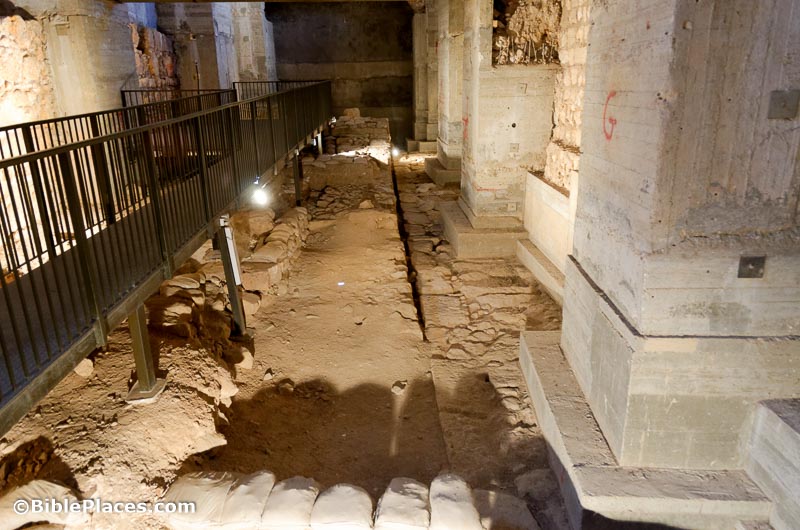
If you don’t pay attention, you would think they’re finding all kinds of first-century streets in Jerusalem. But it’s the same one, again and again. The story this week, based on a journal article in Tel Aviv, is that the Siloam Street/Stepped Street/Pilgrim’s Path was built by Pilate. The date is based on the most recent coin, from AD 30/31, found in the fill under the pavement. Leen Ritmeyer rejects the study, saying that the road was actually built by Herod Agrippa II. That last link has a nice map that shows the location of the Herodian/Pilatian/Agrippian Road.

A three-year salvage excavation near Beth Shemesh uncovered a Byzantine Church with an inscription mentioning a “glorious martyr.” The mosaics are quite well-preserved, and there is an intact underground burial chamber. Some of the artifacts are featured in a new exhibition at the Bible Lands Museum in Jerusalem.

Excavators have found a second monumental gate at Hacilar.

These reports from Beirut are from last year, but I did not see them then:

Rachel Bernstein provides an update on the Temple Mount Sifting Project since its recent reboot and relocation.

Israel Finkelstein responds to the “discovery that changes everything we know about biblical Israel.”

Artificial intelligence is better at deciphering damaged ancient Greek inscriptions than humans are.

The ArcGIS Blog interviews Tom Levy and one of his students about their use of GIS and 3D modeling in their work in the copper mines of Faynan.

Officials in Thessaloniki are arguing about what to do with a “priceless” 6th century AD Byzantine site found during work on a subway tunnel.

Spanish experts have replicated for Iraq two Assyrian lamassu statues previously destroyed by ISIS.

Dirk Obbink denies the charges against him of selling items owned by the Egyptian Exploration Society.

Two scholarships are available for students interested in participating in February’s excavation of Timna’s copper mines.

An international conference entitled “Philistines! Rehabilitating a Biblical Foe” will be held on Nov 17 at Yeshiva University Museum. Registration is required.

‘Atiqot 96 (2019) is now online, with reports on excavations at Rosh Pinna, Mazor, and el-Qubeibe.

Biblical Israel Ministries and Tours has released the 16th video in their series, “It Happened Here.” This one features life lessons from Beth Shean.

Jim Hastings shows how he built a model of a gate of Ezekiel’s temple.

Ferrell Jenkins shares photos from his 1970 tour of Iraq.

Aron Tal reflects on the remarkable return of the ibex. There was a day, apparently, when there were no ibex to be found at En Gedi.

HT: Gordon Franz, Mark Hoffman, Agade, Ted Weis, Joseph Lauer, A.D. Riddle, Steven Anderson
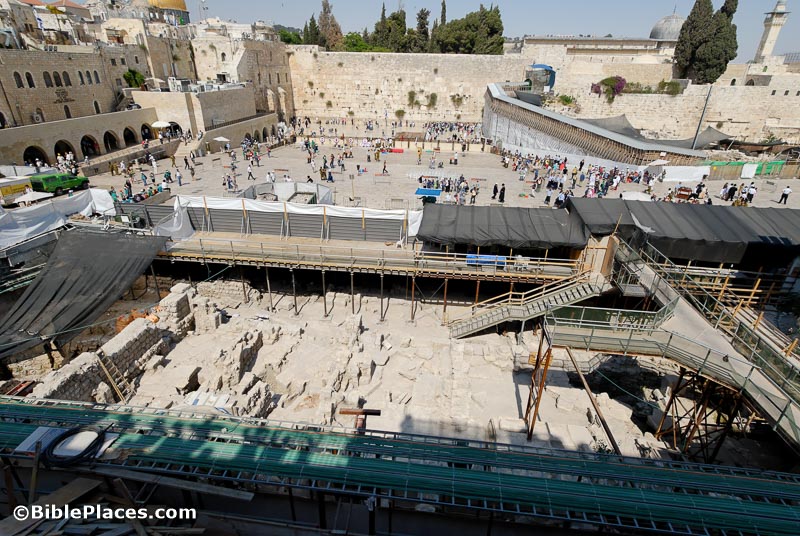
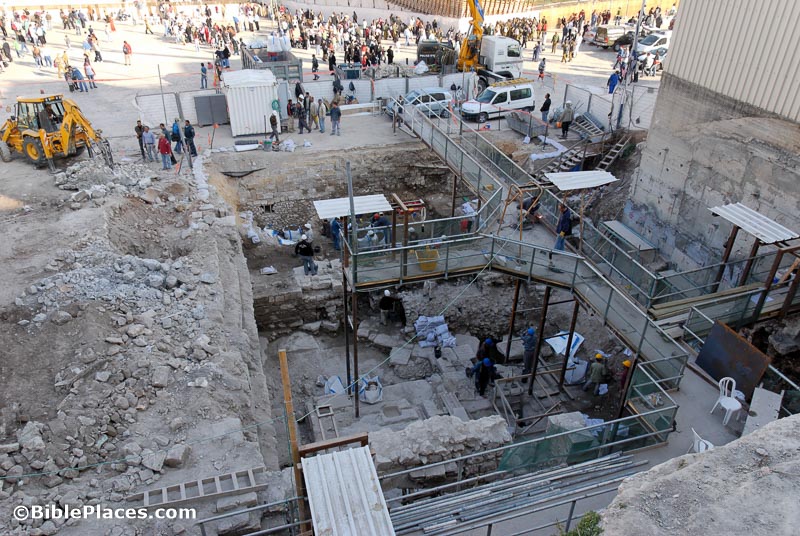
For many years there was a big pit at the back of the Western Wall prayer plaza. If you climbed up the hill, you could see over the barrier walls and watch the hole get deeper. But it was difficult to know what they were finding. One natural guess, given the position of the pit, was that they would find the eastern branch of the Cardo. And they did. They continued digging and discovered a house from the Old Testament period. Their findings are given in a chapter of Ancient Jerusalem Revealed entitled “A First Temple Period Building and the Roman Eastern Cardo in the Western Wall Plaza.” The authors are the archaeologists Shlomit Weksler-Bdolah and Alexander Onn.

Western Wall plaza excavations, 2008

Below all of the human remains, the archaeologists found bedrock that had been quarried in the 7th century BC. On top of that, they found a portion of a “four-room house,” also dating to the 7th century. In the Bible, the two most significant kings ruling over Jerusalem in the 7th century were Manasseh and Josiah. So this house was likely built during the reign of one of them.

They uncovered a portion of the house that measures 27 x 27 feet (8.5 x 8.5m). The walls were preserved to a height of—get this—16 feet (5 m)! That is very unusual for something this old, with all of the later bulldozers to come through (I’m thinking here of Nebuchadnezzar, the Romans, the Persians, even Herod). The structure was well-built, with “uniform, homogeneous courses of slightly trimmed stones.” The layout of the house had three parallel rooms, characteristic of the “four-room house.” The fourth room, running along the back, was beyond the area of the excavation.

The destruction of the building is interesting. The archaeologists determined that the building was destroyed quickly, either by an earthquake or more likely by the Babylonians. Yet the building lacked complete vessels, indicating that the house was abandoned before the destruction. One theory the excavators suggest is that the inhabitants may have been deported to Babylon in the days of King Jehoiachin (2 Kgs 24:12-16).

Western Wall excavations, 2006

What do you think they found in the house? If you’re an archaeology fan, you might just pause here and think about what you would expect to find in a 7th-century house in Jerusalem. You should get some of your guesses right, because the findings are not surprising.

1) Pottery characteristic of the 7th and early 6th centuries.

2) Lots of figurines. About 450 fragments of females, male riders, and animals. This almost sounds like a toy store. A particularly interesting one is of a lion with a small animal in its mouth. This may be a lion having lunch or a lioness carrying its cub.

3) Personal seals with Hebrew names. One of these seals has a cool depiction of an archer. (I’d like a seal like that, please.) Inscribed names include: Hagav, Netanyahu, Yadayahu, and Nawa or Nera.
The archaeologists consider the seals of most value in determining who lived in this house. They believe that these seals “suggest that its inhabitants belonged to the upper class and perhaps served as part of the administrative apparatus in Jerusalem.”

I suppose that we can imagine that the people who lived here were well-connected in Jerusalem, and it’s quite reasonable to think that they may well have been acquainted with Jerusalem inhabitants we know from the Bible, such as Jeremiah, Ezekiel, Zephaniah, and Josiah.

The article continues with what they found from later periods—primarily the Eastern Cardo. I hope to to read and summarize that here next week.

Wayne Stiles just walked the last five miles of the Appian Way into Rome, and he shares his experiences along with a video. Only one section was a hair-raising experience!

A preliminary report from the Swedish excavations at Hala Sultan Tekke in Cyprus is now online.

Israeli security inspectors discovered 69 coins from the time of Alexander the Great being smuggled from Gaza into Israel. But one expert suggests the coins are fake.

The Summer Session program of the American School of Classical Studies at Athens is now accepting applications. Scholarships are available.

Why do newspapers write dishonest headlines like this? “A Chance Discovery Changes Everything We Know About Biblical Israel.” Shame on Haaretz.

The lectures are in Hebrew, but you may find the topic list to be of interest for this year’s “New Discoveries and Insights” conference at Tel Aviv University.

The schedule is now online for next week’s Annual Conference, “New Studies in the Archaeology of Jerusalem and its Region.”

The final list of speakers and their topics for the 22nd Annual Bible and Archaeology Fest is now posted.

Yahoo Groups is shutting down. This will affect lists such as Explorator and ANE-2.

The En-Gedi Resource Center website has a new home, with new organization and a “Hebraic Studies” search bar to make it easier to find what you’re looking for.

Carl Rasmussen shares a number of photos of Göbekli Tepe.

John DeLancey is blogging each day on his tour of Greece, Rome, and Pompeii, now wrapping it up on Day 13.

Ferrell Jenkins explains why a photo he took of the cedars of Lebanon in 2002 is one of his favorites.

Bryan Windle has put together another great archaeological biography, this one on King Nebuchadnezzar.

HT: Ted Weis, Keith Keyser, Agade

Amanda Borschel-Dan of The Times of Israel provides a valuable summary of the Siloam Street/Stepped Street/Pilgrim’s Path that has been in the news for the last decade or so. One particular point of interest: the street will not be fully opened to the public for a few more years, because it is still being excavated 7am to 10pm every day.

“Archaeologists have uncovered a well-preserved fresco of two fighting gladiators in the ancient Roman city of Pompeii.” Very nice.

“Scientists report that they may have found the earliest written record of a solar storm in ancient Assyrian tablets.”

Egypt announced the discovery of 20 well-preserved wooden coffins in Luxor.

“Archeologists working in Luxor’s “Valley of the Monkeys” have discovered an “ancient ‘industrial area’ once used to produce decorative items, furniture and pottery for royal tombs.”

The Egyptian Exploration Society has formally accused Oxford professor Dirk Obbink of stealing and selling papyri fragments from the Oxyrhynchus collection.

With Saudi Arabia opening up for tourism, tour agencies are quick to create tours to scam evangelicals.

The Arab World Institute in Paris is presenting an exhibition highlighting the pre-Islamic history of the Al ‘Ula region in Northwest Saudi Arabia.

Tim Frank’s “Visualizing Food Storage in Ancient Houses” article includes a number of video visualizations from sites like Izbet Sartah, Tel Batash, and Beersheba. These could be quite useful.

A new record has been set in the “world’s oldest marathon,” a race from Aphek to Shiloh.

Wildlife inspectors spotted ten bottlenose dolphins off the coast of Israel and have posted footage.

Only 30-40 acacia gazelles survive in Israel, and rangers recently discovered a fawn had been born.

“Cruise passengers held their breath as a 22.5 meter wide cruise liner became the largest boat to pass through Greece’s narrow Corinth Canal.” There are some nice pictures.

HT: Ted Weis, Keith Keyser, Agade, David Padfield

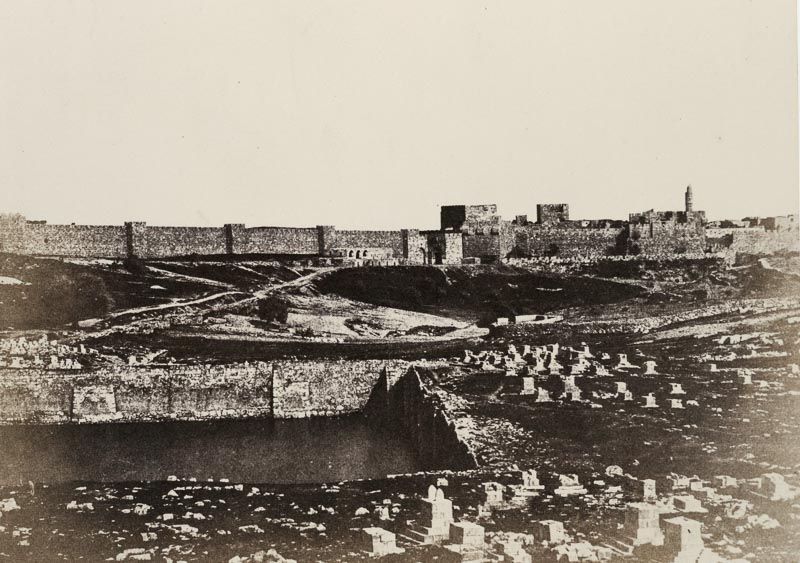
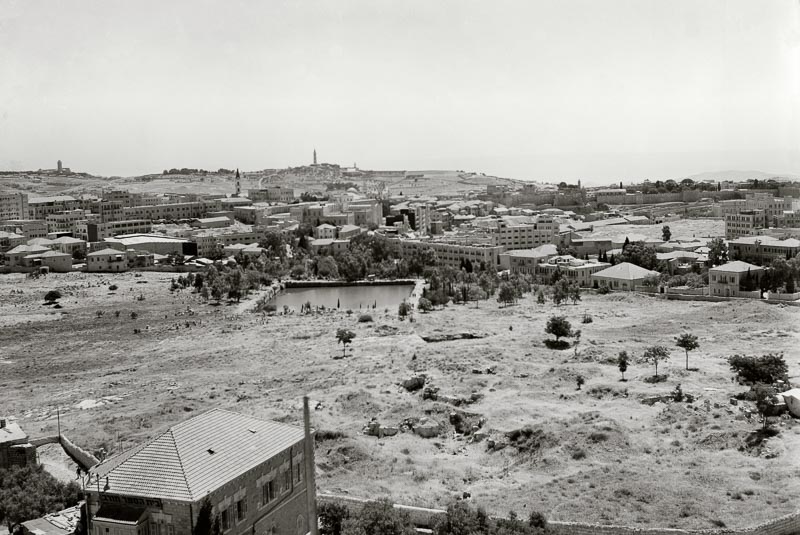
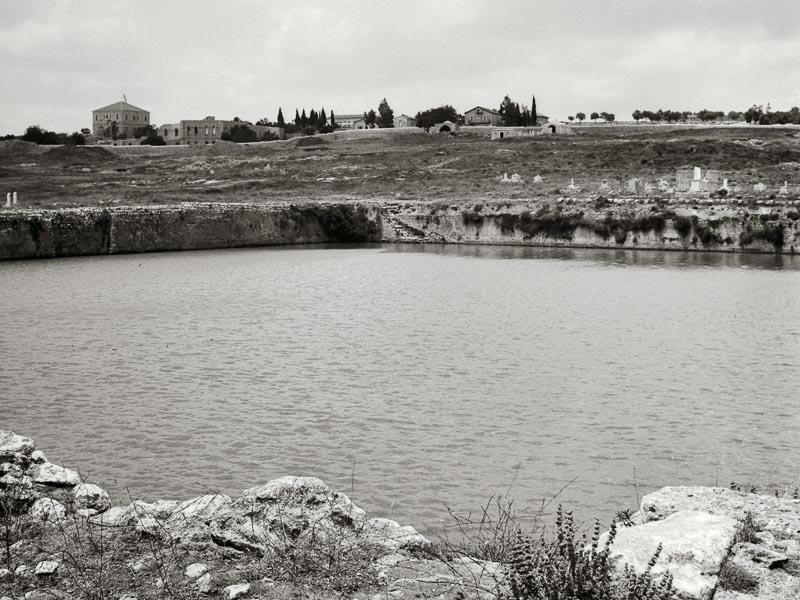
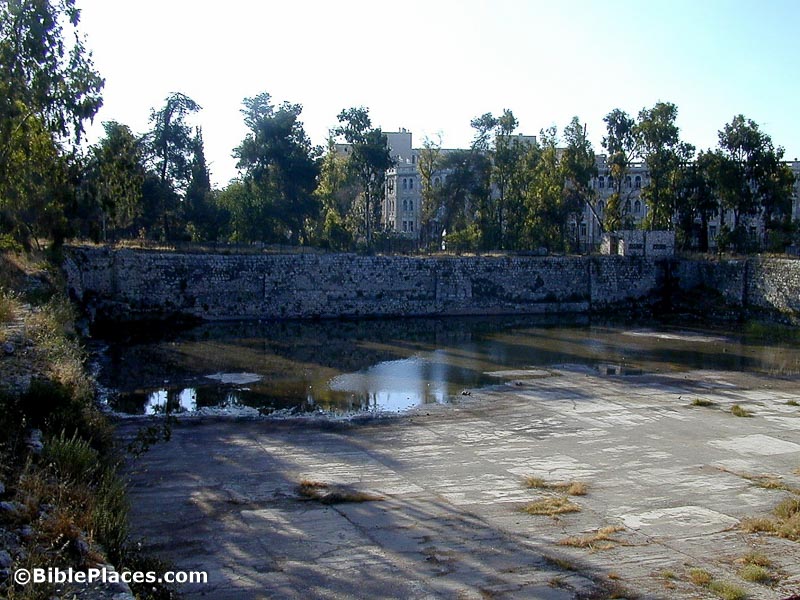
Excavations by David Amit in the area where the Museum of Tolerance is being built in West Jerusalem have revealed that the Mamilla Pool dates to the time of King Herod. While there are a number of pools in the Jerusalem area that date to the time of Herod, no one has ever been sure about the large one that’s rather tucked away down the street from the King David Hotel. Amit reports the results of his excavation in Ancient Jerusalem Revealed.

Amit comes to this conclusion from his excavations of an area slightly uphill from the pool where he uncovered a portion of the Upper Aqueduct system from the Second Temple period. By determining that that the pool is part of this aqueduct system, it is clear that the Mamilla Pool dates to the Second Temple period.

In addition, the excavations revealed an earlier water system from approximately the time of Hezekiah. A massive dam was constructed to divert run-off into Jerusalem, possibly into the Mishneh Quarter. This forerunner to the Upper Aqueduct system may have been constructed to provide water to the new inhabitants on Jerusalem’s Western Hill. Next to the dam, a contemporary Iron Age building may have served as an administrative building, possibly for supervising and maintaining the system. Amit notes the large number of royal seal impressions found in the area may support this theory.

It does seem that wherever one digs in Jerusalem, or in its vicinity, one finds something of interest. This rather modest dig adds significant contributions to our understanding of the water systems of Jerusalem in both the Old and New Testament eras.

Mamilla Pool, circa 1860. You don’t realize how close it is to the Old City until you move the buildings out of the way.

Mamilla Pool, circa 1910, with some buildings in the way.

Mamilla Pool, filled with water, early 1900s.

Mamilla Pool, in more recent days.

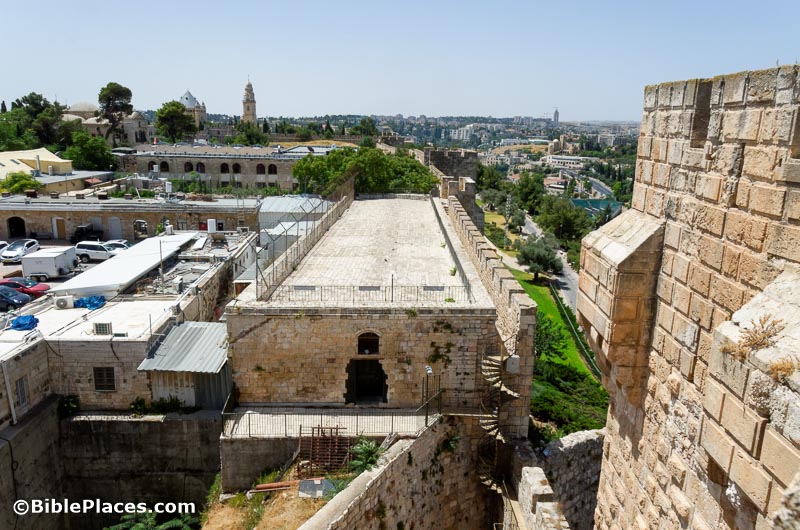
There is an Israeli police station today just inside Jaffa Gate to the right. The Israelis took it over from the Jordanians who used it for the same purpose. The Jordanians inherited it from the British Mandate authorities. One of the buildings of this complex is known as the Kishle. The Kishle served as the prison during British Mandate times. Before the British, the building served the Ottoman police force. And before them, this was the location of the Roman legion charged with keeping the peace in the centuries following the Jewish Revolt. And below that archaeologists have discovered foundations of King Herod’s palace.

There’s clearly a pattern here, and it’s likely related to the geography. This area is the high ground on the Western Hill, and it provides a commanding position of the surrounding area. Unfortunately all of this construction has made uncovering earlier remains difficult. In fact, in the conclusion of the article being summarized here, the archaeologist soberly notes that all that left of Herod’s great palace are scattered remnants of its podium.

Kishle building from the north

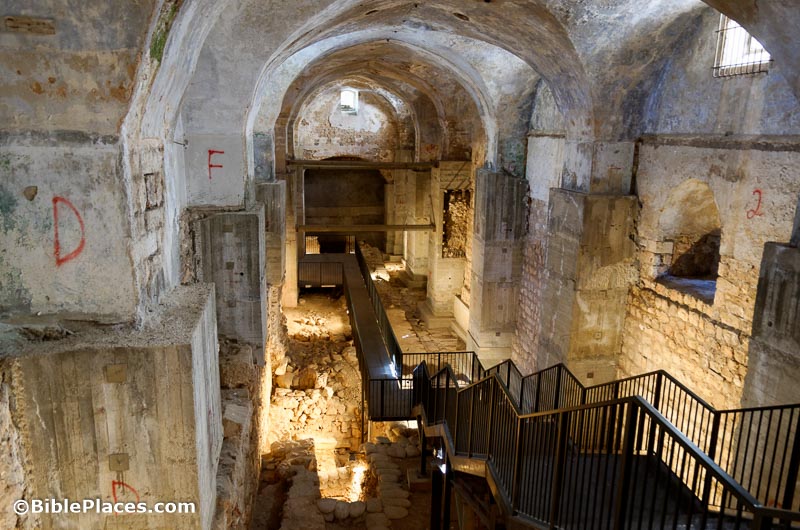
Amit Re’em excavated the Kishle in 2000 and 2001, and his report in Ancient Jerusalem Revealed provides a summary of his discoveries. The article is succinct and well-illustrated, moving from the earlier periods to the later ones. My focus here will be the same as that named in the title of the article, “First and Second Temple Period Fortifications and Herod’s Palace in the Jerusalem Compound.”

Kishle interior

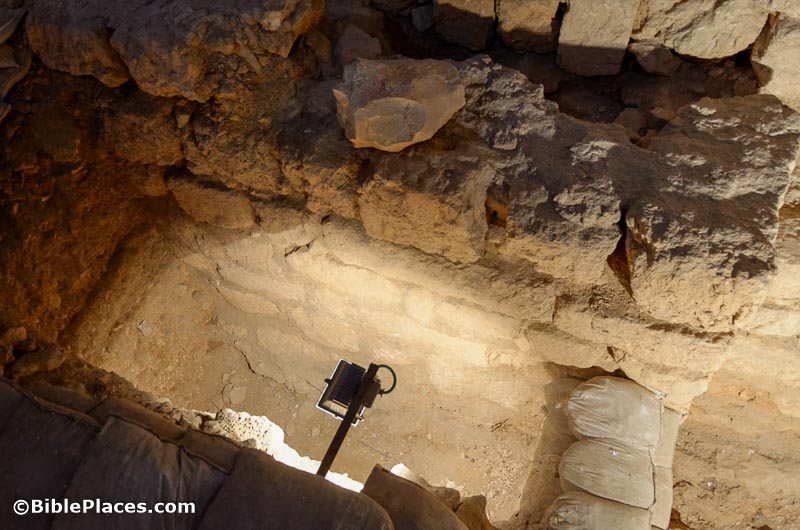
What gets me most excited about this excavation is not the foundations of Herod’s palace but a large section of wall constructed by Hezekiah. If you have studied Jerusalem’s history, you know of the “Broad Wall,” a 25-foot-wide fortification located today in the middle of the Jewish Quarter. What Re’em revealed is more of this same wall, but on the western side of the Western Hill. This is valuable because this is now only the second portion of this wall discovered to date. (This point is a useful illustration of how relatively little is either preserved or accessible in Jerusalem today.)

A length of about 50 feet was exposed, preserved to a height of 8 to 9 feet. That’s not as big as the “Broad Wall” portion, but it’s quite substantial. The construction was also impressive, as the wall was made of “large, well-trimmed stones (90×35 cm.) laid in header/stretcher fashion in the best tradition of First Temple period fortification construction.”

City wall from time of King Hezekiah

But then Re’em goes a step further, claiming that the common view that Jerusalem’s Western Hill was quickly populated with exiles from Samaria is wrong. I think it’s best to hear his claim in his own words:

The new finds from the Kishle contradict [previous] researchers’ conclusion that Jerusalem, limited to the area [of] the City of David and the Temple Mount, rapidly developed to occupy the Western Hill as a result of a mass influx of refugees to Judah and Jerusalem following the Assyrian destruction of the northern Kingdom of Israel at the end of the 8th century BCE. The settlement process on the Western Hill appears to have been gradual, beginning during the first half of the 8th century BCE.

Unfortunately he moves straight on to the next subject without giving a scrap of evidence for his conclusion. I would say that there is evidence in the Bible, usually ignored, that indicates that Jerusalem’s Western Hill was not only settled earlier in the 8th century, but it was also fortified! I think I’ll follow Re’em’s example by throwing that out there and then just moving on.

The Kishle excavations also revealed some of the “First Wall,” built by the Hasmoneans in the 2nd century. Re’em uncovered remains of this wall that were 16 feet wide and exposed for a length of 75 feet. It may be noted that all of these excavations are constrained by the walls of the elongated structure of the Kishle.

From Herod’s palace we have some walls, and the article gives the dimensions, the most interesting of which is one that was preserved to a height of 22 feet. The discussion here is not much more than a page long, and the bottom line is that when you combine results from this dig with others in the area, it is clear that Herod’s palace was massive in size, covering the area of the Citadel, the Kishle, the Armenian Garden, and most of today’s Armenian Quarter.

Foundation wall of Herod’s palace

The final section of this article surveys discoveries from later periods, including a Late Roman channel, medieval dyeing vats, a wall that is probably Ayyubid, and graffiti inscribed by prisoners held by the British Mandate authorities.