The Museum of Stone Tools is a newly opened virtual museum featuring 3D models of stool tools from ancient to modern times.

The Codex Sassoon, one of the oldest complete Hebrew Bibles in existence, was sold by Sotheby’s for $38.1 million. The codex was purchased by the American Friends of ANU – Museum of the Jewish People (formerly Museum of the Jewish Diaspora) and will be donated to the Tel Aviv museum.

“The Sackler Library has been renamed the Bodleian Art, Archaeology and Ancient World Library following the removal of the Sackler name from various parts of the University of Oxford.”

The Chester Beatty Library is hosting a virtual tour of its First Fragments: Biblical Papyrus from Roman Egypt exhibition. The exhibition catalog is available here (€15). Available as open access: The Chester Beatty Biblical Papyri at Ninety: Literature, Papyrology, Ethics, edited by Garrick Vernon Allen, Usama Ali Mohamed Gad, Kelsie Gayle Rodenbiker, Anthony Philip Royle, and Jill Unkel (De Gruyter, $143; free pdf).

The Met has changed its approach to items that entered its collection illegally.

The site onomasticon.net has been updated to include newly published personal names from the Iron Age II southern Levant.

The Bible & Archaeology Fest XXVI will be both in person in San Antonio and livestream.

New release: The Ancient World Goes Digital: Case Studies on Archaeology, Texts, Online Publishing, Digital Archiving, and Preservation, edited by Vanessa Bigot Juloux, Alessandro Di Ludovico, and Sveta Matskevich (Brill, $198).

“Yale introduces LUX, a groundbreaking custom search tool for exploring the university’s unparalleled holdings of artistic, cultural, and scientific objects.”

Mark Hoffman compares ChatGPT with BibleMate.org, an alternative whose “mission is to provide biblically accurate answers and guide users on their faith journey. It’s about ensuring AI doesn’t just offer information but contributes meaningfully to spiritual growth.”

HT: Agade, Joseph Lauer, Arne Halbakken, Ted Weis, Stephanie Durruty, Wayne Stiles, Alexander Schick, Gordon Franz, Explorator

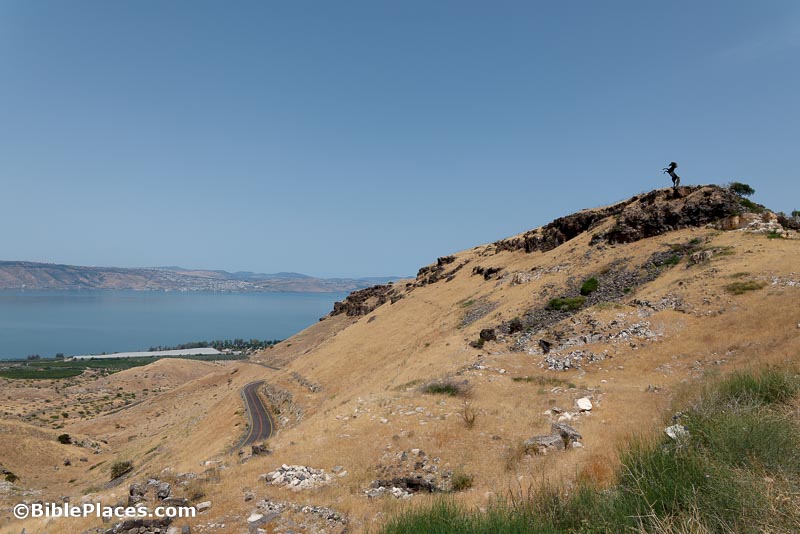
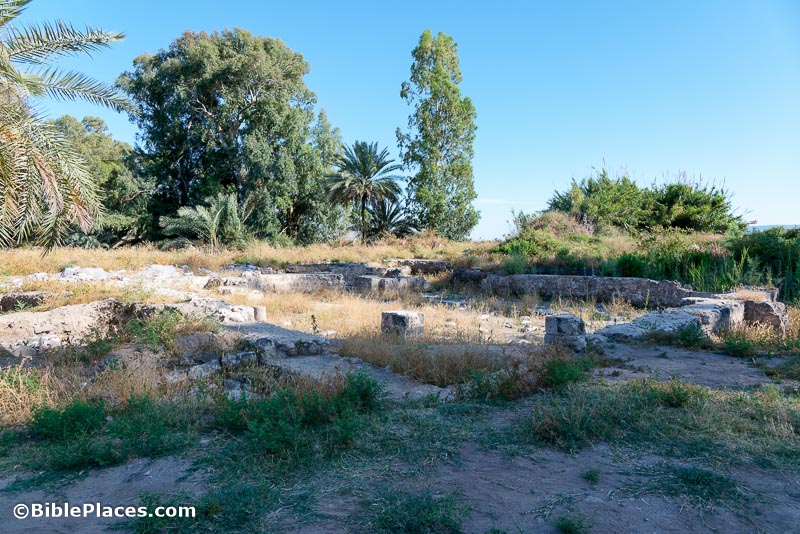
With the restrictive hours at Arbel making it very difficult to descend the famous cliffs, you might prefer an alternate trail that begins at the Arbel synagogue and passes through the Valley of the Doves. No time restrictions on this hike (marked green on the 1:50k map).

Excavations in the Sarachane Archaeology Park in Istanbul uncovered a fragment of a statue of the Greek god Pan holding a flute.

Turkish Archaeological News rounds up the top stories in the month of May, including mention of three new museums to open in Kuşadası (ancient Ephesus)

Writing for Religion Unplugged, Kim Lawton reports on her recent travels to the seven churches of Revelation. She interviewed me as part of her research.

The Christian Post has a feature on places in Turkey related to the apostle Paul.

A retired garbage collector helped uncover two dozen bronze statues in central Italy.

Three more victims of the Vesuvius eruption were discovered recently at Pompeii.

The National Archaeological Museum of Naples will be opening a new branch in the city to display more of its collection.

Stephen DeCasien investigates the development of the naval ram in early maritime warfare.

Katerina Velentza describes her project to “interpret anew where, when, why and how sculptures were transported by sea in the ancient Mediterranean world.”

New video from the British Museum: “How the Greco-Persian Wars changed the way Athenians drank their wine” (16 min).

Terry Madenholm investigates how the ancient Greeks and Romans viewed suicide.

“Last week the American Academy in Rome launched a major update to the Arthur & Janet C. Ross Library’s Digital Humanities Center, giving the repository a new look and feel while increasing access to the collections and their research value in several important ways.” This resource is easily searchable, especially by location, with lots of old photos.

HT: Agade, Joseph Lauer, Arne Halbakken, Ted Weis, Stephanie Durruty, Wayne Stiles, Alexander Schick, Gordon Franz, Explorator

The Lod Mosaic Museum protects a beautiful Roman-era mosaic, but I think it’s unlikely to get many visitors, especially with the $10 entrance fee.

[Due to some website issues, part 2 of the last Weekend Roundup was not sent out. You can read it here.]

A cave near ancient Shechem served refugees for at least eight different historical periods, from the Chalcolithic to the Mamluk periods.

El-Unuk, one of Adam Zertal’s six “Gilgal” sites, is under threat of destruction from construction work.

The Israeli government has approved an $8 million budget to restore and protect the ancient capital city of Samaria. The funding “will go toward establishing a tourism center at the site, building new access roads, mapping untouched areas, and increasing law enforcement to prevent illegal activity.”

Scott Stripling discusses the Mount Ebal Curse Tablet on the latest episode of Digging for Truth.

John DeLancey’s latest video was filmed in the 1st-century synagogue of Magdala.

What are the Lachish Letters and why are they of importance to the Bible? Nathan Steinmeyer explains.

JNS has a story on the Inscriptions of Israel/Palestine project being run by Brown University.

In connection with a new exhibit at the Corning Museum of Glass, Ruth Schuster investigates the history and method of Roman glassmaking in the land of Israel.

Hybrid lecture at the Albright Institute on May 11: “Before the Nabataeans: Arabian Traders in the Negev Highlands,” by Tali Erickson-Gini and Martin David Pasternak

Zoom lecture on May 11: “Jesus Reading Scripture: Exploring the Archaeology of Worship in First-Century Synagogues,” by Paul Flesher ($6/$12).

The online lecture with Ken Dark on “Exploring the Archaeology of Jesus’ Nazareth” has been rescheduled to Friday, 12 May 2023 at 11:00am-12:30 pm ET.

Preserving Bible Times has released Session 5 of The Bible: Its Land & Culture! This session explores Two Different Worlds: Jewish or Hebrew and Roman or Gentile; Peter vs Paul; Deciphering the Roman World; and Roman Exceptionalism. Individual sessions are available here, and all 5 sessions are now available for purchase as a set ($40).

Paleojudaica links to articles that explore connections of King Charles III’s coronation with the Bible and the ancient Near East.

HT: Ted Weis, Explorator

Archaeologists looking at satellite images have discovered three temporary Roman army camps in the northern Arabian desert, possibly evidence of a military campaign that led to the annexation of the Nabatean kingdom in AD 106.

“Archaeologists from the Leiden Turin Expedition to Saqqara have uncovered an ornate tomb dating to the early Ramesside period (c. 13th century BCE) that belonged to Panehsy, the overseer of the Temple of Amun.”

Bryan Windle gives the top three reports in biblical archaeology in the month of April.

“The Zeugma Mosaic Museum in Antep, southeastern Turkey, has reopened after being closed for over two months due to the devastating earthquakes that struck the area in February.”

Writing for Ami Magazine, Lawrence Schiffman considers the irony of ancient Jewish art work from Dura-Europos sitting in a museum in Damascus.

Helen Gries, a curator at the Vorderasiatisches Museum in Berlin, considers how “multiple narratives” come together in the Ishtar Gate of Babylon.

The Roman bust of Nero that was discovered in a Goodwill store in Texas is returning to Germany next month.

The Greek Reporter makes some suggestions as to why the ancient Greeks reclined to eat and drink.

BAS’s Bible & Archaeology Fest XXVI will be back in person as well as livestreamed on Nov 17-19 in San Antonio, Texas.

The latest video from Expedition Bible will likely be popular: Exodus Pharaoh Explained (22 min)

HT: Agade, Arne Halbakken, Explorator

According to Haaretz, the recent excavations have found no traces of the Pool of Siloam.

Chandler Collins investigates “artificial platforms of massive proportions [that] altered Jerusalem’s landscape while also destroying or concealing remains of former times.”

Google Arts & Culture’s collections include a story on the Holy Places of Jerusalem, with many large, beautiful photographs.

Bible History Daily summarizes a recent study that argues that it is very unlikely that a ring bears the name of Pontius Pilate.

Daily Mail tells the story of the Shellal Mosaic, discovered by ANZAC soldiers near Tell el-Farah (South) during World War I.

Haaretz profiles the research of Guy Bar-Oz in his efforts to study the cultural history of trees in Israel.

As Adolfo Roitman nears retirement as curator of the Dead Sea Scrolls at the Shrine of the Book, Israel21c reports on how he ended up in the position, with no museum experience or expertise in the Dead Sea Scrolls.

New episode on This Week in the Ancient Near East: “New Jerusalem Inscription Points to (Previously Known) Iron Age Spice Trade, Or, Solomon and Sheba Get Spicy?”

Hybrid conference on May 21-23: “Epigraphy in Judah: The Second International conference of the Roger and Susan Hertog Center for the Archaeological Study of Jerusalem and Judah”

The Oxford Centre for Hebrew & Jewish Studies is offering free Modern Hebrew Ulpanim courses on Zoom.

Bible Mapper continues to produce and release free maps of the biblical narrative and world:

If you have not entered the drawing for more than 30 prizes of the Photo Companion to the Bible, you have until tomorrow to do so. Everyone who enters receives the new “Top 50 Sites from Dan to Beersheba” PowerPoint.

HT: Agade, Arne Halbakken, Mark Hoffman, Explorator

“Neo-Assyrian reliefs in the provinces tend to present the sacred using standardized Assyrian court motifs. A recently discovered relief at Başbük, however, offers a rare depiction of local gods in Assyrian court style but with traditional Syro-Anatolian motifs.”

“After the recent massive earthquakes, Türkiye’s Hatay Archaeology Museum stepped up efforts to protect its valuable artifacts from aftershocks by employing an in situ protection formula for heavy items and sending smaller artifacts to another museum for safekeeping.”

Archaeologists excavating a 2nd century AD villa in Rome discovered two mosaics depicting Medusa. The article does not include photos of the mosaics.

A previously unknown palimpsest fragment of Matthew 11-12 in Old Syriac has been found in the Vatican Library.

Drawing on James Hoffmeier’s recent BAR article, Marek Dospěl provides an overview of the archaeological and geological evidence for Jeremiah’s travels to Egypt.

The most lavish Mesopotamian tomb ever discovered belonged to a woman.

The Greek Reporter has the oldest photo of the Acropolis of Athens, taken in 1842.

Kim Phillips: “The sale of Codex Sassoon raises questions about what’s real and what’s hype about this important manuscript.”

New release on Logos: Manna Bible Maps Plus: Maps, Timelines, and Movies to Help Students Visualize Their Study of the Bible ($63). I have not used these and cannot offer an opinion as to their value.

Zoom lecture on April 19: “Evidence for Judean Exiles in Babylonia, 572–474 BCE,” by Laurie Pearce. Free but registration required.

The Database of Religious History is “a massive, standardized, searchable encyclopedia of the current best scholarly opinion on historical religious traditions and the historical record more generally.”

HT: Agade, Arne Halbakken, Ted Weis, Alexander Schick, Explorator